How to tell if a mushroom is poisonous (and why folk tests fail)
Silver spoons, garlic, maggots, a bitter taste: no folk test can spot a poisonous mushroom. Why they all fail, and the only approach that actually works.
Safety 5 min read
There is no simple test for a poisonous mushroom: a blackened silver spoon, garlic changing colour, a mushroom nibbled by slugs or a pleasant taste prove nothing. Only someone who can identify the species with certainty can tell you whether a mushroom is edible. If you are not sure, don't eat it.
The short answer: no test, only the species
No test reveals a poisonous mushroom; only identifying the species can. Every autumn we get the same question: how do I know if it's poisonous? The honest answer is that there is no general rule you can read off the mushroom, and no kitchen test. Catalonia's public health service and the Swiss poison centre Tox Info Suisse say the same thing: the only thing that separates a toxic mushroom from an edible one is correct identification of the species.
So the question needs to change. Instead of "is it poisonous?", ask "which species is this, and who can confirm it with certainty?" A mushroom you cannot name is a mushroom you do not eat.
Silver spoons, garlic and onions
None of them can detect a poisonous mushroom. The most widespread belief, in Turkey as elsewhere, is that a silver spoon, garlic or onion cooked with a poisonous mushroom turns black. Poisonous mushrooms share no compound that reacts with silver, and the deadliest toxins, the amatoxins, cause no such colour change. Tox Info Suisse calls these tests wishful thinking.
Many mushrooms, edible ones included, darken on their own when cut, bruised or left to age. A colour change tells you nothing about toxins or safety.
"Animals ate it, so it must be fine"
A mushroom eaten by snails, slugs or insect larvae is not safe for people. Animals digest and tolerate toxins differently. Tox Info Suisse gives a striking example: slugs happily graze on the death cap (Amanita phalloides), while the amatoxins in the same mushroom destroy liver cells in humans.
The reverse holds too: a clean, maggot-free mushroom is no safer. Neither tells you anything.
Taste, smell and colour
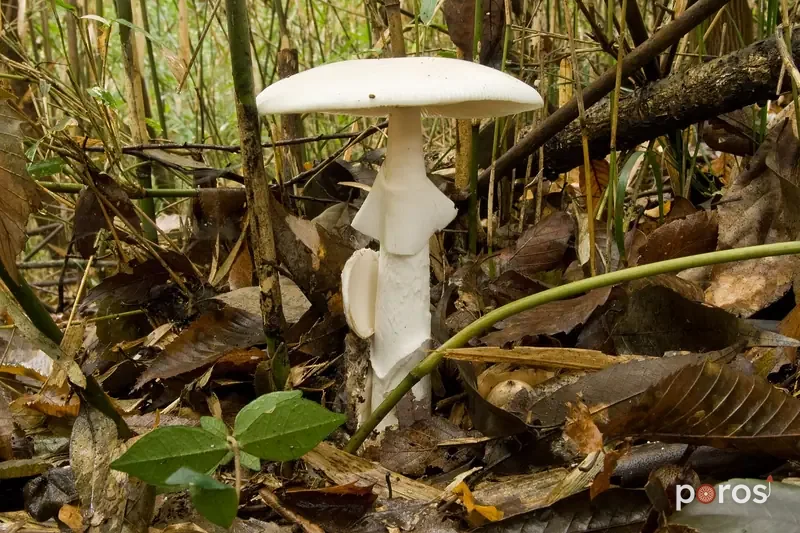
Taste, smell and colour don't give a poisonous mushroom away either. "Poisonous mushrooms taste bitter, smell bad or are brightly coloured" is another myth. According to Tox Info Suisse, many deadly species taste mild, even nutty, and people who were poisoned often noticed nothing odd about the flavour. The destroying angel (Amanita virosa), one of the most toxic mushrooms there is, is pure white; the bright red fly agaric is just one poisonous species among many.
Chewing a small piece to test it is risky in itself, because some toxins act hours or even days later. Eating a bit and feeling fine does not make the rest safe.
"Cooking, boiling or drying removes the poison"
It doesn't. Amatoxins survive boiling, frying, drying, pickling and freezing. The CDC's report on the 2016 death cap poisonings in Northern California also stresses that cooking does not destroy them. Throwing away the boiling water, soaking in vinegar or salting will not make a deadly species edible.
It is true that some edible species upset the stomach when raw and need thorough cooking, but that is a different matter from making a poisonous species safe.
Delayed symptoms are the real trap
Many deadly mushrooms cause no symptoms for hours or even days. With the death cap group, symptoms usually start 6 to 15 hours after the meal, sometimes as late as 24 hours (Tox Info Suisse). With the fool's webcap (Cortinarius orellanus), kidney damage can appear 2 to 17 days later. In the meantime people feel well and never suspect the mushrooms.
That is why "we ate them and nothing happened" is no reassurance. We cover the signs in detail in mushroom poisoning symptoms.
What to do instead
- Don't eat any mushroom whose species you don't know for certain and haven't had confirmed by an expert. A photo, an app or a comment on social media is not an identification.
- Take care at markets as well: wild mushrooms on a stall can be misidentified too. Turkey's Ministry of Health advises choosing packaged, labelled cultivated mushrooms over wild ones.
- When picking, take the whole mushroom including the base of the stem. The sac (volva) at the base is a key sign of the deadly Amanitas and is lost if you cut the stem.
- Don't mix species in one basket; a single fragment of death cap makes the whole basket dangerous.
- If poisoning is suspected, don't wait: call 112 (Turkey's poison centre is 114; elsewhere your local emergency or poison line). Keep leftovers and peelings for the hospital, and make sure everyone who ate the dish is checked.
Our poisonous mushrooms pages and the photo identification tool are for learning; they never confirm that a mushroom is edible.
FAQ
Does a poisonous mushroom turn a silver spoon black?
No. Poisonous mushrooms share no compound that blackens silver; the spoon says nothing about whether a mushroom is safe.
If animals eat a mushroom, is it safe for humans?
No. Slugs and snails can eat even the death cap, which is deadly to people. Animals react to toxins differently from us.
Does cooking destroy mushroom poison?
The amatoxins in deadly species survive cooking, drying, freezing and pickling. Cooking does not make a poisonous mushroom safe.
How long after eating a poisonous mushroom do symptoms start?
It depends on the species: half an hour to a few hours for species that cause stomach upsets; usually 6–15 hours, sometimes up to 24, for the death cap; days later for Cortinarius orellanus.
Are poisonous mushrooms always brightly coloured?
No. The destroying angel (Amanita virosa), one of the most toxic mushrooms there is, is pure white; the bright red fly agaric is just one poisonous species among many.
Sources
- Generalitat de Catalunya — Health recommendations (mantar mevsimi) (checked 2026-10-26)
- Tox Info Suisse — Toxic tales from daily life at the Tox: Mushrooms (checked 2026-10-26)
- Missouri Department of Conservation — Mushroom hunting (checked 2026-10-26)
- Royal Botanic Gardens Victoria — Edible and poisonous fungi (checked 2026-10-26)
- CDC MMWR (PMC) — Amanita phalloides Mushroom Poisonings, Northern California, December 2016 (checked 2026-10-26)
- Habertürk — Sağlık Bakanlığı'ndan mantar zehirlenmelerine karşı uyarı (checked 2026-10-26)
Last updated: 27 October 2026