
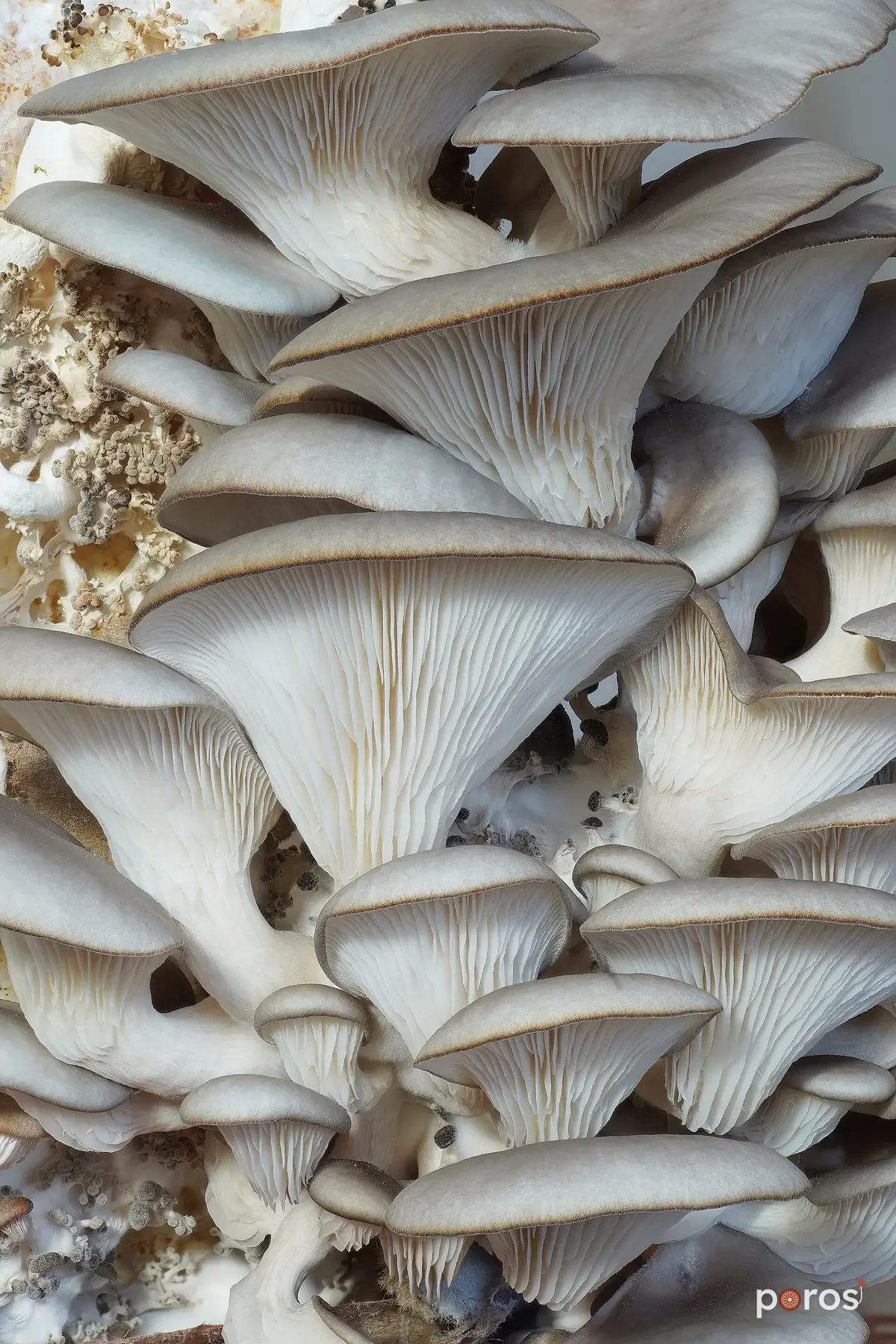
Oyster mushroom
Pleurotus ostreatus · Pleurotaceae
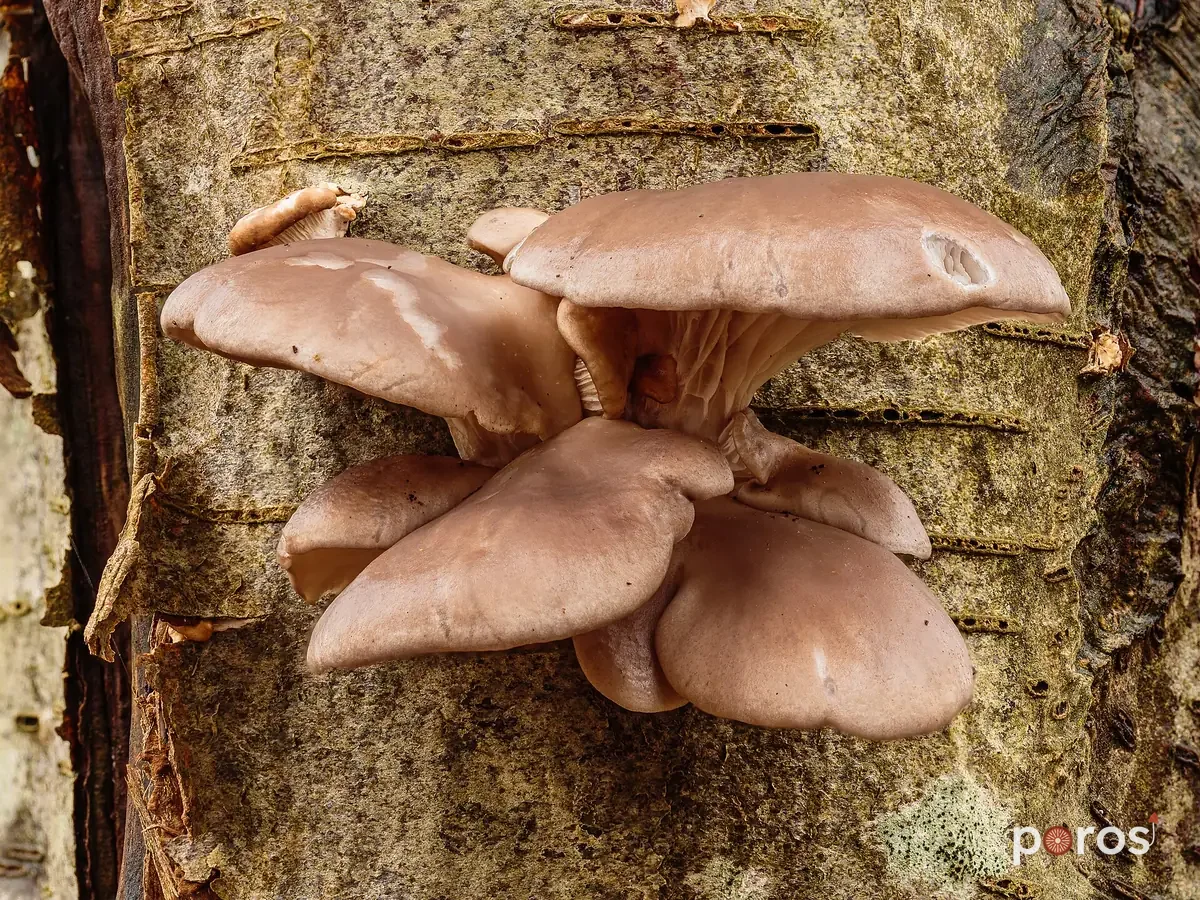
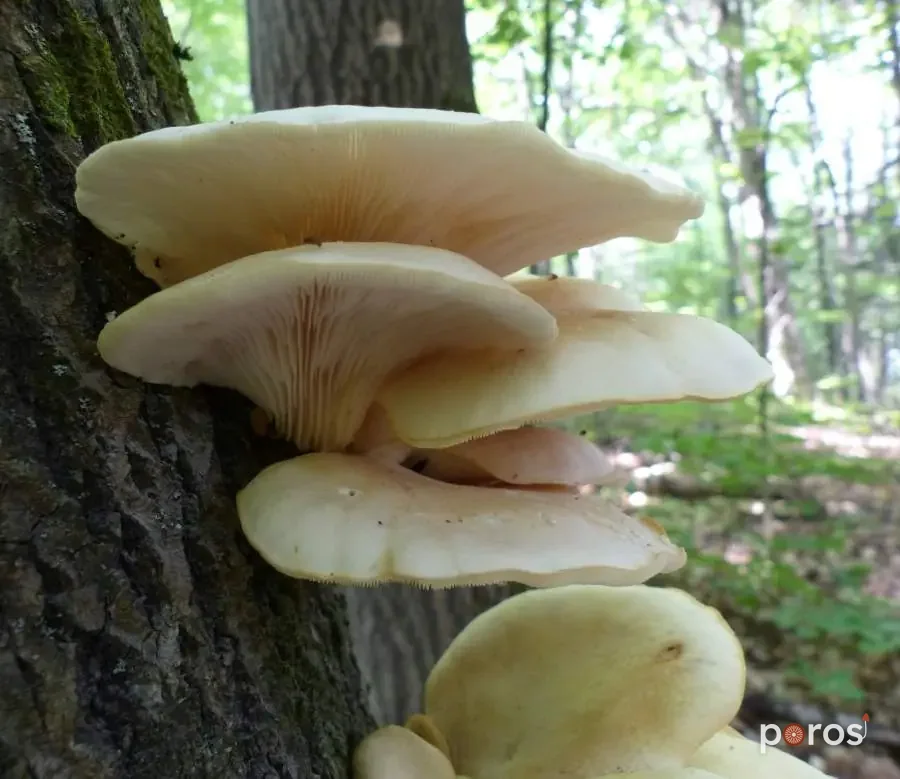
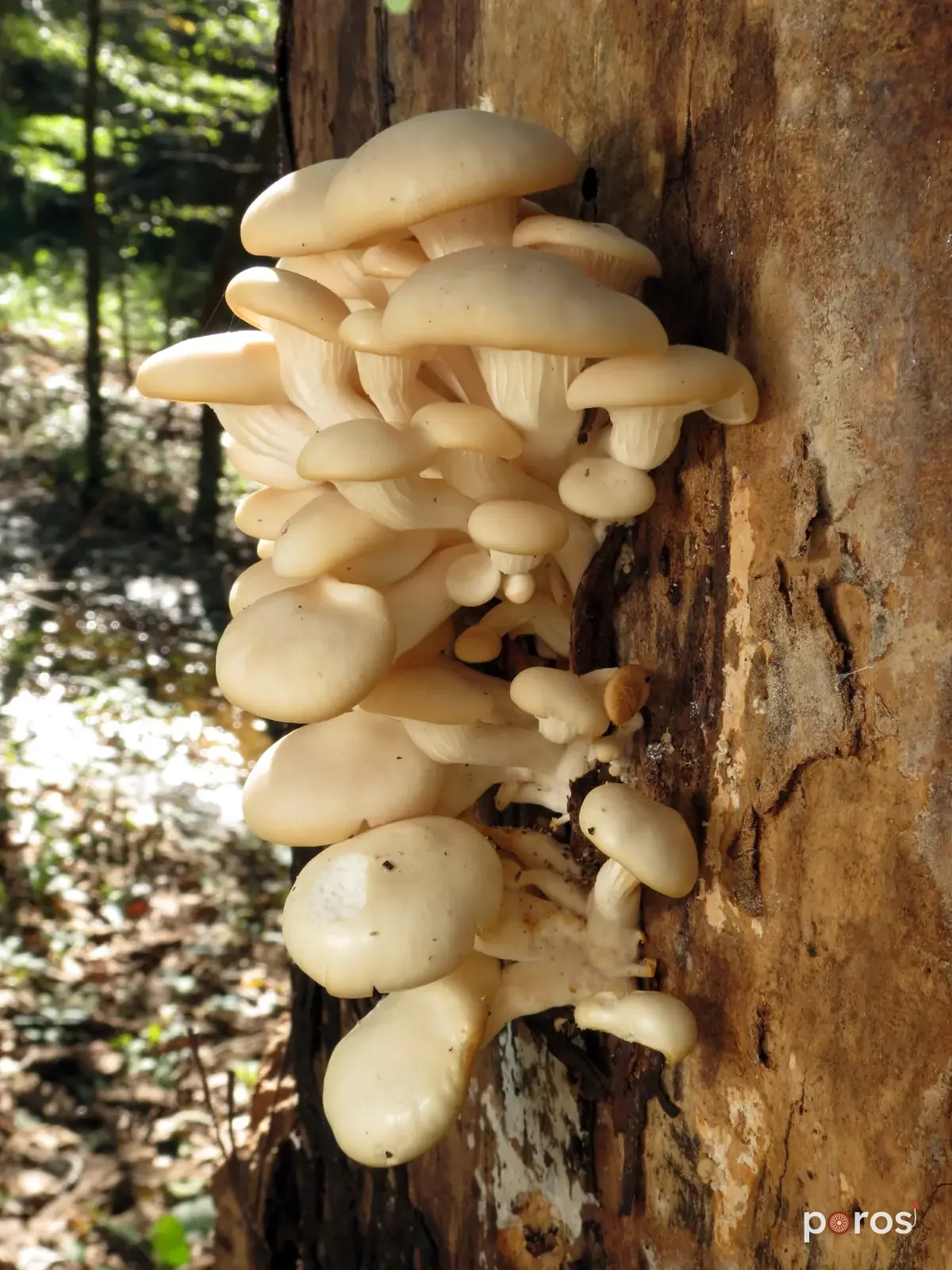
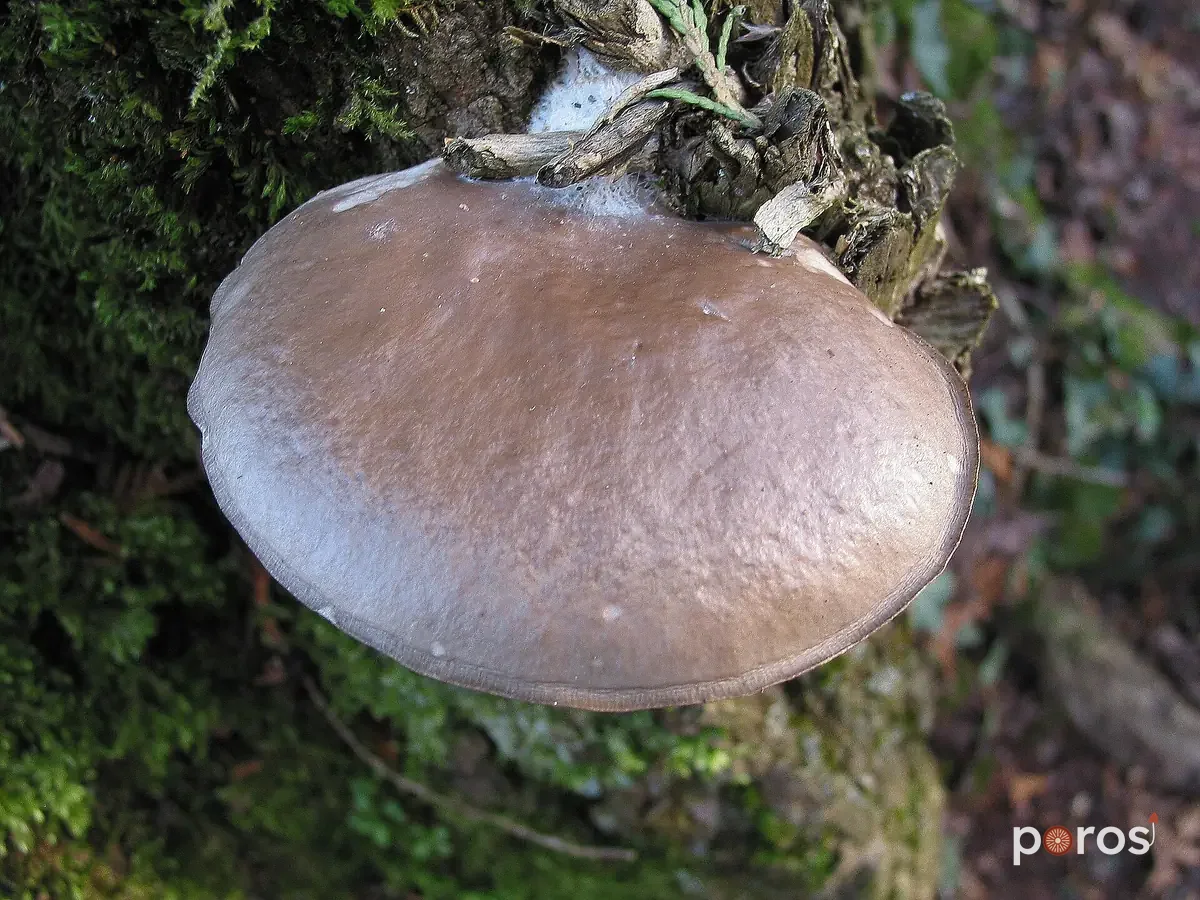
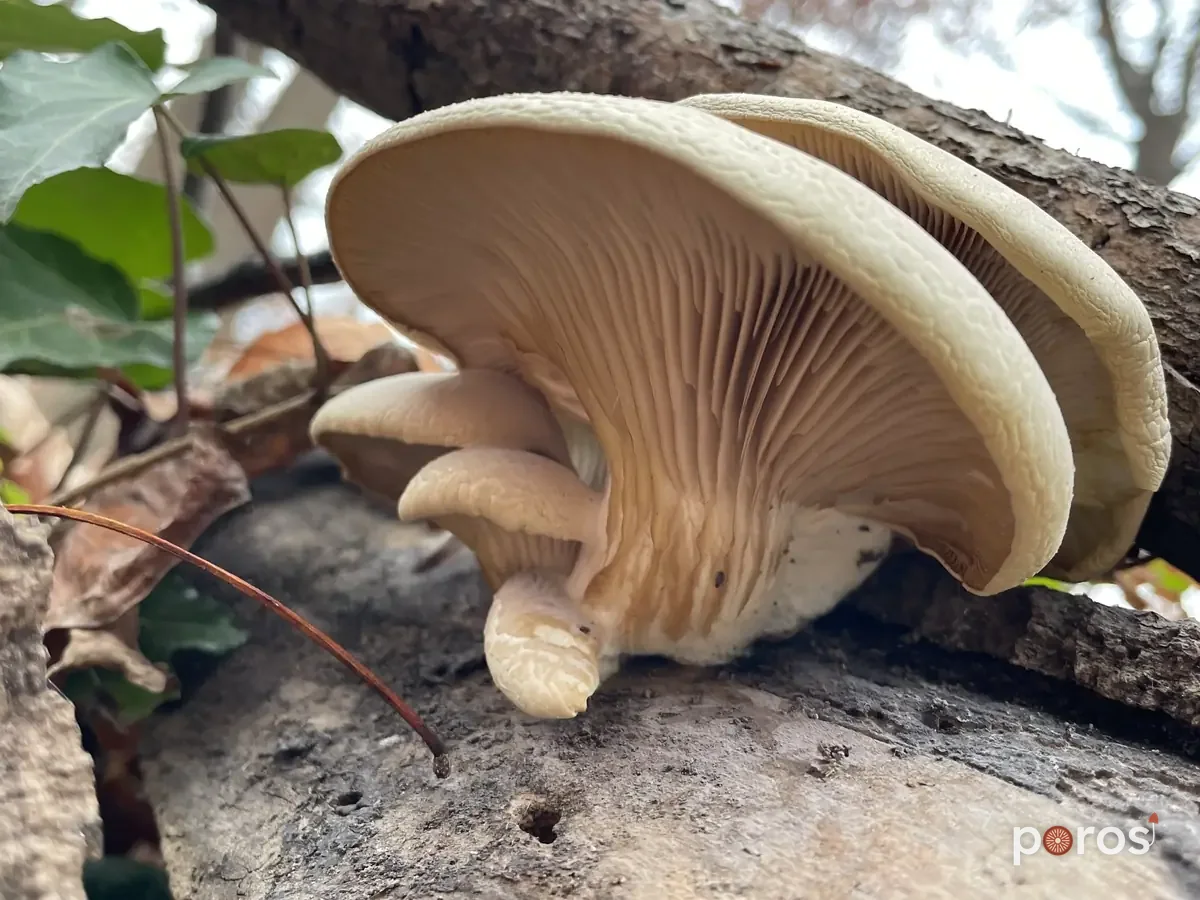
The oyster mushroom grows in tiers of fan- or oyster-shaped caps on dead and dying hardwoods, and is one of the most widely cultivated edible mushrooms in the world.
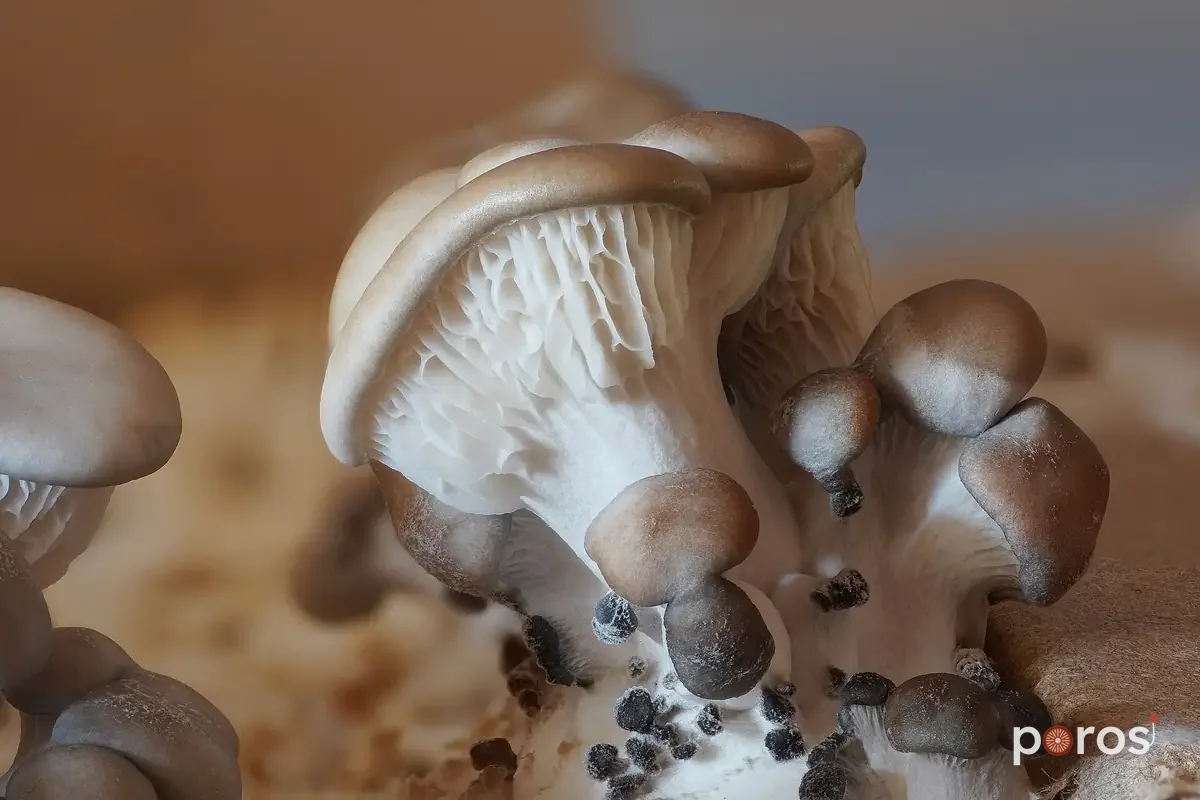
The oyster mushroom grows in tiers of fan- or oyster-shaped caps on dead and dying hardwoods, and is one of the most widely cultivated edible mushrooms in the world. Commercial growing began in Germany during the First World War; it is one of the easiest species to start growing at home.
Also called: grey oyster mushroom, pearl oyster, hiratake Turkish: İstiridye mantarı, kavak mantarı, istiridye
How to recognise it
Oyster mushroom, part by part
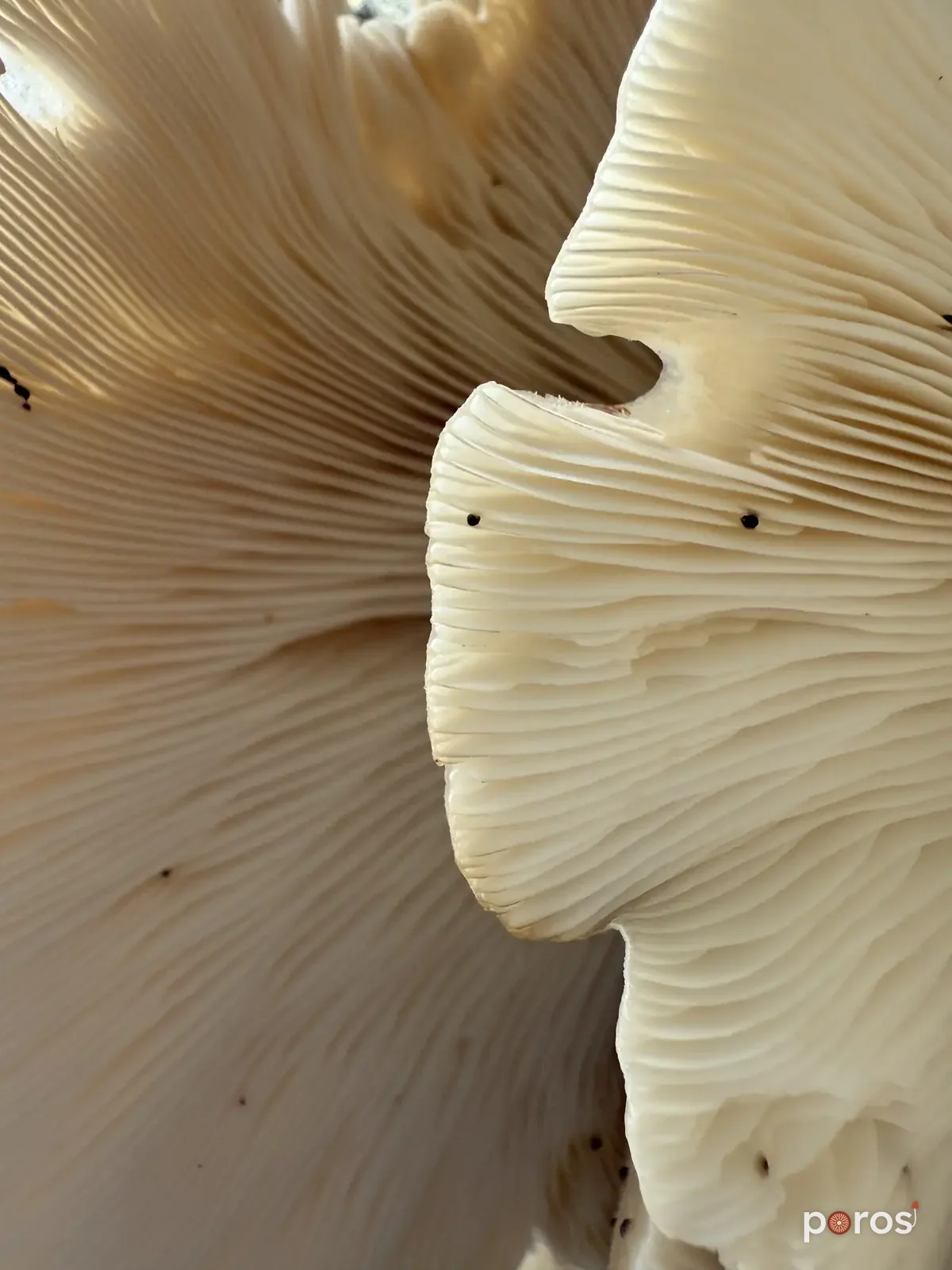
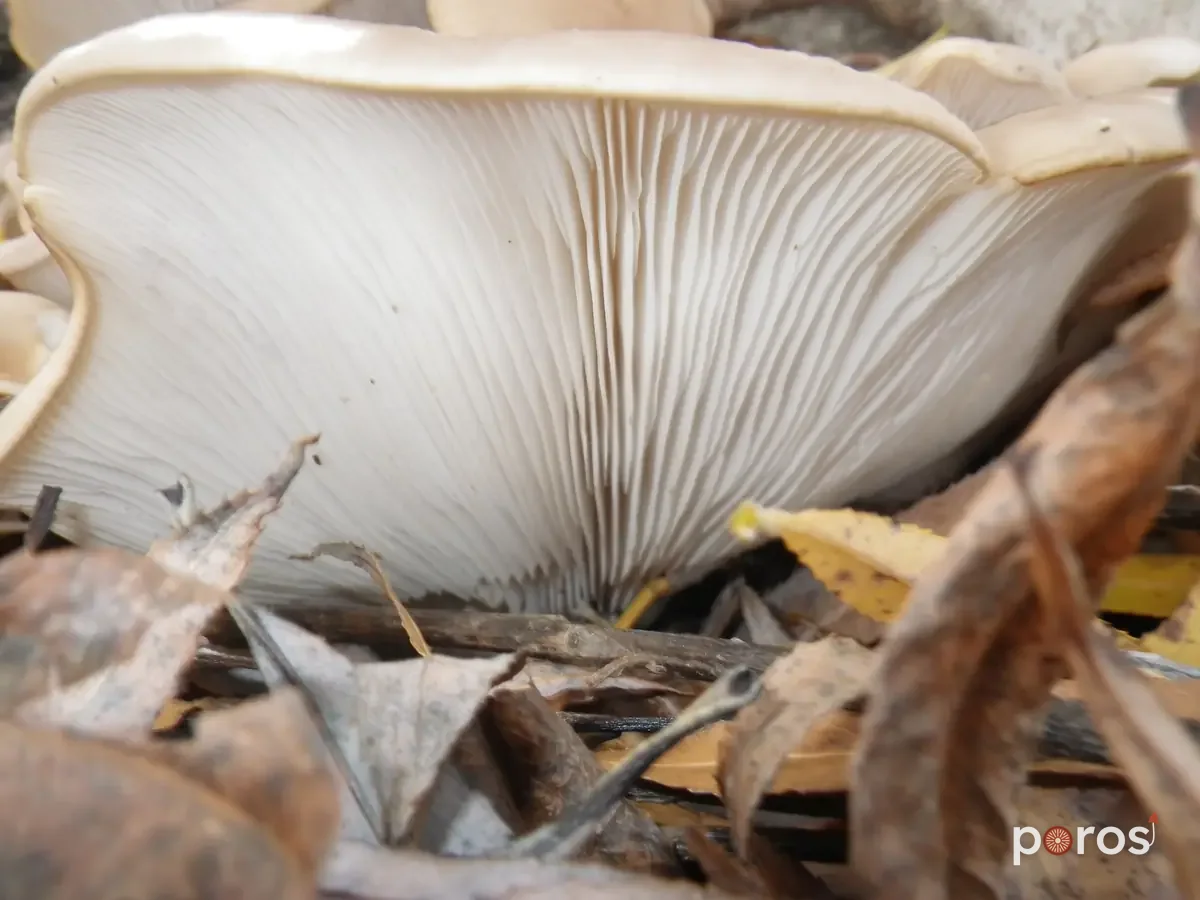
No ring or volva Spore print: White to pale lilac-grey Mild; a hint of bitter almond (benzaldehyde) or anise.
When and where
Oct–Mar
- Janin season
- Febin season
- Marin season
- Apr
- May
- Jun
- Jul
- Aug
- Sep
- Octin season
- Novin season
- Decin season
Wild oyster mushrooms fruit in the cool months, into January–February in southern Europe, and in Turkey GBIF records also cluster between October and March. Cultivated oyster mushrooms are produced all year round.
Where do oyster mushrooms grow?
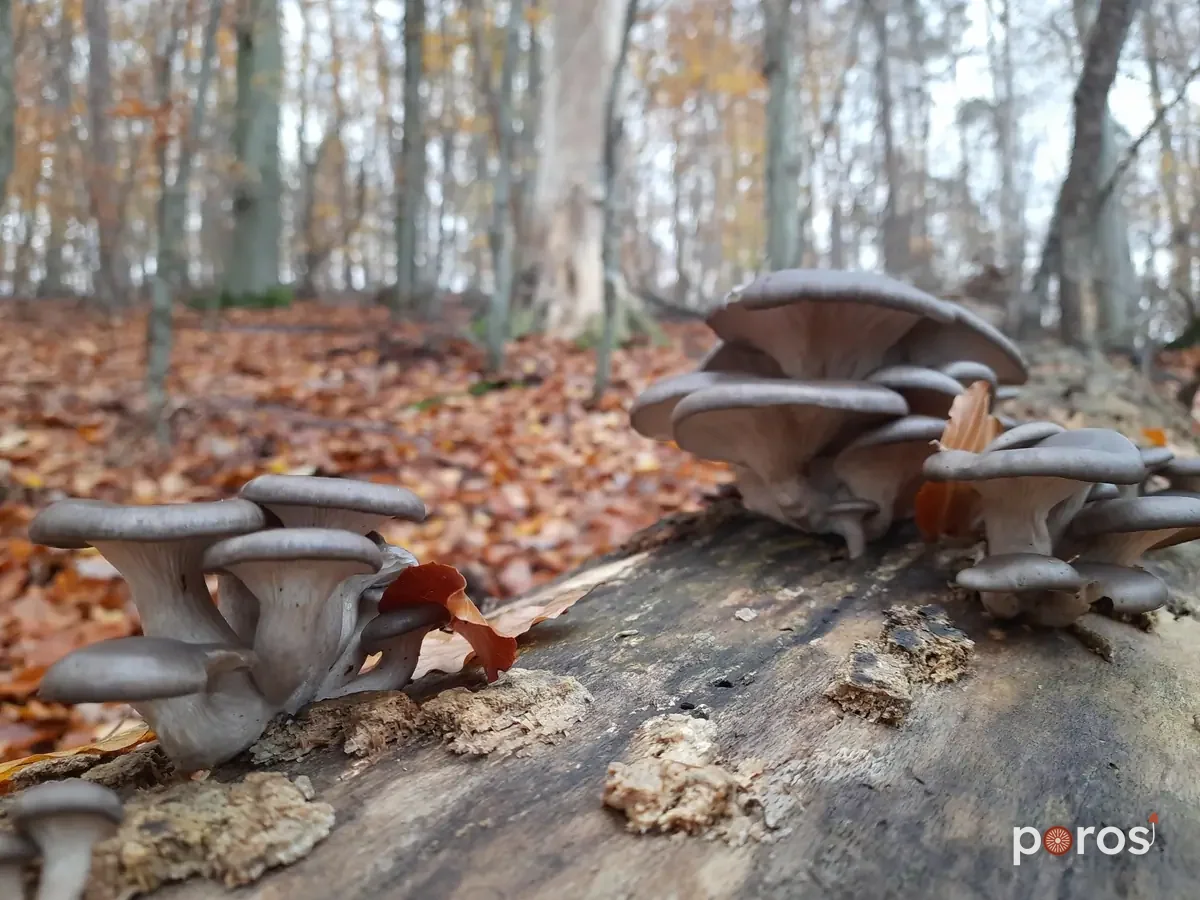
The oyster mushroom is a saprotroph, a wood decomposer that causes white rot. It grows in clusters on dead or dying trunks and branches of broadleaf trees, especially beech and oak.
In Turkey
In Turkey the oyster mushroom has been recorded in the wild on broadleaf trees in wooded areas, and it is also widely cultivated there.
- İstanbul13
- Ankara8
- İzmir2
- Karaman2
- Kırklareli1
- Burdur1
- Balıkesir1
- Aksaray1
31 observations on our map (GBIF, iNaturalist). Record density also reflects where observers work.
Latest oyster mushroom observations


Look-alikes
What could it be confused with?
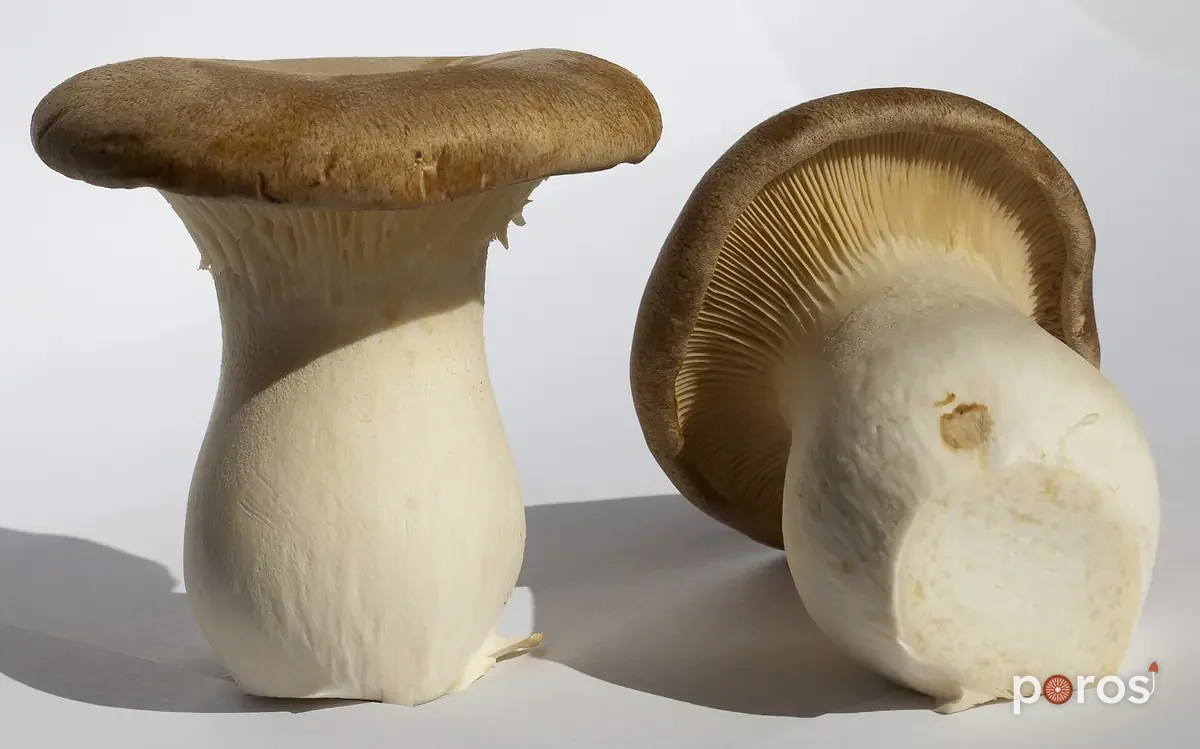
King oyster mushroom Pleurotus eryngii
A related edible species with a thick, fleshy stem, usually growing singly.
Lentinellus species Lentinellus spp.
Some species are toxic; gill edges are jagged and the cap finely hairy.
Ivory funnel Clitocybe dealbata
Contains muscarine; grows from soil in grass, not on wood.
In the kitchen
Cooking with oyster mushrooms
On the blog
 GrowingHow to use a mushroom grow kit: from box to harvest5 min read
 GrowingMushroom grow kit as a New Year gift: who it suits, which one, and how to give it4 min read
 GrowingWhy isn’t my mushroom grow kit growing? 7 causes and fixes5 min read
What goes well with oyster mushrooms
- garlic ×3
- olive oil ×2
- flat-leaf parsley ×2
- sweet paprika ×2
- ground cumin ×2
- sunflower oil ×2
- lemon juice ×2
- Turkish chilli flakes (pul biber) ×2
- tagliatelle or penne
- coarse salt
The ingredients that come up most in our 3 recipes with oyster mushrooms.
Storing oyster mushrooms
What it contains
The oyster mushroom is reported to contain lovastatin at up to 2.8% of its dry weight (Wikipedia, with references). This is not a health claim. Source
General information, not a health claim.
Grow it, buy it
Oyster mushroom price list

Waiting list openDifficulty 1/3
Oyster mushroom grow kit
Pleurotus ostreatus
The easiest place to start: open the box, mist twice a day, first cluster in about two weeks.
Waiting list
Fresh oyster mushrooms
Pleurotus ostreatus
Grown by us; packed in whole clusters on the day they are picked.
| Product | Us | Market (sourced, dated) |
|---|---|---|
| Oyster mushroom grow kit · Small | Coming soon · waiting list | — |
| Oyster mushroom grow kit · Large | Coming soon · waiting list | — |
| Oyster mushroom grow kit · Mega | Coming soon · waiting list | — |
| Fresh oyster mushrooms | Coming soon · waiting list | — |
| Dried oyster mushrooms | In preparation · notify me | — |
| Oyster mushroom powder | In preparation · notify me | 300 ₺ Erkel Gıda · Oyster mushroom powder, 100 g · 26 Oct 2026 |
| Oyster mushroom spawn | — | 749,00 ₺ Tohumlar Fidana · Oyster mushroom spawn, 1 kg · 26 Oct 2026 |
Our prices for oyster mushrooms are published when the product is ready; for now we take waiting-list sign-ups. The market column shows prices seen on other sellers' pages on the date given; they are not our prices and may have changed.
Frequently asked questions
Are oyster mushrooms edible?
Yes, the oyster mushroom is an edible species. Eat a wild one only after an expert has identified it with certainty: it can be confused with lentinellus species (Lentinellus spp.) and ivory funnel (Clitocybe dealbata).
When is oyster mushroom season in Turkey?
In our calendar, oyster mushroom season runs Oct–Mar. Wild oyster mushrooms fruit in the cool months, into January–February in southern Europe, and in Turkey GBIF records also cluster between October and March. Cultivated oyster mushrooms are produced all year round.
Where do oyster mushrooms grow?
The oyster mushroom is a saprotroph, a wood decomposer that causes white rot. It grows in clusters on dead or dying trunks and branches of broadleaf trees, especially beech and oak.
Where are oyster mushrooms found in Turkey?
In Turkey the oyster mushroom has been recorded in the wild on broadleaf trees in wooded areas, and it is also widely cultivated there.
What can the oyster mushroom be confused with?
The oyster mushroom can be confused with king oyster (Pleurotus eryngii, edible species), lentinellus species (Lentinellus spp., poisonous) and ivory funnel (Clitocybe dealbata, poisonous). Look-alikes are compared on this page.
What is the oyster mushroom called in Turkish?
In Turkish, the oyster mushroom (Pleurotus ostreatus) is called İstiridye mantarı; other local names include kavak mantarı and istiridye.
Related species
-
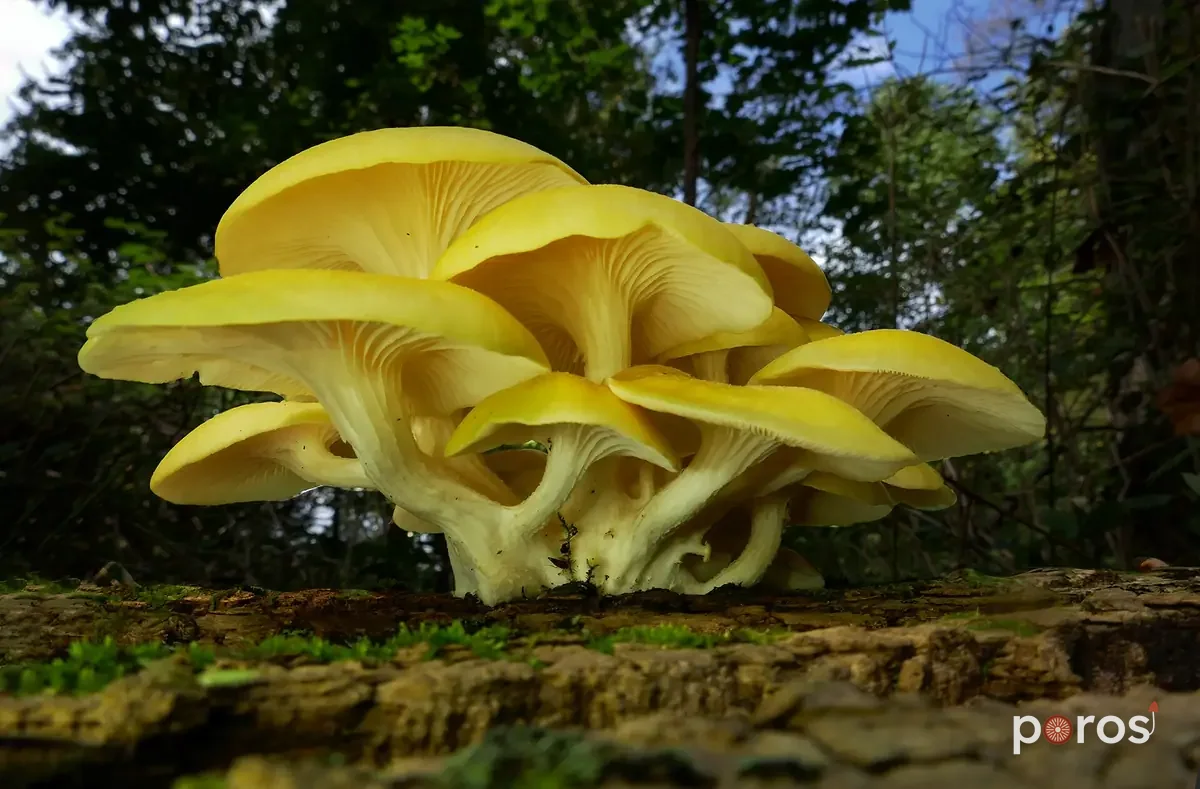 Golden oyster mushroomPleurotus citrinopileatusEdible species
-
King oyster mushroomPleurotus eryngiiEdible species
-
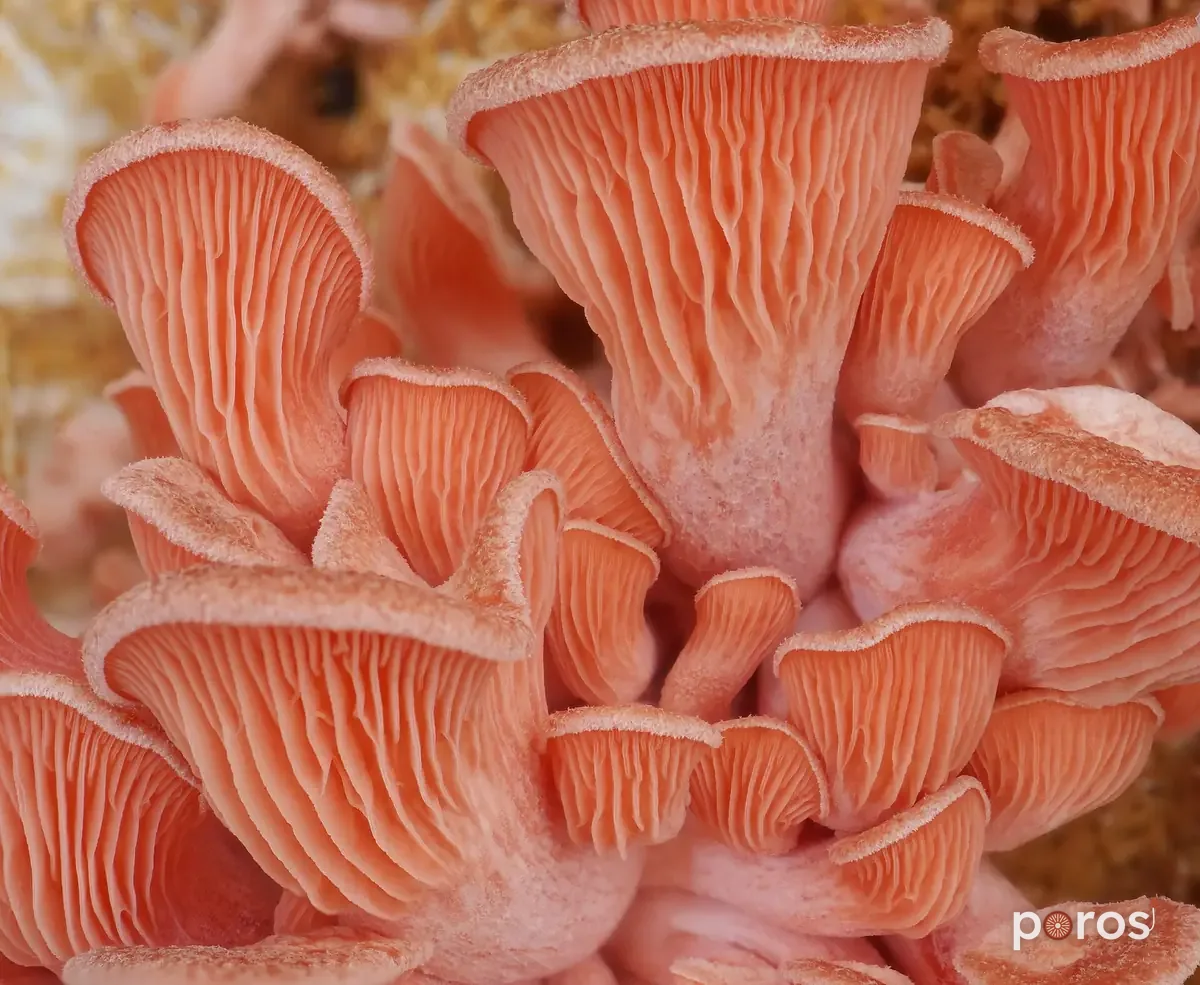 Pink oyster mushroomPleurotus djamorEdible species
-
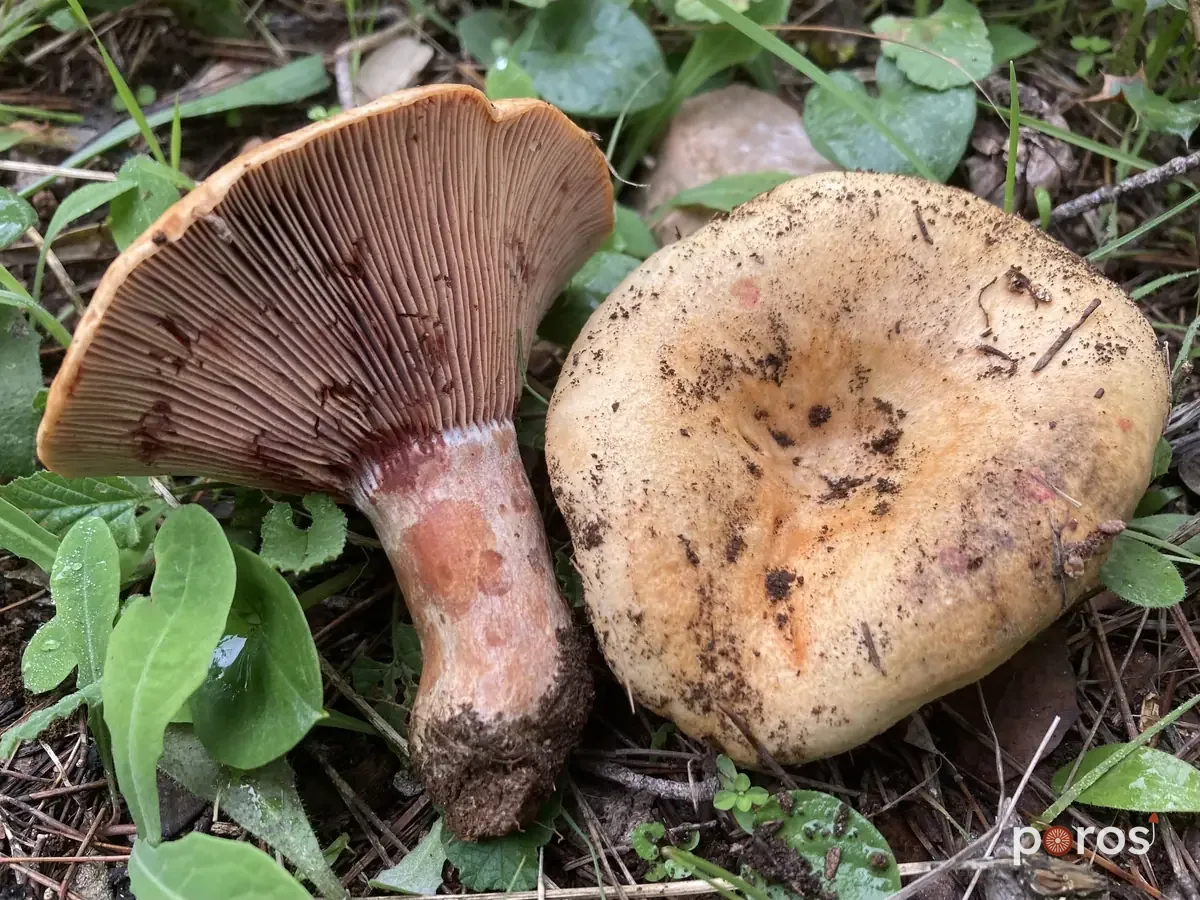 Bloody milk capLactarius sanguifluusEdible species
-
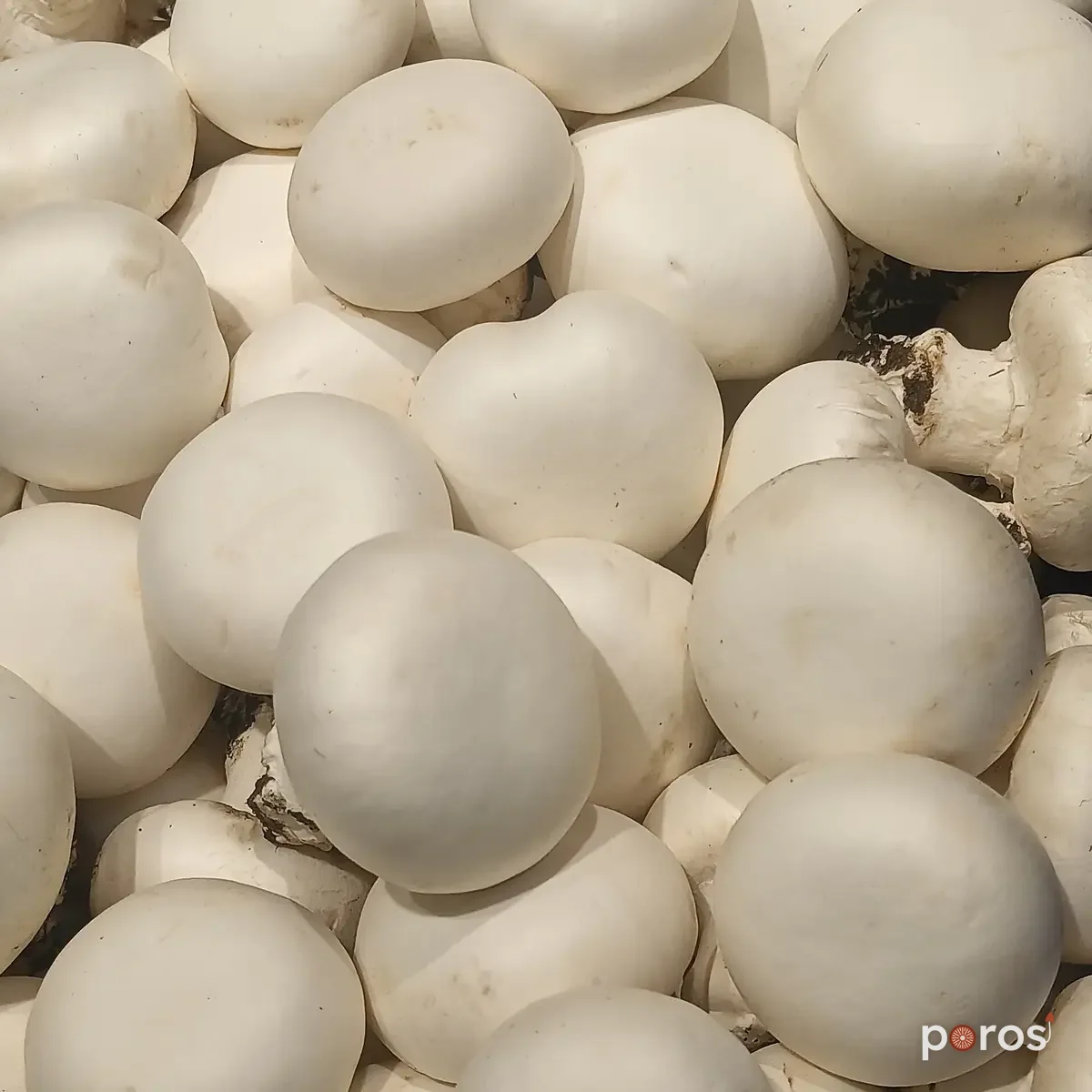 Button mushroomAgaricus bisporusEdible species
-
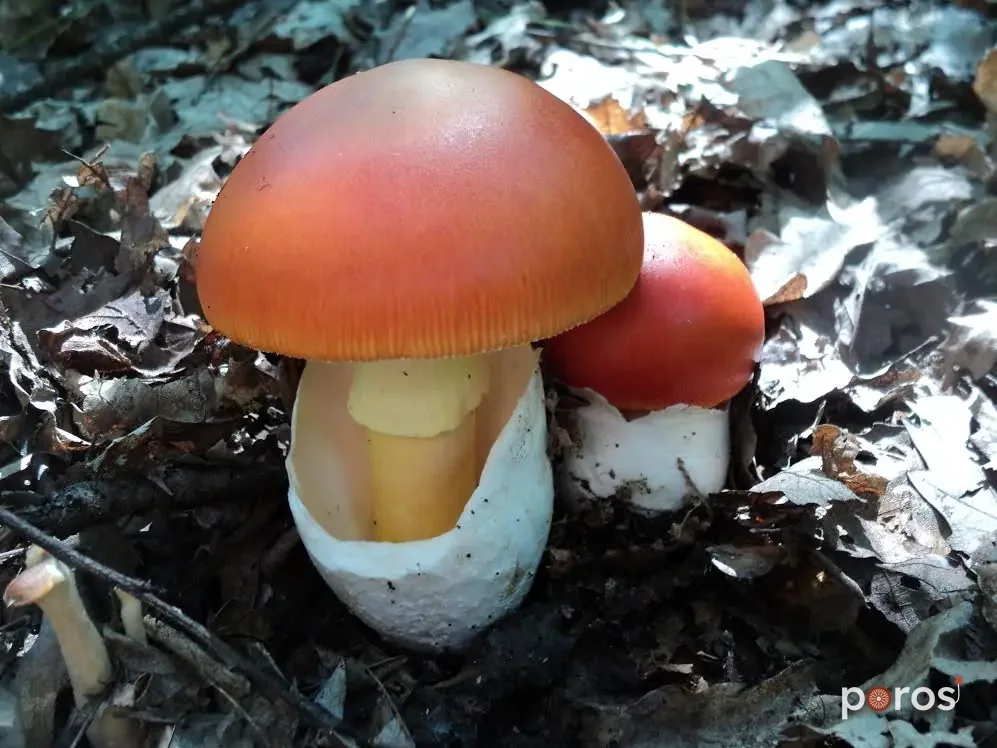 Caesar’s mushroomAmanita caesareaEdible species
-
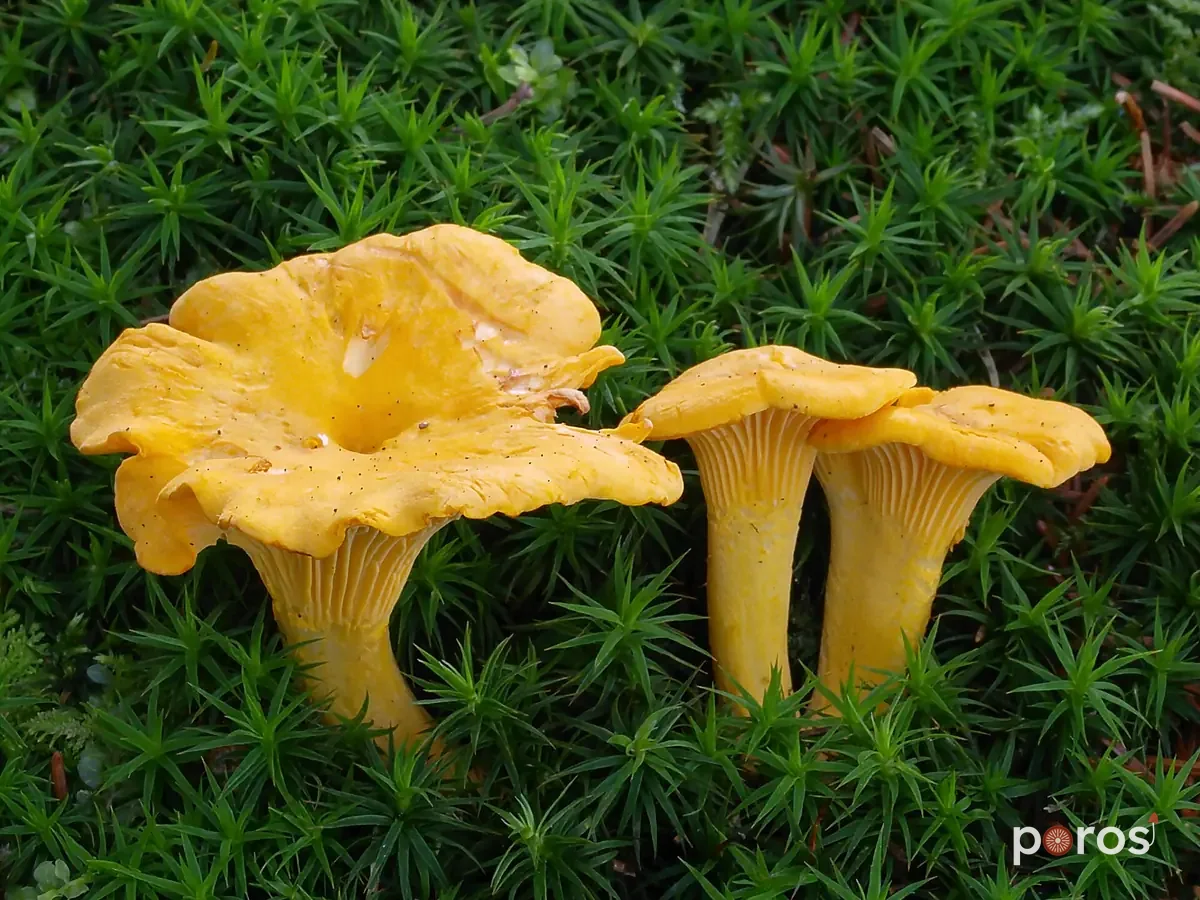 ChanterelleCantharellus cibariusEdible species
-
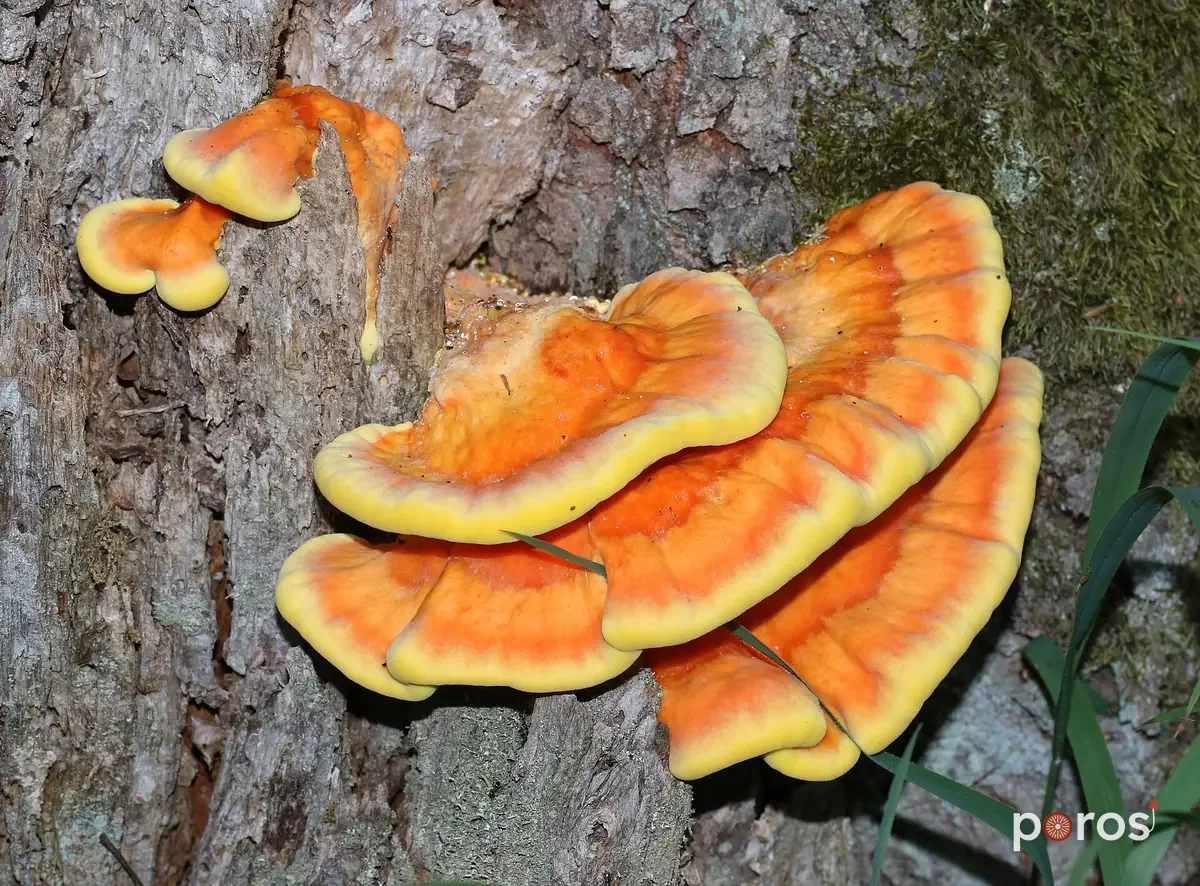 Chicken of the woodsLaetiporus sulphureusEdible species
Sources (5)
- Wikipedia (EN): Pleurotus ostreatus · checked 26 Oct 2026
- Vikipedi (TR): Kavak mantarı · checked 26 Oct 2026
- First Nature: Pleurotus ostreatus · checked 26 Oct 2026
- MushroomExpert: Pleurotus ostreatus · checked 26 Oct 2026
- GBIF: Türkiye kayıtları · checked 26 Oct 2026
Photo credits (10)
- File:Gewone oesterzwam (Pleurotus ostreatus) 31-12-2020 (d.j.b.) 01.jpg · Dominicus Johannes Bergsma · CC BY-SA 4.0
- Pleurotus ostreatus · iNaturalist #21968122 · Katja Schulz · CC BY 4.0
- Pleurotus ostreatus · iNaturalist #2492798 · Dominic · CC BY 4.0
- Pleurotus ostreatus · iNaturalist #10626741 · christine123 · CC BY 4.0
- Pleurotus ostreatus · iNaturalist #253832121 · Bubble-Enko · CC BY 4.0
- Pleurotus ostreatus · iNaturalist #192055198 · Patrick Bayan · CC BY 4.0
- File:20210719 Pleurotus ostreatus 098-127.jpg · Zinnmann · CC BY-SA 3.0
- File:20210719 Pleurotus ostreatus 001-016.jpg · Zinnmann · CC BY-SA 3.0
- File:Pleurotus ostreatus JPG2.jpg · voir ci-dessous / see below · CC BY 3.0
- Pleurotus ostreatus · iNaturalist #102633129 · Annie Weissman · CC BY 4.0


