
Chicken of the woods
Laetiporus sulphureus · Laetiporaceae
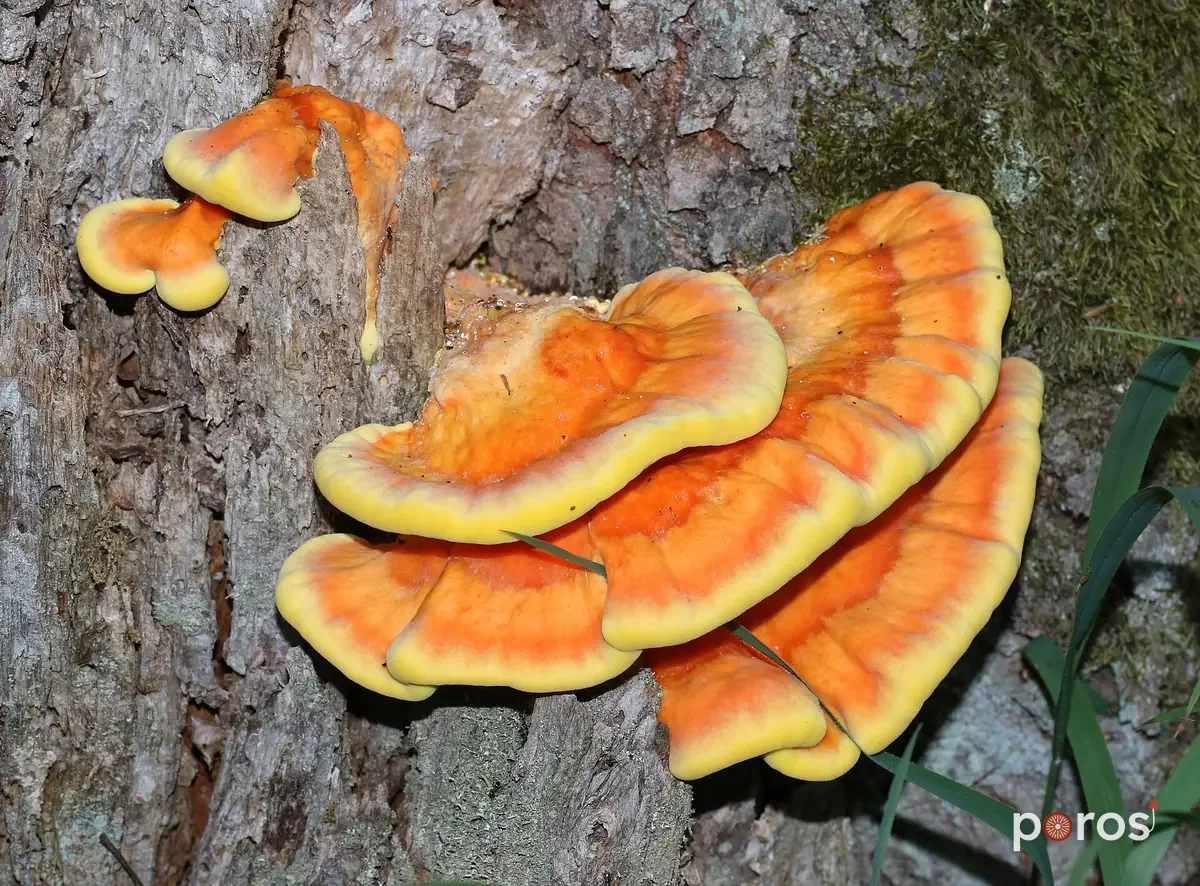
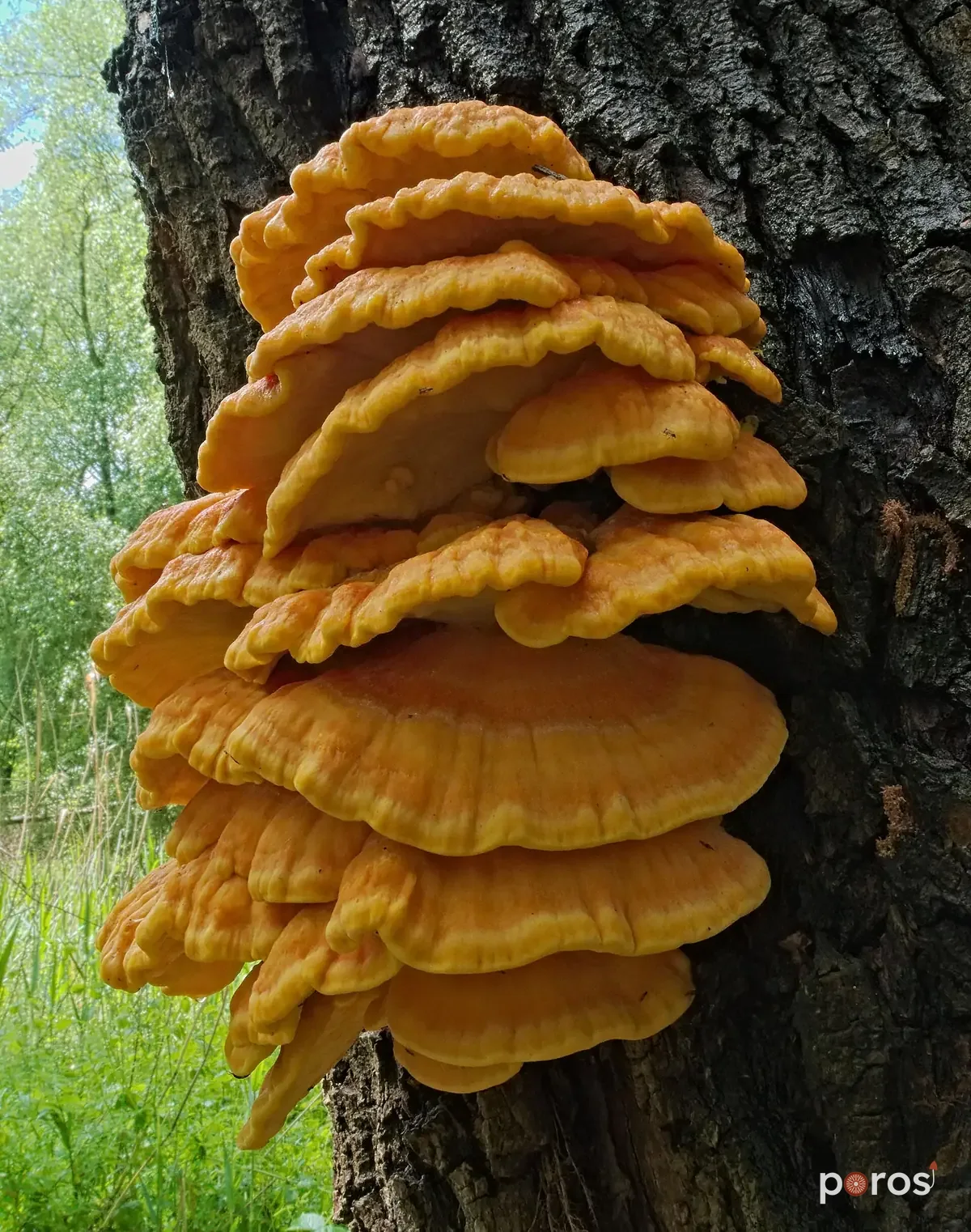
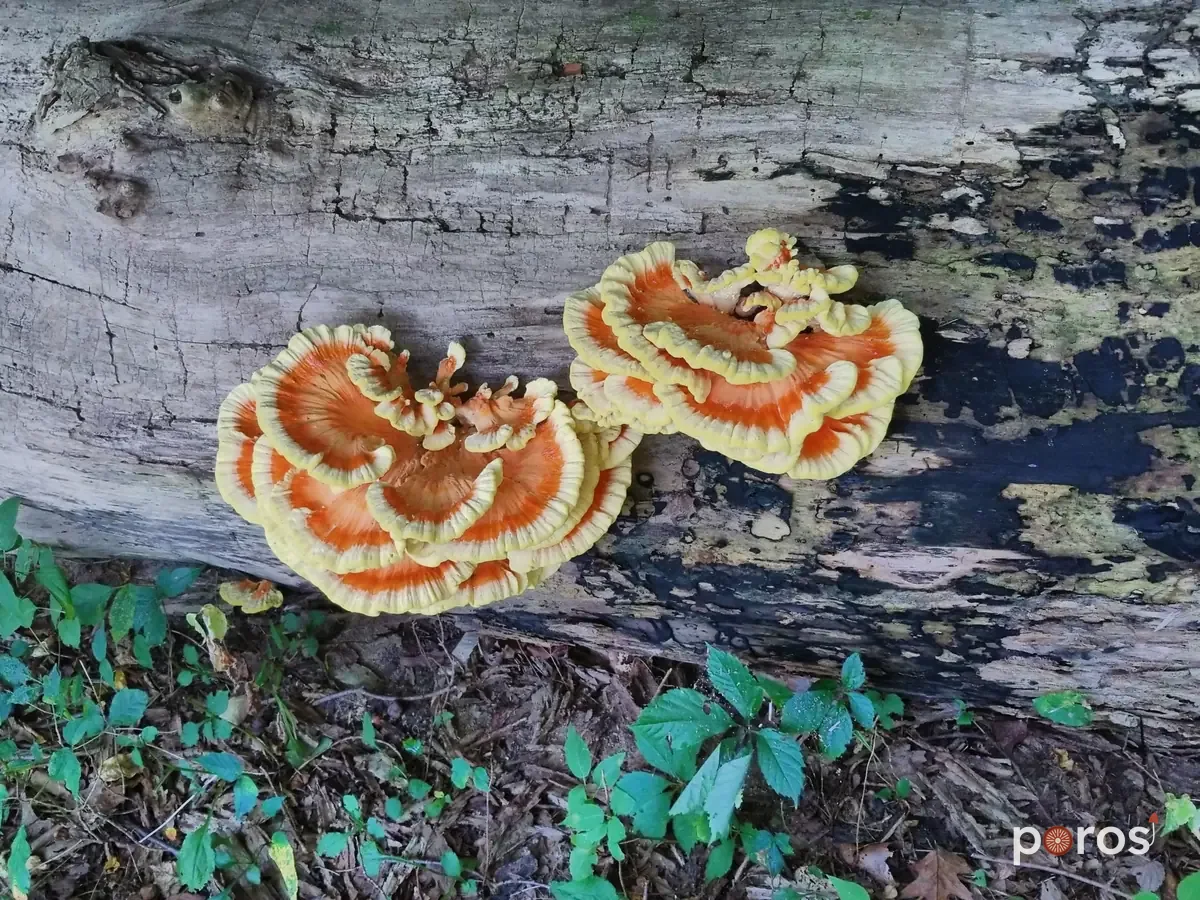
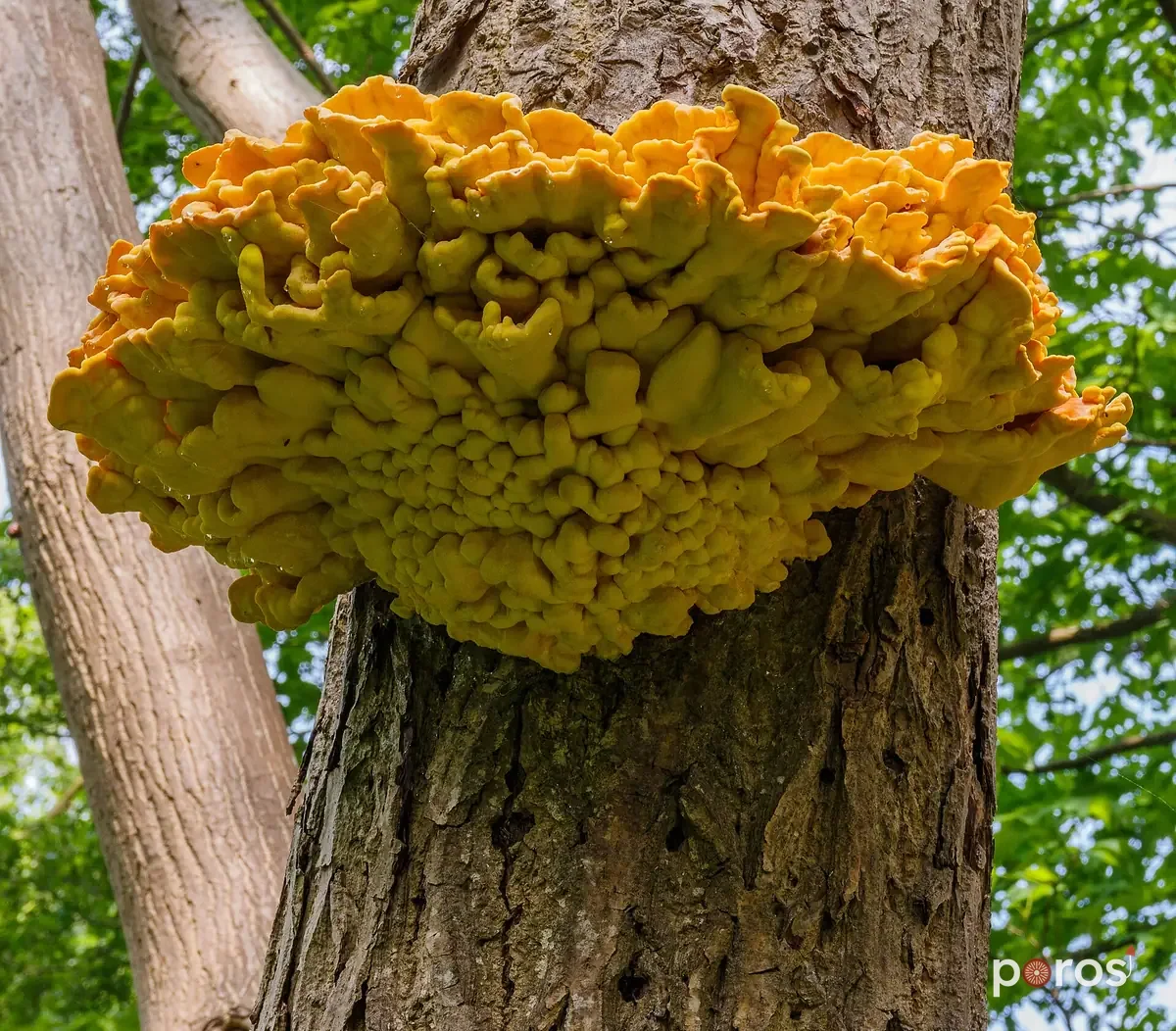
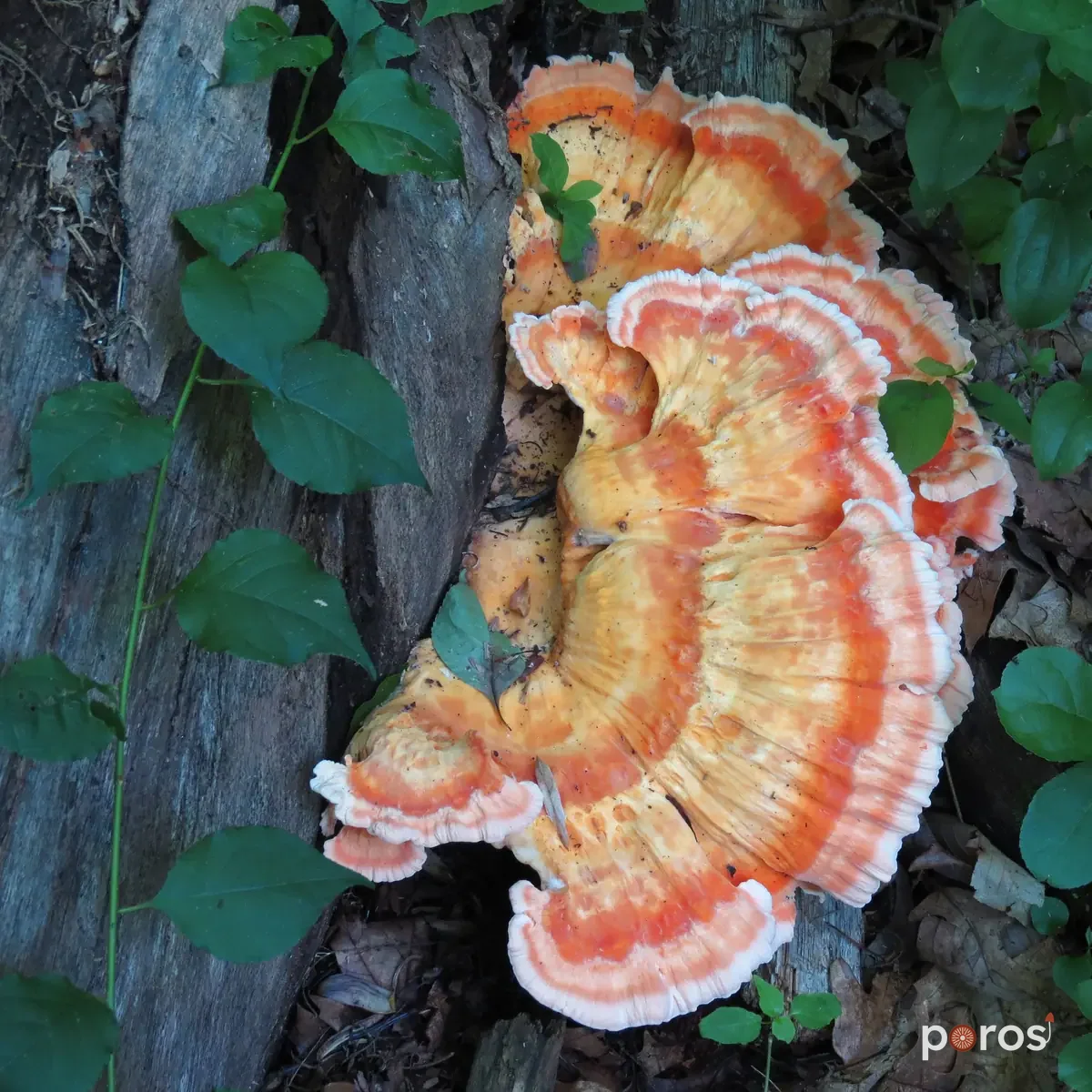
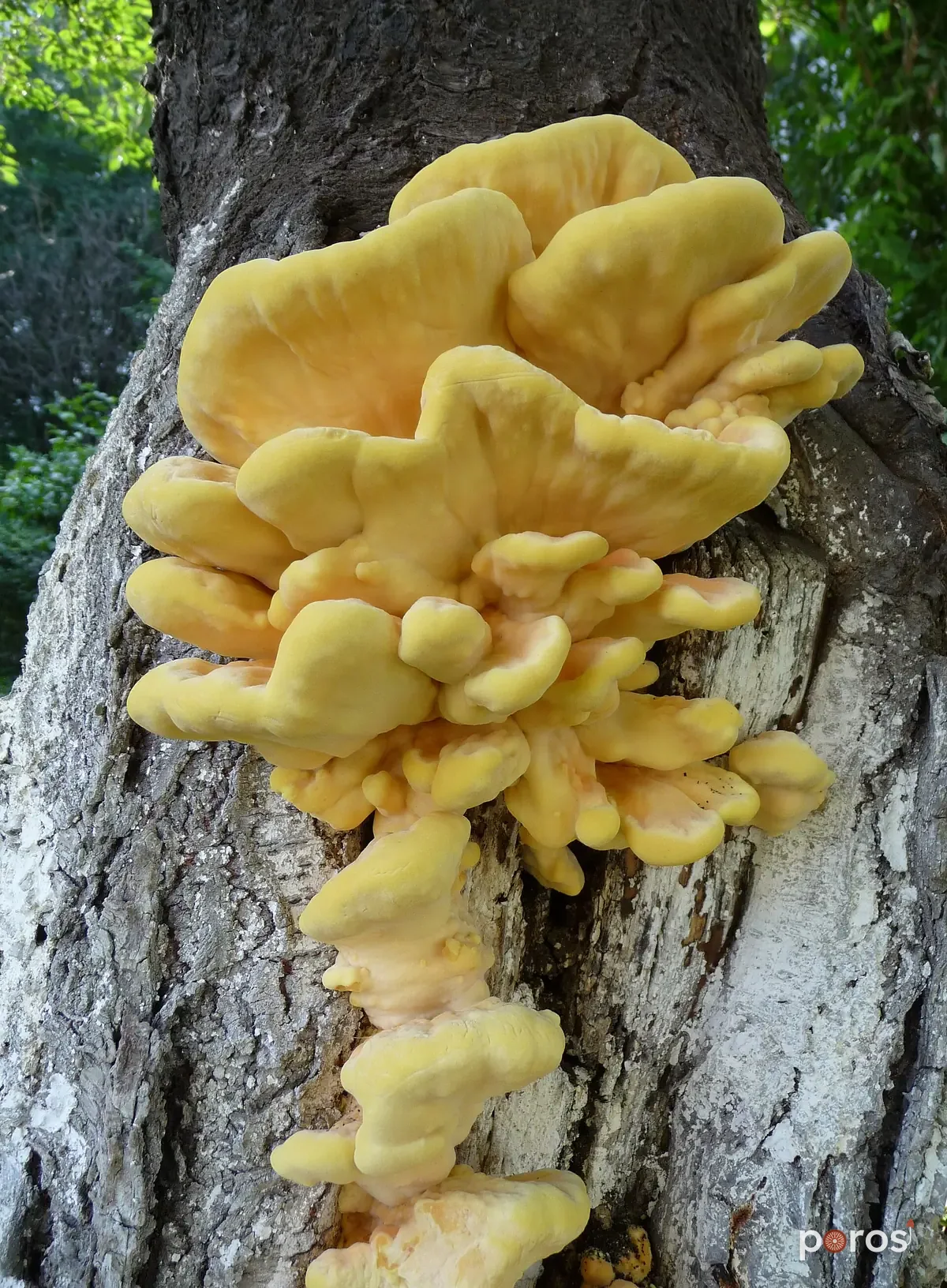
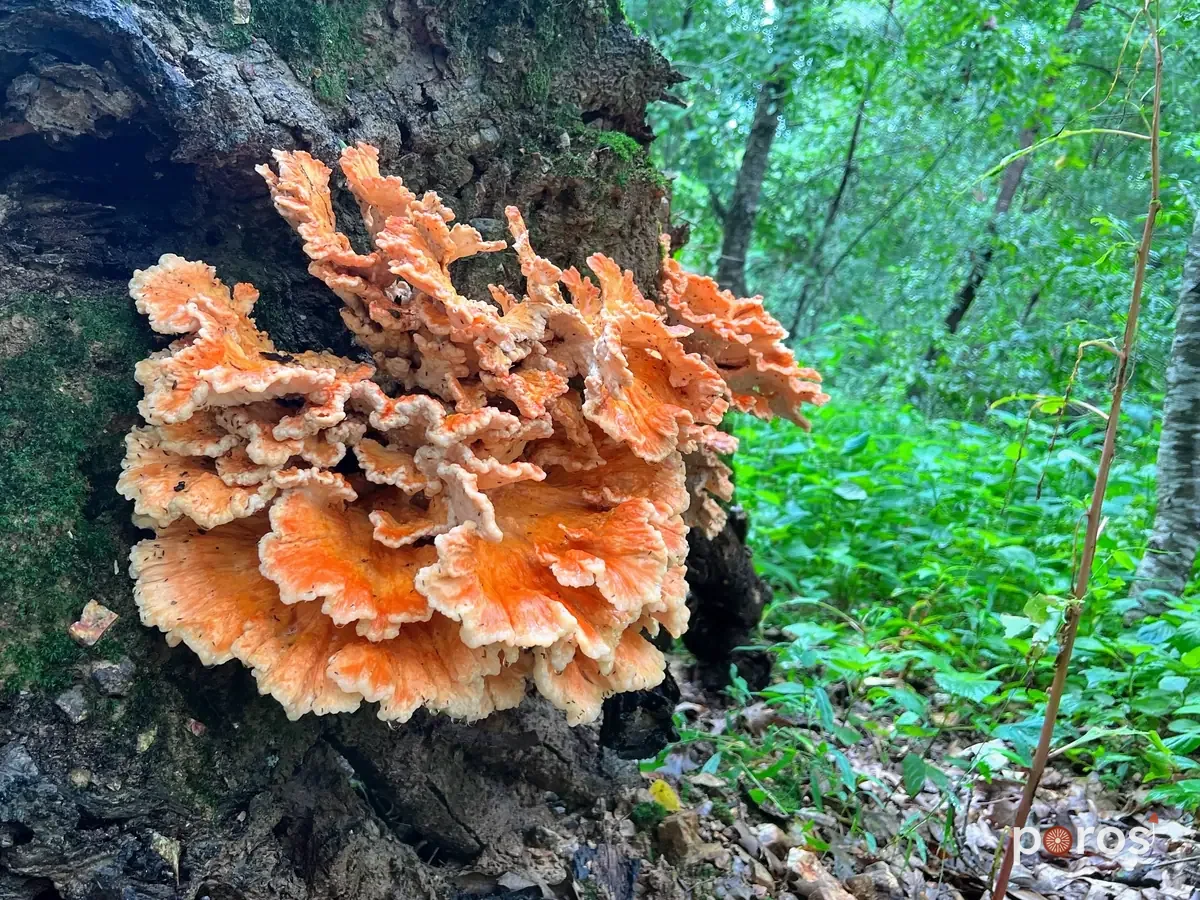
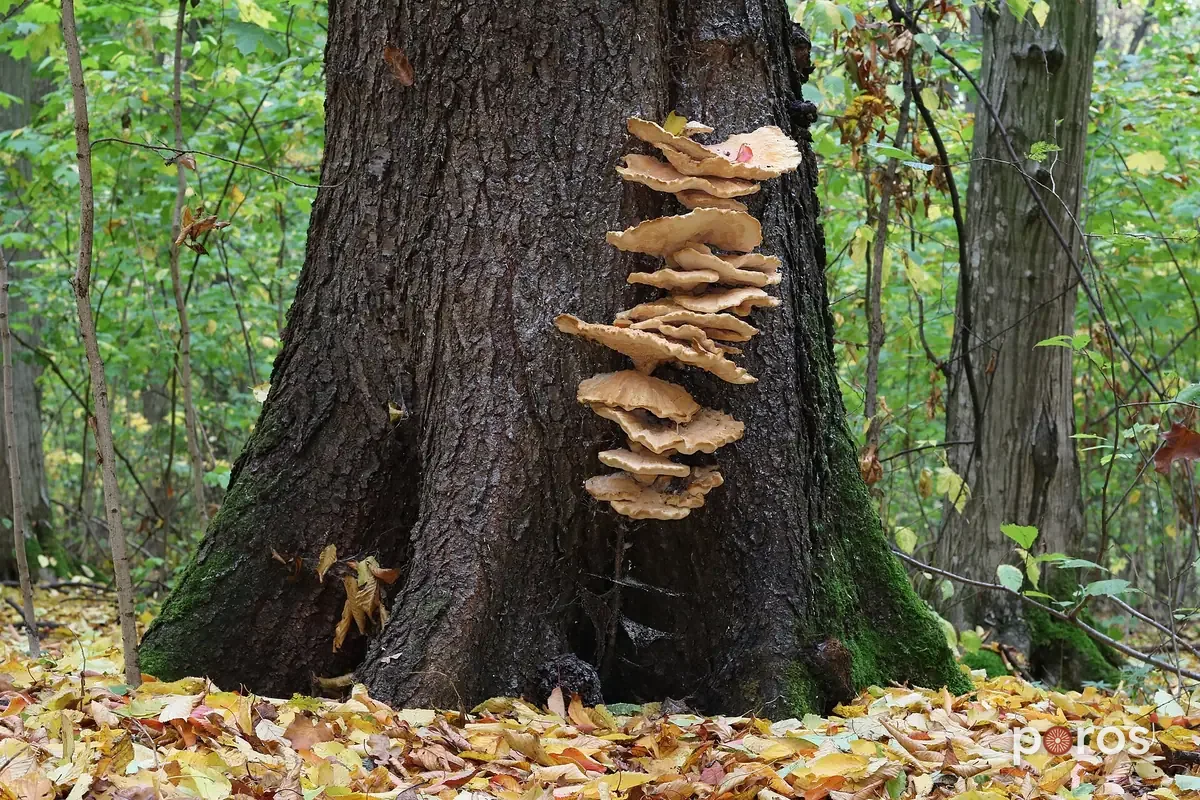
Chicken of the woods forms bright sulphur-yellow to orange shelves stacked on tree trunks, and its taste is often compared to chicken.
Chicken of the woods forms bright sulphur-yellow to orange shelves stacked on tree trunks, and its taste is often compared to chicken. It is edible when young, but some people have reported adverse reactions, so first-timers should try only a little. Old fruit bodies fade and toughen.
Also called: sulphur polypore, sulphur shelf Turkish: Kükürt mantarı
How to recognise it
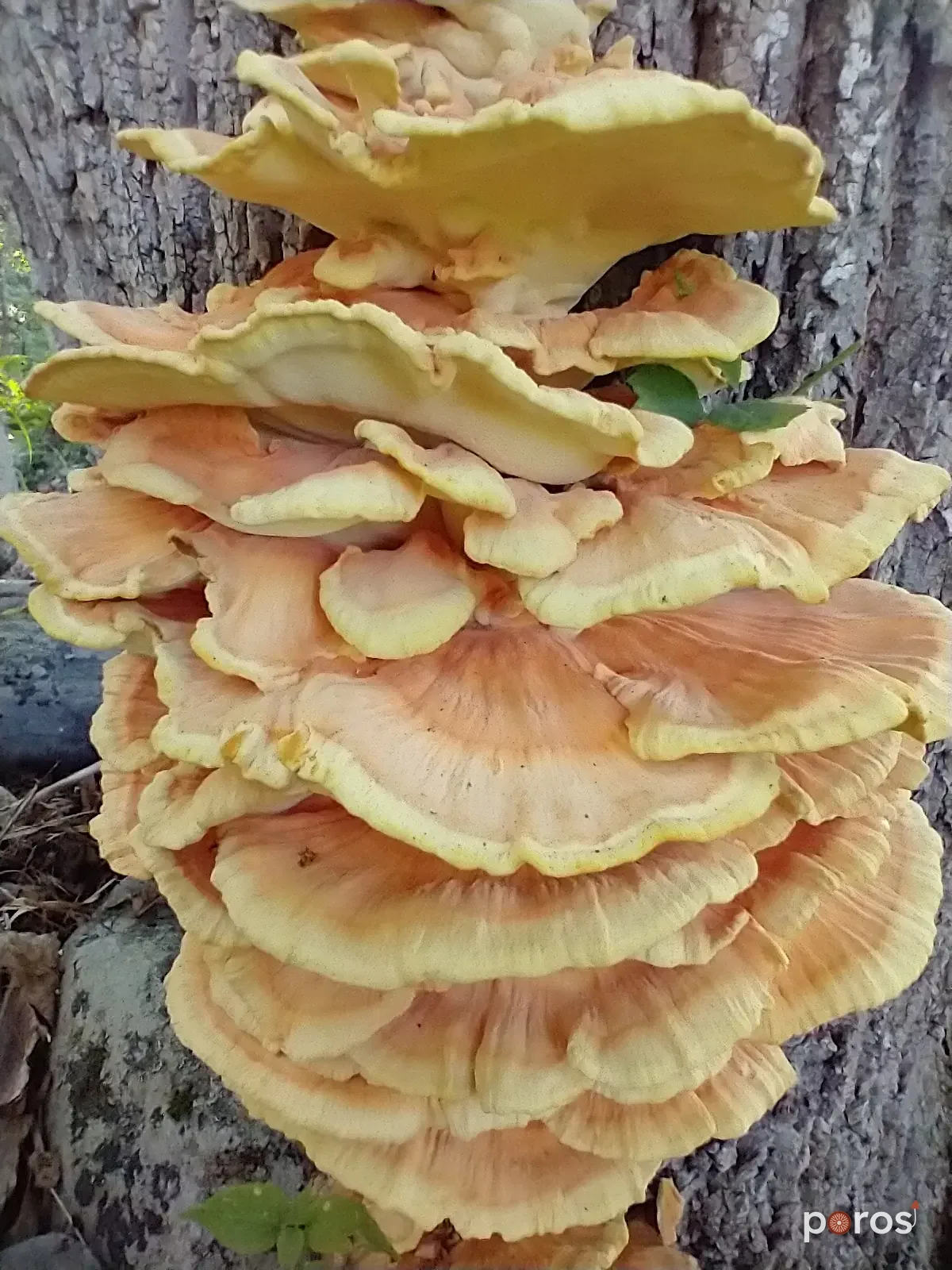
Chicken of the woods, part by part
No ring or volva Spore print: White Fresh flesh is succulent with a strong mushroomy smell; slightly sour taste.
When and where
May–Nov
- Jan
- Feb
- Mar
- Apr
- Mayin season
- Junin season
- Julin season
- Augin season
- Sepin season
- Octin season
- Novin season
- Dec
Chicken of the woods fruits from April to November in Europe; in Turkey, GBIF records peak in September–October.
Where does chicken of the woods grow?
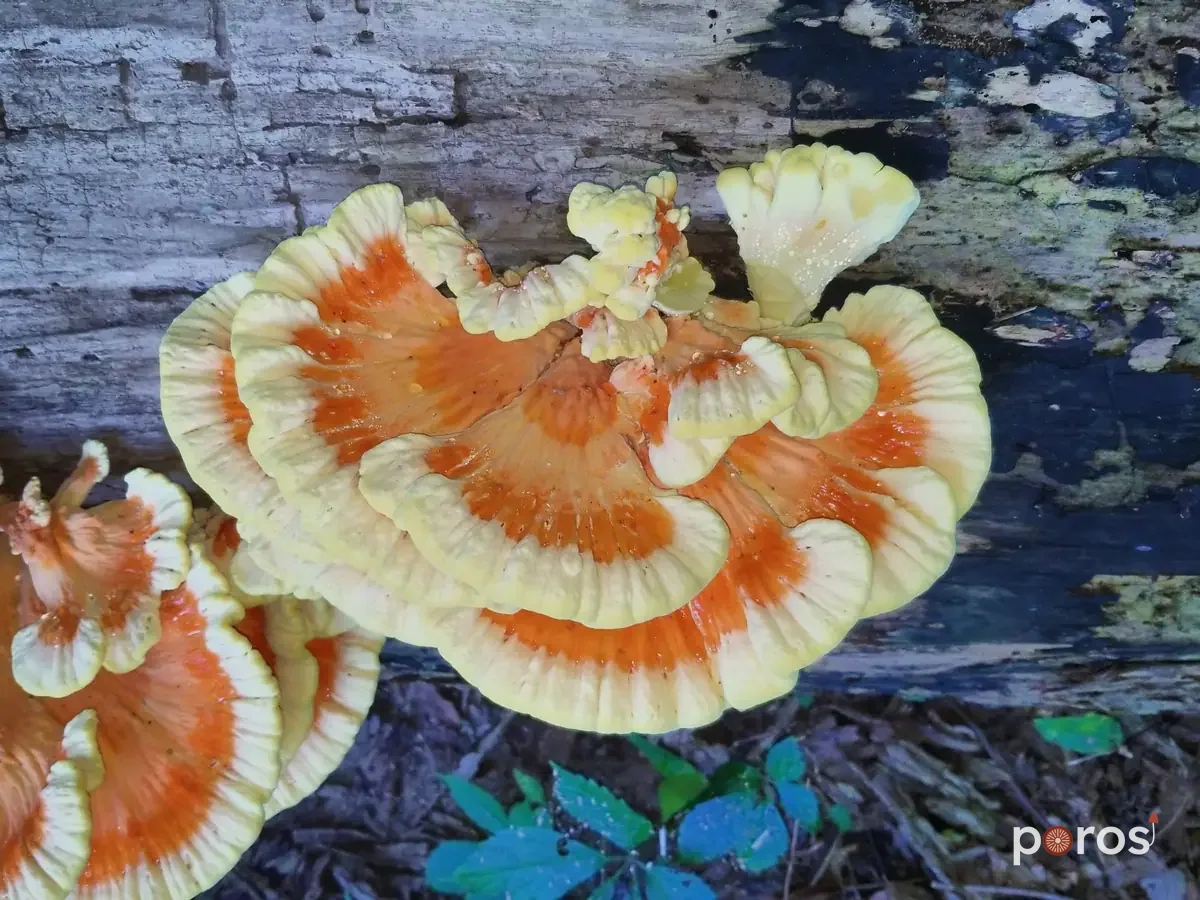
Chicken of the woods grows on dead or old hardwoods (oak, chestnut, beech, cherry, willow, poplar, black locust…), occasionally on conifers, and causes brown cubical rot in the heartwood.
In Turkey
Chicken of the woods is widely recorded in Turkey, most often around Istanbul and Ankara.
- İstanbul21
- Ankara6
- Kırklareli2
- Karabük2
- Bolu1
- İzmir1
- Nevşehir1
- Aksaray1
36 observations on our map (GBIF, iNaturalist). Record density also reflects where observers work.
Latest chicken of the woods observations
Look-alikes
What could it be confused with?
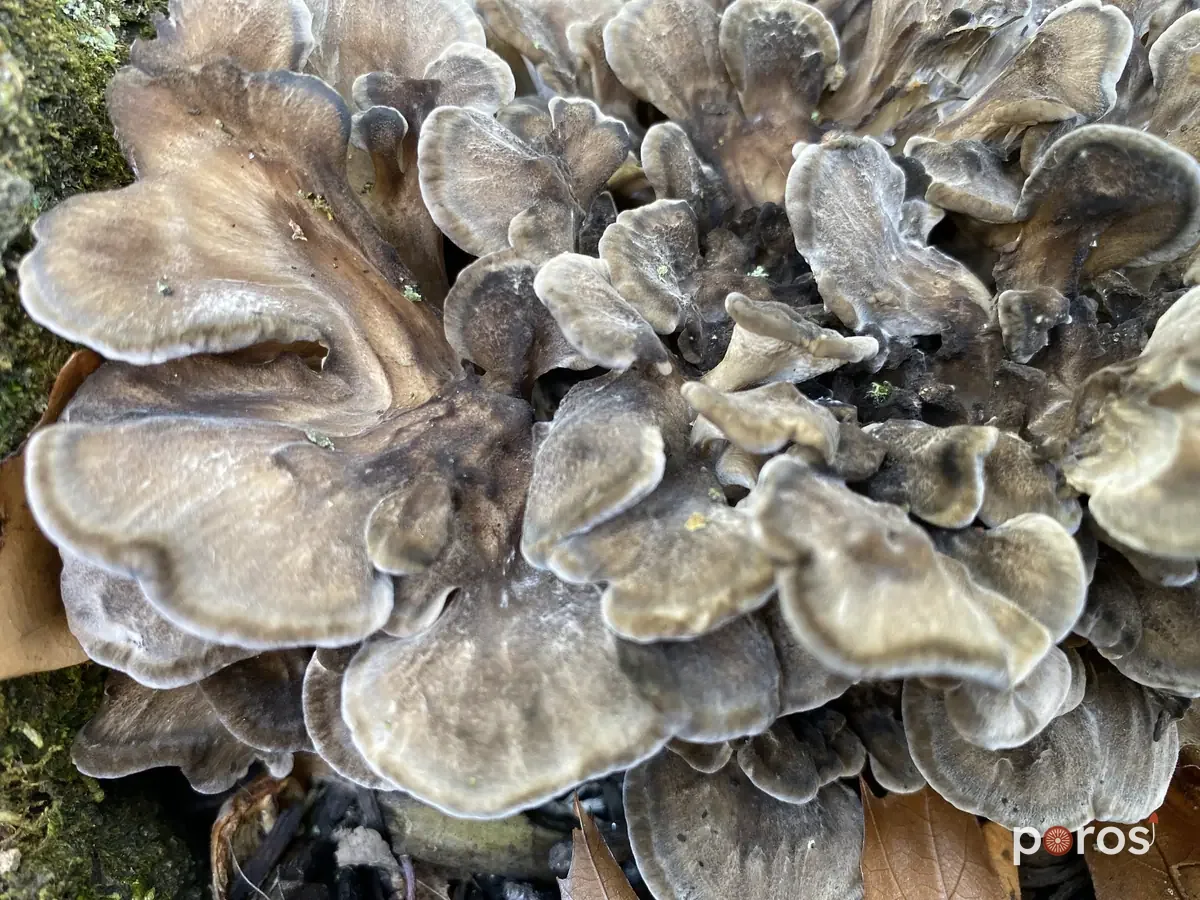
Maitake Grifola frondosa
A clump of grey-brown spoon-shaped caps at the base of a tree.
Jack-o'-lantern mushroom Omphalotus olearius
Orange but gilled and clustered; Turkish Wikipedia warns about this confusion.
In the kitchen
Cooking with chicken of the woods
Storing chicken of the woods
Many people have reported allergies or stomach upsets, so eat only young, fresh parts, cooked thoroughly, and try a small amount first. Do not eat specimens growing on yew.
Grow it, buy it
Chicken of the woods price list
| Product | Us | Market (sourced, dated) |
|---|---|---|
| Fresh chicken of the woods | In preparation · notify me | — |
| Dried chicken of the woods | In preparation · notify me | — |
Our prices for chicken of the woods are published when the product is ready; for now we take waiting-list sign-ups. The market column shows prices seen on other sellers' pages on the date given; they are not our prices and may have changed.
Frequently asked questions
Is chicken of the woods edible?
Yes, chicken of the woods is an edible species. Eat a wild one only after an expert has identified it with certainty: it can be confused with jack-o'-lantern mushroom (Omphalotus olearius). Many people have reported allergies or stomach upsets, so eat only young, fresh parts, cooked thoroughly, and try a small amount first. Do not eat specimens growing on yew.
When is chicken of the woods season in Turkey?
In our calendar, chicken of the woods season runs May–Nov. Chicken of the woods fruits from April to November in Europe; in Turkey, GBIF records peak in September–October.
Where does chicken of the woods grow?
Chicken of the woods grows on dead or old hardwoods (oak, chestnut, beech, cherry, willow, poplar, black locust…), occasionally on conifers, and causes brown cubical rot in the heartwood.
Where is chicken of the woods found in Turkey?
Chicken of the woods is widely recorded in Turkey, most often around Istanbul and Ankara.
What can chicken of the woods be confused with?
Chicken of the woods can be confused with maitake (Grifola frondosa, edible species) and jack-o'-lantern mushroom (Omphalotus olearius, poisonous). Look-alikes are compared on this page.
What is chicken of the woods called in Turkish?
In Turkish, chicken of the woods (Laetiporus sulphureus) is called Kükürt mantarı.
Related species
-
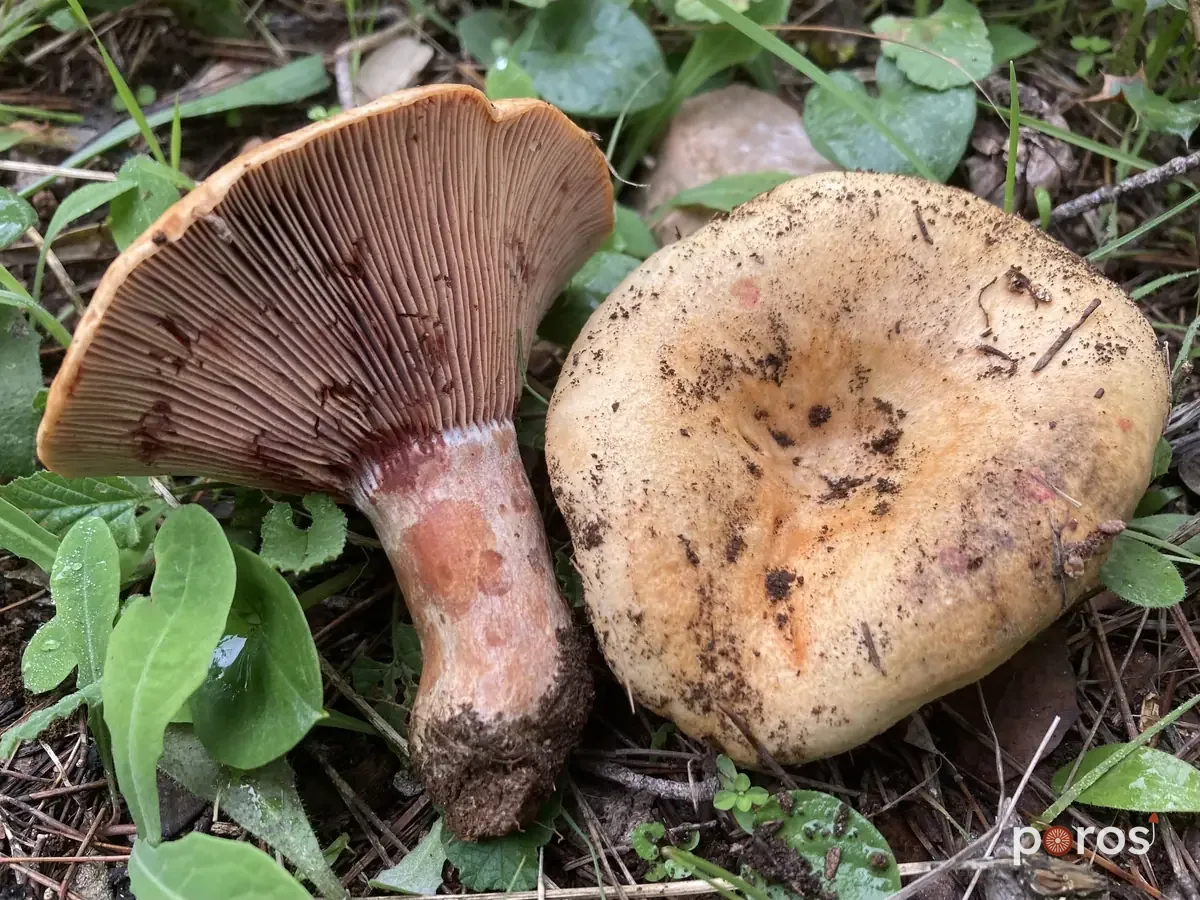 Bloody milk capLactarius sanguifluusEdible species
-
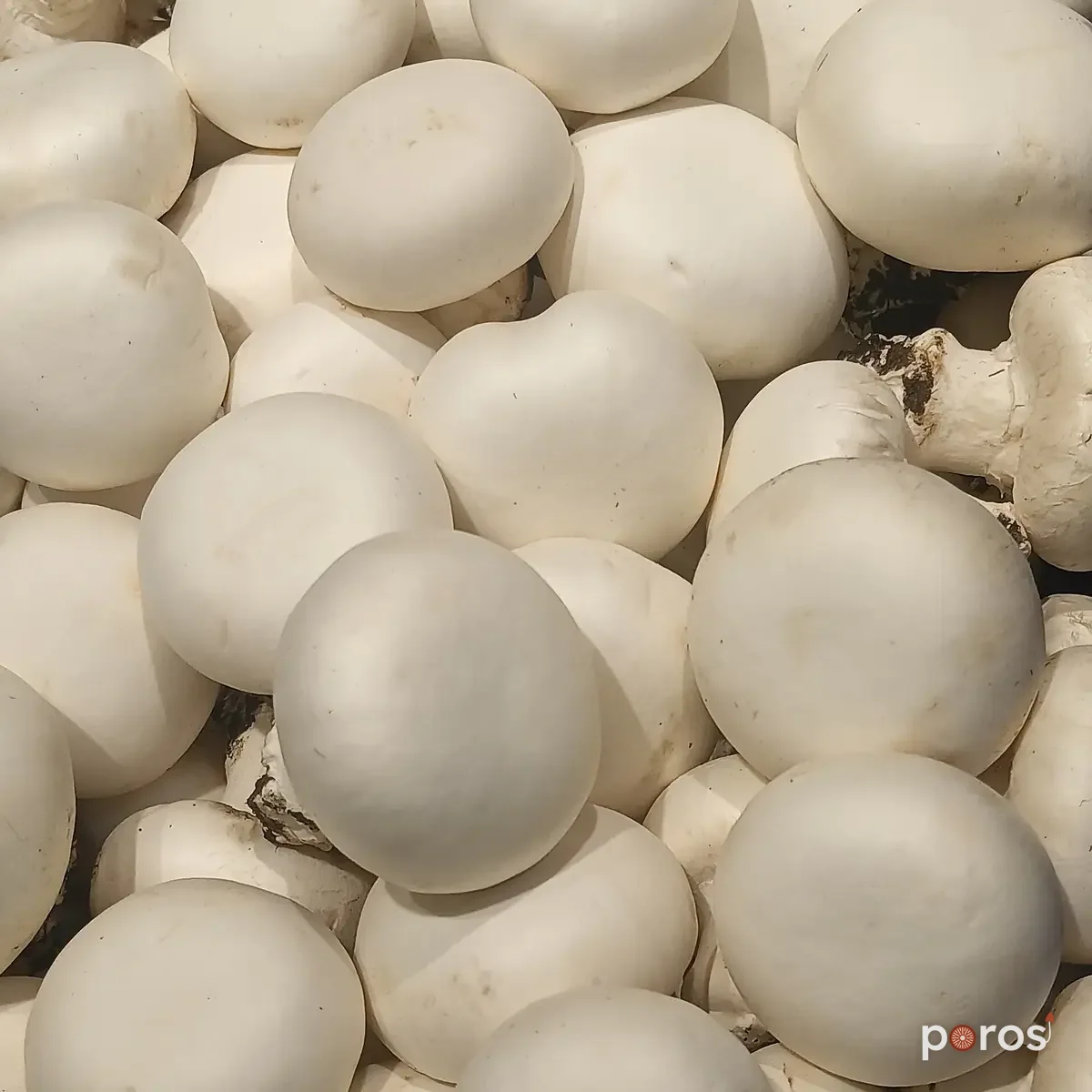 Button mushroomAgaricus bisporusEdible species
-
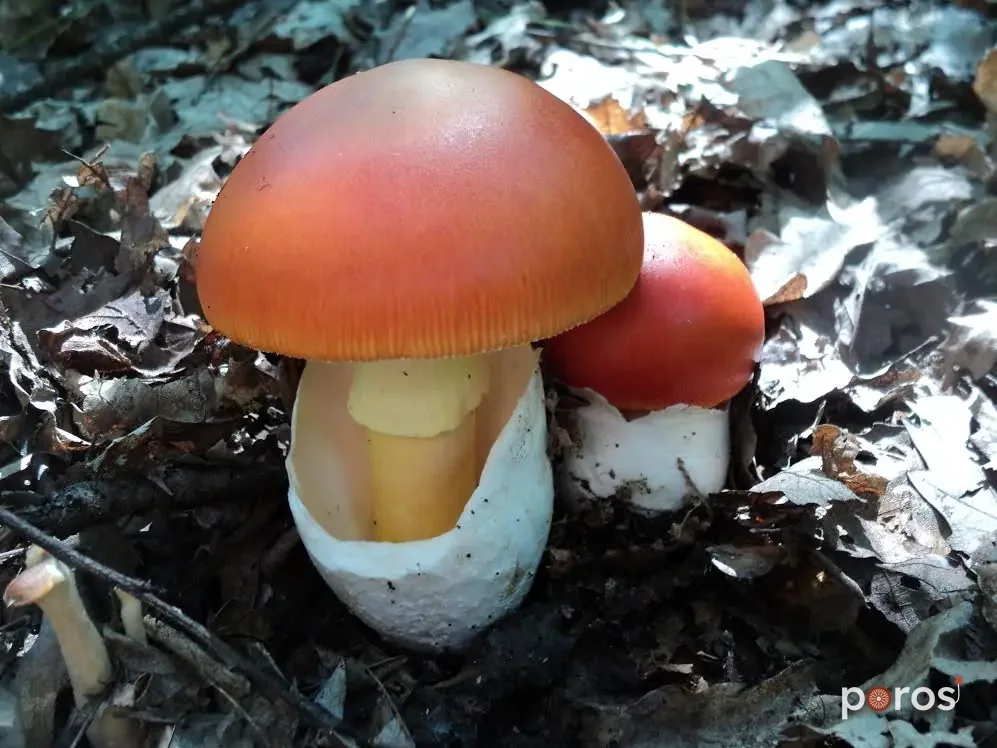 Caesar’s mushroomAmanita caesareaEdible species
-
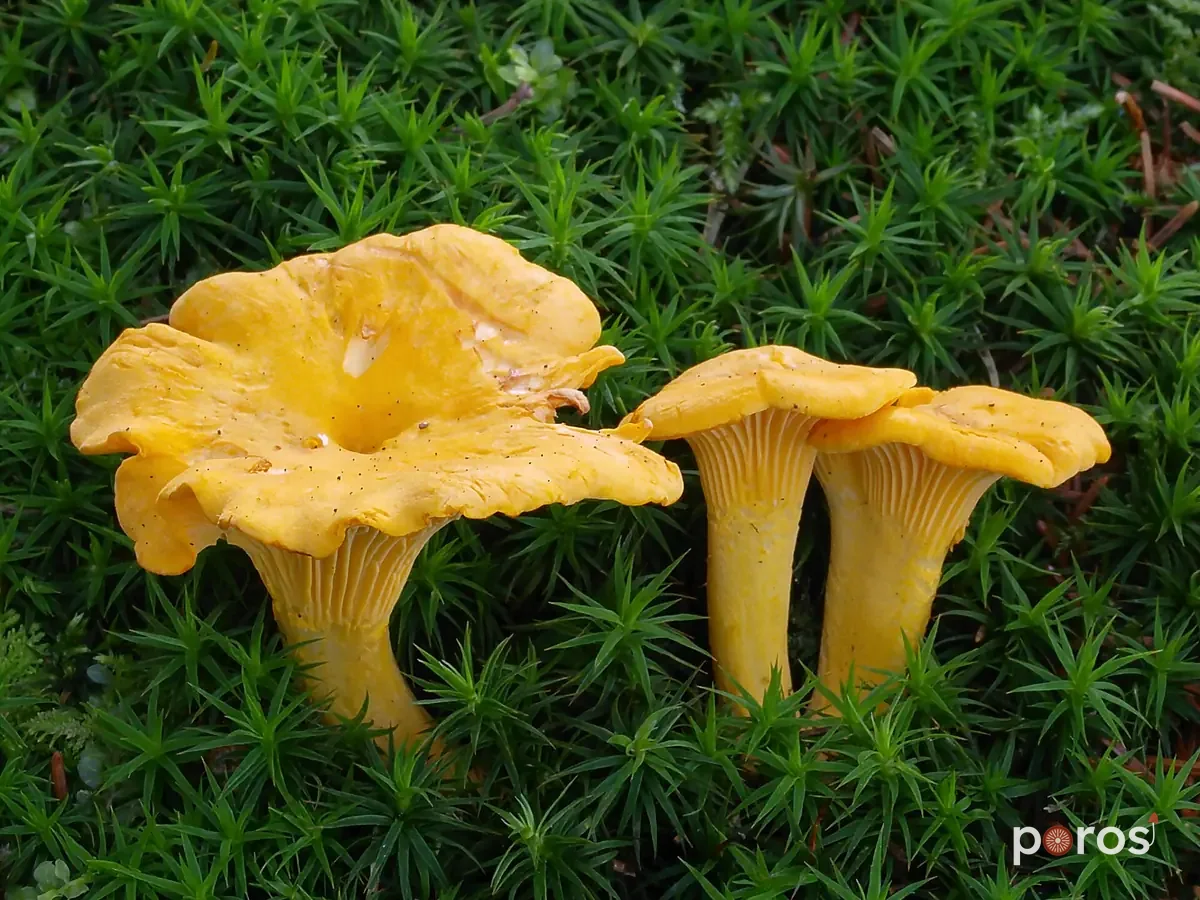 ChanterelleCantharellus cibariusEdible species
-
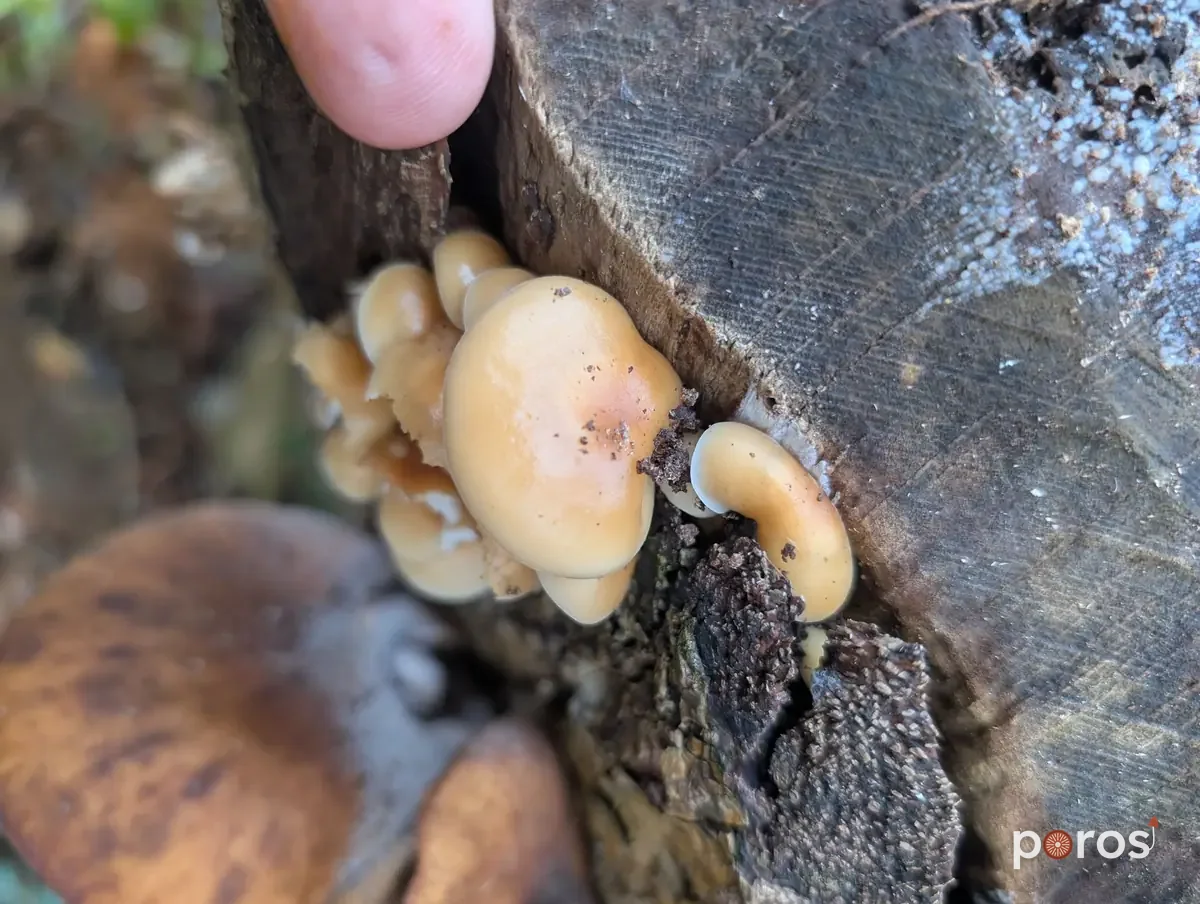 EnokiFlammulina filiformisEdible species
-
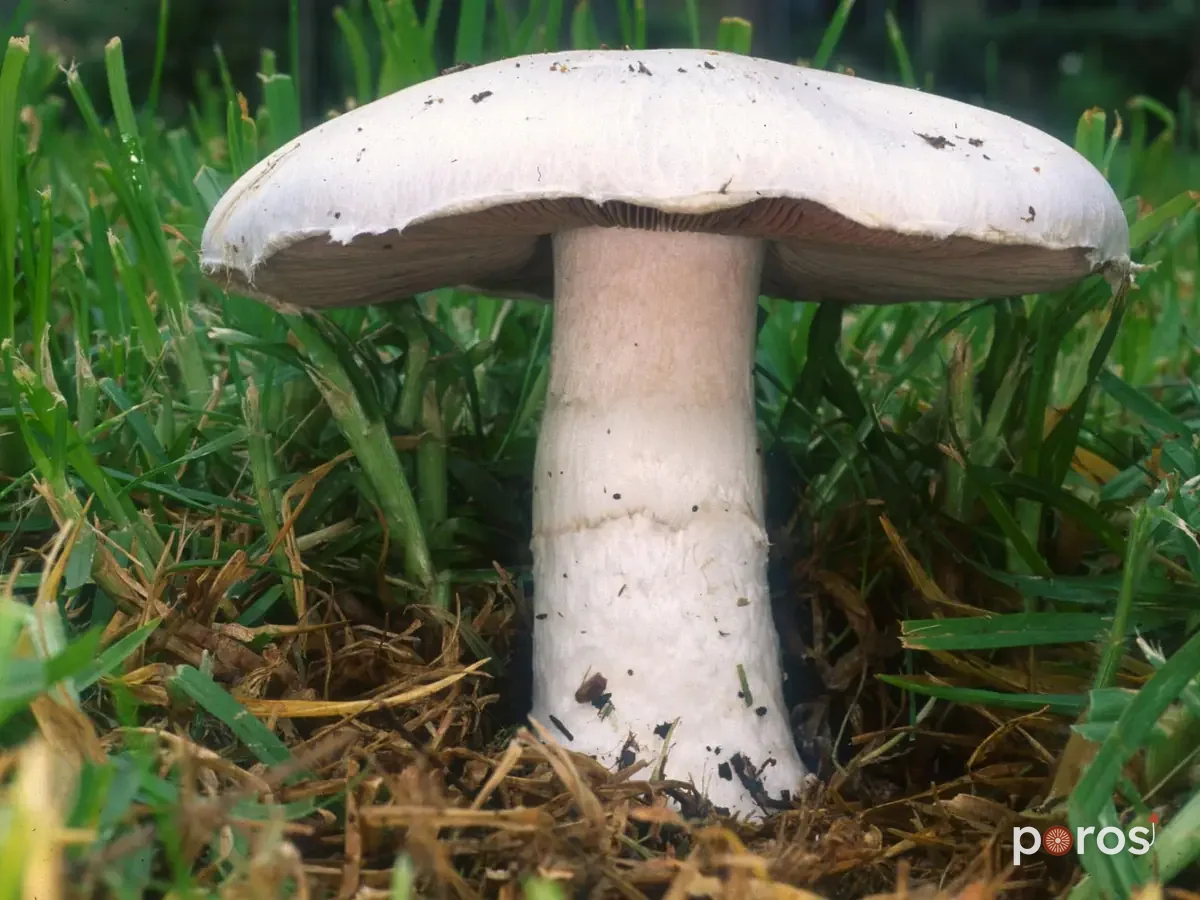 Field mushroomAgaricus campestrisEdible species
-
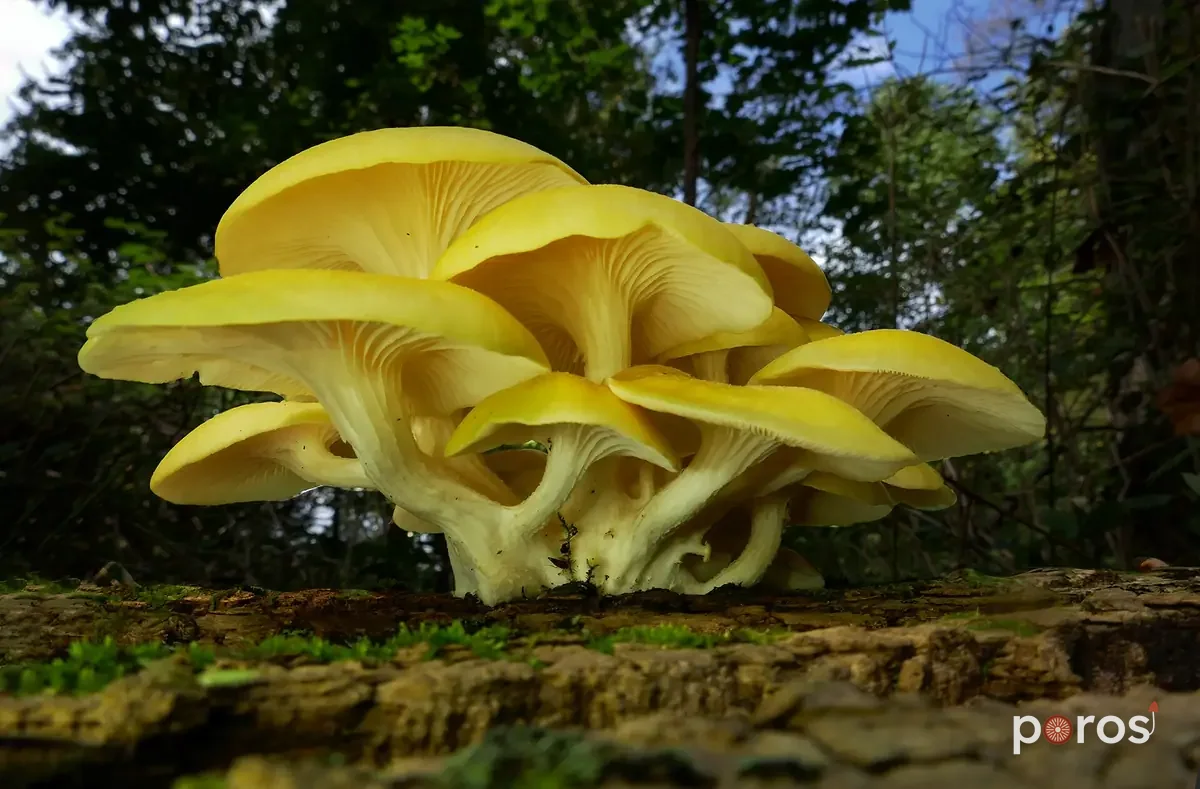 Golden oyster mushroomPleurotus citrinopileatusEdible species
-
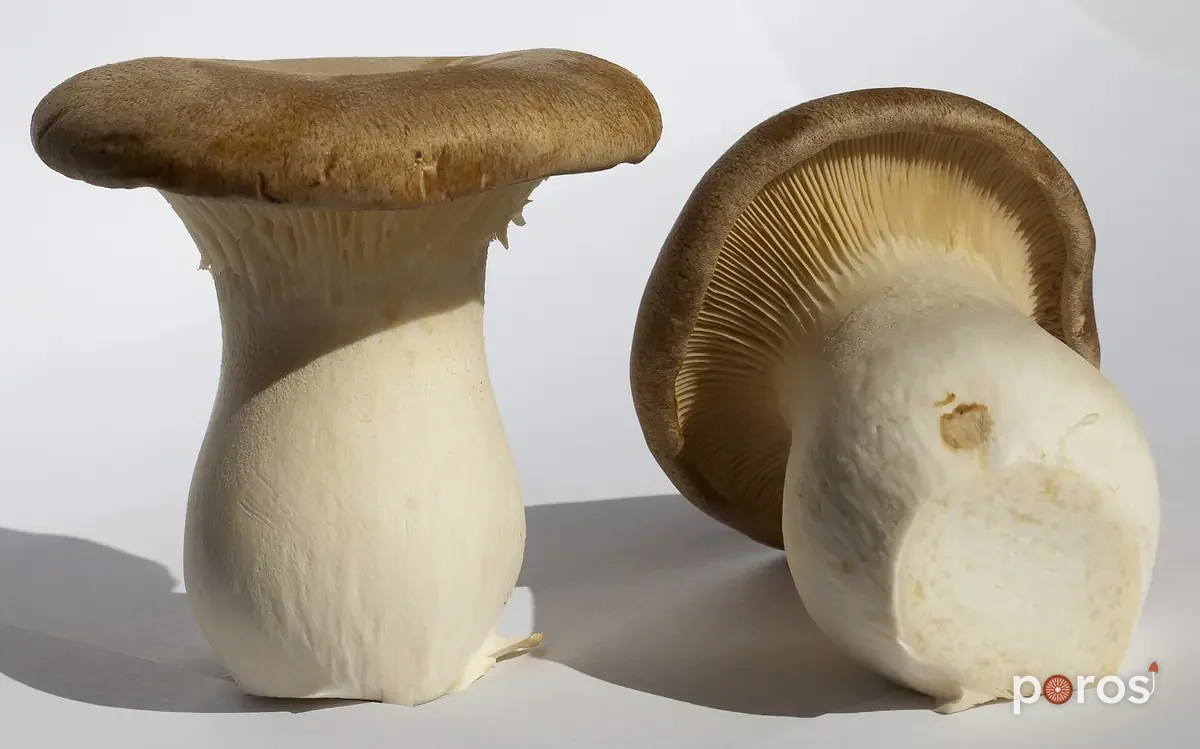 King oyster mushroomPleurotus eryngiiEdible species
Sources (4)
- Wikipedia (EN): Laetiporus sulphureus · checked 26 Oct 2026
- Vikipedi (TR): Kükürt mantarı · checked 26 Oct 2026
- First Nature: Laetiporus sulphureus · checked 26 Oct 2026
- GBIF: Türkiye kayıtları · checked 26 Oct 2026
Photo credits (10)
- File:Laetiporus sulphureus 2023 G1.jpg · George Chernilevsky · CC BY 4.0
- Laetiporus sulphureus · iNaturalist #56376543 · Tom Norton · CC BY 4.0
- Laetiporus sulphureus · iNaturalist #16219800 · Rob Norris · CC0
- File:2017.05.13.-04-Bruehl Rohrhof--Laetiporus sulphureus (Gemeiner Schwefelporling).jpg · Andreas Eichler · CC BY-SA 4.0
- Laetiporus sulphureus · iNaturalist #179472156 · Ray Fisher · CC BY 4.0
- File:Laetiporus sulphureus 2026 G1.jpg · George Chernilevsky · CC BY 4.0
- Laetiporus sulphureus · iNaturalist #16219800 · Rob Norris · CC0
- File:Locatie, Hortus (Haren, Groningen). Laetiporus sulphureus.jpg · Agnes Monkelbaan · CC BY-SA 4.0
- Laetiporus sulphureus · iNaturalist #1019838 · Katja Schulz · CC BY 4.0
- File:Laetiporus sulphureus 2010 G1.jpg · George Chernilevsky · Public domain


