
Mushroom poisoning symptoms: when they start and what to do
Nausea can start half an hour after a mushroom meal or the next morning. Why the timing matters, why feeling better can mislead, and what to do first.
Safety 5 min read
If you feel ill after eating wild mushrooms (nausea, vomiting, diarrhoea, stomach pain, sweating, dizziness or confusion), get help at once: call 112 in Turkey and across Europe, or your local poison centre (Turkey: 114). Symptoms that start 6 hours or more after the meal can mean a more serious poisoning, so go to hospital even if they ease. Take the leftover mushrooms with you and make sure everyone who ate them is checked.
The most common symptoms
Mushroom poisoning usually announces itself through the gut: nausea, vomiting, diarrhoea and abdominal pain. Depending on the species these can come with cold sweats, dizziness, fainting, delirium, blurred vision, a flushed face or a metallic taste. Turkey's Ministry of Health lists the same range and warns that in severe cases the liver and kidneys are affected.
When the symptoms start matters as much as what they are. Doctors use the timing to narrow down which group of toxins may be involved.
Why timing matters
The later symptoms start, the more serious the poisoning may be. According to Catalonia's public health service, symptoms usually appear between half an hour and three hours after eating, and this group tends to stay limited to a stomach upset. Symptoms that begin later can signal a more serious poisoning.
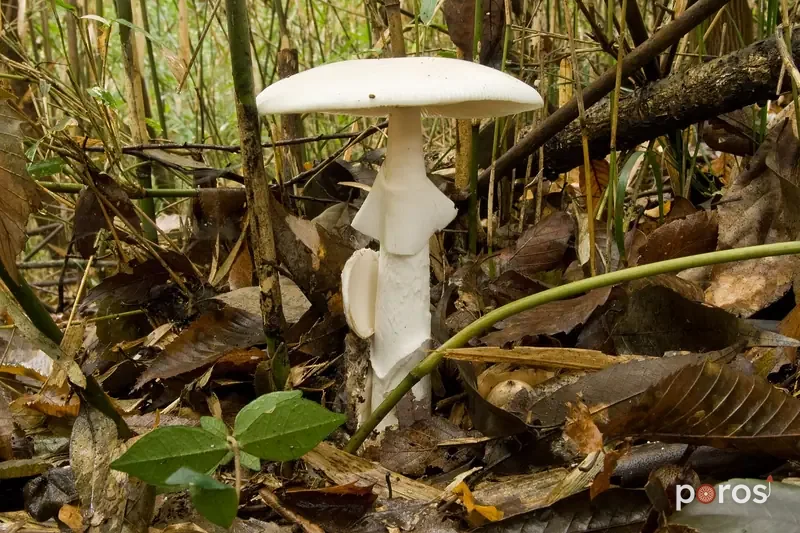
In the deadliest group, the amatoxin mushrooms (death cap, destroying angel, funeral bell), symptoms start 6 to 24 hours after the meal. Until then people feel fine; mushrooms eaten at dinner often strike in the night or the next morning.
This is a rule of thumb, not a guarantee. If several species were eaten together, an early stomach upset can mask a deadly poisoning that comes later. Early symptoms are no reason to relax.
The three phases of death cap poisoning
Death cap (amatoxin) poisoning runs in three phases, as described in the US CDC's report on 14 cases in Northern California in December 2016:
- After a silent 6–24 hours, severe vomiting and diarrhoea with serious fluid loss.
- Around 24–36 hours after the meal, a phase where symptoms ease and the patient seems to recover.
- Typically 3–5 days after the meal, severe liver and multi-organ failure.
The same report warns that patients seen early may be sent home and come back much sicker. Relief in the second phase is not recovery. Of the 14 patients, 11 recovered and three needed liver transplants.
Poisonings that arrive days later
Some species cause symptoms only days after the meal. According to Tox Info Suisse, the fool's webcap (Cortinarius orellanus) and its close relative can cause kidney failure 2 to 17 days after the meal. After a gap that long nobody thinks of the mushrooms, so always tell the doctor that you ate wild mushrooms.
The false morel (Gyromitra esculenta) usually brings on stomach symptoms 6–10 hours after eating; in severe cases the nervous system and liver are affected.
What to do in the first hours
- Even with mild symptoms, call for help straight away (112, or your local poison centre; in Turkey 114, open 24/7) and follow their advice.
- Keep any leftover mushrooms, peelings and trimmings, even leftovers of the meal, and take them to hospital; experts can often identify the species from them.
- Make sure everyone who ate the dish gets checked, with or without symptoms.
- Note the time of the meal and of the first symptom; it is one of the most useful things a doctor can know.
- Don't try home remedies such as milk, yoghurt or an online "antidote". Treatment belongs in hospital.
Prevention is easier than treatment
Almost every poisoning starts with a misidentification: a toxic mushroom mistaken for an edible one. We explain why silver spoons, garlic and "the animals ate it" don't work in how to tell if a mushroom is poisonous.
Don't eat a mushroom unless you know its species for certain, and know where the mushrooms on your plate came from. If you'd like to grow your own, our guide to growing mushrooms at home is a far safer place to start than the forest floor.
FAQ
How long after eating does mushroom poisoning show?
It depends on the species: often within half an hour to three hours; 6–24 hours for amatoxin species such as the death cap; days later for Cortinarius orellanus.
If my symptoms go away, have I recovered?
Not necessarily. Death cap poisoning has a phase 24–36 hours after the meal when symptoms ease, followed by liver damage. Go to hospital even if you feel better.
Who should I call?
Your emergency number (112 in Turkey and the EU) or your local poison centre. In Turkey the National Poison Information Centre is 114, open 24/7.
What should I take to hospital?
Any leftover mushrooms, peelings or leftovers of the meal. Experts use them to try to identify the species.
What are the symptoms of mushroom poisoning?
Usually nausea, vomiting, diarrhoea and abdominal pain. Depending on the species there may also be cold sweats, dizziness, fainting, delirium, blurred vision, a flushed face or a metallic taste.
Sources
- Vo KT et al. — Amanita phalloides Mushroom Poisonings, Northern California, December 2016. MMWR 2017;66(21):549–553 (PMC) (checked 2026-10-26)
- Tox Info Suisse — Toxic tales from daily life at the Tox: Mushrooms (checked 2026-10-26)
- Generalitat de Catalunya — Health recommendations (mantar mevsimi) (checked 2026-10-26)
- Habertürk — Mantar zehirlenmelerine dikkat (Sağlık Bakanlığı açıklaması) (checked 2026-10-26)
- Wikipedia (EN) — Gyromitra esculenta (checked 2026-10-26)
Last updated: 27 October 2026


