

Mushroom glossary · Biology and ecology
What are the Basidiomycota?
Also called: basidiomycetes, club fungi, bazidiyomiset
Basidiomycota are a large phylum of fungi whose members, the basidiomycetes, produce their spores on the outside of club-shaped cells called basidia. Most gilled mushrooms, boletes, puffballs, bracket fungi, rusts and smuts belong here. Together with the Ascomycota they make up the subkingdom Dikarya, often referred to as the higher fungi.
How do basidiomycetes reproduce?
The shared hallmark is the basidium, a club-shaped end cell. Each basidium usually carries four spores on its outer surface, and these are called basidiospores. In a gilled mushroom the basidia line the gills, and ripe spores are shot off from there.
The body of these fungi is made of thread-like hyphae, although the yeast members are single-celled. Some basidiomycetes reproduce only asexually. According to Wikipedia, they are tied to the phylum by a structure on the hyphae called the clamp connection, by cell wall components and, most reliably, by DNA sequence data.
Which fungi are basidiomycetes?
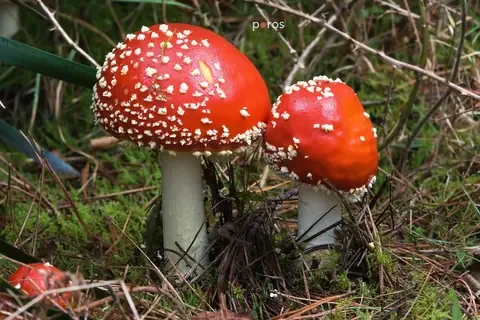
Most of the mushrooms we know from the kitchen and the woods sit in this phylum. The button mushroom, the oyster mushroom, the penny bun and the fly agaric are all basidiomycetes. So are puffballs, earthstars, bracket fungi, jelly fungi and stinkhorns.
The phylum is not limited to fungi you can see. The rusts and smuts that attack cereals belong here, as does Cryptococcus, a yeast that causes disease in humans. One estimate puts the group at more than thirty thousand species.
How do Basidiomycota differ from Ascomycota?
The difference lies in where the spores form. Basidiomycetes carry them outside the basidium, at its tips. In the Ascomycota they form inside a sac called an ascus. Morels and truffles are ascomycetes, which is why they are built so differently from gilled mushrooms. The two phyla together form the subkingdom Dikarya.
Pages related to Basidiomycota


Related terms
- BasidiumThe microscopic, club-shaped cell that bears the spores of basidiomycete fungi on its tip.
- AscomycotaThe largest fungal phylum, whose members form spores inside a microscopic sac, the ascus.
- SporeThe microscopic reproductive cell that fungi produce in order to multiply and spread.
- GillsThe thin, spore-bearing plates that radiate under the cap of many mushrooms.
- HyphaA microscopic, tip-growing filament that makes up the body of a fungus.
Frequently asked questions
Is the button mushroom a basidiomycete?
Yes. The button mushroom is a gilled mushroom and produces its spores at the tips of basidia on its gills. Oyster mushrooms and shiitake belong to the same phylum. Morels and truffles, by contrast, belong to a different one, the Ascomycota.
Do all basidiomycetes have a cap and stem?
No. A cap and stem appear in only part of the group. Bracket fungi grow as shelves on tree trunks and puffballs are ball-shaped. Rusts and smuts are microscopic fungi living on plants, and some members live as single-celled yeasts.
What is a basidiospore?
A basidiospore is the sexual spore formed at the tip of a basidium. A basidium usually bears four spores, occasionally two or eight. Each spore develops on a narrow prong called a sterigma and is forcibly discharged once it is fully grown.
Sources
- Wikipedia (EN) – Basidiomycota en.wikipedia.org
- Wikipedia (EN) – Basidium en.wikipedia.org