
Mushrooms by colour · 4 species
Green mushrooms
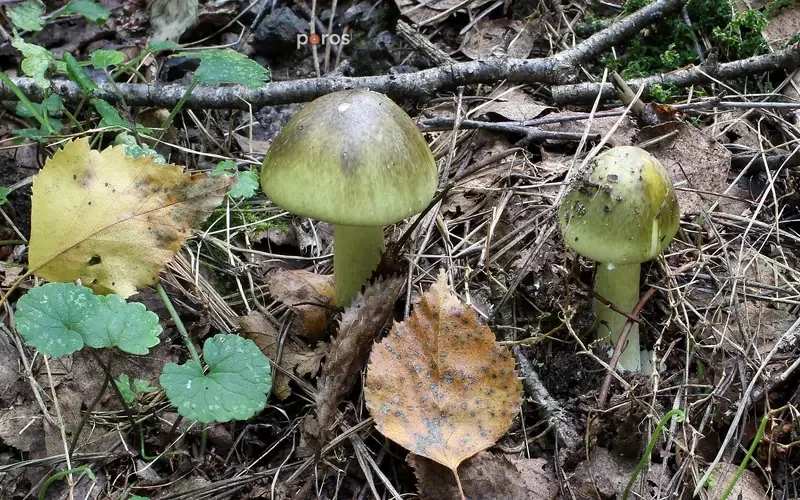
The most dangerous green mushroom is the death cap (Amanita phalloides), held responsible for most fatal mushroom poisonings in Turkey. The green brittlegill (Russula virescens) is known as edible, but it can be confused with the death cap, so it is not eaten without expert identification.


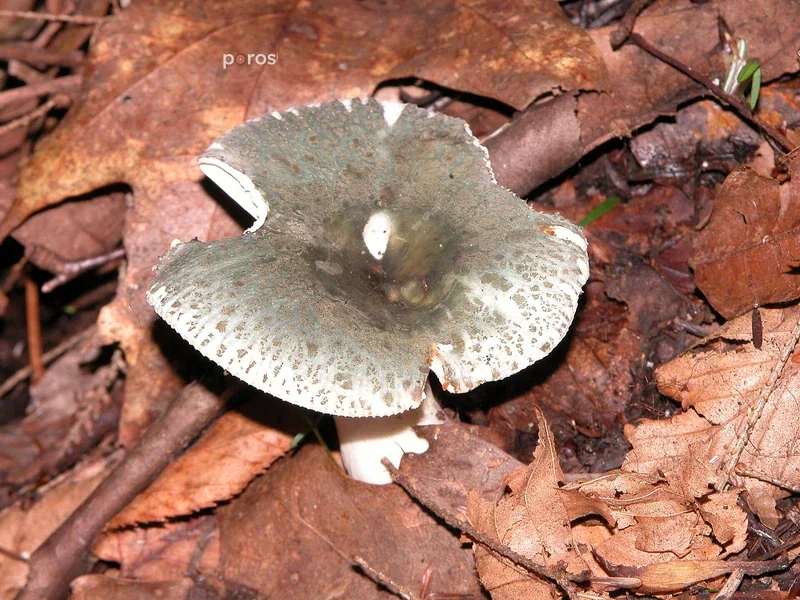
This page brings together mushrooms with green tones. For a closer look at one species, see our green brittlegill page (yeşil mantar in Turkish): a Russula with a matt green cap that cracks into small patches.
Green-capped mushrooms are uncommon and stand out, but this group includes the most poisonous mushroom known. The death cap's cap ranges from olive to yellowish green.
In the common stinkhorn the green is not on a cap but in the olive-green, slimy spore mass at the tip of the stem.
Green mushrooms: edible or poisonous, and when?
| Mushroom | Status | Season |
|---|---|---|
| Common stinkhornPhallus impudicus | Inedible | May–Nov |
| False saffron milkcapLactarius deterrimus | Inedible | Jan, Aug–Nov |
| Green-cracking brittlegillRussula virescens | Edible species | Jun–Nov |
| Death capAmanita phalloides | Deadly poisonous | Jul–Nov |
The status column is a guide and is not enough to decide to eat a mushroom. Do not eat a wild mushroom unless an expert has seen it in person. Edible mushrooms · Poisonous mushrooms
The deadly green-capped species
The death cap (Amanita phalloides) is deadly. It has white gills, a ring on the stem and a sac-like cup (volva) at the base; the cup may stay buried and is only seen when the whole mushroom is dug out.
Its toxins (amatoxins) are not destroyed by cooking, drying or freezing. Symptoms start hours later, and this delay is misleading.
If poisoning is suspected in Türkiye, call 112 or the National Poison Information Centre (114) straight away, and keep a piece of the mushroom if you can.
- Death cap Amanita phalloides Deadly poisonous
Green mushroom species
This encyclopedia covers three green-toned species: the green brittlegill (Russula virescens), known as edible; the deadly death cap (Amanita phalloides); and the inedible common stinkhorn (Phallus impudicus). Each has its own page.
Green brittlegill or death cap?
The green brittlegill's cap cracks into small patches, it has no ring and no cup, and its stem snaps like chalk. The death cap has a ring and a cup at the base. These are clues; a firm identification needs an expert.
Mushrooms that change colour
Some mushrooms change colour when cut or handled; some hallucinogenic mushrooms bruise bluish. A colour change on its own says nothing about edibility.
Frequently asked questions
Are green mushrooms edible?
Green mushrooms such as the green brittlegill (Russula virescens) are known as edible, but it can be confused with the deadly death cap, so it is not eaten without expert identification.
Which mushrooms are green?
In this encyclopedia: the green brittlegill (Russula virescens), the death cap (Amanita phalloides) and the common stinkhorn, whose spore mass is olive green.
Is a green-capped mushroom poisonous?
A green-capped mushroom can be poisonous: the death cap has an olive or yellowish-green cap and is deadly. Do not eat a green mushroom without expert identification.
What colour is the death cap?
The death cap usually has an olive, yellowish-green or greenish-brown cap; pale, almost white specimens also occur. Its gills are white.
How do you tell a green brittlegill from a death cap?
A green brittlegill and a death cap differ in ring and cup: the death cap has a ring on the stem and a cup (volva) at the base, the brittlegill has neither. A firm identification still needs an expert.
What is the Latin name of the green brittlegill?
It is Russula virescens, also called the quilted green russula. In Turkish it is yeşil mantar.
Does cooking destroy death cap toxins?
Cooking does not destroy death cap toxins. Amatoxins survive cooking, drying and freezing.
I ate a green mushroom. What should I do?
If poisoning is suspected in Türkiye, call 112 or the National Poison Information Centre (114) straight away, and keep a piece of the mushroom if you can. Do not wait for symptoms.
Sources
- Wikipedia (EN): Russula virescens en.wikipedia.org
- Wikipedia (EN): Amanita phalloides en.wikipedia.org
- Wikipedia (TR): Amanita phalloides tr.wikipedia.org
All sources (4)
- Wikipedia (EN): Phallus impudicus en.wikipedia.org
Other colours
Last updated: Prepared by the Poros Mantar editorial teamReport a correction