
Mushrooms by colour · 18 species
Yellow mushrooms
Some yellow mushrooms are edible, but yellow is not a safety sign. The best-known yellow mushroom is the chanterelle (Cantharellus cibarius), which has poisonous lookalikes such as jack-o'-lantern mushrooms and the deadly fool's webcap.
-
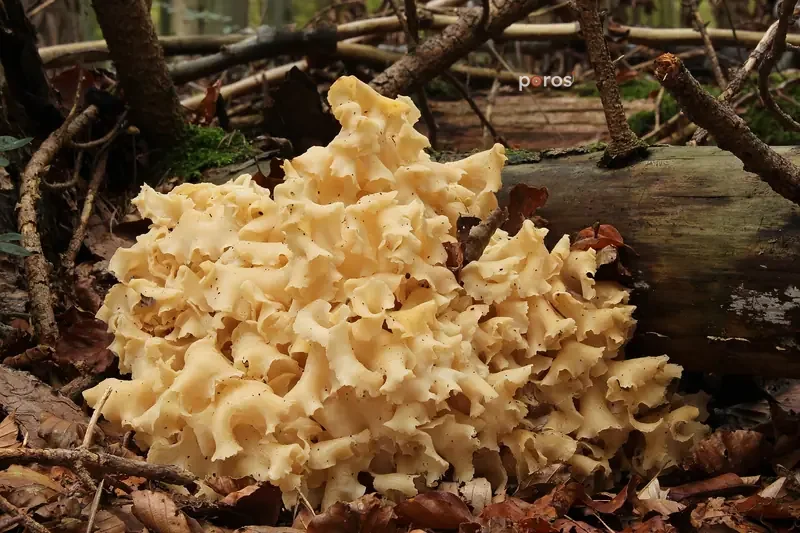 Edible species
Cauliflower mushroom
Sparassis crispa
Sparassidaceae
-
 Edible species
Chanterelle
Cantharellus cibarius
Hydnaceae
-
 Edible species
Chicken of the woods
Laetiporus sulphureus
Laetiporaceae
-
 Inedible
Common bird’s nest fungus
Crucibulum laeve
Agaricaceae
-
 Poisonous
Common earthball
Scleroderma citrinum
Sclerodermataceae
-
 Edible species
Enoki
Flammulina filiformis
Physalacriaceae
Cultivable
-
 Inedible
False death cap
Amanita citrina
Amanitaceae
-
 Inedible
Glistening inkcap
Coprinellus micaceus
Psathyrellaceae
-
 Edible species
Golden oyster mushroom
Pleurotus citrinopileatus
Pleurotaceae
Cultivable
-
 Inedible
Hairy curtain crust
Stereum hirsutum
Stereaceae
-
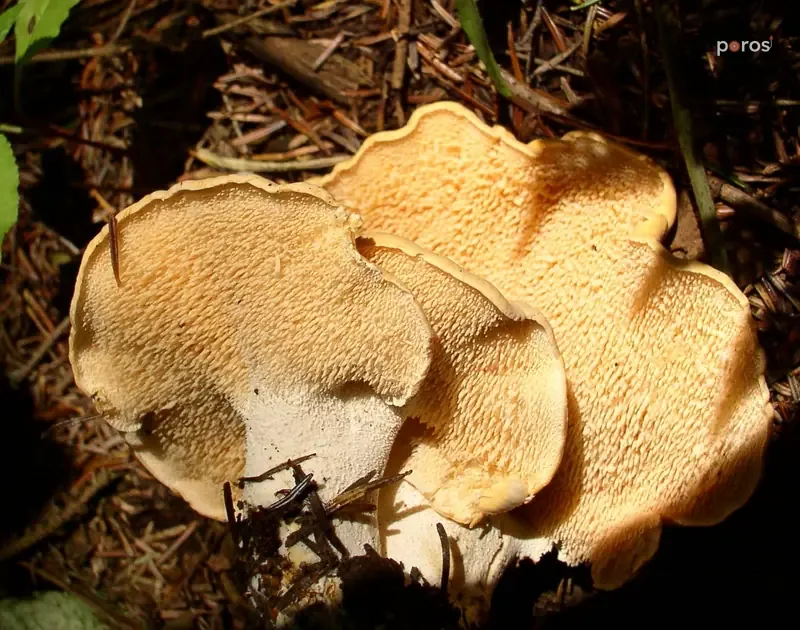 Edible species
Hedgehog mushroom
Hydnum repandum
Hydnaceae
-
 Edible species
Honey fungus
Armillaria mellea
Physalacriaceae
-
 Edible species
Morel
Morchella esculenta
Morchellaceae
-
 Inedible
Plums and custard
Tricholomopsis rutilans
Phyllotopsidaceae
-
 Poisonous
Sulphur tuft
Hypholoma fasciculare
Strophariaceae
-
 Inedible
Yellow brain
Tremella mesenterica
Tremellaceae
-
 Inedible
Yellow coral fungus
Ramaria flava
Gomphaceae
-
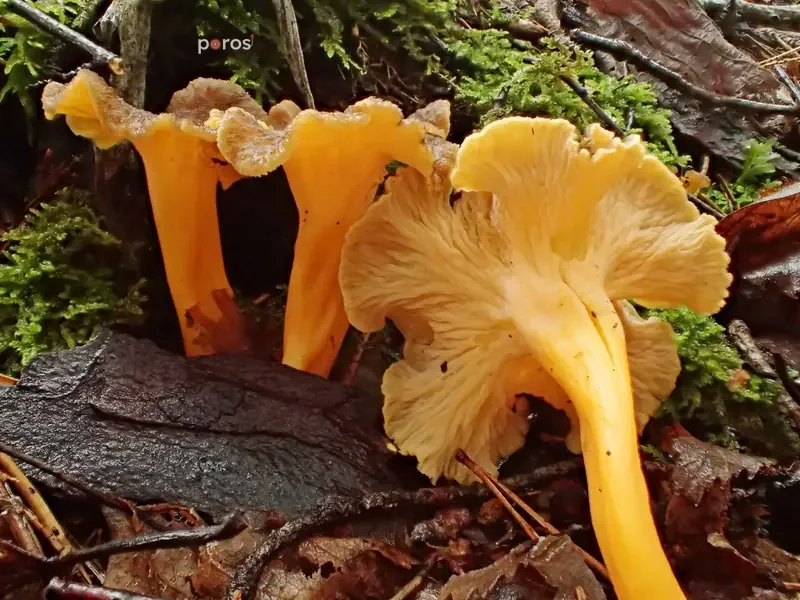 Edible species
Yellow foot chanterelle
Craterellus lutescens
Cantharellaceae
Yellow mushrooms stand out on the forest floor. The chanterelle (sarı horozmantarı in Turkish) is yellow to deep yellow, convex then funnel-shaped with a wavy edge. The golden oyster mushroom (Pleurotus citrinopileatus) is bright yellow to golden brown with a velvety, dry cap.
Chicken of the woods (Laetiporus sulphureus, kükürt mantarı) grows as tiers of fan-shaped shelves on trunks, sulphur yellow to bright orange. Enoki is familiar as thin white supermarket clusters, but in the wild its cap is ochre-yellow to yellow-brown and sticky when wet.
Colour alone never tells you whether a mushroom is edible: the same colour includes both edible and deadly species. To identify a yellow mushroom, look at what is under the cap, the stem and where it grows, all together, and leave the final call to an expert.
Yellow mushrooms: edible or poisonous, and when?
| Mushroom | Status | Season |
|---|---|---|
| Cauliflower mushroomSparassis crispa | Edible species | Aug–Nov |
| ChanterelleCantharellus cibarius | Edible species | Jun–Nov |
| Chicken of the woodsLaetiporus sulphureus | Edible species | May–Nov |
| Common bird’s nest fungusCrucibulum laeve | Inedible | Oct–Mar, May |
| Common earthballScleroderma citrinum | Poisonous | Mar, Aug–Nov |
| EnokiFlammulina filiformis | Edible species | |
| False death capAmanita citrina | Inedible | Aug–Dec |
| Glistening inkcapCoprinellus micaceus | Inedible | Mar–Jun, Oct–Nov |
| Golden oyster mushroomPleurotus citrinopileatus | Edible species | |
| Hairy curtain crustStereum hirsutum | Inedible | Dec–May, Jul–Oct |
| Hedgehog mushroomHydnum repandum | Edible species | Aug–Jan |
| Honey fungusArmillaria mellea | Edible species | Sep–Jan |
| MorelMorchella esculenta | Edible species | Mar–May |
| Plums and custardTricholomopsis rutilans | Inedible | Oct–Jan |
| Sulphur tuftHypholoma fasciculare | Poisonous | Feb–Apr, Jun, Aug, Oct–Dec |
| Yellow brainTremella mesenterica | Inedible | Oct–May |
| Yellow coral fungusRamaria flava | Inedible | Jul–Nov |
| Yellow foot chanterelleCraterellus lutescens | Edible species | Sep–Feb |
The status column is a guide and is not enough to decide to eat a mushroom. Do not eat a wild mushroom unless an expert has seen it in person. Edible mushrooms · Poisonous mushrooms
Poisonous lookalikes of the same colour
Known poisonous lookalikes of the chanterelle include jack-o'-lantern mushrooms; the false chanterelle is not considered edible. The orange-brown fool's webcap (Cortinarius orellanus) is also confused with chanterelles and can cause lasting kidney damage.
Chanterelles have forked ridges running down the stem instead of true gills; most lookalikes have true gills. This is a clue, not proof.
If poisoning is suspected in Türkiye, call 112 or the National Poison Information Centre (114) straight away, and keep a piece of the mushroom if you can.
- Common earthball Scleroderma citrinum Poisonous
- Sulphur tuft Hypholoma fasciculare Poisonous
Edible yellow species
Chanterelle, golden oyster, chicken of the woods and enoki are edible species, but none should be eaten without a firm expert identification. Golden oyster and enoki are mostly cultivated; shop-bought mushrooms do not carry the same risk as wild-picked ones.
Why colour misleads
Yellow shades change with age, moisture and light. Chicken of the woods fades with age, enoki is white when cultivated and ochre-yellow in the wild, and even the fly agaric's cap can be orange-yellow. A colour list is a starting point, not an identification tool.
When and where do yellow mushrooms grow?
Chanterelles appear from June to November in broadleaf woods, mostly under oak, chestnut and hazel on mossy, damp ground. Chicken of the woods forms shelves on dead or old broadleaf trees from May to November; it grows from the trunk, not the soil.
Morels are a spring mushroom, found from March to May, and are never eaten raw. Golden oyster and enoki are mostly cultivated all year round, so yellow mushrooms in the shops are usually these. The mushroom calendar gives the month-by-month detail.
Frequently asked questions
Are yellow mushrooms edible?
Some are: chanterelle, golden oyster, chicken of the woods and enoki. But poisonous species also come in yellow; never eat a wild mushroom without expert identification.
What is the common yellow mushroom called?
In Türkiye, 'sarı mantar' usually means the chanterelle (Cantharellus cibarius). Golden oyster and chicken of the woods are yellow too.
How do you identify a chanterelle?
It is yellow to deep yellow, funnel-shaped with a wavy edge, and has forked ridges running down the stem. Because poisonous lookalikes exist, leave the identification to an expert.
What is the yellow mushroom growing on a tree?
Tiers of yellow-orange shelves on a trunk are often chicken of the woods (Laetiporus sulphureus). Other yellow species also grow on wood, so a firm identification is needed.
Is enoki yellow or white?
Cultivated enoki is tiny and white. Wild enoki has an ochre-yellow to yellow-brown cap that is sticky when wet.
Can yellow mushrooms be poisonous?
Yes. Jack-o'-lantern mushrooms are poisonous chanterelle lookalikes. If poisoning is suspected in Türkiye, call 112 or the National Poison Information Centre (114) straight away, and keep a piece of the mushroom if you can.
What are yellow-orange mushrooms?
Yellow-orange mushrooms include the chanterelle, chicken of the woods and the saffron milk cap, but also the poisonous jack-o'-lantern. We check where and how the mushroom grows before eating it.
Sources
- Wikipedia (EN): Cantharellus cibarius en.wikipedia.org
- Vikipedi (TR): Cantharellus cibarius tr.wikipedia.org
- First Nature: Cantharellus cibarius first-nature.com
All sources (13)
- First Nature: Omphalotus olearius first-nature.com
- First Nature: Hygrophoropsis aurantiaca first-nature.com
- Wikipedia (EN): Pleurotus citrinopileatus en.wikipedia.org
- Wikipedia (EN): Laetiporus sulphureus en.wikipedia.org
- Vikipedi (TR): Kükürt mantarı tr.wikipedia.org
- First Nature: Laetiporus sulphureus first-nature.com
- Wikipedia (EN): Flammulina filiformis en.wikipedia.org
- Wikipedia (EN): Flammulina velutipes en.wikipedia.org
- Wikipedia (EN): Cortinarius orellanus en.wikipedia.org
- First Nature: Cortinarius orellanus first-nature.com
Other colours
Last updated: Prepared by the Poros Mantar editorial teamReport a correction