
Mushrooms by colour · 19 species
Orange mushrooms
In Türkiye the best-known orange mushroom is the saffron milk cap (Lactarius deliciosus, kanlıca), an edible species. But the orange-brown fool's webcap (Cortinarius orellanus) is deadly, so colour alone tells you nothing.
-
 Edible species
Bloody milk cap
Lactarius sanguifluus
Russulaceae
-
 Edible species
Caesar’s mushroom
Amanita caesarea
Amanitaceae
-
 Edible species
Chicken of the woods
Laetiporus sulphureus
Laetiporaceae
-
 Traditional use
Cordyceps
Cordyceps militaris
Cordycipitaceae
Cultivable
-
 Inedible
Dog stinkhorn
Mutinus caninus
Phallaceae
-
 Inedible
False saffron milkcap
Lactarius deterrimus
Russulaceae
-
 Inedible
Hairy curtain crust
Stereum hirsutum
Stereaceae
-
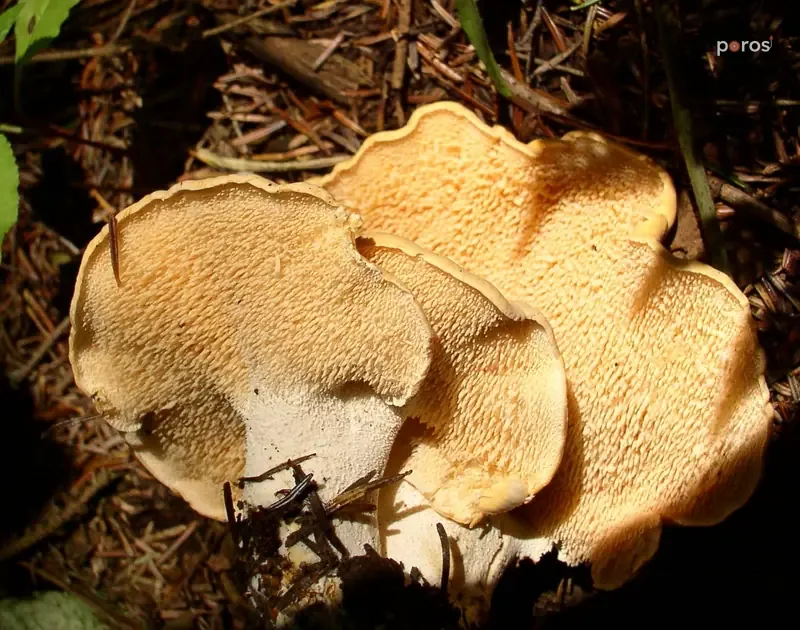 Edible species
Hedgehog mushroom
Hydnum repandum
Hydnaceae
-
 Poisonous
Jack-o’-lantern mushroom
Omphalotus olearius
Omphalotaceae
-
 Edible species
Nameko
Pholiota microspora
Strophariaceae
Cultivable
-
 Inedible
Orange peel fungus
Aleuria aurantia
Pyronemataceae
-
 Inedible
Red cage fungus
Clathrus ruber
Phallaceae
-
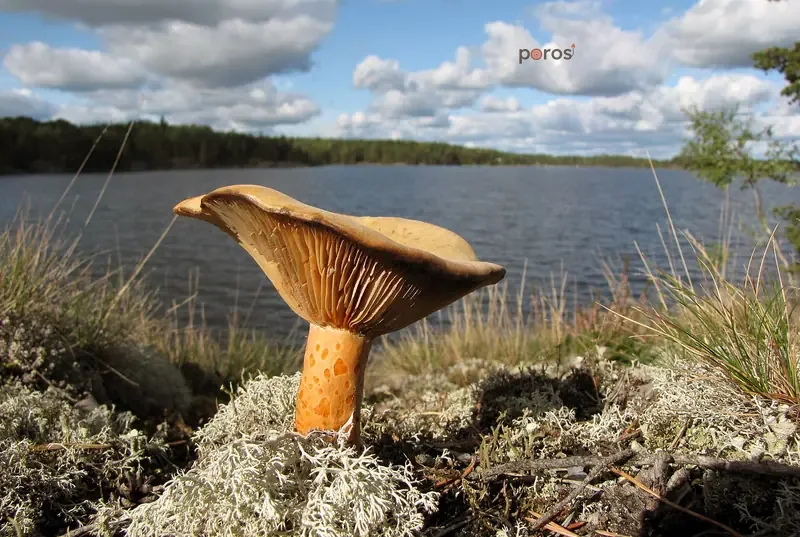 Edible species
Saffron milk cap
Lactarius deliciosus
Russulaceae
-
 Inedible
Salmon milkcap
Lactarius salmonicolor
Russulaceae
-
 Inedible
Tawny funnel
Paralepista flaccida
Tricholomataceae
-
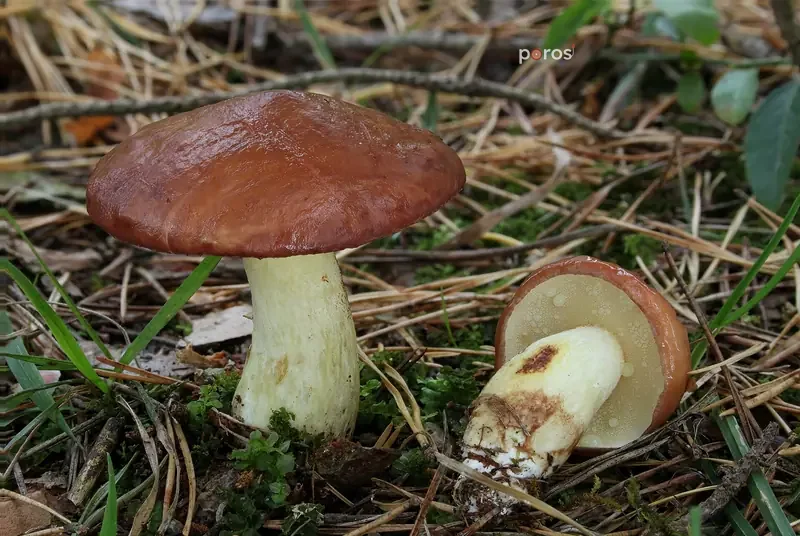 Edible species
Weeping bolete
Suillus granulatus
Suillaceae
-
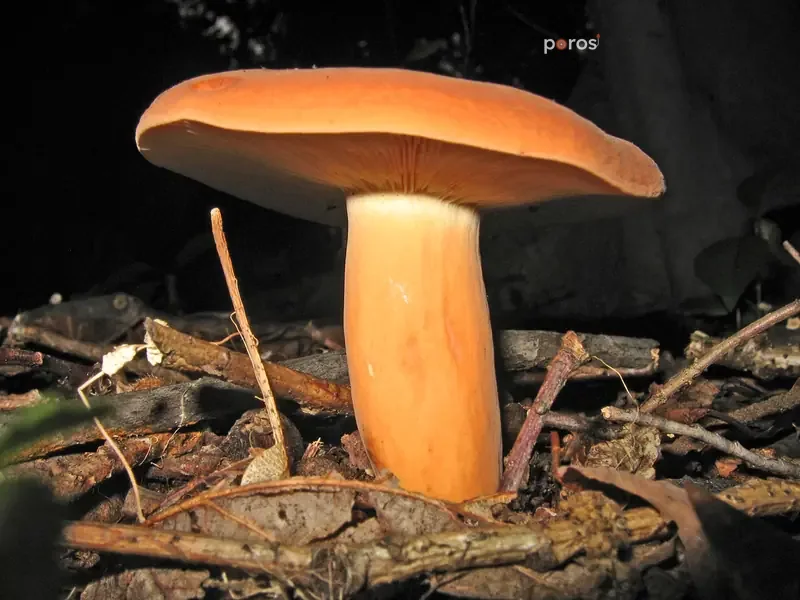 Edible species
Weeping milk cap
Lactifluus volemus
Russulaceae
-
 Inedible
Yellow brain
Tremella mesenterica
Tremellaceae
-
 Deadly poisonous
Fool’s webcap
Cortinarius orellanus
Cortinariaceae
The saffron milk cap has a carrot-orange cap with darker orange concentric bands. The bloody milk cap (Lactarius sanguifluus, kızıl sütlü çıntar) ranges from pinkish buff to orange, with patches of grey-green.
Caesar's mushroom runs from orange to red, chicken of the woods from sulphur yellow to bright orange. Cordyceps (Cordyceps militaris) has no cap and forms an orange-red club; nameko is small, amber to orange-brown, gelatinous and slippery.
Colour alone never tells you whether a mushroom is edible: the same colour includes both edible and deadly species. With any orange mushroom, look at the underside of the cap, the stem and where it grows, all together.
Orange mushrooms: edible or poisonous, and when?
| Mushroom | Status | Season |
|---|---|---|
| Bloody milk capLactarius sanguifluus | Edible species | Sep–Dec |
| Caesar’s mushroomAmanita caesarea | Edible species | Jul–Nov |
| Chicken of the woodsLaetiporus sulphureus | Edible species | May–Nov |
| CordycepsCordyceps militaris | Traditional use | Aug–Nov |
| Dog stinkhornMutinus caninus | Inedible | Apr, Jul–Nov |
| False saffron milkcapLactarius deterrimus | Inedible | Jan, Aug–Nov |
| Hairy curtain crustStereum hirsutum | Inedible | Dec–May, Jul–Oct |
| Hedgehog mushroomHydnum repandum | Edible species | Aug–Jan |
| Jack-o’-lantern mushroomOmphalotus olearius | Poisonous | Oct–Jan |
| NamekoPholiota microspora | Edible species | |
| Orange peel fungusAleuria aurantia | Inedible | Sep–Jan |
| Red cage fungusClathrus ruber | Inedible | Apr–May, Oct–Dec |
| Saffron milk capLactarius deliciosus | Edible species | Sep–Dec |
| Salmon milkcapLactarius salmonicolor | Inedible | Jun, Aug–Nov |
| Tawny funnelParalepista flaccida | Inedible | Oct–Jan |
| Weeping boleteSuillus granulatus | Edible species | May–Jun, Sep–Dec |
| Weeping milk capLactifluus volemus | Edible species | Jun–Sep |
| Yellow brainTremella mesenterica | Inedible | Oct–May |
| Fool’s webcapCortinarius orellanus | Deadly poisonous | Aug–Nov |
The status column is a guide and is not enough to decide to eat a mushroom. Do not eat a wild mushroom unless an expert has seen it in person. Edible mushrooms · Poisonous mushrooms
Poisonous lookalikes of the same colour
The fool's webcap is a small orange-brown mushroom with fine fibrous scales. Its toxin can cause lasting kidney damage, and symptoms may begin days later. It is among the species confused with chanterelles.
The saffron milk cap's poisonous lookalike is the woolly milk cap. The fly agaric's cap is sometimes orange-yellow and can be confused with Caesar's mushroom, and wild nameko can be confused with the deadly galerina.
If poisoning is suspected in Türkiye, call 112 or the National Poison Information Centre (114) straight away, and keep a piece of the mushroom if you can.
- Fool’s webcap Cortinarius orellanus Deadly poisonous
- Jack-o’-lantern mushroom Omphalotus olearius Poisonous
Edible orange species
Saffron milk cap, bloody milk cap, Caesar's mushroom, chicken of the woods and nameko are edible, but none should be eaten without a firm expert identification. Cordyceps is known mainly for traditional use; its health effects are still being researched and we make no treatment claims.
Features that tell them apart
Saffron and bloody milk caps belong to the milk caps (Lactarius). Webcaps show a cobweb-like veil between cap and stem when young and leave a rusty brown spore print. These are clues; identification belongs to an expert.
When and where do orange mushrooms grow?
Saffron milk caps and bloody milk caps come up under pines from September to December; the saffron milk cap prefers acidic soil, the bloody milk cap chalky soil. Caesar's mushroom appears in oak and pine woods from July to November. Chicken of the woods forms shelves on tree trunks from May to November.
The deadly fool's webcap also fruits in broadleaf woods from August to November, so the busiest months for orange edibles overlap with the season of their deadly look-alike. Nameko and cordyceps are mostly cultivated. The mushroom calendar gives the month-by-month detail.
Frequently asked questions
Are orange mushrooms edible?
Some are: saffron milk cap, bloody milk cap, Caesar's mushroom, chicken of the woods and nameko. But the deadly fool's webcap is orange-brown too; never eat a wild mushroom without expert identification.
What is the common orange mushroom called?
In Türkiye it is usually the saffron milk cap (kanlıca). Bloody milk cap, chicken of the woods and Caesar's mushroom are also orange.
How do you identify a saffron milk cap?
It has a carrot-orange cap with darker bands that is sticky when wet. Because of poisonous lookalikes such as the woolly milk cap, leave identification to an expert.
Can orange mushrooms be poisonous?
Yes. The fool's webcap is orange-brown and can cause lasting kidney damage, with symptoms that may start days later.
What is the orange club-shaped mushroom?
A capless orange-red club may be cordyceps (Cordyceps militaris). It is known for traditional use and its health effects are still being studied.
I ate an orange mushroom. What should I do?
If poisoning is suspected in Türkiye, call 112 or the National Poison Information Centre (114) straight away, and keep a piece of the mushroom if you can.
Sources
- Wikipedia (EN): Lactarius deliciosus en.wikipedia.org
- Vikipedi (TR): Lactarius deliciosus tr.wikipedia.org
- First Nature: Lactarius deliciosus first-nature.com
All sources (15)
- First Nature: Lactarius torminosus first-nature.com
- Wikipedia (EN): Lactarius sanguifluus en.wikipedia.org
- Wikipedia (EN): Amanita caesarea en.wikipedia.org
- Vikipedi (TR): İmparator mantarı tr.wikipedia.org
- First Nature: Amanita caesarea first-nature.com
- Wikipedia (EN): Laetiporus sulphureus en.wikipedia.org
- Vikipedi (TR): Kükürt mantarı tr.wikipedia.org
- First Nature: Laetiporus sulphureus first-nature.com
- Wikipedia (EN): Cordyceps militaris en.wikipedia.org
- First Nature: Cordyceps militaris first-nature.com
- Wikipedia (EN): Cortinarius orellanus en.wikipedia.org
- First Nature: Cortinarius orellanus first-nature.com
Other colours
Last updated: Prepared by the Poros Mantar editorial teamReport a correction