
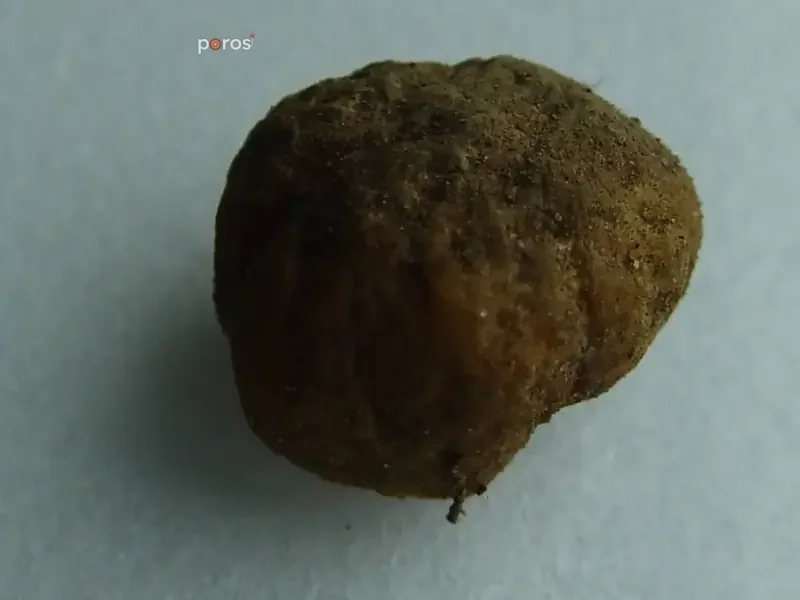


Desert truffle
Terfezia spp. · Pezizaceae
The desert truffle is the name for Terfezia species, known in Turkey as domalan, keme and dolaman: edible, potato-like fungi that grow underground.
Last updated: Prepared by the Poros Mantar editorial team12 sources checkedReport a correction
The desert truffle is the name for Terfezia species, known in Turkey as domalan, keme and dolaman: edible, potato-like fungi that grow underground. They are a separate genus from true truffles (Tuber) and partner mostly with low shrubs such as rockroses (Helianthemum) rather than trees. The species most often named in Turkey are Terfezia boudieri and Terfezia claveryi. They appear in spring on dry steppe in Turkey, and because they can be confused with poisonous earthballs they are never eaten unless identified with certainty.
Also called: terfez, kamaa, Terfezia truffle Turkish: Çöl trüfü, domalan, keme, dolaman, kemeye, tombalak, topalak, geme
What is a desert truffle?
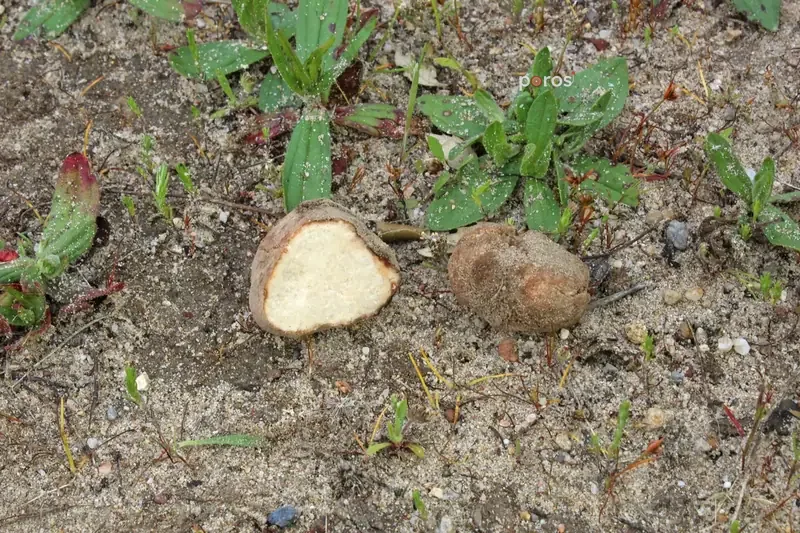
Desert truffle is the shared name for underground fungi in the genus Terfezia; in Turkey they go by local names such as domalan, keme, dolaman, kemeye, tombalak and geme. Turkish Wikipedia's domalan article lists Terfezia arenaria, T. boudieri, T. claveryi, T. leptoderma and T. leonis, along with the white desert truffle Tirmania nivea. The species most often named in Turkey are Terfezia boudieri and Terfezia claveryi.
Despite the name, a desert truffle is not a true truffle. True truffles belong to Tuber, live with trees such as oak and hazel and smell strongly. Desert truffles belong to Pezizaceae, live with low shrubs and have a mild smell. We cover true truffles on our truffle page, and the difference is also explained in our article on domalan.
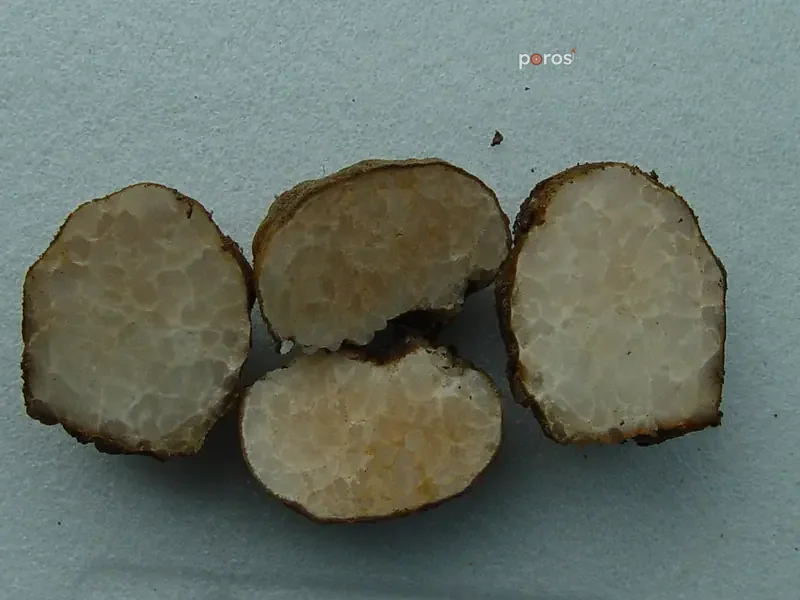
The fruit body, the part we see, is a tuber that forms a few centimetres below ground. There is no cap, stem or gills; the outside is pale brown and the inside cream, marbled with pale veins. So unlike the capped mushrooms on our site, it is described by its outer skin and its inside.
Where does the desert truffle grow in Turkey?
The desert truffle grows on dry steppe, in sandy, quick-drying soil. Wikipedia reports desert truffles from arid zones of the Mediterranean basin, North Africa and the Middle East, includes Turkey in that range and shows a desert truffle photographed at Avanos.
In Turkey, domalan is known around Konya, Karaman and Şanlıurfa (Turkish Wikipedia). A study by Muğla Sıtkı Koçman University researchers in Denizli recorded Terfezia boudieri alongside true truffles. The seven Terfezia claveryi observations on our map are from Ankara and Konya. You can see every record on our mushroom map of Turkey; a blank area does not mean the fungus is absent, only that no one has recorded it there.
The host plant decides where to look. The desert truffle mostly forms mycorrhizae with rockroses (Helianthemum); Turkish Wikipedia calls the plant kumi otu. Wikipedia adds that partnerships with Cistus, oaks and pines have also been reported.
When is desert truffle season?
Domalan appears in spring, from late March to May. Turkish Wikipedia says it comes up after spring rain, and the Turkish records on our map are from April and May.
A year's crop is decided by the previous autumn and winter, not by the spring itself. Sources gathered by Wikipedia say desert truffle yields depend largely on autumn and winter rainfall: plenty after a wet winter, few or none after a dry one. So the same spot does not give the same amount every year. Our mushroom calendar shows what appears in each month.
How do foragers find desert truffles?
Desert truffles are found by the marks they leave on the ground, not by sight. The growing tuber pushes the soil up, so foragers look for small mounds and cracks around the host plant (Turkish Wikipedia, Wikipedia). Unlike true truffles they are rarely hunted with dogs, because the smell is weak.
Digging without damaging the tuber and nearby roots, filling the hole back in and leaving small, unripe tubers in place protects the patch for the next year. Before going out, read our mushroom foraging guide for kit and rules.
Is the desert truffle poisonous, and what is it confused with?
A correctly identified desert truffle is edible; Turkish Wikipedia lists it among edible mushrooms. The danger is mistaking a poisonous tuber-like fungus for domalan.
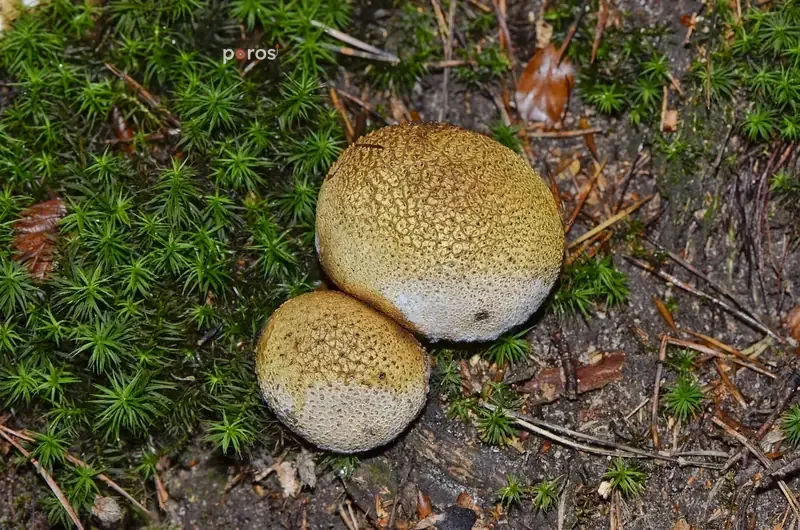
The main confusion is with earthballs (Scleroderma). According to First Nature, the common earthball (Scleroderma citrinum) has a thick, hard, scaly skin and an inside that is white at first, then turns purple-black and powdery. The desert truffle has a thin skin that peels easily and a pale, veined inside. The scaly earthball (Scleroderma verrucosum), recorded in Turkey, can also be half buried. Anyone who cuts a tuber and finds a dark, unveined or powdery inside does not eat it. See our poisonous mushrooms page for the full list.
Do not rely on one feature; skin, inside, smell and habitat are judged together. If in doubt, do not eat it, and if symptoms follow, call 112 or 114 at once.
How do you tell a desert truffle from a true truffle?
The easiest way to tell them apart is by habitat, skin and smell. The desert truffle comes up in spring on dry steppe, in sandy soil at the foot of low shrubs such as rockroses. True truffles ripen in woodland among the roots of oak, hazel or beech, in calcareous soil, in summer or winter depending on the species.
The skin is a clear clue. A desert truffle has a thin, smooth or slightly rough skin, pale brown to reddish, that peels easily. Summer and black truffles are covered in hard black warts. Both are veined inside, but the desert truffle stays cream or pale pink, while black truffles darken as they ripen.
Smell is the last test: ripe true truffles smell strong and distinctive, which is why dogs find them; desert truffles smell mild and are found by the marks in the soil. These differences separate the two groups; to rule out poisonous earthballs, use the warnings above as well.
Is it legal to pick desert truffles in Turkey?
Picking a little for your own table is a common tradition, but commercial picking and sale of produce from forest and pasture land is regulated. Non-wood forest products (mushrooms included) from state forests are managed under Turkey's Forest Law No. 6831 and General Directorate of Forestry rules; anyone planning to pick commercially checks with the local forest enterprise office. We also cover this in our article on where truffles grow in Turkey. We do not quote prices.
Can desert truffles be cultivated?
Desert truffles cannot be grown at home or from a kit; they are only being trialled in fields with inoculated plants. Wikipedia says Israeli researchers are trying to turn Terfezia boudieri into a crop. Rockrose seedlings with inoculated roots are planted in suitable soil and, depending on rain, a harvest is hoped for over several years. We describe the same method for true truffles in our truffle growing article; species you can grow at home are on our grow at home page.
How is desert truffle used in the kitchen?
Desert truffles are cleaned well and eaten cooked. In the recipes shared on University of Wisconsin mycologist Tom Volk's pages, the tubers are scrubbed with a soft brush or washed carefully to remove sand and peeled if needed; Turkish Wikipedia also notes that the skin peels easily. According to Wikipedia, desert truffles have little flavour of their own and take on the taste of what they are cooked with, which is why the Romans used them as a flavour carrier in spiced dishes. So rather than being shaved raw like true truffles, they are sautéed in butter with onion and added to eggs, soups or rice. Our desert truffle scrambled eggs, adapted from Tom Volk's page, is the simplest example.
Keep cleaned desert truffles in a paper bag rather than plastic in the fridge and cook them within a few days; plastic traps moisture and speeds spoilage (Penn State Extension, general advice for mushrooms). Only cook tubers that have been identified with certainty; a white or creamy interior is a good sign but not enough on its own.
How to recognise it
Desert truffle, part by part
No ring or volva Spore print: None; spores stay in asci Mild and earthy, without the strong smell of true truffles.

When and where
Mar–May
- Jan
- Feb
- Marin season
- Aprin season
- Mayin season
- Jun
- Jul
- Aug
- Sep
- Oct
- Nov
- Dec
The desert truffle is a spring mushroom: Turkish Wikipedia says domalan appears in spring after rain, and the Turkish records on our map are from April and May. The crop depends on the previous autumn and winter rains, so after a dry winter there may be few or none.
Where does desert truffle grow?
The desert truffle grows in sandy, quick-drying soils in arid and semi-arid regions, mostly in a mycorrhizal partnership with rockroses (Helianthemum). Wikipedia notes that desert truffles can also partner with Cistus, oaks and pines.
Where is desert truffle found in Turkey?
In Turkey the desert truffle is known around Konya, Karaman and Şanlıurfa (Turkish Wikipedia), and near the Syrian border it is called keme (Wikipedia). A study in Denizli recorded Terfezia boudieri, and the Terfezia claveryi observations on our map come from Ankara and Konya.
- Ankara5
- Konya2
Which months
- Jan0
- Feb0
- Mar0
- Apr5
- May2
- Jun0
- Jul0
- Aug0
- Sep0
- Oct0
- Nov0
- Dec0
2 provinces, 7 observations (GBIF, iNaturalist); months from observation dates. Record density also reflects where observers work.
Latest desert truffle observations
-
 Illustrative
Konya11 May 2023 · GBIF
-
 Illustrative
Konya11 May 2023 · GBIF
-
 Illustrative
Ankara18 Apr 2023 · GBIF
-
 Illustrative
Ankara18 Apr 2023 · GBIF
-
 Illustrative
Ankara18 Apr 2023 · GBIF
-
 Illustrative
Ankara18 Apr 2023 · GBIF
- See on the map
On "illustrative" cards the image is a photo of the species; the observation photo cannot be shown here because of its licence, but can be seen at the source.
Look-alikes
What could it be confused with?
Desert truffle can be mistaken for the species below. Each card shows the look-alike and how it differs from Desert truffle.
 Poisonous
not Desert truffle
Common earthball Scleroderma citrinum
Thick, hard, scaly skin; inside white at first, then purple-black and without veins. Grows on the surface or half buried. Treated as poisonous (First Nature).
 Poisonous
not Desert truffle
Scaly earthball Scleroderma verrucosum
Has a short, root-like stem base and a brown, scaly skin; the inside turns to olive-black powder when ripe. Recorded in Turkey and treated as poisonous.
 Edible species
not Desert truffle
Summer truffle Tuber aestivum
A true truffle: black with pyramid-shaped warts, grows under oak and hazel and smells strongly. The desert truffle has a smooth, pale skin.
How to cook and eat desert truffle
Safety first. Not every tuber-like fungus in the soil is a desert truffle; tubers with a hard, scaly skin or a purple-black or powdery inside are not eaten.
How to prepare it
Brush the sand from the cracks under running water; peel if the skin is tough, then slice thinly.
How to cook it
Unlike true truffle it is not shaved raw: sauté it in butter with onion and add it to eggs, soup or pilaf.
What goes with it?
It has little flavour of its own and takes on the taste of whatever it cooks with.
- desert truffles
- butter
- shallot
- eggs
- double cream
Source: Wikipedia · practical details from our recipes.
Recipe
How to store desert truffle
Grow it, buy it
Desert truffle price list
| Product | Us | Market (sourced, dated) |
|---|---|---|
| Fresh desert truffle | Made to order · ask | — |
| Dried desert truffle | Made to order · ask | — |
We make our desert truffle products in small batches, to order; send a request and we email you the price and delivery date. The market column shows prices seen on other sellers' pages on the date given; they are not our prices and may have changed.
Frequently asked questions
Are domalan, keme and dolaman the same mushroom?
Yes. Domalan, keme, dolaman, kemeye, tombalak and geme are regional Turkish names for desert truffles in the genus Terfezia. Keme is used especially near the Syrian border.
Is domalan a real truffle?
No. It is called a desert truffle, but it is a separate genus from true truffles (Tuber). True truffles live with tree roots and smell strongly; domalan lives with low shrubs and smells mild.
How is domalan found?
By looking for small mounds and cracks in the soil around its host plants, such as rockroses. Its smell is weak, so dogs are rarely used.
Which provinces of Turkey have desert truffles?
Konya, Karaman and Şanlıurfa are the best-known areas; Terfezia boudieri has been recorded in Denizli, and our map has Terfezia claveryi records from Ankara and Konya.
Why are there years with no desert truffles?
Because the crop depends on the previous autumn and winter rainfall. After a dry winter there are few or none.
Can desert truffles be grown at home?
No. The desert truffle depends on plant roots; it is only being trialled in fields with inoculated seedlings.
Is picking desert truffles allowed?
Commercial picking and sale of non-wood products such as mushrooms from state forests falls under Forest Law No. 6831 and General Directorate of Forestry rules; check with the local forest enterprise office before picking commercially.
What is terfez?
Terfez is the North African name for desert truffles of the genus Terfezia. They are the same group we know in Turkey as domalan or keme. They grow underground in dry, open land, usually together with rockrose plants (Helianthemum).
What are desert truffles called in Arabic?
In Arabic, desert truffles are generally called kamʾa (كمأة); in the Gulf they are also known as faqʿ. They are the same Terfezia and Tirmania truffles collected after winter rains across the Middle East and in south-eastern Turkey.
Is desert truffle edible?
Yes, desert truffle is an edible species. Eat a wild one only after an expert has identified it with certainty: it can be confused with common earthball (Scleroderma citrinum) and scaly earthball (Scleroderma verrucosum). Not every tuber-like fungus in the soil is a desert truffle; tubers with a hard, scaly skin or a purple-black or powdery inside are not eaten.
When is desert truffle season in Turkey?
In our calendar, desert truffle season runs Mar–May. The desert truffle is a spring mushroom: Turkish Wikipedia says domalan appears in spring after rain, and the Turkish records on our map are from April and May. The crop depends on the previous autumn and winter rains, so after a dry winter there may be few or none.
Where does desert truffle grow?
The desert truffle grows in sandy, quick-drying soils in arid and semi-arid regions, mostly in a mycorrhizal partnership with rockroses (Helianthemum). Wikipedia notes that desert truffles can also partner with Cistus, oaks and pines.
Where is desert truffle found in Turkey?
In Turkey the desert truffle is known around Konya, Karaman and Şanlıurfa (Turkish Wikipedia), and near the Syrian border it is called keme (Wikipedia). A study in Denizli recorded Terfezia boudieri, and the Terfezia claveryi observations on our map come from Ankara and Konya.
What can desert truffle be confused with?
Desert truffle can be confused with common earthball (Scleroderma citrinum, poisonous), scaly earthball (Scleroderma verrucosum, poisonous) and summer truffle (Tuber aestivum, edible species). Look-alikes are compared on this page.
What is desert truffle called in Turkish?
In Turkish, desert truffle (Terfezia spp.) is called Çöl trüfü; other local names include domalan, keme, dolaman, kemeye, tombalak, topalak and geme.
Related species
-
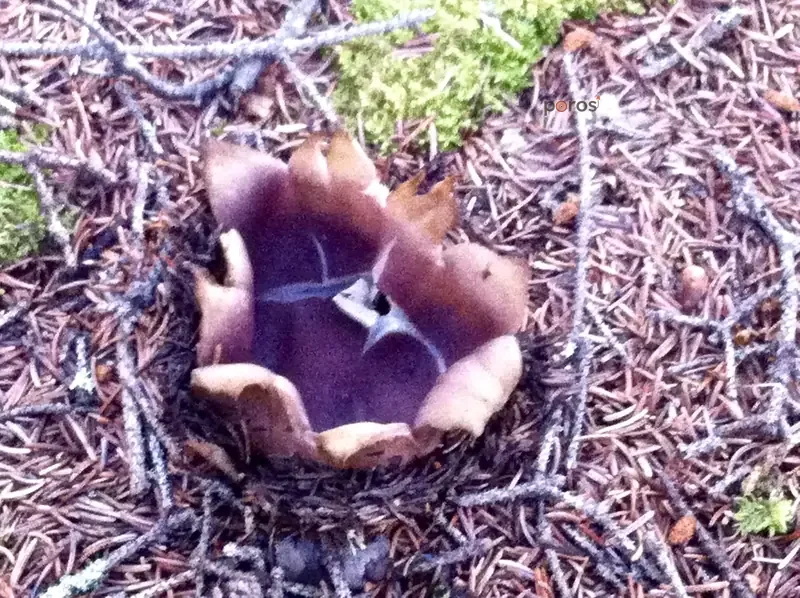 Violet crown cupSarcosphaera coronariaPoisonous
-
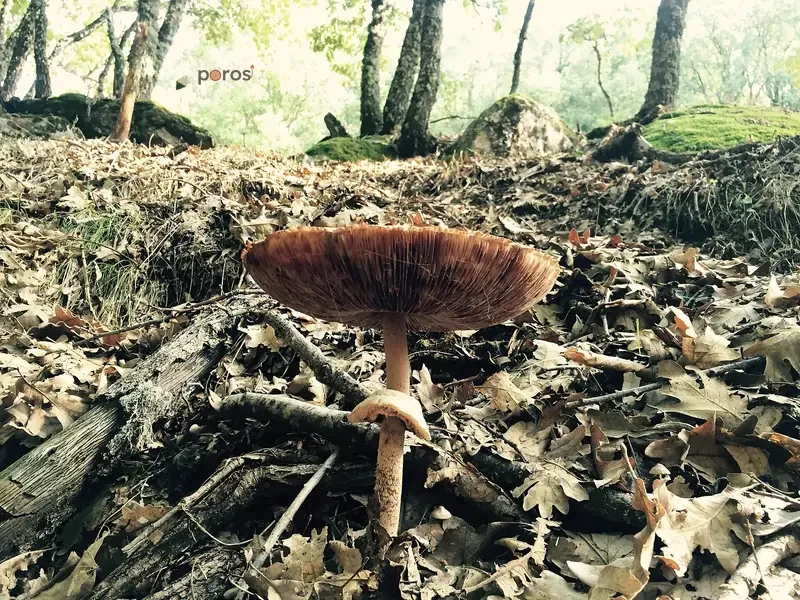 Anatolian matsutakeTricholoma anatolicumEdible species
-
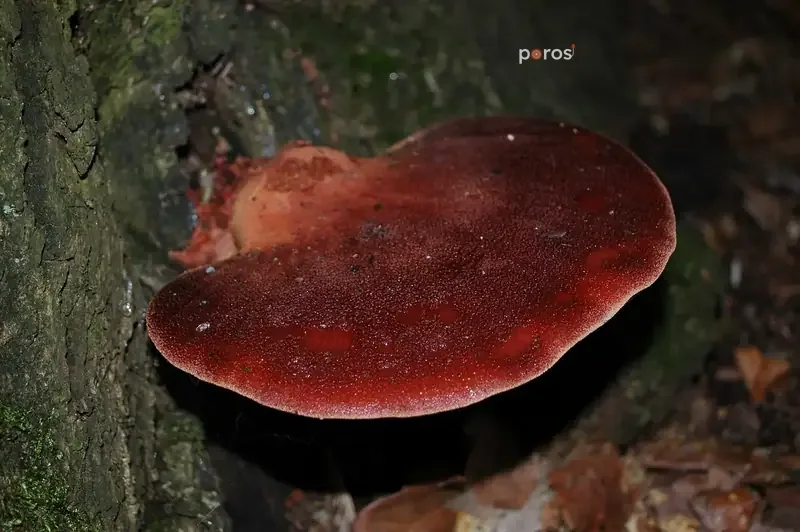 Beefsteak fungusFistulina hepaticaEdible species
-
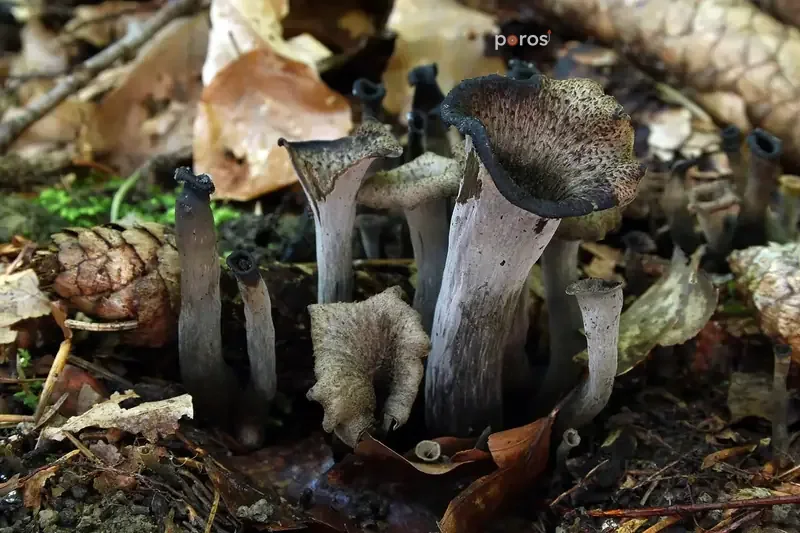 Black trumpetCraterellus cornucopioidesEdible species
-
 Bloody milk capLactarius sanguifluusEdible species
-
 Button mushroomAgaricus bisporusEdible species
-
 Caesar’s mushroomAmanita caesareaEdible species
-
 Cauliflower mushroomSparassis crispaEdible species
Sources
- 6831 sayılı Orman Kanunu (mevzuat.gov.tr) mevzuat.gov.tr
- Dündar ve ark. (2012), Food Science and Technology International: Türkiye'den Terfezia boudieri pubmed.ncbi.nlm.nih.gov
- Louro ve ark. (2019), Fungal Biology: Terfezia sınıflandırması pubmed.ncbi.nlm.nih.gov
All sources (12)
- Gezer K. ve ark. — Ecological characteristics of truffles growing in Denizli Province, Turkey, J. Food Agric. Environ. 12(2), 2014 acikerisim.mu.edu.tr
- Tom Volk, University of Wisconsin: Desert truffle recipes (Elinoar's) botit.botany.wisc.edu
- Penn State Extension: Preparing and Preserving Mushrooms extension.psu.edu
- Vikipedi (TR): Domalan tr.wikipedia.org
- Wikipedia (EN): Terfeziaceae / desert truffle en.wikipedia.org
- Wikipedia (EN): Terfezia en.wikipedia.org
- First Nature: Scleroderma citrinum first-nature.com
- GBIF: Terfezia, Türkiye kayıtları gbif.org
- Wikipedia (EN): Truffle — Culinary use (desert truffles) en.wikipedia.org
Photo credits (6)
- File:2014-01-22 Terfezia alsheikhii Kovács, M.P. Martín & Calonge 400060.jpg · Elsa (pinknailsgirl) at Mushroom Observer, a source for mycological i · CC BY-SA 3.0
- File:2014-01-22 Terfezia alsheikhii Kovács, M.P. Martín & Calonge 400061.jpg · Elsa (pinknailsgirl) at Mushroom Observer, a source for mycological i · CC BY-SA 3.0
- Terfezia arenaria · iNaturalist #11185490 · Davide Puddu · CC BY 4.0
- File:2008-05-02 Terfezia arenaria (Moris) Trappe 220243.jpg · Gerhard Koller (Gerhard) at Mushroom Observer, a source for mycologic · CC BY-SA 3.0
- File:Terfezia (10.3897-mycokeys.84.71372) Figure 3.jpg · Santos-Silva C, Louro R, Natário B, Nobre T (2021) Lack of knowledge on ecological determinants and · CC BY 4.0
- File:2014-01-22 Terfezia alsheikhii Kovács, M.P. Martín & Calonge 404765.jpg · Elsa (pinknailsgirl) at Mushroom Observer, a source for mycological i · CC BY-SA 3.0


