
Amanita proxima (near neighbour amanita)
Amanita proxima · Amanitaceae

Amanita proxima is a large, white-capped amanita with a fringed margin that grows on warm, calcareous soils around the Mediterranean. Its most telling feature is the sac-like volva at the base, which is orange to rusty in colour. It is confused with its close relative Amanita ovoidea, gathered for food in places, but it carries an amino acid that targets the kidneys: cases of acute kidney failure starting hours to days after the meal have been reported from France, Italy and Spain. It has not been recorded in Turkey.
Also called: near neighbour amanita Turkish: Amanita proxima
Last updated: Prepared by the Poros Mantar editorial team5 sources checkedReport a correction
DEADLY POISONOUS — keep it out of any basket of mushrooms to eat.
Amanita proxima is poisonous and targets the kidneys. According to sources the culprit is an amino acid, 2-amino-4,5-hexadienoic acid (the same as in Amanita smithiana). In reported cases nausea, vomiting and abdominal pain began hours after the meal (8 hours in one Italian case), followed by acute kidney failure; the kidney damage is usually reversible (Mancini et al. 2015). Unlike death cap poisoning, the liver is usually only mildly affected. If poisoning is suspected, call 112 (Turkish poison centre UZEM: 114) and keep any leftover mushroom.
Amanita proxima photos
-
© Nikos D. Karabelas · CC BY 4.0
-

Volva© Bernhard Reuscher (Rhodos) · CC BY-SA 4.0
-

© Dominique · CC0
-

Gills© Nikos D. Karabelas · CC BY 4.0
-

© Davide Puddu (Davide Puddu) at Mushroom Observer, a source for mycolo · CC BY-SA 3.0
-

Cap© Nikos D. Karabelas · CC BY 4.0
-

© Iehllmore · CC0
-
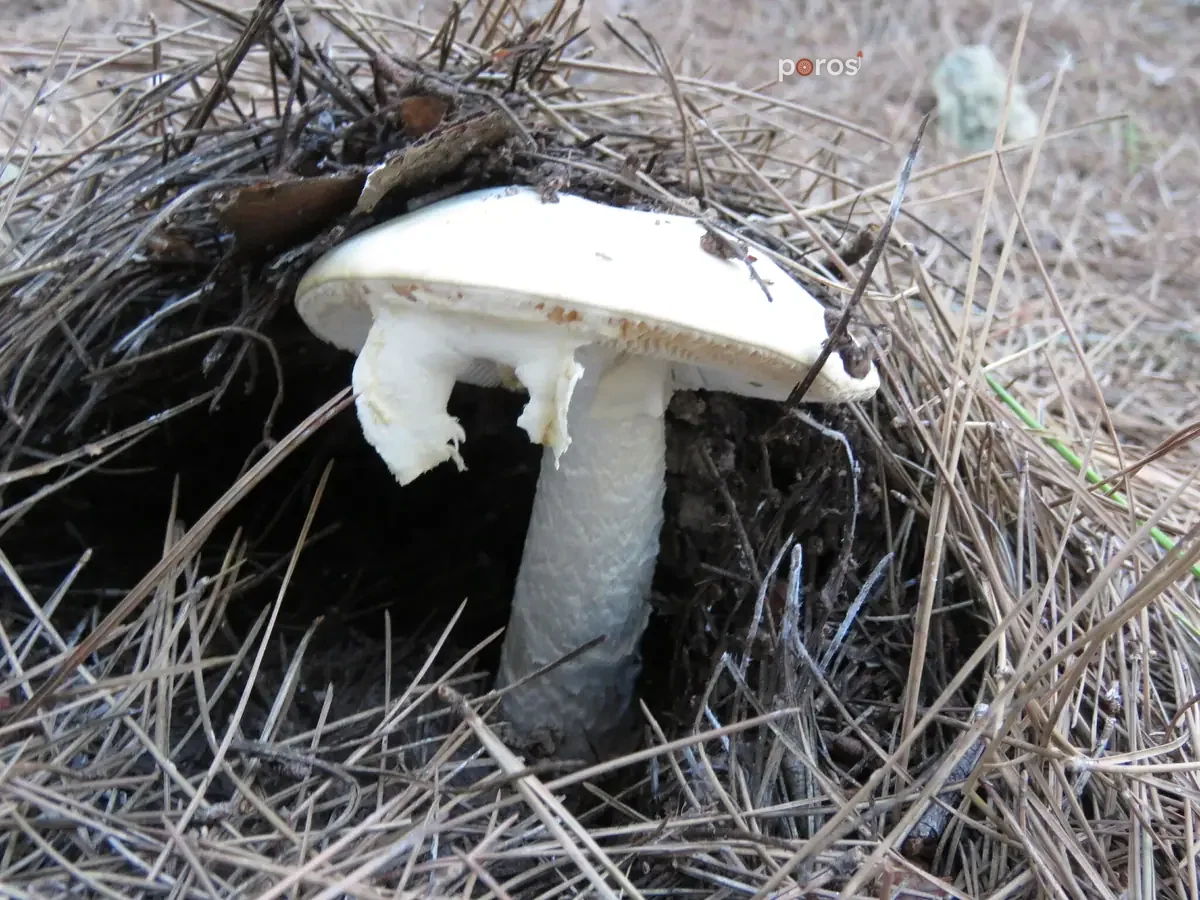
In habitat© Dominique · CC0
-

Volva© Pitxiquin · CC BY-SA 4.0
-

Gills© Nikos D. Karabelas · CC BY 4.0
-

© Nikos D. Karabelas · CC BY 4.0


These are licensed records of this species; photos alone are not enough to identify a mushroom.
Is Amanita proxima poisonous?
Yes, Amanita proxima is deadly poisonous and must never be eaten. It carries an amino acid that damages the kidneys and has caused cases of acute kidney failure. It can be mistaken for bearded amanita (Amanita ovoidea), destroying angel (Amanita virosa) and fool's mushroom (Amanita verna). If poisoning is suspected, call 112 at once (Turkish poison centre: 114) and keep any leftover mushroom.
Is Amanita proxima edible?
No, Amanita proxima must never be eaten; it is deadly poisonous. If poisoning is suspected, call 112 at once (Turkish poison centre: 114) and keep any leftover mushroom.
How to recognise it
Appearance of amanita proxima
Spore print: White Not distinctive.
Where does amanita proxima grow?
Grows on calcareous soils in Mediterranean scrub, holm oak and pine woods, mostly at low altitude near the coast.
In Turkey
There are no Turkish records: our map data (GBIF and iNaturalist) holds no observations from Turkey. The species is known from the western Mediterranean (France, Italy, Spain, Portugal and North Africa). The climate of Turkey's Aegean and Mediterranean coasts suits it, so a white amanita with an orange volva is worth photographing and reporting, without handling it.
Our map has no observations of amanita proxima from Turkey yet.
Look-alikes
What is it mistaken for?
Amanita proxima can be mistaken for the species below. Each comparison shows Amanita proxima on the left, the look-alike on the right, and how to tell them apart.
Bearded amanita Amanita ovoidea
How to tell Its volva is white or pale cream and its ring mealy and fragmentary; Amanita proxima has an orange to rusty volva and a membranous ring. If you cannot tell them apart, pick neither.

Destroying angel Amanita virosa
How to tell The destroying angel is more slender with a shaggy stem and a white volva, grows in beech, chestnut and conifer woods and carries amatoxins.
Other look-alikes (1)
 Deadly
not Amanita proxima
Fool's mushroom Amanita verna
The fool's mushroom fruits in spring, is smaller and has a white volva; it carries amatoxins.
Amanita proxima and its look-alikes compared
| Species | Status | Underside | Spore print | Season |
|---|---|---|---|---|
| Amanita proxima | Deadly poisonous | Free, crowded, white to creamy gills | White | Sep–Dec |
| Destroying angelAmanita virosa | Deadly poisonous | Crowded, white, free gills | White | Aug–Nov |
| Fool’s mushroomAmanita verna | Deadly poisonous | Free, crowded, white gills | White | Apr–Jun |
The table is compiled from each species page. The status column is a guide only; do not eat a wild mushroom unless an expert has seen it in person. Compare look-alikes side by side
Frequently asked questions
Is Amanita proxima poisonous?
Yes, Amanita proxima is deadly poisonous and must never be eaten. It carries an amino acid that damages the kidneys and has caused cases of acute kidney failure. It can be mistaken for bearded amanita (Amanita ovoidea), destroying angel (Amanita virosa) and fool's mushroom (Amanita verna). If poisoning is suspected, call 112 at once (Turkish poison centre: 114) and keep any leftover mushroom.
Is Amanita proxima edible?
No, Amanita proxima must never be eaten; it is deadly poisonous. If poisoning is suspected, call 112 at once (Turkish poison centre: 114) and keep any leftover mushroom.
How is it recognised?
A large white cap, a membranous ring and, above all, a sac-like volva that is orange or rusty outside.
How does it differ from Amanita ovoidea?
Ovoidea has a white volva and a mealy, fragmentary ring; proxima has an orange volva and a membranous ring. Because misidentification leads to poisoning, neither should be picked.
When do symptoms start?
In reported cases digestive symptoms came within hours (after 8 hours in one Italian case), then kidney failure (Mancini et al. 2015). If in doubt, call 112.
Is it found in Turkey?
There are no Turkish records; it is known from the western Mediterranean. The climate of Turkey's Aegean and Mediterranean coasts would suit it.
Does it carry amatoxins like the death cap?
No. Its toxin is different: not an amatoxin but a kidney-damaging amino acid. It still causes serious poisoning.
Where does it grow?
On calcareous soils in Mediterranean scrub and under holm oak and pine, mostly near the coast.
When is amanita proxima season in Turkey?
In our calendar, amanita proxima season runs Sep–Dec. Fruits along Mediterranean coasts after the autumn rains, from September to December.
Where does amanita proxima grow?
Grows on calcareous soils in Mediterranean scrub, holm oak and pine woods, mostly at low altitude near the coast.
Where is amanita proxima found in Turkey?
There are no Turkish records: our map data (GBIF and iNaturalist) holds no observations from Turkey. The species is known from the western Mediterranean (France, Italy, Spain, Portugal and North Africa). The climate of Turkey's Aegean and Mediterranean coasts suits it, so a white amanita with an orange volva is worth photographing and reporting, without handling it.
What can amanita proxima be confused with?
Amanita proxima can be confused with bearded amanita (Amanita ovoidea, inedible), destroying angel (Amanita virosa, deadly) and Fool's mushroom (Amanita verna, deadly). Look-alikes are compared on this page.
What is amanita proxima called in Turkish?
In Turkish, amanita proxima (Amanita proxima) is called Amanita proxima.
Related species
-
 Death capAmanita phalloidesDeadly poisonous
-
Destroying angelAmanita virosaDeadly poisonous
-
 Eastern destroying angelAmanita bisporigeraDeadly poisonous
-
Fool’s mushroomAmanita vernaDeadly poisonous
-
 Smith’s amanitaAmanita smithianaDeadly poisonous
-
 Western destroying angelAmanita ocreataDeadly poisonous
-
 BlusherAmanita rubescensInedible
-
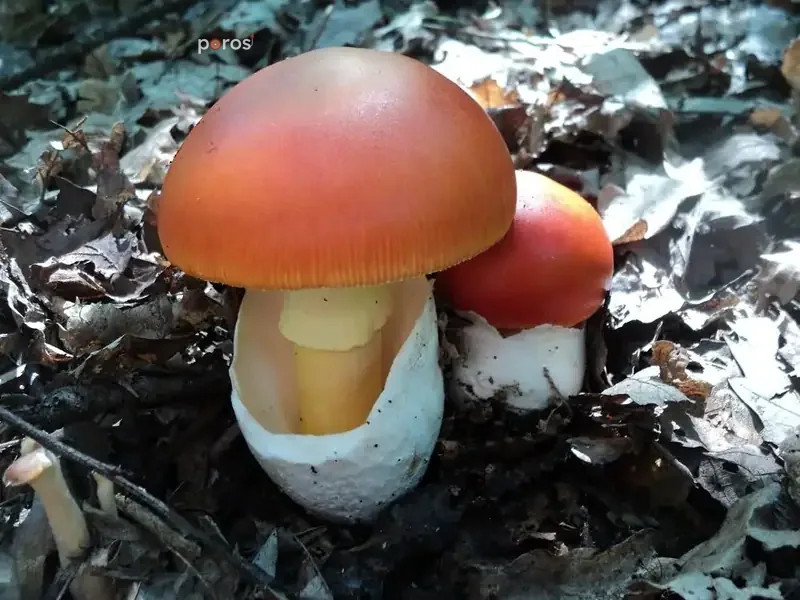 Caesar’s mushroomAmanita caesareaEdible species
Sources
- Mancini ve ark. (2015), G Ital Nefrol: Amanita proxima kaynaklı akut böbrek yetmezliği olgusu pubmed.ncbi.nlm.nih.gov
- Diaz (2021), Wilderness Environ Med: Nephrotoxic Mushroom Poisoning pubmed.ncbi.nlm.nih.gov
- Wikipedia (EN): Amanita proxima en.wikipedia.org
All sources (5)
- iNaturalist: Amanita proxima inaturalist.org
- GBIF: Türkiye kayıtları gbif.org
Photo credits (11)
- File:Amanita proxima Mushroom Skafidaki 1.jpg · Nikos D. Karabelas · CC BY 4.0
- File:Amanita proxima (Rhodos, Greece).jpg · Bernhard Reuscher (Rhodos) · CC BY-SA 4.0
- Amanita proxima · iNaturalist #252915583 · Dominique · CC0
- File:Amanita proxima Mushroom Skafidaki 6.jpg · Nikos D. Karabelas · CC BY 4.0
- File:Amanita proxima Dumée 512034 2014-11-29.jpg · Davide Puddu (Davide Puddu) at Mushroom Observer, a source for mycolo · CC BY-SA 3.0
- File:Amanita proxima Mushroom Skafidaki 5.jpg · Nikos D. Karabelas · CC BY 4.0
- Amanita proxima · iNaturalist #335075362 · Iehllmore · CC0
- Amanita proxima · iNaturalist #252915583 · Dominique · CC0
- File:Amanita proxima a la festa del bolet de Cal Rosal 2018.jpg · Pitxiquin · CC BY-SA 4.0
- File:Amanita proxima Mushroom Skafidaki 8.jpg · Nikos D. Karabelas · CC BY 4.0
- File:Amanita proxima Mushroom Skafidaki 10.jpg · Nikos D. Karabelas · CC BY 4.0


