
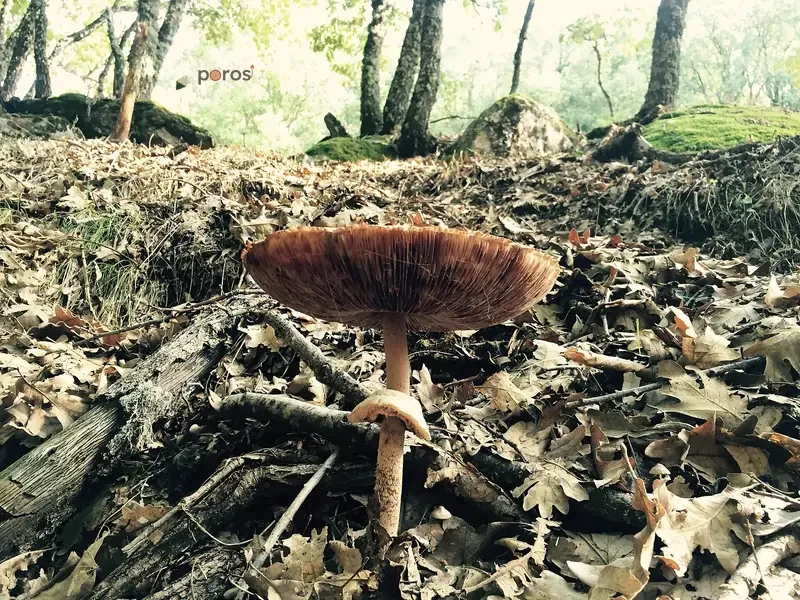
Anatolian matsutake
Tricholoma anatolicum · Tricholomataceae
The Anatolian matsutake is a member of the matsutake group found only in Turkey, fruiting in autumn in the Lebanon cedar forests of the Taurus Mountains.
Last updated: Prepared by the Poros Mantar editorial team8 sources checkedReport a correction
The Anatolian matsutake is a member of the matsutake group found only in Turkey, fruiting in autumn in the Lebanon cedar forests of the Taurus Mountains. White to cream, with a tar-like smell, it is a prized edible species picked around Feke and elsewhere and exported mainly to Japan. It is not cultivated; all of it is wild-picked.
Also called: cedar mushroom, Turkish matsutake Turkish: Sedir mantarı, katran mantarı
How to recognise it
Anatolian matsutake, part by part
No volva Spore print: White, as in Tricholoma; the spores are cyanophilic (Doğan & Akata 2011) A distinctive tar-like smell, which gives it the local name katran mantarı (tar mushroom).
When and where
Sep–Nov
- Jan
- Feb
- Mar
- Apr
- May
- Jun
- Jul
- Aug
- Sepin season
- Octin season
- Novin season
- Dec
Doğan and Akata (2011) report fruiting in October and November; samples collected at Feke in 2015 date from September (Taşkın et al. 2018). Most GBIF records from Turkey are from November. The Feke study describes a window of about three months in the wet, humid autumn between summer drought and winter cold; a dry autumn means a poor crop.
Where does anatolian matsutake grow?
The Anatolian matsutake lives in partnership with the roots of Lebanon cedar (Cedrus libani). According to Doğan and Akata (2011), it grows in the Taurus Mountains at roughly 1,400–1,700 m, on poor, well-drained sandy soils in cedar forests more than 25 years old. The Feke study (Duran et al. 2011) found sandy clay loam soils, very slightly acidic, low in lime and rich in organic matter, with mycelium mostly 10–30 cm deep. It is absent from young cedar stands and is thought to appear once the trees reach seed-bearing age at 25–30 years; crops are larger in heavy seed years.
Where is anatolian matsutake found in Turkey?
The Anatolian matsutake is known only from Turkey. Doğan and Akata (2011) recorded it along the Taurus Mountains in Adana, Antalya, Karaman, Kahramanmaraş, Konya, Muğla and Osmaniye. The best-known picking area is the Feke district of Adana, where it is considered the most valuable mushroom. The forestry directorate's 2022–2026 cedar mushroom action plan covers Adana, Antalya, Hatay, Kahramanmaraş, Konya, Mersin and Muğla, and more than 100 tonnes a year are shipped to Japan.
Which months
- Jan0
- Feb0
- Mar0
- Apr0
- May0
- Jun0
- Jul0
- Aug0
- Sep0
- Oct0
- Nov1
- Dec0
1 provinces, 1 observations (GBIF, iNaturalist); months from observation dates. Record density also reflects where observers work.
Latest anatolian matsutake observations
 Illustrative
On "illustrative" cards the image is a photo of the species; the observation photo cannot be shown here because of its licence, but can be seen at the source.
Look-alikes
What could it be confused with?
Anatolian matsutake can be mistaken for the species below. Each card shows the look-alike and how it differs from Anatolian matsutake.
 Deadly
not Anatolian matsutake
Destroying angel Amanita virosa
Pure white, ringed and found in woodland, but has a sac (volva) at the stem base and no tar-like smell. Deadly poisonous.
 Deadly
not Anatolian matsutake
Death cap Amanita phalloides
Cap usually greenish but pale specimens can look whitish; has a volva at the base and a ring on the stem. Deadly poisonous.
 Poisonous
not Anatolian matsutake
Pear-scented fibrecap Inocybe pyriodora
Smaller, with a fibrous cap and a brown spore print; Wikipedia lists it among matsutake look-alikes.
 Inedible
not Anatolian matsutake
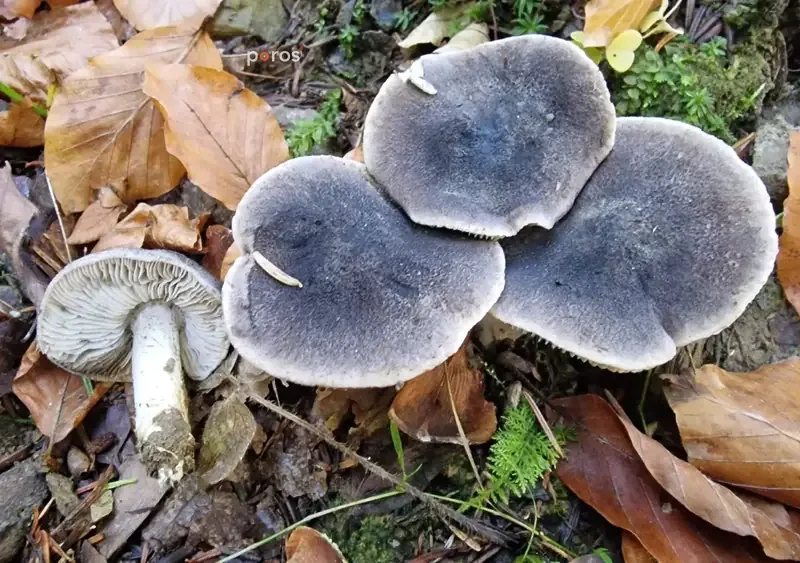
Grey knight Tricholoma terreum
Grey, felty cap, no ring and no tar smell; grows in large groups under pines. Its edibility is disputed.
How to cook and eat anatolian matsutake
Safety first. Any large white mushroom with a ring could be a deadly Amanita. Never pick the Anatolian matsutake on colour or smell alone: dig out the stem base to check for a sac (volva), and show it to an expert if in doubt. When picking, cover the soil and needle litter again and leave very young mushrooms in place: sources note that unregulated over-harvesting threatens the species (Doğan & Akata 2011; Allı & Şen 2016).
How to cook it
It belongs to the matsutake group prized in Japanese cooking; fresh mushrooms are more sought after than frozen or dried ones.
Source: Wikipedia.
How to store anatolian matsutake
What it contains
A methanol extract of samples from Feke had a total phenolic content of 56 mg/kg (Taşkın et al. 2018). This is a laboratory measurement, not a health claim. Source
General information, not a health claim.
Grow it, buy it
Anatolian matsutake price list
| Product | Us | Market (sourced, dated) |
|---|---|---|
| Fresh anatolian matsutake | Made to order · ask | — |
| Dried anatolian matsutake | Made to order · ask | — |
We make our anatolian matsutake products in small batches, to order; send a request and we email you the price and delivery date. The market column shows prices seen on other sellers' pages on the date given; they are not our prices and may have changed.
Frequently asked questions
Is the cedar mushroom a matsutake?
It belongs to the same group but is a separate species. Tricholoma anatolicum was described by Intini, Doğan and Riva (2003) as a new member of the matsutake group. Japanese matsutake (T. matsutake) has not been recorded in Turkey (Allı & Şen 2016); in the trade, the cedar mushroom is also called matsutake.
What other names does it have?
Locally it is called sedir mantarı (cedar mushroom) and katran mantarı (tar mushroom) (Doğan & Akata 2011). The epithet anatolicum refers to Anatolia.
Where is it picked in Turkey?
In mature Lebanon cedar forests of the Taurus Mountains, at about 1,400–1,700 m. Feke in Adana province is the best-known area; it has also been recorded in Antalya, Karaman, Kahramanmaraş, Konya, Muğla and Osmaniye.
Can it be cultivated?
No, it is not cultivated. Because it lives in partnership with living cedar roots, it is only wild-picked, and it does not even appear in young cedar stands.
Why is it so valuable?
It is considered the most valuable mushroom around Feke and is exported to East Asia, mainly Japan, with more than 100 tonnes a year going there. Closed, young caps are the most sought after.
Are there rules for picking it?
Sources note there have been no specific picking rules and that over-harvesting threatens the species. The forestry directorate's 2022–2026 action plan targets picker training and sustainable use; check with the local forest office before picking.
How do we cook matsutake?
We wipe the cedar mushroom clean, slice it and cook it simply so its spicy pine scent stays: grilled with a little salt, in clear soups, or steamed with rice as in Japanese matsutake gohan.
What are the matsutake look-alikes?
Other white Tricholoma species and some Amanitas can look similar. The cedar mushroom has a strong spicy-pine smell, a ring-like band on the stem and firm white flesh; we check the base for a sack, which would point to an Amanita.
Is anatolian matsutake edible?
Yes, anatolian matsutake is an edible species. Eat a wild one only after an expert has identified it with certainty: it can be confused with destroying angel (Amanita virosa), death cap (Amanita phalloides) and pear-scented fibrecap (Inocybe pyriodora). Any large white mushroom with a ring could be a deadly Amanita. Never pick the Anatolian matsutake on colour or smell alone: dig out the stem base to check for a sac (volva), and show it to an expert if in doubt. When picking, cover the soil and needle litter again and leave very young mushrooms in place: sources note that unregulated over-harvesting threatens the species (Doğan & Akata 2011; Allı & Şen 2016).
When is anatolian matsutake season in Turkey?
In our calendar, anatolian matsutake season runs Sep–Nov. Doğan and Akata (2011) report fruiting in October and November; samples collected at Feke in 2015 date from September (Taşkın et al. 2018). Most GBIF records from Turkey are from November. The Feke study describes a window of about three months in the wet, humid autumn between summer drought and winter cold; a dry autumn means a poor crop.
Where does anatolian matsutake grow?
The Anatolian matsutake lives in partnership with the roots of Lebanon cedar (Cedrus libani). According to Doğan and Akata (2011), it grows in the Taurus Mountains at roughly 1,400–1,700 m, on poor, well-drained sandy soils in cedar forests more than 25 years old. The Feke study (Duran et al. 2011) found sandy clay loam soils, very slightly acidic, low in lime and rich in organic matter, with mycelium mostly 10–30 cm deep. It is absent from young cedar stands and is thought to appear once the trees reach seed-bearing age at 25–30 years; crops are larger in heavy seed years.
Where is anatolian matsutake found in Turkey?
The Anatolian matsutake is known only from Turkey. Doğan and Akata (2011) recorded it along the Taurus Mountains in Adana, Antalya, Karaman, Kahramanmaraş, Konya, Muğla and Osmaniye. The best-known picking area is the Feke district of Adana, where it is considered the most valuable mushroom. The forestry directorate's 2022–2026 cedar mushroom action plan covers Adana, Antalya, Hatay, Kahramanmaraş, Konya, Mersin and Muğla, and more than 100 tonnes a year are shipped to Japan.
What can anatolian matsutake be confused with?
Anatolian matsutake can be confused with destroying angel (Amanita virosa, deadly), death cap (Amanita phalloides, deadly), pear-scented fibrecap (Inocybe pyriodora, poisonous) and grey knight (Tricholoma terreum, inedible). Look-alikes are compared on this page.
What is anatolian matsutake called in Turkish?
In Turkish, anatolian matsutake (Tricholoma anatolicum) is called Sedir mantarı; other local names include katran mantarı.
Related species
-
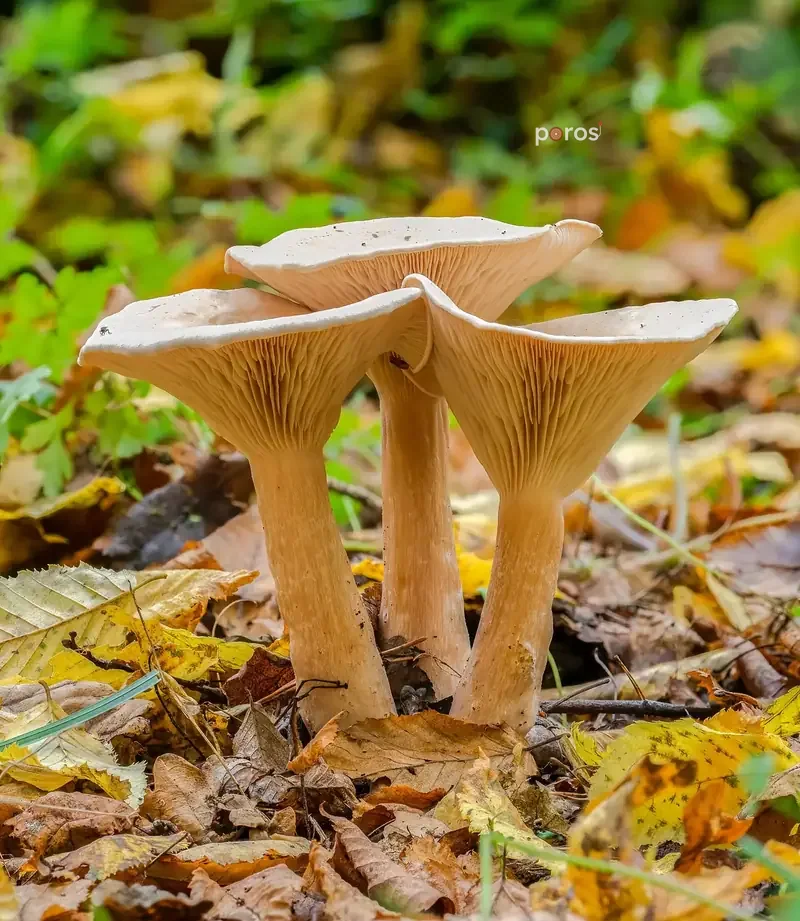 Trooping funnelInfundibulicybe geotropaEdible species
-
 Wood blewitLepista nudaEdible species
-
Grey knightTricholoma terreumInedible
-
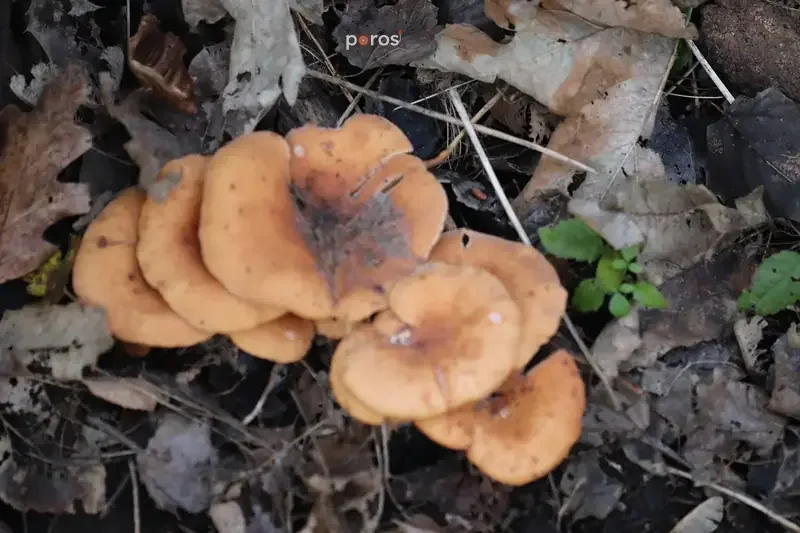 Tawny funnelParalepista flaccidaInedible
-
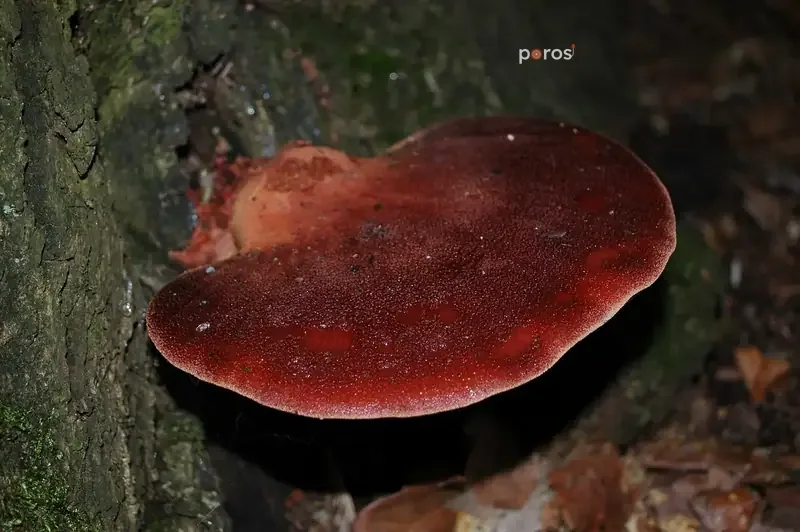 Beefsteak fungusFistulina hepaticaEdible species
-
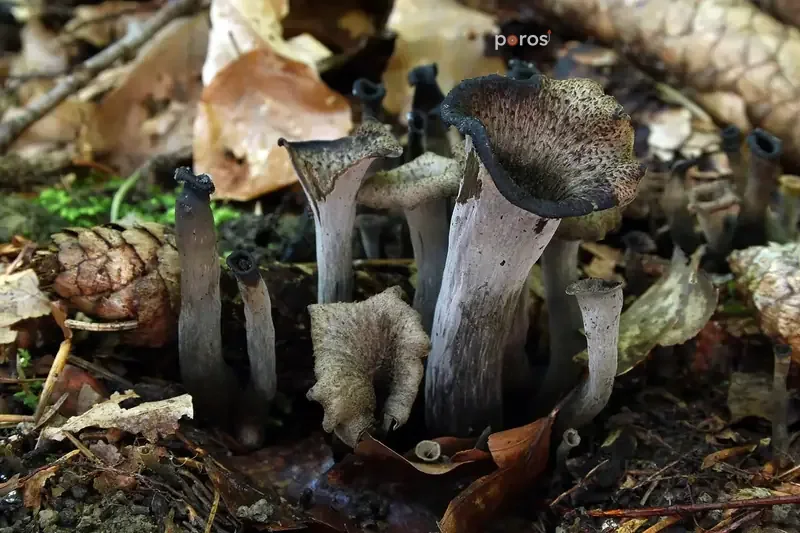 Black trumpetCraterellus cornucopioidesEdible species
-
 Bloody milk capLactarius sanguifluusEdible species
-
 Button mushroomAgaricus bisporusEdible species
Sources
- Kaplaner ve ark. (2023), Natural Product Research: Tricholoma anatolicum'dan izole edilen anatoluin A ve B pubmed.ncbi.nlm.nih.gov
- Doğan H.H., Akata I. (2011). Ecological features of Tricholoma anatolicum in Turkey. African Journal of Biotechnology 10(59): 12626–12638 (Selçuk Üniversitesi açık arşiv) acikerisim.selcuk.edu.tr
- Duran C., Taşkın H., Büyükalaca S. (2011). Adana İli Feke İlçesinde Bulunan Sedir Mantarı (Tricholoma anatolicum)'nın Ekolojik İsteklerinin Belirlenmesi. Alatarım 10(1): 42–49 (Kastamonu Ü. UNIS kaydı) unis.kastamonu.edu.tr
All sources (8)
- Taşkın H. ve ark. (2018). Determination of Multiple Antioxidant Activities of Endemic Tricholoma anatolicum. Turkish Journal of Agriculture – Food Science and Technology 6(11): 1582–1585 agrifoodscience.com
- Allı H., Şen İ. (2016). Tricholoma Türlerinin Yenilebilirliği Üzerine Notlar. Türk Tarım – Gıda Bilim ve Teknoloji Dergisi 4(3): 178–181 agrifoodscience.com
- Wikipedia (EN): Matsutake en.wikipedia.org
- GBIF: Tricholoma anatolicum, Türkiye kayıtları gbif.org
- İstiklal: Sedir mantarından ülke ekonomisine katkı bekleniyor (OGM Sedir Mantarı Eylem Planı 2022–2026) istiklal.com.tr
Photo credits (1)
- Gilled mushroom on an autumn morning (Unsplash).jpg · Roberto Arias rariasg / Wikimedia Commons · CC0
