

Mushroom glossary · Mushroom anatomy
What is a stipe?
Also called: stem, stalk
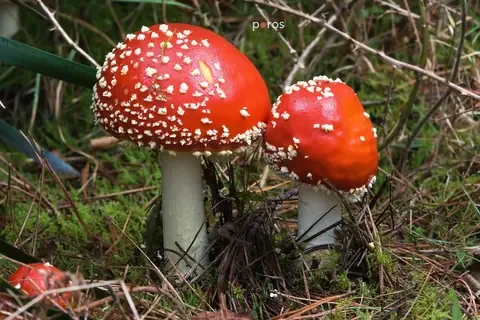
The stipe is the stem of a mushroom, which supports the cap and lifts it clear of the ground. It is made of sterile tissue that produces no spores. By raising the cap it helps the spores reach moving air. Not every fungus has one, and its ring, basal sac, surface pattern and texture are useful clues in identification.
What is the stipe for?
The benefit of a stipe lies in spore dispersal. A mushroom raised above the ground releases its spores more easily into the wind or onto passing animals. Like every tissue except the hymenium, the stipe makes no spores. In some species the fertile surface runs a little way down it.
Do all mushrooms have a stipe?
No. Many species that grow straight from wood have a short stipe or none. In the oyster mushroom it is often short and off-centre. Turkey tail and chicken of the woods are attached directly to the wood. Puffballs, earthstars and cup fungi are also among the groups without one.
What do you look for on the stipe?
For identification you note its size, shape and texture, which may be fibrous, brittle or leathery. You check for a ring or veil remains on it and for a volva at the base. Surface pattern helps too. The top of a cep stem has a fine white net, the parasol has a snakeskin pattern, and the brown birch bolete has dark scabers.
To keep these features intact, a mushroom is not cut off halfway up the stem but dug out with its base. The sac that is the key feature of the death cap lies below the soil. Stem features are not enough on their own either.
Pages related to Stipe



Related terms
- CapThe top part of a mushroom, which carries the spore-bearing surface on its underside.
- AnnulusThe ring of tissue on some mushroom stems, left behind by the partial veil.
- VolvaThe sac at the base of some mushroom stems, left behind by the universal veil.
- CortinaA cobweb-like veil of fine fibres between the cap edge and stem of some young mushrooms.
- RhizomorphA thick, root-like cord of many fungal hyphae that carries water and nutrients over distance.
Frequently asked questions
Is a stipe the same as a stem?
Yes. Stipe is the technical word mycologists use for a mushroom stem or stalk, and a fungus that has one is described as stipitate. Species descriptions list the size, colour, surface and texture of the stem under this term.
Is the stipe part of the mycelium?
No. The stipe belongs to the fruiting body, which appears and disappears within a short time. The mycelium is the network of threads that lives in the soil or wood all year. Both are made of hyphae, but they do different jobs.
Should you cut the stem of a mushroom you want to identify?
No. To keep the ring, the sac and the stem base intact, the mushroom is dug out whole from the surrounding soil. No judgement should be made about a mushroom whose base has not been seen.
Sources
- Australian National Botanic Gardens – Types of fungal fruiting bodies anbg.gov.au
- Wikipedia (EN) – Stipe (mycology) en.wikipedia.org
- MykoWeb – California Fungi: Glossary mykoweb.com