Can you freeze mushrooms? How to do it right
Yes, you can freeze mushrooms, but sautéed or steamed rather than raw. Step-by-step freezing, wild mushrooms, how long they keep and the safety rules.
 Cihat Murat Yüksel
Kitchen
9 min read
Yes, though sautéing or steaming them first gives far better results than freezing them raw. Raw frozen mushrooms release their water when thawed and turn rubbery. Cooled, portioned mushrooms keep their quality in the freezer for months and go straight into the pot or pan without thawing. Freezing doesn't make a poisonous or spoiled mushroom safe.
The short answer: freeze them sautéed or steamed, not raw
The US National Center for Home Food Preservation (NCHFP) and Oregon State University Extension both recommend steaming mushrooms or briefly cooking them in fat before freezing. Oregon State says most mushrooms freeze better after heat treatment by steam blanching or sautéing, and that sautéing is the preferred method for many varieties.
There are really three questions here: why freezing raw isn't recommended, how to freeze step by step, and how long frozen mushrooms keep and how to cook them. The last section deals with the safety question people ask most: can mushrooms in the freezer make you ill?
If you'll use them soon, there's no need to freeze. How to keep fresh mushrooms in the fridge is covered in our how to store mushrooms guide; freezing is for a surplus you want to keep for more than a few days.
Why raw frozen mushrooms go mushy
As raw mushrooms freeze, their water turns into ice crystals that damage the cell structure, and it leaks out when they thaw, leaving soft or rubbery mushrooms sitting in their own liquid. The USDA's food database puts raw white mushrooms at more than 92% water, so ice crystals have a marked effect.
Pre-cooking reduces the problem in two ways. Sautéing draws out some of the water, which evaporates, so there's less left to freeze. Heat also slows the enzymes that cause darkening and loss of flavour. In a study on button mushrooms by Jaworska and colleagues, mushrooms frozen without blanching kept their sensory quality for at most 4 months, while blanched or acid-soaked and blanched mushrooms lasted 8 months.
Raw freezing still has a place. If the mushrooms are only going into soups, sauces or stews where texture matters little and you're short of time, you can clean, slice and freeze them directly; just don't expect them to fry well afterwards. With some wild species, such as saffron milk caps and chanterelles, freezing raw is best avoided; more on that below.
Step by step: sauté, cool, portion
Sauté them in a little fat until their liquid has cooked off, cool them completely and freeze in single-use portions. NCHFP gives two methods, steaming and pre-cooking in fat, and notes that steamed mushrooms keep longer than those heated in fat. Sautéing is what most home cooks do, so that's the one we lay out:
- If you prefer steaming: NCHFP recommends steaming whole mushrooms for 5 minutes, buttons or quarters for 3½ minutes and slices for 3 minutes, then cooling them in iced water and draining.
- To keep their colour: before steaming, NCHFP suggests a 5-minute dip in water with 1 teaspoon of lemon juice or 1½ teaspoons of citric acid per pint (about half a litre).
- To keep pieces separate: spread the cooled mushrooms on a tray in a single layer, freeze, then transfer to a bag.
- Choose firm mushrooms without spots or decay. Soft or smelly mushrooms don't get frozen.
- Clean them and trim the stem ends. NCHFP says anything larger than 1 inch (2.5 cm) across should be sliced or quartered.
- Sauté in small batches in a wide pan with a little butter or olive oil until almost done. Don't crowd the pan; you want them to brown, not stew.
- Take them off the heat and cool quickly, in the open air or by setting the pan in cold water.
- Pack single-use portions into freezer bags or containers, leaving about ½ inch (1 cm) headspace in containers and pressing the air out of bags.
- Label with the contents and date, then freeze. Colorado State University recommends placing containers in a single layer for the quickest freezing.
Cook the mushrooms for freezing with just fat and a little salt rather than the peppers and tomato in our mushroom sauté recipe; that way a frozen portion can go into any dish later.
Freezing saffron milk caps and other wild mushrooms
Wild mushrooms can be frozen too, on two conditions: the species must be identified with certainty, and they must be cooked rather than frozen raw. Oregon State University Extension advises that unless you're an expert in identification, you should only preserve commercially sold mushrooms, and it reminds readers that the toxins in poisonous species aren't destroyed by drying or cooking. The same goes for freezing.
If you're left with a glut of saffron milk caps at the end of the season, the best approach is to cook them in their own juices and fat, as in our saffron milk cap sauté, cool them and freeze in portions. Cleaning and cooking tips are in how to cook saffron milk caps. For chanterelles, the long-established Finnish home economics organisation Martat is more explicit: don't freeze them raw, as this often makes them bitter; heat them first to evaporate some of the liquid.
Before freezing wild mushrooms, check the following:
- Don't freeze, keep or eat any mushroom you're not completely sure of. Freezing doesn't fix an identification mistake.
- Don't mix species in one bag; label each bag with the species and date.
- Discard maggoty, soft or smelly pieces; an unhealthy-looking mushroom doesn't improve in the freezer.
- Clean off soil and pine needles before cooking; see how to clean mushrooms.
How long do frozen mushrooms last?
Mushrooms cooked before freezing keep good quality for several months; raw frozen mushrooms deteriorate sooner. Here's what our sources say:
- Button mushroom study (Jaworska et al.): the maximum storage period was 4 months for unblanched mushrooms and 8 months for blanched or acid-soaked and blanched ones, based on sensory quality.
- USDA Food Safety and Inspection Service (FSIS): freezer storage times are for quality only; food kept constantly at 0 °F (−18 °C) stays safe indefinitely. FSIS's chart gives 2–3 months for soups and stews.
- Colorado State University: most frozen vegetables keep high quality for 12–18 months at 0 °F or below; this is a general figure for vegetables, not specific to mushrooms.
We suggest using sautéed mushrooms within a few months and finishing frozen mushroom soups and sauces within 2–3 months, which is why the date on the bag matters.
How to cook frozen mushrooms
They go straight into hot dishes without thawing. Adding a frozen portion to soup, sauce, rice or a hot pan keeps the texture and saves the mushrooms from sitting around while they thaw. There's no need for long cooking, since they only have to heat through.
Dishes that make the most of frozen mushrooms:
- Soup: frozen sautéed mushrooms go straight into the pot for our cream of mushroom soup.
- Pasta and risotto: add them in the last few minutes of a mushroom risotto or a creamy pasta sauce.
- Omelettes: warm a small portion in the pan before adding the eggs.
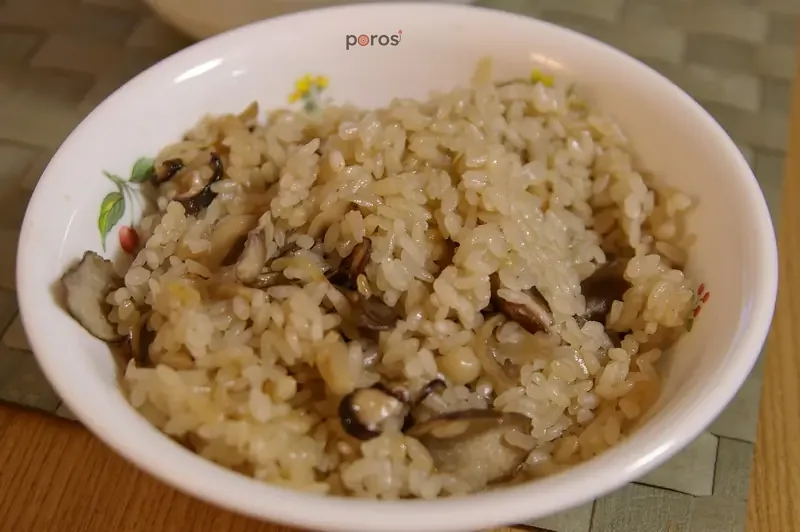
- As a powder: for long storage, drying and grinding is an alternative to freezing; the cover photo is from our dried mushroom powder recipe.
If you do need to thaw them, use one of FSIS's three safe methods: in the fridge, in cold water or in the microwave. Never thaw on the kitchen counter. All our recipes are in the recipes section.
Can frozen mushrooms make you sick? Safety rules
Properly prepared edible mushrooms kept frozen won't make you ill, but freezing doesn't make a poisonous species or a spoiled mushroom safe. FSIS explains that freezing to 0 °F (−18 °C) inactivates bacteria, yeasts and moulds in food but doesn't kill them, and that once thawed they can multiply again. Mushrooms come out of the freezer in the condition they went in; the freezer just stops the clock.
With poisonous mushrooms the picture is even clearer. The death cap's amatoxins are heat- and cold-stable; neither cooking nor freezing reduces their effect. Oregon State also notes that toxins in poisonous species aren't destroyed by drying or cooking. There is no such thing as poison “wearing off” in the freezer.
Rules for freezing safely:
- Freeze only fresh, sound mushrooms whose species is known for certain.
- Don't leave cooked mushrooms on the counter for long; cool them quickly and freeze.
- Cook thawed mushrooms as soon as possible. FSIS says the unused portion of cooked food thawed in the fridge can be refrozen, though quality may suffer.
- Don't eat slimy, foul-smelling or mouldy mushrooms, whether they came out of the freezer or not.
- If you have nausea, vomiting or diarrhoea after eating mushrooms, call 112 in Turkey (the poison centre is 114; elsewhere, your local emergency or poison line).
How long fresh mushrooms last in the fridge and how to tell when they've gone off is covered in how long mushrooms last in the fridge. If you'd rather dry them, see how to dry mushrooms.
FAQ
Can you freeze raw mushrooms?
You can, but they release water and turn rubbery when thawed. For better results, sauté or steam them first, cool, then freeze in portions.
How long do frozen mushrooms last?
In one study, unblanched frozen button mushrooms kept their quality for 4 months and blanched ones for 8. Food kept at 0 °F (−18 °C) stays safe; the time limit is about quality.
Can frozen mushrooms make you sick?
Properly prepared edible mushrooms won't become poisonous in the freezer. But freezing doesn't make a poisonous species or a spoiled mushroom safe, and microbes can multiply again after thawing.
Do you need to thaw frozen mushrooms before cooking?
No. Mushrooms cooked before freezing go straight into soup, sauce or a hot pan, which also helps preserve their texture.
Can you freeze oyster mushrooms?
Yes. They're delicate, so sauté them briefly and cool them before freezing rather than freezing them raw.
Is it better to freeze or dry mushrooms?
It depends on use. Freezing keeps a texture close to sautéed mushrooms and suits a few months' storage. Drying takes less space and concentrates flavour, which is good for soups, sauces and mushroom powder.
Can you freeze cooked mushrooms?
Yes. Let sautéed mushrooms, mushroom sauce or a mushroom stew cool completely, then freeze in portions in airtight containers or freezer bags. Reheat from frozen in a pan or pot for the best texture.
Should you wash mushrooms before freezing?
Clean them, but never freeze them wet. Wet mushrooms build up ice crystals and stick together; pat them dry, then sauté or steam, cool and freeze.
Sources
- USDA FSIS — Freezing and Food Safety fsis.usda.gov
- USDA FoodData Central — Mushrooms, white, raw (SR Legacy, FDC 169251) fdc.nal.usda.gov
- National Center for Home Food Preservation (NCHFP) — Freezing Mushrooms nchfp.uga.edu
All sources (7)
- Oregon State University Extension — Preserving mushrooms (SP 50-919) extension.oregonstate.edu
- Colorado State University Extension, Preserve Smart — Freezing mushrooms apps.chhs.colostate.edu
- Jaworska G., Bernaś E., Cichoń Z. ve ark. — Establishing the optimal period of storage for frozen Agaricus bisporus, depending on the preliminary processing applied (IIR FRIDOC kaydı) iifiir.org
- Marttaliitto (Martat) — Chanterelle martat.fi