Is mushroom picking legal in Turkey? Forest and park rules
Can you pick wild mushrooms in Turkey's forests and national parks? What the Forest Law and the National Parks Law say, and what to check before you go.
 Cihat Murat Yüksel
News
Updated: 7 min read
It depends on where you are. Most forests in Turkey are state forests, and under Forest Law No. 6831 non-timber forest products such as mushrooms are allocated by the forest administration, in announced areas and periods, primarily to forest villagers and cooperatives for a set fee. In national parks, Law No. 2873 prohibits any production of forest products that would disturb the natural balance. A handful for your own dinner is treated very differently from commercial collecting. None of this is legal advice; ask the local forest management office before you pick.
Why this question comes up
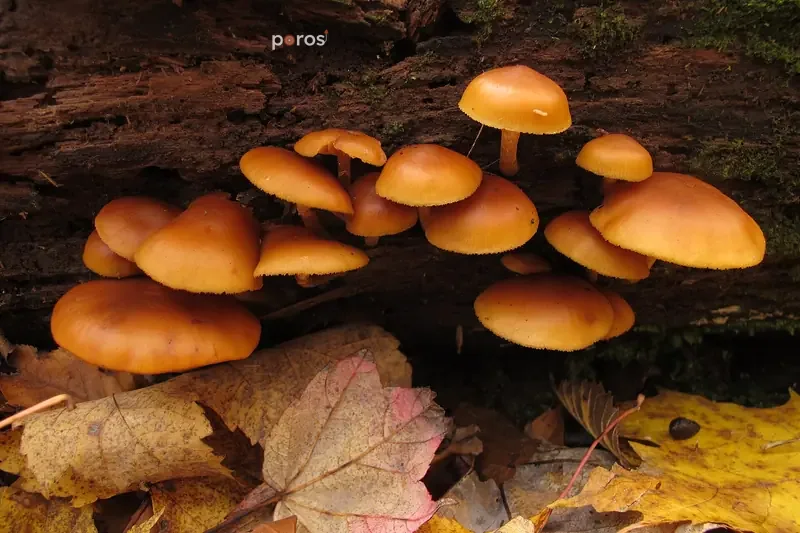
Wild mushrooms are a common sight at Turkish village markets, especially kanlıca (saffron milk cap), sarıkız (chanterelle) and kuzugöbeği, the Turkish name for morels, literally "lamb's belly button". So visitors naturally ask whether they can simply walk into a forest and pick their own.
Mushroom collecting is a living tradition in Turkey's Black Sea, Aegean and Mediterranean regions, yet Turkish forests are mostly state land and forest products are protected by law. We are not lawyers and offer no legal interpretation here. We can tell you what the laws in force actually say, link to the official texts, and explain what that means in practice for a walker or forager.
What the Turkish Forest Law says
Article 37 of Forest Law No. 6831 covers forest products outside the annual timber production programme, which means everything except logs, poles, fuelwood, resin and similar items. These products can be collected within areas and periods set by the forest administration. The right goes first to forest village development cooperatives, or to villagers living in or near the forest, after a public announcement and on payment of a tariff fee.
Mushrooms fall under these non-timber forest products (in Turkish, "odun dışı orman ürünleri"). Additional articles of the same law state that such products may be given to village legal entities, agricultural development cooperatives, producer unions and local people for a tariff fee. The forest administration, then, decides who collects what, where and when.
Commercial collecting, picking sacks of mushrooms to sell, is therefore not something an individual can do freely. In some regions valuable species such as morels and truffles are collected through tenders or via local cooperatives. These arrangements are managed by the General Directorate of Forestry (OGM), part of the Ministry of Agriculture and Forestry, and its regional directorates.
National parks: do not pick
National Parks Law No. 2873 is much stricter. Article 14 says that in areas covered by the law the natural and ecological balance may not be disturbed, wildlife may not be destroyed, and no forest products may be produced in a way that upsets the natural balance. This applies to national parks, nature parks, natural monuments and nature conservation areas.
We therefore recommend that you do not pick mushrooms at all in protected areas such as Kazdağı (Mount Ida) National Park, Yedigöller or the Kaçkar Mountains. Photographing and recording fungi is welcome and useful, and on our foraging routes we mark protected area boundaries separately so you know where picking is off the table.
If you are walking in a national park and see a beautiful Caesar's mushroom or a patch of chanterelles, take a picture and leave it. Rangers can and do intervene, and the law is clear.
A few mushrooms for your own table
The law does not set a specific personal allowance, such as one kilogram per person per day, the way some European regions do. In practice, villagers and walkers who pick a few mushrooms for their own meal are treated differently from commercial pickers, but this is a matter of local practice rather than a right written into law.
If a region has announced a collection ban, a tender or a specific season, that announcement applies to everyone. Before you go, call the local forest management office (orman işletme şefliği), read the notice boards at forest entrances, and ask in the village. On private land you need the owner's permission.
A practical checklist before you go
With the legal and safety sides together, this is the checklist we suggest. Field detail is in our foraging guide, and the mushroom calendar goes through the year month by month.
- Is the area a national park, nature park or conservation area? If so, do not pick.
- In state forests, check whether the forest office has announced a ban, a tender or a collection season.
- On private land, ask the owner first.
- Do not pick to sell; commercial collection requires permission and a fee.
- Take only what you will eat, cut rather than rip, and leave small and old specimens.
- Use a ventilated basket, keep species separate, and save the emergency numbers 112 and 114 in your phone.
Legal does not mean safe
A mushroom picked in a permitted place is not thereby fine to eat, though that's the most common mistake we see. Legal permission says nothing about edibility. Every year Turkey records wild mushroom poisonings, and the most serious cases involve deadly species such as the death cap (Amanita phalloides). Our poisonous mushrooms section shows the look-alikes that cause most trouble.
If you are not completely sure of the species, do not eat it. If you develop nausea, vomiting, diarrhoea or abdominal pain after eating wild mushrooms in Turkey, call 112, the national emergency number. The Turkish poison centre, UZEM (Ulusal Zehir Danışma Merkezi), answers on 114 around the clock. We explain how the line works in our poison information line article.
What about buying at markets?
A village market feels safer, and often it is, but market mushrooms were also picked in the wild and nobody may have checked the species. We go through what to look at in our piece on market mushrooms. Cultivated button mushrooms, oyster mushrooms and shiitake from registered growers are more predictable.
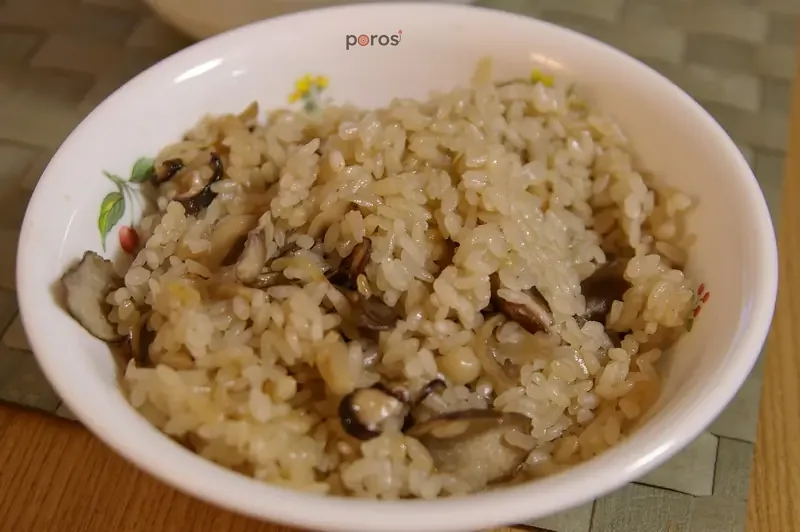
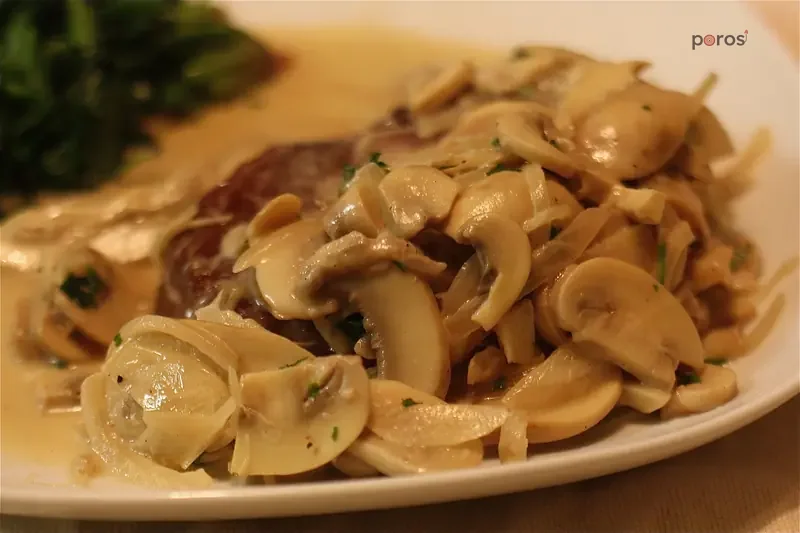
A sensible approach for visitors is to enjoy wild mushrooms cooked in a restaurant or by local hosts who have picked them for generations, and to treat your own forest finds as something to photograph rather than eat, unless you are an experienced forager.
Why the rules exist
Fungi matter to a forest well beyond the table. Many forest mushrooms live in partnership with tree roots and help forests grow, and heavy commercial picking, raking leaf litter and trampling can damage the hidden network of mycelium. The allocation system in the Forest Law is meant to keep collection orderly and to give forest villages a fair share of the income. Morels, for example, are an export product for Turkey, which is one reason their collection is often organised.
FAQ
Is it illegal to pick mushrooms in Turkey?
There is no blanket ban, but non-timber forest products in state forests are managed by the forest administration under Forest Law No. 6831. Commercial picking requires permission and a fee.
Can I pick mushrooms in Turkish national parks?
No. National Parks Law No. 2873 prohibits producing forest products in a way that disturbs the natural balance. We recommend photographing, not picking.
Is there a personal limit for picking mushrooms in Turkey?
The law does not set a fixed personal allowance. Local announcements apply, so ask the forest management office or local villagers.
Can tourists forage for mushrooms in Turkey?
The same rules apply to everyone. Avoid protected areas, respect local notices, and do not eat anything you cannot identify with complete certainty.
Can I sell mushrooms I picked in Turkey?
Commercial collection and sale are subject to permission and tariff fees from the forest administration. Do not pick to sell without that.
What should I do if I feel ill after eating wild mushrooms in Turkey?
Call 112 immediately. The Turkish poison centre UZEM answers on 114. Keep any leftover mushrooms for identification.
Sources
- Mevzuat Bilgi Sistemi — 6831 sayılı Orman Kanunu (Madde 37, Ek madde metinleri) mevzuat.gov.tr
- Mevzuat Bilgi Sistemi — 2873 sayılı Milli Parklar Kanunu (Madde 14) mevzuat.gov.tr
- T.C. Tarım ve Orman Bakanlığı — Orman Genel Müdürlüğü ogm.gov.tr
All sources (4)
- Wikipedia (EN) — Morchella en.wikipedia.org
Last updated: 19 November 2026