

Mushroom glossary · Biology and ecology
What is a saprotroph?
Also called: saprophyte, saprobe, decomposer
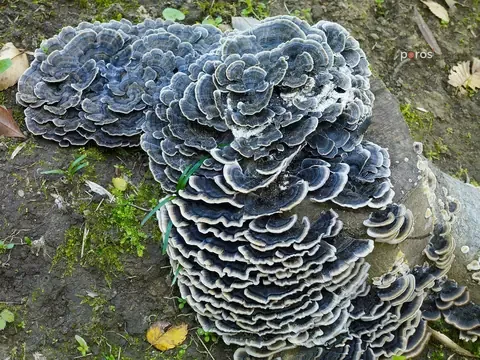
A saprotroph is an organism that feeds on dead organic matter. A saprotrophic fungus releases enzymes onto dead wood, leaves or straw, digests the material where it lies and absorbs the dissolved nutrients through its hyphae. In this way natural waste is broken down and nutrients return to the soil. The oyster mushroom is one example.
How does a saprotrophic fungus feed?
A saprotrophic fungus does not swallow its food. It digests it outside its body. The hyphae release enzymes into their surroundings. Proteins are broken into amino acids, fats into fatty acids and glycerol, and starch and cellulose into sugars. These small molecules are taken up by the hyphae and passed along the mycelium.
This way of feeding needs water and oxygen. Most saprotrophs prefer neutral to mildly acidic conditions and grow best at around twenty-five degrees.
Why do saprotrophic fungi matter?
Saprotrophs are nature's recyclers. They break down dead wood, fallen leaves and plant debris and return the nutrients to the soil. Lignin, the tough component of wood, is hard to break down. The fungi that manage it are those that cause white rot.
Most mushrooms that come up in lawns and gardens also feed on buried scraps of wood, dead roots and similar remains. The University of California calls these fungi beneficial because they decompose organic matter and make nutrients available to other plants.
Saprotroph, parasite or mycorrhizal: what is the difference?
The three terms describe where a fungus gets its food. A saprotroph lives on dead matter. A parasitic fungus feeds on a living host and harms it. A mycorrhizal fungus trades with living plant roots. The lines are blurred: honey fungus is a parasite on living trees and feeds on dead wood as well.
The oyster mushroom is a white-rot saprotroph found in the wild on dead and dying hardwoods. Button mushrooms are grown on compost. Being a saprotroph says nothing about whether a mushroom is edible.
Pages related to Saprotroph



Related terms
- White rotWood decay in which fungi break down lignin, cellulose and hemicellulose, leaving wood pale.
- Brown rotWood decay in which fungi remove cellulose and leave lignin, cracking wood into brown cubes.
- MycorrhizaA partnership between a fungus and plant roots that trades water and minerals for sugars.
- Parasitic fungusA fungus that takes its food from a living host and harms it in the process.
- SubstrateThe material, such as straw, sawdust or logs, that mushroom mycelium grows on and feeds from.
Frequently asked questions
Are saprotrophic fungi harmful?
In nature most are beneficial, because they decompose organic matter and release nutrients that plants can use. Mushrooms in a garden usually do the lawn no harm. Some saprotrophic mushrooms are poisonous, however, so it is wise to remove any that children or pets could reach.
Are home-grown mushrooms saprotrophs?
Oyster mushrooms and button mushrooms are. The oyster mushroom is a wood decomposer and the button mushroom is grown on compost. Neither needs a living tree. Mycorrhizal species such as ceps and truffles, by contrast, live attached to tree roots.
Can a saprotrophic fungus grow on a living tree?
It can. Most wood-decay fungi get into a tree through wounds such as broken limbs or poor pruning cuts, and they are commoner on old, weak trees. Some rot the heartwood of a living tree and carry on decomposing the wood after the tree has died.
Sources
- UC Statewide IPM Program – Mushrooms in Lawns ipm.ucanr.edu
- Wikipedia (EN) – Saprotrophic nutrition en.wikipedia.org
- Wikipedia (EN) – Wood-decay fungus en.wikipedia.org