


Turkey tail
Trametes versicolor · Polyporaceae
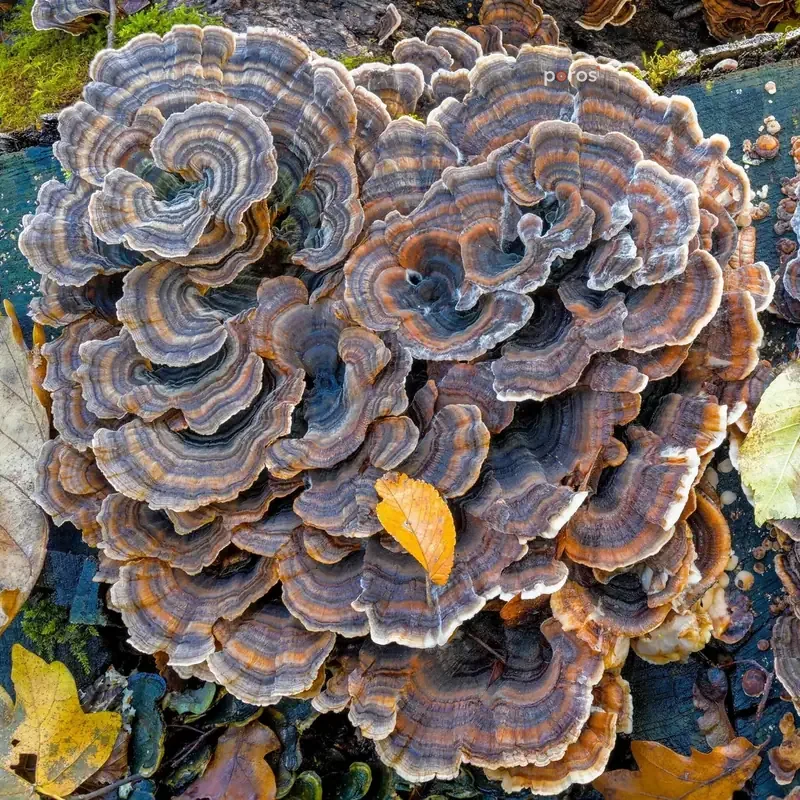
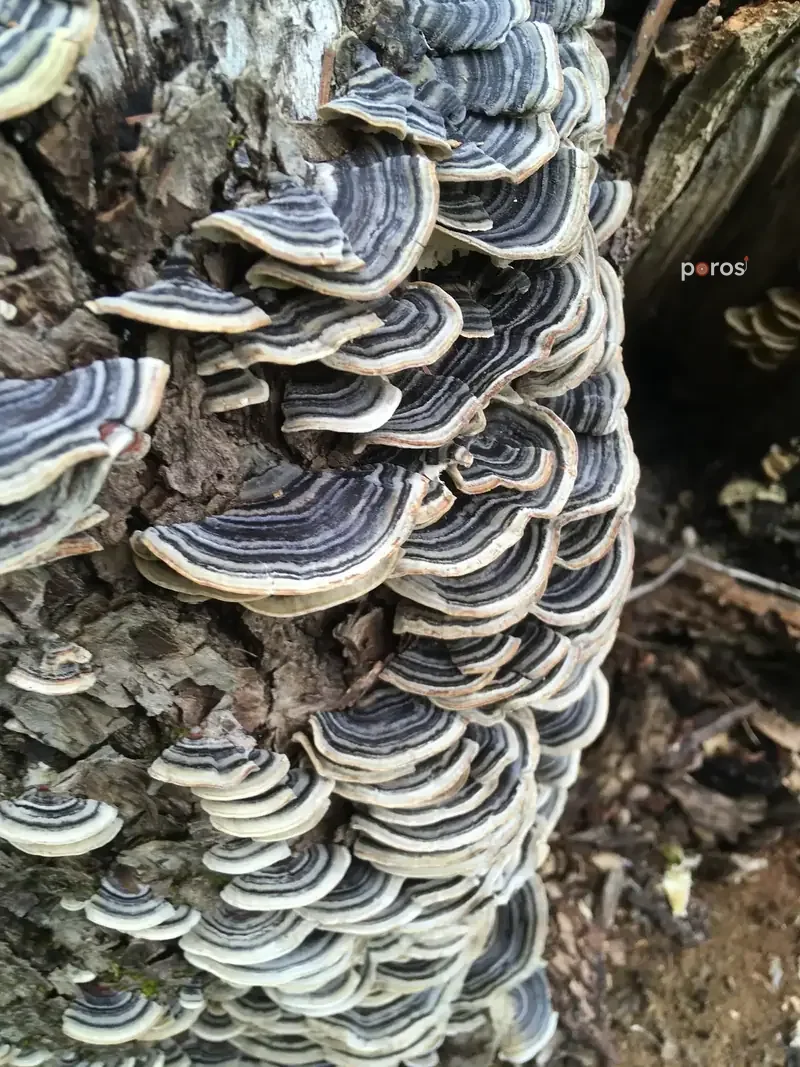
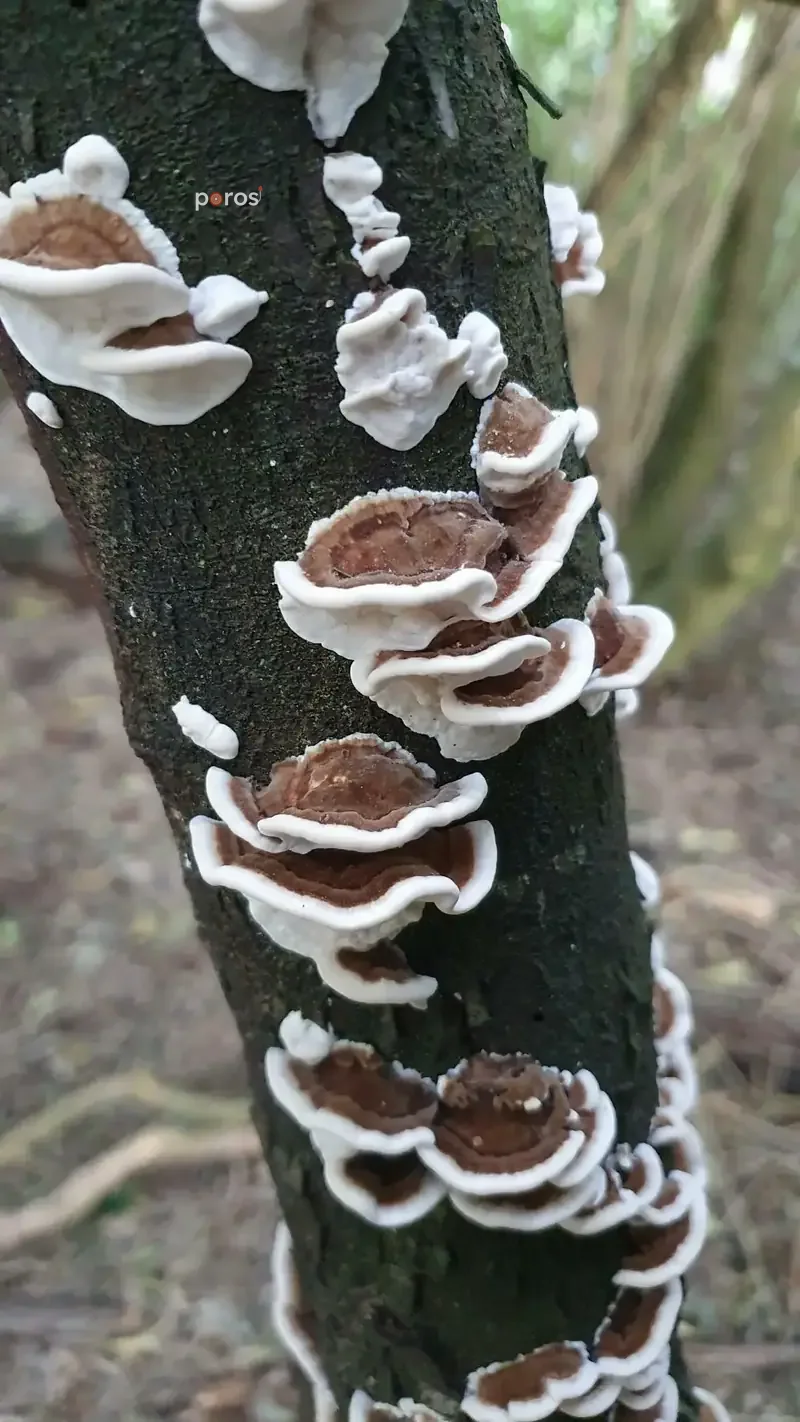
Turkey tail is one of the most familiar bracket fungi, forming tiers of thin, fan-shaped caps banded in brown, grey, blue and cream on dead stumps and branches.
Last updated: Prepared by the Poros Mantar editorial team6 sources checkedReport a correction
Turkey tail is one of the most familiar bracket fungi, forming tiers of thin, fan-shaped caps banded in brown, grey, blue and cream on dead stumps and branches. The underside is white with tiny pores, never gills. It is far too tough to eat as food; in East Asia it is dried and simmered as a traditional preparation.
Also called: many-zoned polypore Turkish: Hindi kuyruğu, alacalı kav, çok renkli kav mantarı
How to recognise it
Turkey tail, part by part
No ring or volva Spore print: White Not distinctive; the flesh is leathery, tough and flexible.


When and where
All year
- Janin season
- Febin season
- Marin season
- Aprin season
- Mayin season
- Junin season
- Julin season
- Augin season
- Sepin season
- Octin season
- Novin season
- Decin season
Turkey tail is tough and long-lived, so it can be seen all year; Turkish GBIF records cluster between October and March.
Type InedibleMedicinal (traditional)Species used in traditional medicine; not a treatment. Source
Months seen JanuaryFebruaryMarchAprilMayJuneJulyAugustSeptemberOctoberNovemberDecember
Regions Black Sea RegionCentral Anatolia RegionMediterranean RegionAegean RegionMarmara RegionMuğlaAnkaraKocaeliSakaryaBoluIstanbulBalıkesirKırklareli
Where does turkey tail grow?
Turkey tail grows on dead hardwood, above all oak, beech and hornbeam, and only rarely on conifers; it decomposes wood and causes a white rot.
Where is turkey tail found in Turkey?
In Turkey, turkey tail records come mostly from the northern forests of İstanbul, Thrace and the western Black Sea (Bolu, Sakarya), and it can turn up in almost any wooded region.
- İstanbul30
- Bolu9
- Muğla5
- Sakarya3
- Kocaeli3
- Balıkesir3
- Kırklareli3
- Ankara2
- Antalya1
- Manisa1
- Çanakkale1
- Yalova1
Other provinces: Adana (1), Samsun (1), Rize (1), Düzce (1), Tekirdağ (1)
Which months
- Jan6
- Feb8
- Mar9
- Apr1
- May8
- Jun1
- Jul6
- Aug2
- Sep4
- Oct14
- Nov4
- Dec4
turkey tail map of Turkey: all provinces and months →
17 provinces, 67 observations (GBIF, iNaturalist); months from observation dates. Record density also reflects where observers work.
Latest turkey tail observations
-
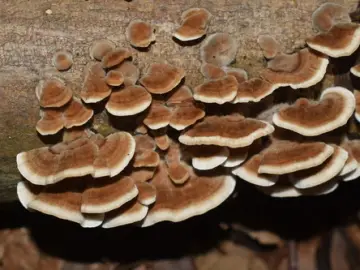 İstanbul5 Oct 2025 · iNaturalist© Umut Nuri Erdoğan · CC BY
-
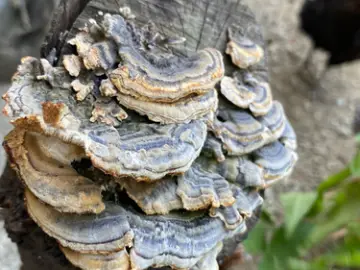 Yalova15 Aug 2025 · iNaturalist© Mehmet · CC BY
-
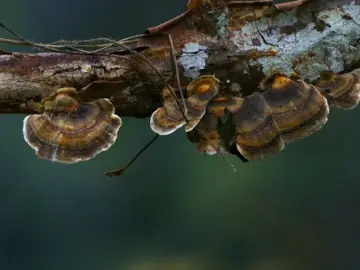 Kırklareli2 Nov 2024 · iNaturalist© Asrın Akıncıoğlu · CC BY
-
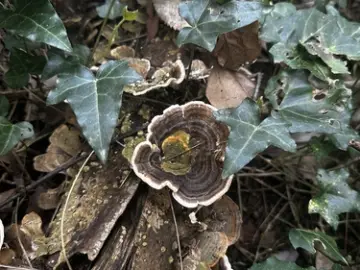 İstanbul30 Mar 2024 · iNaturalist© Umut Nuri Erdoğan · CC BY
-
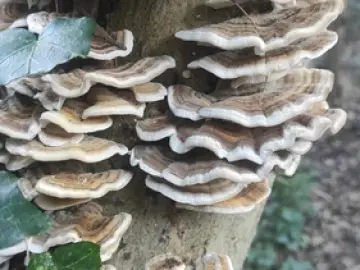 İstanbul20 Feb 2024 · iNaturalist© Umut Nuri Erdoğan · CC BY
-
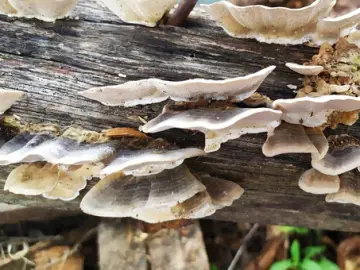 Kırklareli23 Nov 2019 · iNaturalist© Asrın Akıncıoğlu · CC BY
-
 Illustrative
Bolu30 Oct 2026 · iNaturalist
-
 Illustrative
Bolu29 Oct 2026 · iNaturalist
- See on the map
On "illustrative" cards the image is a photo of the species; the observation photo cannot be shown here because of its licence, but can be seen at the source.
Look-alikes
What could it be confused with?
Turkey tail can be mistaken for the species below. Each card shows the look-alike and how it differs from Turkey tail.
 Inedible
not Turkey tail
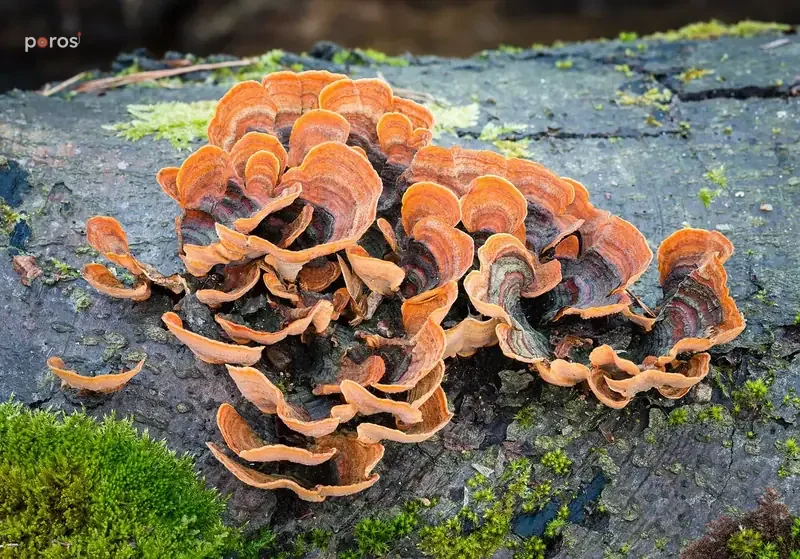
Hairy curtain crust Stereum hirsutum
Its underside is smooth and orange-yellow with no pores, and the cap is thicker with coarse hairs.
 Inedible
not Turkey tail
Hairy bracket Trametes hirsuta
Its cap is grey-cream and coarsely hairy with muted bands; the underside is also porous.
 Inedible
not Turkey tail
Violet-toothed polypore Trichaptum biforme
The underside is violet-tinged with torn, tooth-like pores.
 Inedible
not Turkey tail
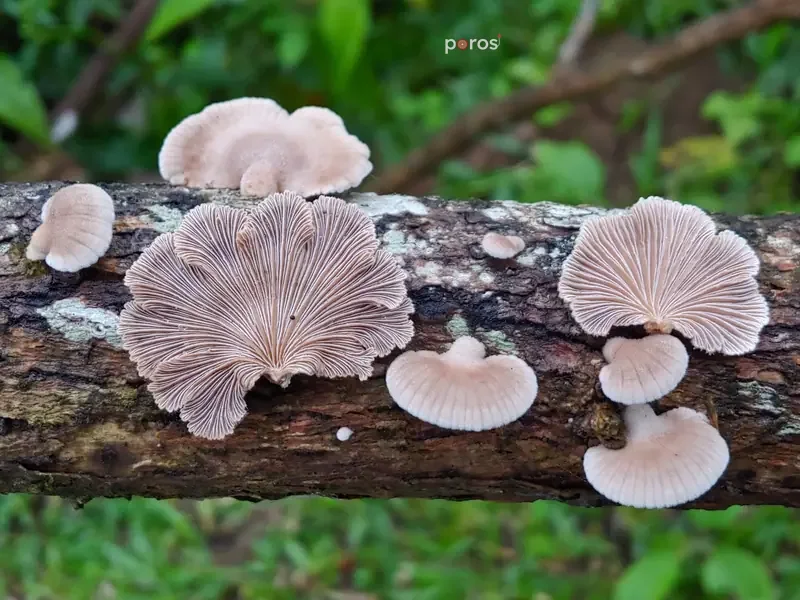
Split gill Schizophyllum commune
It is also a small hairy fan on dead wood, but has gills split down the middle underneath instead of pores.
What it contains
Polysaccharides from turkey tail known as PSK and PSP are being studied in clinical research; this does not make the mushroom a treatment.
General information, not a health claim.
Turkey tail is not eaten as food, and any health use should be discussed with a doctor. This page is not medical advice.
Grow it, buy it
Turkey tail price list

Turkey tail (Trametes versicolor) liquid culture in a sterile syringe. A woody, colourful bracket; colonises logs and sawdust easily.
510 ₺
| Product | Us | Market (sourced, dated) |
|---|---|---|
| Turkey tail tea | Made to order · ask | — |
| Turkey tail capsules (food supplement) | Made to order · ask | — |
We make our turkey tail products in small batches, to order; send a request and we email you the price and delivery date. The market column shows prices seen on other sellers' pages on the date given; they are not our prices and may have changed.
Frequently asked questions
Can you eat turkey tail?
Turkey tail is not poisonous, but its leathery flesh is far too tough to eat as food. In East Asia it is dried and simmered for a long time as a traditional preparation.
Where does turkey tail grow in Turkey?
It grows on dead hardwood stumps and branches in almost any forest. GBIF and iNaturalist records come mostly from the northern forests of İstanbul, Thrace and the western Black Sea.
How do you tell turkey tail from false turkey tail?
Flip the cap: turkey tail has a white underside with tiny pores. Look-alikes such as hairy curtain crust (Stereum hirsutum) have a smooth underside with no pores.
When can you find turkey tail?
Because it is tough and long-lived it can be found all year, but fresh, brightly banded brackets appear mostly after autumn and winter rain.
Is turkey tail tea medicinal?
Turkey tail has a long traditional use in East Asia and its polysaccharides are being researched. It is not proven to treat any disease; talk to a doctor before using it.
Why is it called turkey tail?
Its fan-shaped caps, banded in brown, grey and cream, look like the spread tail of a wild turkey, hence the name.
What other mushrooms look like turkey tail?
Besides the false turkey tail (Stereum), the hairy curtain crust and some small brackets such as Trichaptum species look similar. Turkey tail has tiny pores underneath; the look-alikes have a smooth underside or teeth. We turn the bracket over before naming it.
Is false turkey tail poisonous?
False turkey tail usually means the hairy curtain crust (Stereum hirsutum) or a similar crust fungus. It is not known as a dangerous mushroom, but it is tough and leathery and nobody eats it. We tell the two apart by the underside: false turkey tail is smooth, while turkey tail has tiny pores.
When is turkey tail season in Turkey?
In our calendar, turkey tail is recorded all year. Turkey tail is tough and long-lived, so it can be seen all year; Turkish GBIF records cluster between October and March.
Where does turkey tail grow?
Turkey tail grows on dead hardwood, above all oak, beech and hornbeam, and only rarely on conifers; it decomposes wood and causes a white rot.
Where is turkey tail found in Turkey?
In Turkey, turkey tail records come mostly from the northern forests of İstanbul, Thrace and the western Black Sea (Bolu, Sakarya), and it can turn up in almost any wooded region.
What can turkey tail be confused with?
Turkey tail can be confused with hairy curtain crust (Stereum hirsutum, inedible), hairy bracket (Trametes hirsuta, inedible), violet-toothed polypore (Trichaptum biforme, inedible) and split gill (Schizophyllum commune, inedible). Look-alikes are compared on this page.
What is turkey tail called in Turkish?
In Turkish, turkey tail (Trametes versicolor) is called Hindi kuyruğu; other local names include alacalı kav and çok renkli kav mantarı.
Related species
-
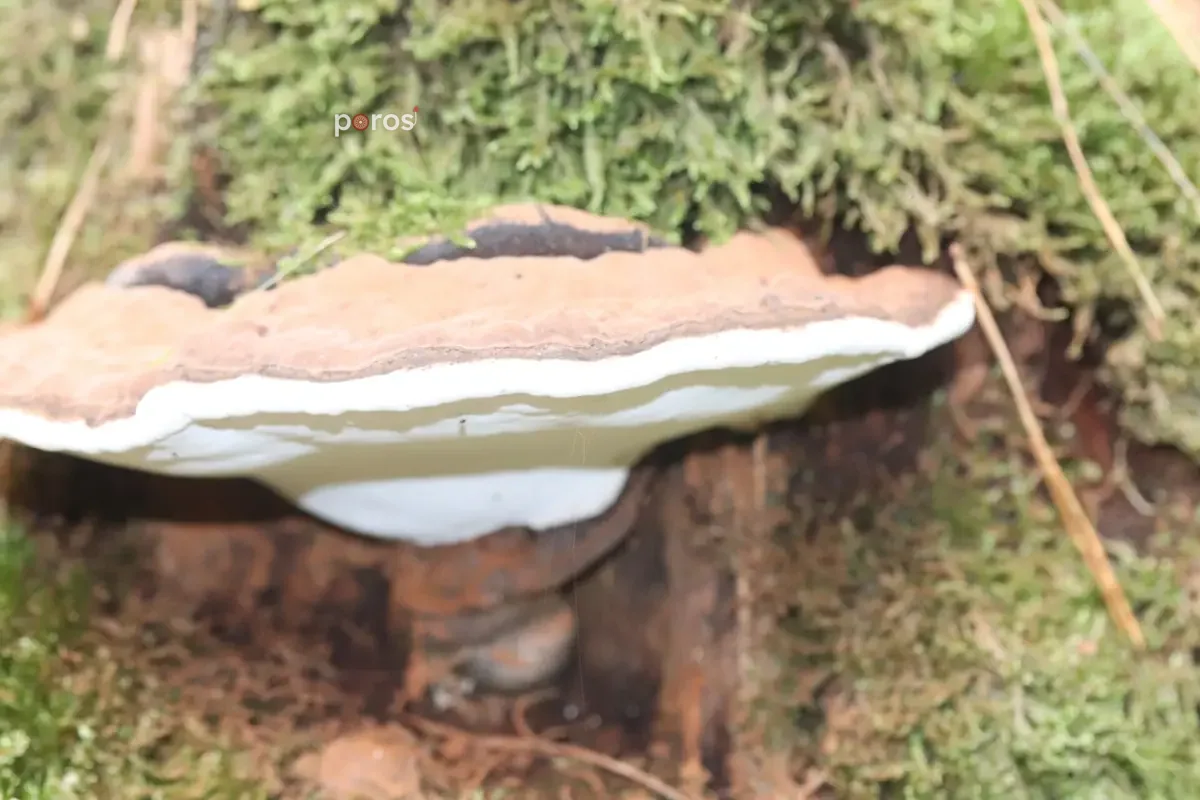 Artist’s bracketGanoderma applanatumInedible
-
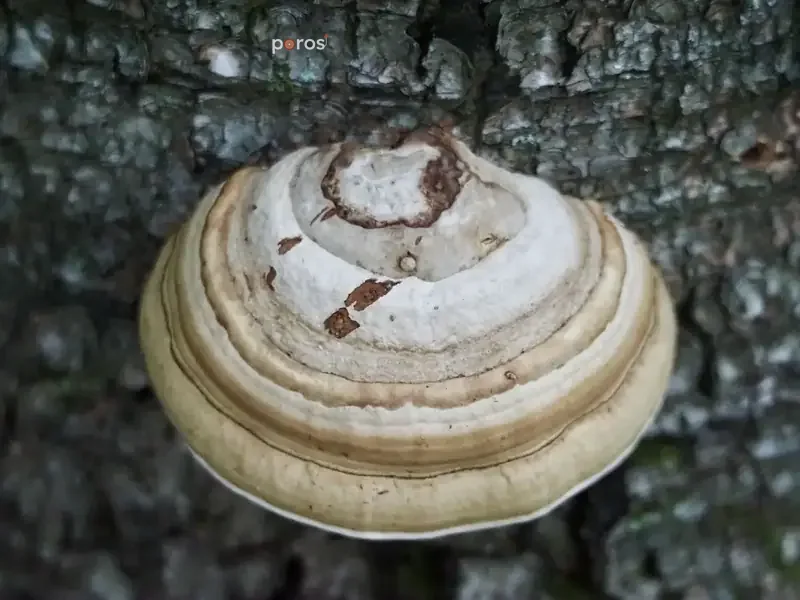 Tinder fungusFomes fomentariusInedible
-
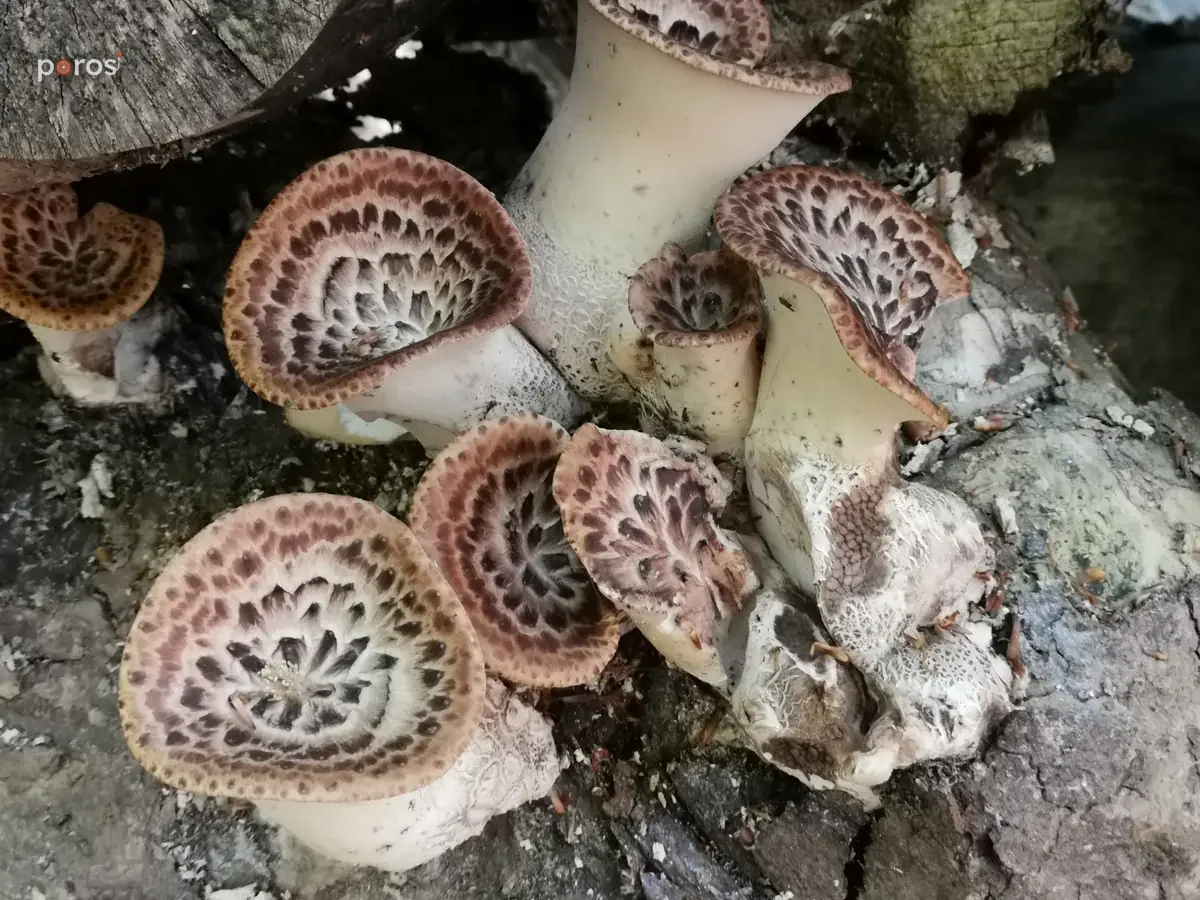 Dryad’s saddleCerioporus squamosusEdible species
-
 ReishiGanoderma lucidumTraditional use
-
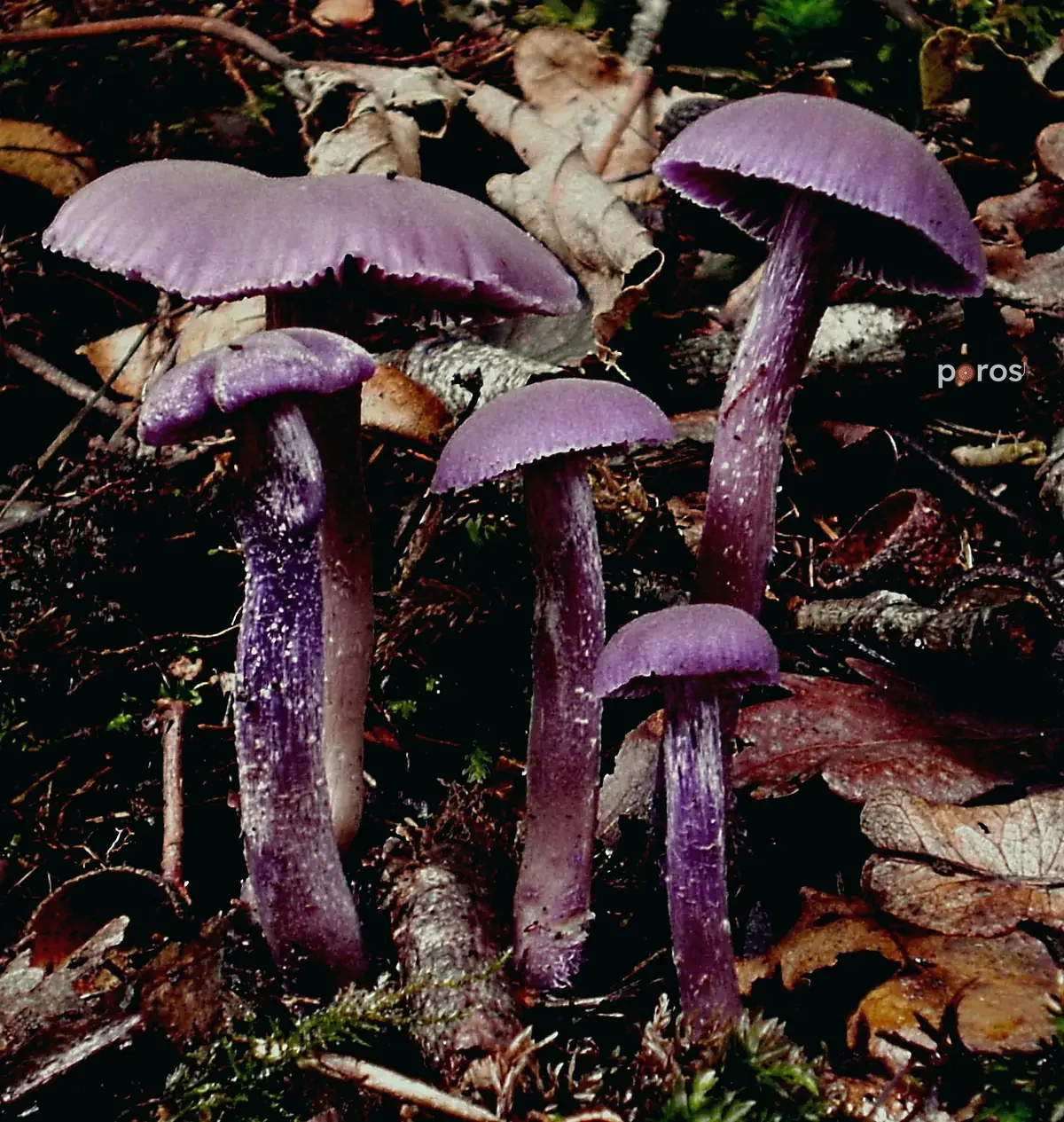 Amethyst deceiverLaccaria amethystinaInedible
-
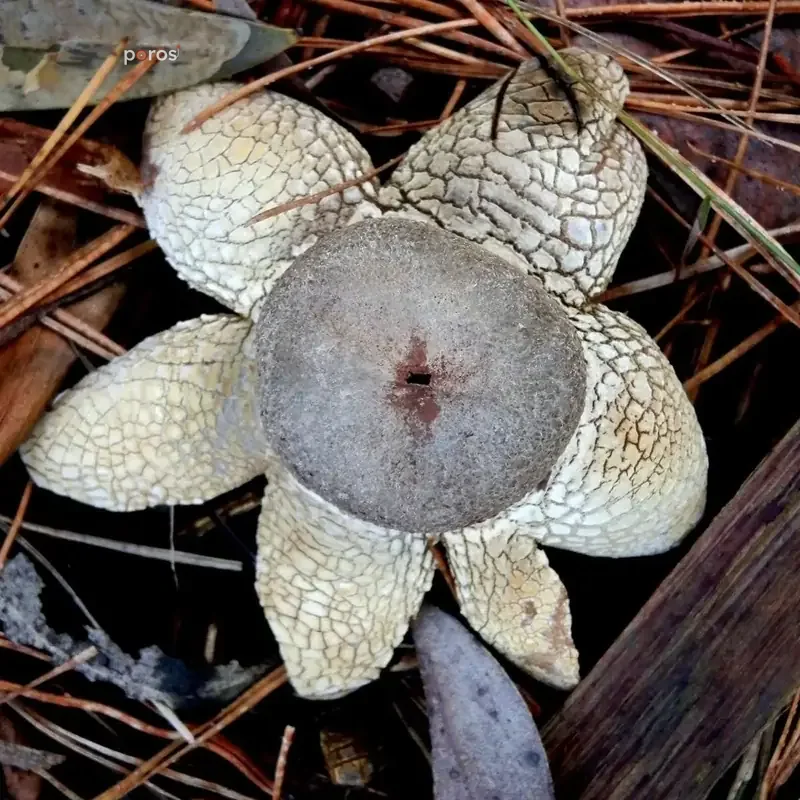 Barometer earthstarAstraeus hygrometricusInedible
-
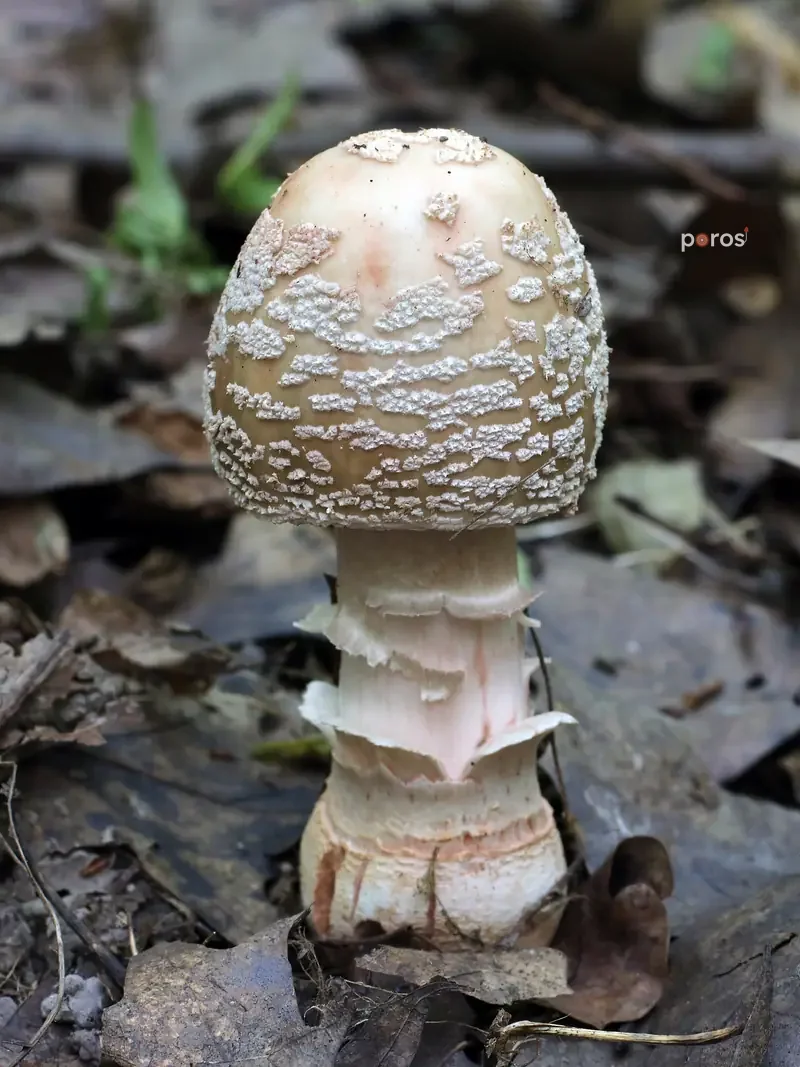 BlusherAmanita rubescensInedible
-
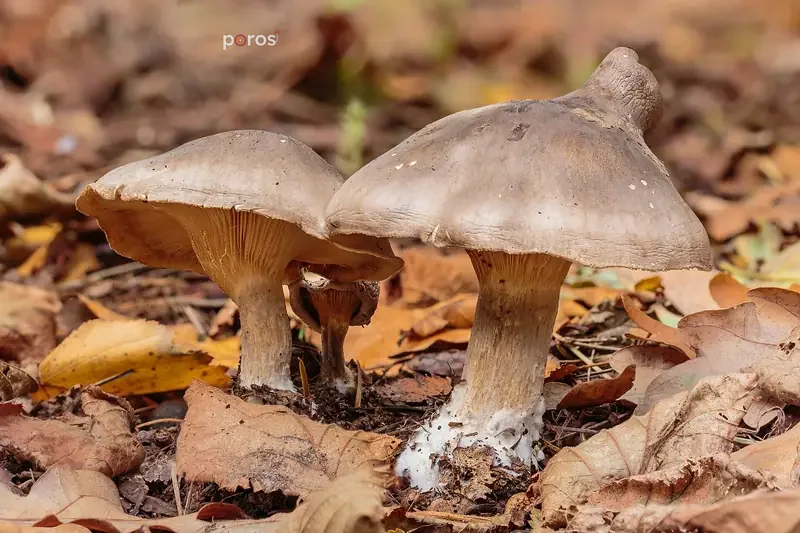 Clouded funnelClitocybe nebularisInedible
Sources
- Habtemariam (2020), Biomedicines: Trametes versicolor polisakkaritleri pubmed.ncbi.nlm.nih.gov
- Adanacıoğlu ve ark. (2014), ANADOLU (Ege Tarımsal Araştırma Enstitüsü): Türkiye makromantar genetik kaynakları I. Ege Bölgesi dergipark.org.tr
- Wikipedia (EN): Trametes versicolor en.wikipedia.org
All sources (6)
- First Nature: Trametes versicolor first-nature.com
- GBIF: Türkiye kayıtları gbif.org
- iNaturalist: Türkiye gözlemleri inaturalist.org
Photo credits (14)
- File:Trametes versicolor 342735621.jpg · Matej Frančeškin · CC BY 4.0
- Trametes versicolor · iNaturalist #96503798 · Christine Young · CC BY 4.0
- Trametes versicolor · iNaturalist #96503798 · Christine Young · CC BY 4.0
- Trametes versicolor · iNaturalist #96503798 · Christine Young · CC BY 4.0
- Trametes versicolor · iNaturalist #21964832 · Juli Mallett · CC BY 4.0
- Trametes versicolor · iNaturalist #232841636 · rgpowlesland · CC BY 4.0
- Trametes versicolor · iNaturalist #342350181 · C. · CC0
- Trametes versicolor · iNaturalist #36834943 · common_snowball · CC0
- iNaturalist: İstanbul, 5 Oct 2025 · Umut Nuri Erdoğan · CC BY
- iNaturalist: Yalova, 15 Aug 2025 · Mehmet · CC BY
- iNaturalist: Kırklareli, 2 Nov 2024 · Asrın Akıncıoğlu · CC BY
- iNaturalist: İstanbul, 30 Mar 2024 · Umut Nuri Erdoğan · CC BY
- iNaturalist: İstanbul, 20 Feb 2024 · Umut Nuri Erdoğan · CC BY
- iNaturalist: Kırklareli, 23 Nov 2019 · Asrın Akıncıoğlu · CC BY
