

Mushroom glossary · Biology and ecology
What is white rot?
Also called: white-rot fungi, white rot fungus
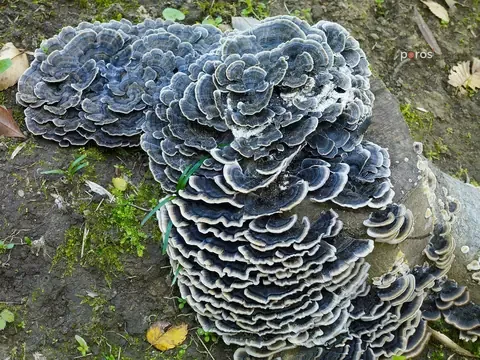
White rot is the wood decay caused by fungi that can break down all three main components of wood: lignin, cellulose and hemicellulose. The rotted wood turns moist, soft and spongy or stringy, and looks white or yellow. The name comes from the white colour of the cellulose left behind. Oyster mushrooms and turkey tail cause white rot.
How does white rot work?
Lignin gives plant cell walls their strength and durability, and it is very hard to break down. White-rot fungi use enzymes that split it into smaller molecules, chiefly lignin peroxidase, manganese peroxidase and laccase. The decayed wood becomes moist, soft, spongy or stringy.
These fungi also produce zone lines in the wood. Partly rotted timber marked in this way is known as spalted wood and is prized by woodworkers.
Why does white rot matter?
White-rot fungi are regarded as a vital part of the carbon cycle because they can reach stores of carbon that would otherwise stay locked away. By decomposing dead wood they return nutrients to the soil and create habitats for other species.
In a living tree the same ability does damage. Honey fungus causes a white rot of the roots and the base of the trunk. Decay is not always visible from outside. The University of California reports that a ten per cent loss in wood weight can mean a seventy to ninety per cent loss in strength.
Which mushrooms cause white rot?
White rot is found mostly in broadleaved trees and less often in conifers. The oyster mushroom, turkey tail and the tinder fungus belong to this group. Their counterparts are the brown-rot fungi, which break down cellulose and leave the lignin behind.
The kind of rot a fungus causes says nothing about whether it is edible.
Pages related to White rot



Related terms
- Brown rotWood decay in which fungi remove cellulose and leave lignin, cracking wood into brown cubes.
- SaprotrophAn organism that feeds by breaking down dead organic matter such as wood, leaves or compost.
- Parasitic fungusA fungus that takes its food from a living host and harms it in the process.
- SubstrateThe material, such as straw, sawdust or logs, that mushroom mycelium grows on and feeds from.
- BioluminescenceLight made by living things through a chemical reaction. Some mushrooms glow green in the dark.
Frequently asked questions
What is the difference between white rot and brown rot?
In white rot the fungus breaks down lignin too, and the wood turns pale, moist and stringy or spongy. In brown rot cellulose and hemicellulose are removed and lignin remains, so the wood goes brown, dries and cracks into cubes. White rot is commoner in broadleaved trees, brown rot in conifers.
Does white rot kill living trees?
It depends on the species. Some wood-decay fungi live on dead wood. Others enter through wounds and decay the wood of living trees. Honey fungus and some Ganoderma species cause extensive rot in roots and trunks. A decayed tree loses strength and may fall.
What are white-rot fungi used for?
In nature they decompose dead wood. Their lignin-degrading enzymes are being studied for mycoremediation, the use of fungi to clean up polluted sites. Most of what is known comes from work on turkey tail and on the species Phanerochaete chrysosporium.
Sources
- UC Statewide IPM Program – Wood Decay Fungi in Landscape Trees ipm.ucanr.edu
- Wikipedia (EN) – Wood-decay fungus en.wikipedia.org