Truffles in Turkey: where they grow and how they're found
Truffles grow underground with the roots of oak, hazel and other trees. Species recorded in Turkey, hunting with dogs, the seasons and truffle orchards.
 Cihat Murat Yüksel
In the wild
Updated: 9 min read
Truffles grow underground, attached to the roots of trees such as oak and hazel. Several species have been recorded in Turkey, notably the summer truffle (Tuber aestivum), Tuber borchii and the winter truffle (Tuber brumale), with Denizli and the Marmara region among example areas. Since they stay out of sight, they're mostly found by smell, with trained dogs. You can't grow them at home; orchards planted with inoculated seedlings take years to produce.
The short answer: underground, with oak and hazel roots
A truffle is a fungus that forms a partnership (mycorrhiza) with the roots of oak, hazel and some other trees and produces its fruiting body below ground. The sources collected on Wikipedia list oaks, hazelnut, cherry and other deciduous trees as partners of black truffles. The truffle takes carbohydrates from the tree and supplies nutrients such as potassium, phosphorus and nitrogen in return. That's why the tree always tells you where to look.
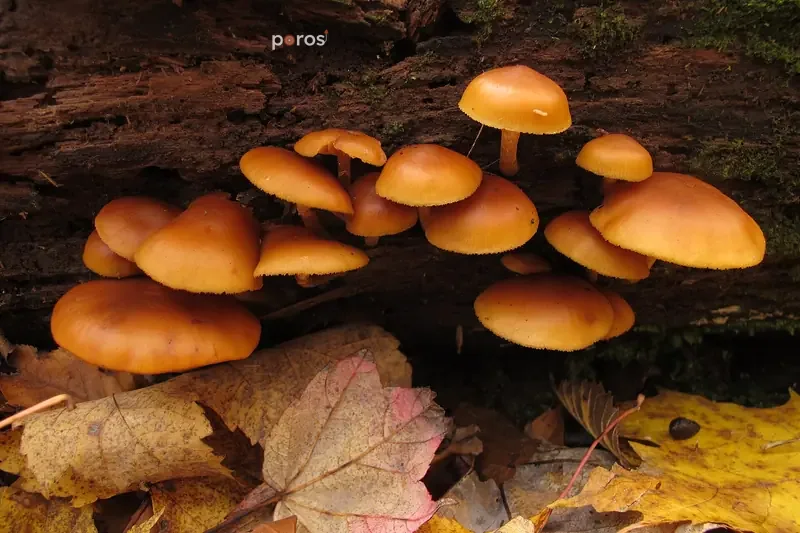
Truffles have no cap, stem or gills. What we see is a tuber-like fruiting body, formed underground; Wikipedia gives the summer truffle's diameter as 2–10 cm (1–4 in). Black species like the summer truffle on our cover have a rough skin covered in pyramid-shaped warts and marbled flesh inside.
Turkey is little known for truffles but rich in them. The sections below go through the species on record, how they're found, when they appear and how they're cultivated. The genus, its species and lookalikes are on our truffle species page.
Truffle species recorded in Turkey
Several true truffle (Tuber) species have been recorded in Turkey; the most often cited are the summer truffle (Tuber aestivum), Tuber borchii and the winter truffle (Tuber brumale). Reading the scientific records and the observation database together gives this picture:
- Denizli: a study by researchers from Muğla Sıtkı Koçman University, carried out between 2006 and 2010, identified Tuber aestivum, T. borchii, T. brumale and the desert truffle Terfezia boudieri in Denizli Province. It examines soil pH, lime, texture and organic matter as factors affecting truffle growth.
- New records from Anatolia: a study published in Mycotaxon reports eight truffle taxa new to Turkey, including Tuber ferrugineum and Tuber puberulum, and adds new Turkish localities for Tuber borchii.
- GBIF records: the global biodiversity database GBIF holds hundreds of Tuber records from Turkey, most identified only to genus and most from Gümüşhane, Bayburt and Erzurum. At species level, Tuber rufum has the most records, followed by T. borchii, T. aestivum, T. rapaeodorum, T. fulgens, T. brumale and T. macrosporum. There is a single record of the white truffle (T. magnatum); one record says nothing about the species' distribution in Turkey.
GBIF records show where observations were made, not where truffles are absent. You can see the overall distribution of Turkish mushroom records on the Turkey mushroom map.
How truffles are found: hunting with dogs
Truffles sit out of sight, so noses find them, and these days those noses mostly belong to trained dogs. A ripening truffle gives off a strong aroma that reaches the surface. Research cited by Wikipedia points to dimethyl sulfide as the main compound both pigs and dogs recognise.
Traditionally sows were used, but pigs tend to eat the truffles they find and dig up the ground. Wikipedia notes that Italy has banned the use of pigs for truffle hunting since 1985 because the animals damaged truffle mycelium while digging, cutting the area's production for several years. Dogs have no strong desire to eat truffles, can be trained to mark the spot, and are easier to control.
People searching without dogs use a few other clues:
- Flies: flies of the genus Suillia detect the truffle's aroma and lay eggs above it. Wikipedia says they can be seen hovering over truffles at ground level.
- The tree: truffles partner with the roots of beech, birch, hazel, hornbeam, oak, pine and poplar, according to Wikipedia; no host tree, no truffle.
- Tree and soil: searching under oak and hazel on well-drained, chalky soil makes more sense than digging at random.
Random digging damages both the mycelium and the forest soil. For the rules of picking in forests, see our mushroom foraging guide.
When are winter and summer truffles in season?
It depends on the species: summer truffles ripen in summer, winter truffles in late autumn and winter. On Wikipedia's dates the summer truffle (Tuber aestivum) is harvested from May to August, while the autumn form of the same species, known as the Burgundy truffle, runs from September to late December and sometimes late January. The black Périgord truffle (Tuber melanosporum) and the winter truffle (Tuber brumale) are late-autumn and winter truffles.
The monthly spread of Turkish GBIF records reflects this variety, with records spread across spring, autumn and winter months, but there are too few to draw a firm calendar. In practice: November to January is the time for winter species, and the summer months for the summer truffle.
For an overview of what fruits in which month, see our mushroom calendar; other species recorded in Turkey are on our mushroom species page.
Are domalan and truffles the same?
Domalan and truffles are related but different: domalan is the Turkish name for Terfezia, the genus known as desert truffles, while true truffles belong to the genus Tuber. Both form tuber-like fruiting bodies underground. Turkish Wikipedia links domalan to Terfezia and lists species such as Terfezia boudieri and Terfezia claveryi.
Desert truffles live not with trees but mostly with small shrubs such as rockrose (Helianthemum); Wikipedia says Terfezia boudieri partners with this plant and includes a photo of a desert truffle from Avanos in central Anatolia. The Denizli study also found Terfezia boudieri alongside Tuber species. So Turkey has both true truffles and domalan, in different habitats and with different partners.
Truffle cultivation: orchards of inoculated seedlings
Cultivation means planting seedlings whose roots have been inoculated with truffle mycelium in suitable soil, then waiting years for a result. Wikipedia traces the method to early-19th-century France, where seedlings and acorns gathered beneath truffle-producing oaks were planted elsewhere and, years later, truffles appeared around the new trees. Today the inoculation happens in the nursery. Tasmania's first truffle harvest, the same source notes, came after eight years of work with inoculated trees.
There has been public work in this area in Turkey too. According to a 2016 CNN Türk report, the General Directorate of Forestry prepared a Truffle Forest Action Plan for 2014–2018, which aimed to create 395 decares of artificial truffle forest, set up 18 gene conservation gardens and provide training in truffle cultivation. The report says the plan also aimed to train volunteer collectors to stop truffles being gathered at random.
Truffles don't grow at home, in a pot or in a bag; we explain why in do mushrooms have seeds. Without the tree, the soil and the climate together, there are no truffles.
Are truffles poisonous? What they get confused with
The true truffle species gathered commercially are edible, but not every tuber-like fungus in or on the soil is a truffle. Wikipedia rates the summer truffle's edibility as choice. The real risk is mistaking other tuber-shaped fungi for truffles.
The best-known example is the common earthball (Scleroderma citrinum). It grows on or half-buried in the soil, with a thick, scaly skin and a tuber-like shape; inside it's white at first, then purple-brown and black. First Nature notes conflicting reports about its toxicity but says it should be treated as toxic, a species for looking at, not cooking.
If in doubt, these differences help:
- True truffle: underground, near tree roots; marbled with veins in cross-section; a distinct, strong aroma.
- Earthball: usually on the soil surface; thick, hard skin; inside a uniformly coloured dark mass that turns to powder when mature.
- Puffballs: young ones are pure white and uniform inside. First Nature warns that death cap buttons can be mistaken for puffballs, and a lengthwise cut reveals the embryonic mushroom inside.
- If you're not sure: don't eat it. That rule applies to truffles too.
Why truffles are so valuable and what drives their price is covered in the most expensive mushroom. All poisonous species are on our poisonous mushrooms pages.
Which forests to look in
Look for truffles in forests dominated by oak and hazel, on chalky, well-drained soils; but oaks in a forest don't mean truffles are there. We can't yet say whether truffles have been recorded on our routes, but getting to know oak-dominated forests is a good start.
Belgrad Forest, north of Istanbul, is a deciduous forest dominated by sessile oak. The Istranca (Yıldız) Mountains form Thrace's forest belt facing the Black Sea; Thrace, where GBIF holds Tuber macrosporum records, is interesting in this respect. Kazdağları, between the Marmara and Aegean regions, has few mushroom records so far and is waiting to be explored. All routes are on our foraging routes page.
When gathering truffles or any mushrooms in forest areas, follow local rules and the forest administration's practices; commercial gathering and sale fall under the General Directorate of Forestry and its regional forest enterprises. Prices are outside the scope of this article.
FAQ
Are there truffles in Turkey?
Yes. The summer truffle (Tuber aestivum), Tuber borchii, the winter truffle (Tuber brumale) and other Tuber species have been recorded in Turkey, with records from Denizli, the Marmara region and eastern Anatolia.
How are truffles found?
Because they're underground, they're found by smell, mostly with trained dogs. Pigs were used in the past, but they tend to eat truffles and dig up the ground, so dogs are preferred today.
What trees do truffles grow under?
Mainly oak and hazel, and also cherry and other deciduous trees. Chalky, well-drained soils suit truffles.
Can you grow truffles at home?
No. Truffles depend on tree roots; orchards planted with seedlings inoculated with truffle produce after several years. They don't grow in pots or bags.
Is domalan the same as a truffle?
No. Domalan is Terfezia, the desert truffle, which lives with shrubs; true truffles belong to the genus Tuber and live with tree roots.
Are truffles poisonous?
Commercial truffle species are edible. But not every tuber-shaped fungus is a truffle; don't confuse them with species such as the common earthball, which is treated as toxic.
What is a mycorrhizal fungus?
A fungus that lives in partnership with plant roots: it brings water and minerals from the soil, and the plant gives it sugars from photosynthesis. Truffles, saffron milk caps and many other edible species live this way.
Sources
- Gezer K., Kaygusuz O., Çelik A., Işıloğlu M. — Ecological characteristics of truffles growing in Denizli Province, Turkey, Journal of Food, Agriculture and Environment 12(2), 2014 acikerisim.mu.edu.tr
- Elliott T.F., Türkoğlu A., Trappe J.M., Yaratanakul Güngör M. — Turkish truffles 2: eight new records from Anatolia, Mycotaxon 131(2), 2016 rune.une.edu.au
- Wikipedia (EN) — Truffle en.wikipedia.org
All sources (9)
- Wikipedia (EN) — Tuber aestivum en.wikipedia.org
- GBIF — Tuber, Türkiye kayıtları gbif.org
- Vikipedi (TR) — Domalan (Terfezia) tr.wikipedia.org
- Wikipedia (EN) — Terfezia en.wikipedia.org
- First Nature — Scleroderma citrinum, Common Earthball first-nature.com
- CNN Türk (27.01.2016) — Orman Genel Müdürlüğü Trüf Ormanı Eylem Planı cnnturk.com
Last updated: 19 November 2026