
Summer truffle (Burgundy truffle, scorzone)
Tuber aestivum · Tuberaceae

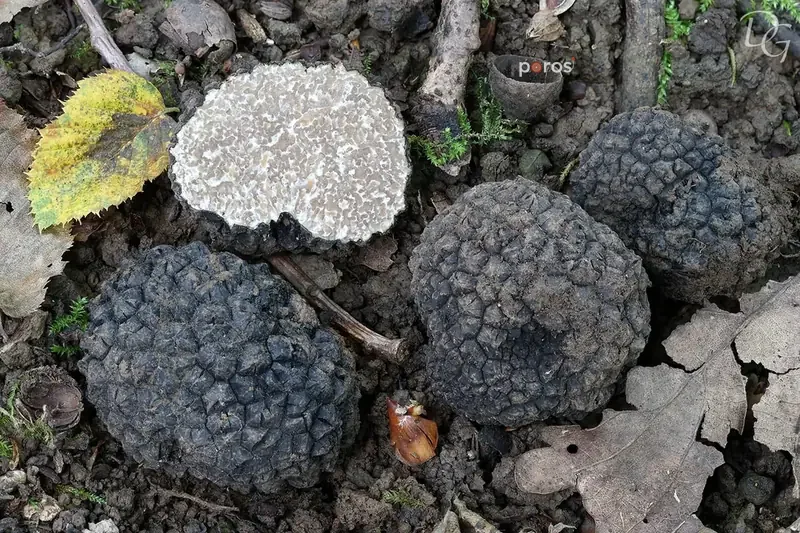
The summer truffle (Tuber aestivum) is Europe's most common and widespread truffle. Its skin is black with coarse pyramid warts, but its interior stays pale brown to beige with fine white veins. Its aroma is milder and nuttier than black or white truffle, and its price far lower. It is one of the few truffles recorded in Turkey.
Also called: Burgundy truffle, scorzone, black summer truffle Turkish: Yaz trüfü, kara trüf mantarı, Burgonya trüfü Synonyms: Tuber uncinatum
Last updated: Prepared by the Poros Mantar editorial team5 sources checkedReport a correction
Summer truffle photos
-
© Rippitippi · Public domain
-

Cross-section© Rippitippi · Public domain
-
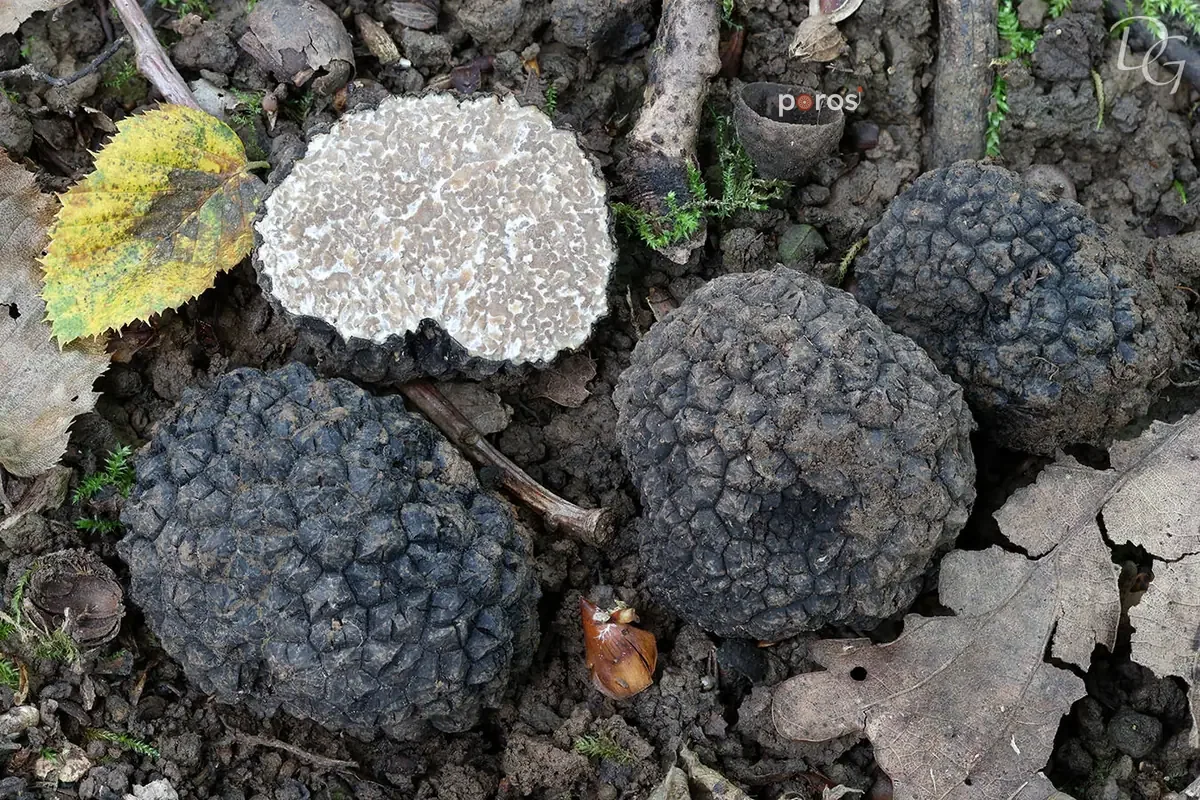
In habitat© Daniel Ghyselinck · CC BY 4.0
-

Cap© Rippitippi · Public domain
-

Cross-section© Rippitippi · Public domain
-

Spore print© Daniel Ghyselinck · CC BY 4.0
-

© Rajan Rao · CC BY 4.0
-

© Rippitippi · Public domain
-

Cross-section© Rippitippi · Public domain
-

© mycobel · CC BY 4.0
-
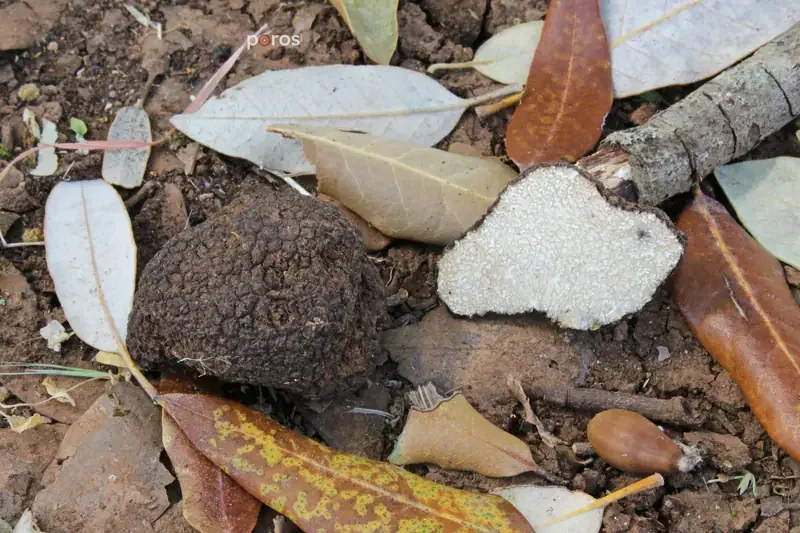
In habitat© Davide Puddu · CC BY 4.0


These are licensed records of this species; photos alone are not enough to identify a mushroom.
Are summer truffles poisonous?
Summer truffles are not listed as poisonous in our sources. The real risk is confusing them with common earthball (Scleroderma citrinum) and scaly earthball (Scleroderma verrucosum), so never eat wild ones without certain identification. If poisoning is suspected, call 112 at once (Turkish poison centre: 114) and keep any leftover mushroom.
Are summer truffles edible?
Summer truffles are listed as edible in our sources and are cultivated; even so, never eat wild ones without certain identification: they have poisonous look-alikes, such as common earthball (Scleroderma citrinum) and scaly earthball (Scleroderma verrucosum). Do not eat them without an expert's approval. The summer truffle is edible. Do not eat tuber-like fungi from the ground that an expert has not checked: poisonous earthballs look similar from outside. Truffle hunting requires a permit in some countries; in Turkey, follow the rules for gathering forest products.
How to recognise it
Appearance of summer truffle
No ring or volva Spore print: Spores form inside, in sacs with a net pattern Mild; hazelnut, mushroom and earth. The autumn form is more aromatic.
Where does summer truffle grow?
It grows in calcareous soil in partnership with oak, hazel, beech, hornbeam and pine roots, forming a few centimetres below ground, sometimes near the surface.
Where is summer truffle found in Turkey?
It has been recorded in Turkey: GBIF holds 5 records (two from Istanbul) and iNaturalist has 3 research-grade observations. Worldwide it ranges across Europe and western Asia, from Spain to Sweden and from North Africa to the Caucasus and Iran. On iNaturalist Turkey it is listed as 'kara trüf mantarı'; we use the name summer truffle to avoid confusion with the black Périgord truffle.
Which months
- Jan0
- Feb0
- Mar0
- Apr2
- May0
- Jun0
- Jul0
- Aug0
- Sep0
- Oct0
- Nov0
- Dec0
1 provinces, 2 observations (GBIF, iNaturalist); months from observation dates. Record density also reflects where observers work.
Latest summer truffle observations
Look-alikes
What could it be confused with?
Summer truffle can be mistaken for the species below. Each comparison shows Summer truffle on the left, the look-alike on the right, and how to tell them apart.
Take care when foraging: Poisonous look-alikes of Summer truffle come first. If in doubt, leave it.

Common earthball Scleroderma citrinum
How to tell It grows on the surface or half-buried; its skin is yellowish and scaly and its interior purple-black and powdery; it is poisonous.

Scaly earthball Scleroderma verrucosum
How to tell It grows above ground; under its yellowish-brown, finely scaly skin it has a thick, root-like stem, and its inside soon turns into a purple-black, powdery spore mass. It lacks the summer truffle's black, pyramid-warted skin and marbled interior. It is poisonous.
Other look-alikes (3)
not Summer truffle
Périgord black truffle Tuber melanosporum
Its skin is similar but the warts are smaller and its interior is purple-black when ripe; its aroma is much stronger and it is gathered in winter.
 Edible species
not Summer truffle
Truffle Tuber spp.
Our truffle page covers the genus as a whole; other truffles recorded in Turkey include small, whitish species.
 Edible species
not Summer truffle
Desert truffle Terfezia spp.
The desert truffle grows in the sandy soil of dry steppe, with low shrubs such as rock-rose (Helianthemum) rather than trees, and appears in spring. Its skin is smooth and reddish to pale brown; it lacks the summer truffle's black, pyramid-warted skin and strong smell.
Summer truffle and its look-alikes compared
| Species | Status | Underside | Spore print | Season |
|---|---|---|---|---|
| Summer truffleTuber aestivum | Edible species | The interior goes from whitish to pale brown, beige or hazel, marbled with fine, white, branching veins | Spores form inside, in sacs with a net pattern | May–Dec |
| Common earthballScleroderma citrinum | Poisonous | No gills or pores | Olive-brown to blackish brown (as a powder) | Mar, Aug–Nov |
| TruffleTuber spp. | Edible species | The inside (gleba) is whitish at first | None; spores stay in asci | May–Dec |
| Desert truffleTerfezia spp. | Edible species | The inside (gleba) is cream, pale pink or pale brown, marbled with fine pale veins | None; spores stay in asci | Mar–May |
| Scaly earthballScleroderma verrucosum | Poisonous | Interior (gleba) whitish grey when young, then purple-black and powdery | Dark brown to black spore powder | Jul–Nov |
The table is compiled from each species page. The status column is a guide only; do not eat a wild mushroom unless an expert has seen it in person. Compare look-alikes side by side
How to cook and eat summer truffle
Safety first. The summer truffle is edible. Do not eat tuber-like fungi from the ground that an expert has not checked: poisonous earthballs look similar from outside. Truffle hunting requires a permit in some countries; in Turkey, follow the rules for gathering forest products. If poisoning is suspected, call 112 (Turkish poison centre UZEM: 114) and keep any leftover mushroom.
What goes with it?
- Carnaroli or Arborio rice
- beef stock
- olive oil
- butter
- grated Parmesan
- summer truffle
Recipe
How to store summer truffle
Grow it, buy it
Summer truffle price list
| Product | Poros Mantar | Market |
|---|---|---|
| Fresh summer truffle | Made to order · ask | — |
| Dried summer truffle | Made to order · ask | — |
We make our summer truffle products in small batches, to order; send a request and we email you the price and delivery date. The market column shows prices seen on other sellers' pages on the date given; they are not our prices and may have changed.
Frequently asked questions
Are summer truffles poisonous?
Summer truffles are not listed as poisonous in our sources. The real risk is confusing them with common earthball (Scleroderma citrinum) and scaly earthball (Scleroderma verrucosum), so never eat wild ones without certain identification. If poisoning is suspected, call 112 at once (Turkish poison centre: 114) and keep any leftover mushroom.
Are summer truffles edible?
Summer truffles are listed as edible in our sources and are cultivated; even so, never eat wild ones without certain identification: they have poisonous look-alikes, such as common earthball (Scleroderma citrinum) and scaly earthball (Scleroderma verrucosum). Do not eat them without an expert's approval. The summer truffle is edible. Do not eat tuber-like fungi from the ground that an expert has not checked: poisonous earthballs look similar from outside. Truffle hunting requires a permit in some countries; in Turkey, follow the rules for gathering forest products.
Does the summer truffle grow in Turkey?
Yes, it has been recorded: GBIF holds 5 records (two from Istanbul) and iNaturalist has 3 research-grade observations.
Is the summer truffle the same as the black truffle?
No. Both have black skins, but the summer truffle stays pale brown to beige inside with a mild aroma, while the Périgord truffle is purple-black inside and much more aromatic.
What is the Burgundy truffle?
It is the autumn-ripening form of the summer truffle, once treated as a separate species, Tuber uncinatum. It is darker inside and more aromatic.
How is the summer truffle used?
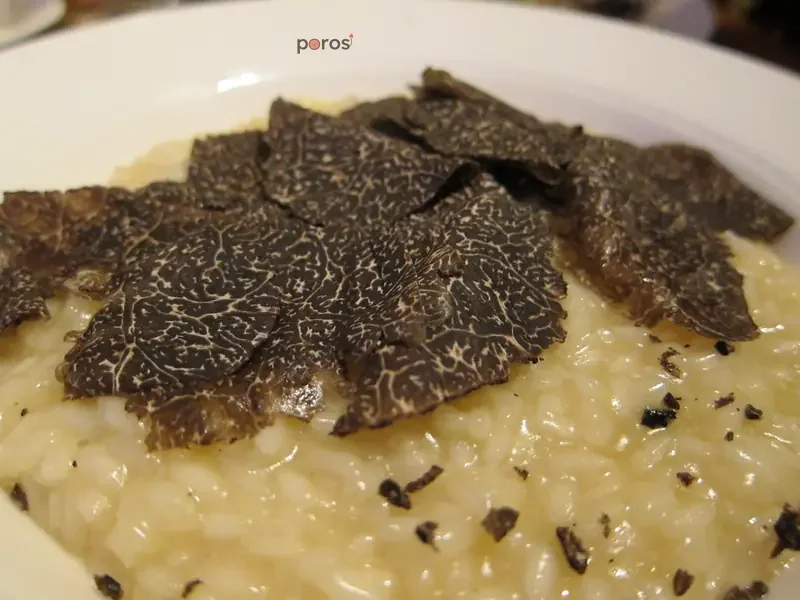
Because its aroma is mild it is used generously, sliced thinly over pasta, eggs, salads and cheese; it tolerates brief heating.
When is it gathered?
The summer form from May to August and the autumn form from September to December.
Can the summer truffle be farmed?
Yes. It is grown in truffle orchards planted with inoculated oak and hazel seedlings and needs calcareous soil.
Is there a poisonous truffle?
True truffles (Tuber) are not known to be poisonous, but poisonous earthballs (Scleroderma) and some other underground fungi can be mistaken for them. Show any tubers you find to an expert.
When is summer truffle season in Turkey?
In our calendar, summer truffle season runs May–Dec. The summer form is gathered from May to August and the autumn form (Burgundy truffle, formerly T. uncinatum) from September to December.
Where does summer truffle grow?
It grows in calcareous soil in partnership with oak, hazel, beech, hornbeam and pine roots, forming a few centimetres below ground, sometimes near the surface.
Where is summer truffle found in Turkey?
It has been recorded in Turkey: GBIF holds 5 records (two from Istanbul) and iNaturalist has 3 research-grade observations. Worldwide it ranges across Europe and western Asia, from Spain to Sweden and from North Africa to the Caucasus and Iran. On iNaturalist Turkey it is listed as 'kara trüf mantarı'; we use the name summer truffle to avoid confusion with the black Périgord truffle.
What can summer truffle be confused with?
Summer truffle can be confused with périgord black truffle (Tuber melanosporum, edible species), common earthball (Scleroderma citrinum, poisonous), truffle (Tuber spp., edible species), desert truffle (Terfezia spp., edible species) and scaly earthball (Scleroderma verrucosum, poisonous). Look-alikes are compared on this page.
What is summer truffle called in Turkish?
In Turkish, summer truffle (Tuber aestivum) is called Yaz trüfü; other local names include kara trüf mantarı and Burgonya trüfü.
Related species
-
TruffleTuber spp.Edible species
-
 Almond mushroomAgaricus subrufescensEdible species
-
 Anatolian matsutakeTricholoma anatolicumEdible species
-
 Aniseed funnelClitocybe odoraEdible species
-
 Bay boleteImleria badiaEdible species
-
 Beefsteak fungusFistulina hepaticaEdible species
-
 Black morelMorchella elataEdible species
-
 Black trumpetCraterellus cornucopioidesEdible species
Sources
- Wikipedia (EN): Tuber aestivum en.wikipedia.org
- iNaturalist: Tuber aestivum (Türkçe ad ve Türkiye gözlemleri) inaturalist.org
- GBIF: Türkiye kayıtları gbif.org
All sources (5)
- Wikipedia (EN): Terfezia en.wikipedia.org
- Wikipedia (EN): Scleroderma verrucosum en.wikipedia.org
Photo credits (13)
- File:Tuber aestivum Valnerina 013.jpg · Rippitippi · Public domain
- File:Tuber aestivum Valnerina 014.jpg · Rippitippi · Public domain
- Tuber aestivum · iNaturalist #229713051 · Daniel Ghyselinck · CC BY 4.0
- File:Tuber aestivum Valnerina 011.jpg · Rippitippi · Public domain
- File:Tuber aestivum Valnerina 016.jpg · Rippitippi · Public domain
- Tuber aestivum · iNaturalist #229713051 · Daniel Ghyselinck · CC BY 4.0
- Tuber aestivum · iNaturalist #152627961 · Rajan Rao · CC BY 4.0
- File:Tuber aestivum Valnerina 003.jpg · Rippitippi · Public domain
- File:Tuber aestivum Valnerina 018.jpg · Rippitippi · Public domain
- File:Tuber aestivum.jpg · mycobel · CC BY 4.0
- Tuber aestivum · iNaturalist #9372784 · Davide Puddu · CC BY 4.0
- iNaturalist: İstanbul, 28 Apr 2025 · Umut Nuri Erdoğan · CC BY
- iNaturalist: İstanbul, 22 Apr 2025 · Umut Nuri Erdoğan · CC BY


