

Mushroom glossary · Toxins
What is muscimol?
Also called: pantherine, agarin
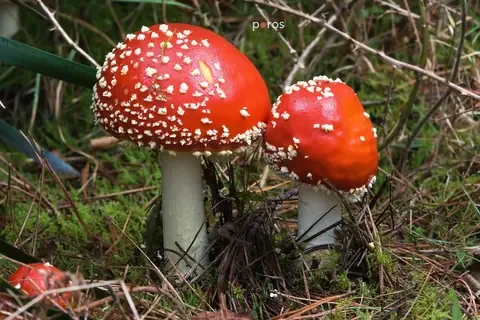
Muscimol is the principal compound acting on the nervous system in the fly agaric (Amanita muscaria) and the panther cap (Amanita pantherina). It stimulates the GABA-A receptor, the binding site of GABA, the brain's calming messenger. It causes drowsiness, loss of balance, confusion and hallucinations. It also forms when ibotenic acid loses its carboxyl group.
Which mushrooms contain muscimol?
The main natural source of muscimol is the genus Amanita. The fly agaric and the panther cap are the two best-known species. Our pages on the royal fly agaric and the jewelled amanita mention the same compound. In the mushroom it occurs together with ibotenic acid. During drying, and in the body after a meal, part of the ibotenic acid turns into muscimol. The amount varies greatly from one mushroom to another, so there is no telling in advance how severe the effect will be.
What does muscimol do in the body?
Muscimol is shaped much like GABA, the brain's main inhibitory neurotransmitter. It binds to the same site as GABA on the GABA-A receptor and activates it strongly. The outcome is depression of the central nervous system: sedation, sleepiness, dizziness, clumsiness, slurred speech and poor concentration. In larger amounts perception is distorted, with hallucinations, agitation and painful muscle twitching.
It should not be confused with muscarine. The names are alike, but muscimol has no action at the muscarinic receptors.
When do symptoms of muscimol poisoning start?
According to Wikipedia, the effects begin 30 minutes to 2 hours after it is swallowed, peak at 1 to 3 hours and last 4 to 10 hours. Some effects may linger for up to 24 hours. Nausea and vomiting are common. Deaths from fly agaric poisoning are extremely rare today, though coma has been reported in severe cases.
Drying turns ibotenic acid into muscimol, so a dried mushroom is active too. As our panther cap page says, no method of cooking destroys the poison. If poisoning is suspected, call 112 at once without waiting for symptoms; in Turkey the national poison centre (UZEM) answers on 114.
Pages related to Muscimol


Related terms
- Ibotenic acidThe nerve toxin in the fly agaric and panther cap that stimulates glutamate receptors.
- MuscarineThe nerve toxin in fibrecaps and small white funnels that causes sweating and salivation.
- AmatoxinThe liver-destroying group of toxins found in death caps and some Galerina and Lepiota species.
Frequently asked questions
Are muscimol and muscarine the same thing?
No. Both names come from the fly agaric, but they are different compounds. Muscarine stimulates the muscarinic receptors that govern glands and the heart. Muscimol stimulates the GABA-A receptor in the brain and causes drowsiness and hallucinations.
How long do the effects of muscimol last?
According to Wikipedia, the effects last 4 to 10 hours, and some symptoms can persist for up to 24 hours. The fly agaric article adds that certain effects may go on for days. It depends on the amount in the mushroom, which cannot be known beforehand.
Is the panther cap more dangerous than the fly agaric?
According to our species pages, the panther cap carries more ibotenic acid and muscimol than the fly agaric and is linked with stronger poisonings. Its brown cap also makes it easier to mistake for an edible species.
Sources
- Wikipedia (EN) – Muscimol en.wikipedia.org
- Wikipedia (EN) – Amanita muscaria en.wikipedia.org
- Wikipedia (EN) – Mushroom poisoning en.wikipedia.org