
Royal fly agaric (king of Sweden amanita)
Amanita regalis · Amanitaceae

The royal fly agaric (Amanita regalis) is the northern cousin of the fly agaric: its cap is liver-brown to olive-brown rather than red, dotted with yellowish cream warts. It is common in the spruce and birch forests of Scandinavia, Finland and Russia. Like the fly agaric it carries ibotenic acid and muscimol and, when eaten, causes poisoning with a drunken state, hallucinations and convulsions. It has not been recorded in Turkey.
Also called: king of Sweden amanita Turkish: Kraliyet sinek mantarı
Last updated: Prepared by the Poros Mantar editorial team3 sources checkedReport a correction
POISONOUS — do not eat.
The royal fly agaric is poisonous. According to sources it carries the same ibotenic acid and muscimol as the fly agaric; 30 minutes to 3 hours after eating it causes nausea, dizziness, a drunken state, hallucinations, muscle spasms and deep sleep. In Finland three people were poisoned after eating it in mistake for the parasol mushroom; symptoms began 1–2 hours later and all recovered. Cooking does not fully neutralise the toxins. If poisoning is suspected, call 112 (Turkish poison centre UZEM: 114) and keep any leftover mushroom.
Royal fly agaric photos
-
© Павел Кунгуров · CC BY 4.0
-

© Ирина Хохрякова · CC BY 4.0
-

Cap© Павел Кунгуров · CC BY 4.0
-

Gills© Johan Adler · CC BY 4.0
-

Stem© Andreas Schneider · CC BY 4.0
-

Cross-section© Nadja Berglund · CC BY 4.0
-

© ainali · CC BY 4.0
-
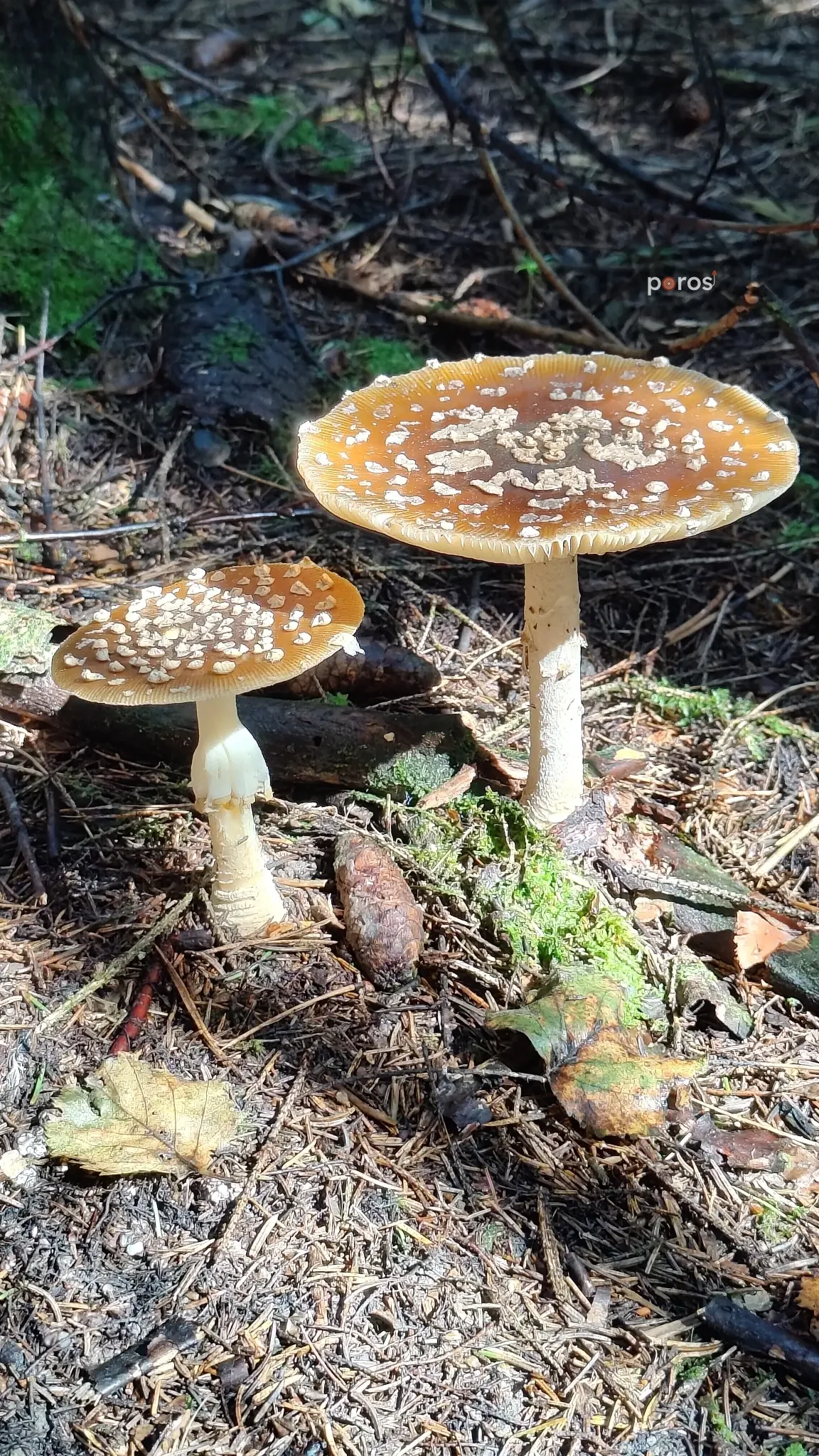
In habitat© Полина Полежанкина · CC BY 4.0
-

Gills© Pavel Kacl · CC BY 4.0
-

Stem© Nina Filippova · CC BY 4.0
-

© Tatiana · CC BY 4.0


These are licensed records of this species; photos alone are not enough to identify a mushroom.
Are royal fly agarics poisonous?
Yes, royal fly agarics are poisonous and must not be eaten. It carries the same ibotenic acid and muscimol as the fly agaric and causes nervous system poisoning. If poisoning is suspected, call 112 at once (Turkish poison centre: 114) and keep any leftover mushroom.
Are royal fly agarics edible?
No, royal fly agarics must not be eaten; they are poisonous. Cooking does not fully neutralise the toxins. If poisoning is suspected, call 112 at once (Turkish poison centre: 114) and keep any leftover mushroom.
How to recognise it
Appearance of royal fly agarics
Spore print: White Not distinctive.
Where do royal fly agarics grow?
Mycorrhizal with spruce and birch; grows in boreal and montane forests on acid soils.
In Turkey
There are no Turkish records: our map data (GBIF and iNaturalist) holds no observations from Turkey. The species belongs mainly to northern Europe and Alaska and is scarce in the mountains of central Europe. In Turkey the most dangerous brown-capped, spotted amanita is the panther cap. Its Turkish name on iNaturalist is Kraliyet Sinek Mantarı.
Our map has no observations of royal fly agarics from Turkey yet.
Look-alikes
What is it mistaken for?
Royal fly agaric can be mistaken for the species below. Each comparison shows Royal fly agaric on the left, the look-alike on the right, and how to tell them apart.
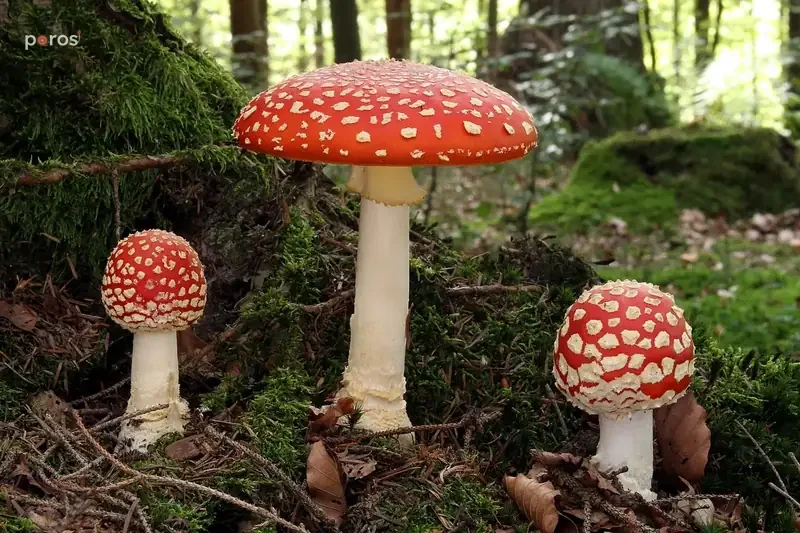
Fly agaric Amanita muscaria
How to tell The fly agaric has a red or orange cap with white warts; it carries the same toxins.

Panther cap Amanita pantherina
How to tell The panther cap is smaller, with pure white warts, an unstriated ring and a sharp collar at the top of the bulb.
Other look-alikes (1)
 Inedible
not Royal fly agaric
Blusher Amanita rubescens
The blusher's flesh and damaged areas turn pinkish red, and its ring is striate.
Royal fly agaric and its look-alikes compared
| Species | Status | Underside | Spore print | Season |
|---|---|---|---|---|
| Royal fly agaricAmanita regalis | Poisonous | Free, crowded, white to pale cream gills | White | Jul–Oct |
| Fly agaricAmanita muscaria | Poisonous | White gills, free from the stem | White | Aug–Nov |
| Panther capAmanita pantherina | Poisonous | Free, crowded, white gills | White | Jul–Dec |
| BlusherAmanita rubescens | Inedible | Free, crowded, white gills that develop red spots with age or bruising | White | Jun–Nov |
The table is compiled from each species page. The status column is a guide only; do not eat a wild mushroom unless an expert has seen it in person. Compare look-alikes side by side
Frequently asked questions
Are royal fly agarics poisonous?
Yes, royal fly agarics are poisonous and must not be eaten. It carries the same ibotenic acid and muscimol as the fly agaric and causes nervous system poisoning. If poisoning is suspected, call 112 at once (Turkish poison centre: 114) and keep any leftover mushroom.
Are royal fly agarics edible?
No, royal fly agarics must not be eaten; they are poisonous. Cooking does not fully neutralise the toxins. If poisoning is suspected, call 112 at once (Turkish poison centre: 114) and keep any leftover mushroom.
How does it differ from the fly agaric?
Its cap is brown rather than red and its warts are yellowish cream. It grows mostly in northern spruce and birch forests.
Does it grow in Turkey?
No, there are no Turkish records. In Turkey the dangerous brown, spotted amanita is the panther cap.
When do symptoms start?
According to sources within half an hour to three hours, with dizziness, a drunken state, hallucinations and spasms. If in doubt, call 112.
How can it be confused with the blusher?
Both have brownish, warty caps. The blusher's flesh turns pink where cut or insect-damaged; the royal fly agaric's does not.
Why is it called royal?
Latin regalis means regal, a nod to its large, imposing build. Kraliyet Sinek Mantarı is its Turkish name on iNaturalist.
Does cooking make it safe?
No, cooking or parboiling does not make it safe; it should not be eaten.
When is royal fly agaric season in Turkey?
In our calendar, royal fly agaric season runs Jul–Oct. Fruits in northern Europe from late July to October, especially in August and September.
Where do royal fly agarics grow?
Mycorrhizal with spruce and birch; grows in boreal and montane forests on acid soils.
Where are royal fly agarics found in Turkey?
There are no Turkish records: our map data (GBIF and iNaturalist) holds no observations from Turkey. The species belongs mainly to northern Europe and Alaska and is scarce in the mountains of central Europe. In Turkey the most dangerous brown-capped, spotted amanita is the panther cap. Its Turkish name on iNaturalist is Kraliyet Sinek Mantarı.
What can the royal fly agaric be confused with?
The royal fly agaric can be confused with fly agaric (Amanita muscaria, poisonous), panther cap (Amanita pantherina, poisonous) and blusher (Amanita rubescens, inedible). Look-alikes are compared on this page.
What is the royal fly agaric called in Turkish?
In Turkish, the royal fly agaric (Amanita regalis) is called Kraliyet sinek mantarı.
Related species
-
Fly agaricAmanita muscariaPoisonous
-
 Jewelled amanitaAmanita gemmataPoisonous
-
Panther capAmanita pantherinaPoisonous
-
 Amanita proximaAmanita proximaDeadly poisonous
-
BlusherAmanita rubescensInedible
-
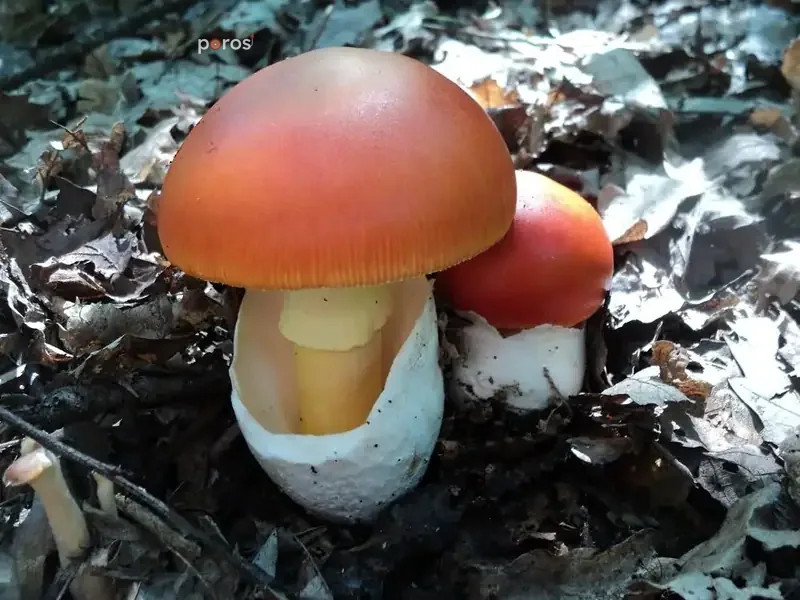 Caesar’s mushroomAmanita caesareaEdible species
-
 Death capAmanita phalloidesDeadly poisonous
-
 Destroying angelAmanita virosaDeadly poisonous
Sources
- Wikipedia (EN): Amanita regalis en.wikipedia.org
- iNaturalist: Amanita regalis (Türkçe ad) inaturalist.org
- GBIF: Türkiye kayıtları gbif.org
Photo credits (11)
- Amanita regalis · iNaturalist #199264283 · Павел Кунгуров · CC BY 4.0
- Amanita regalis · iNaturalist #394017590 · Ирина Хохрякова · CC BY 4.0
- Amanita regalis · iNaturalist #199264283 · Павел Кунгуров · CC BY 4.0
- Amanita regalis · iNaturalist #304483691 · Johan Adler · CC BY 4.0
- Amanita regalis · iNaturalist #178405772 · Andreas Schneider · CC BY 4.0
- Amanita regalis · iNaturalist #304501229 · Nadja Berglund · CC BY 4.0
- Amanita regalis · iNaturalist #309513855 · ainali · CC BY 4.0
- Amanita regalis · iNaturalist #385898891 · Полина Полежанкина · CC BY 4.0
- Amanita regalis · iNaturalist #182700940 · Pavel Kacl · CC BY 4.0
- Amanita regalis · iNaturalist #56645404 · Nina Filippova · CC BY 4.0
- File:Amanita regalis 93737833.jpg · Tatiana · CC BY 4.0
