

Mushroom glossary · Toxins
What is ibotenic acid?
Also called: ibotenate, ibotenic
Ibotenic acid is a toxin found in the fly agaric (Amanita muscaria) and the panther cap (Amanita pantherina) that acts on the nervous system. It resembles glutamate, the brain's excitatory messenger, and strongly stimulates glutamate receptors. In the body, and during drying, part of it turns into muscimol. Together the two compounds produce the poisoning.
Which mushrooms contain ibotenic acid?
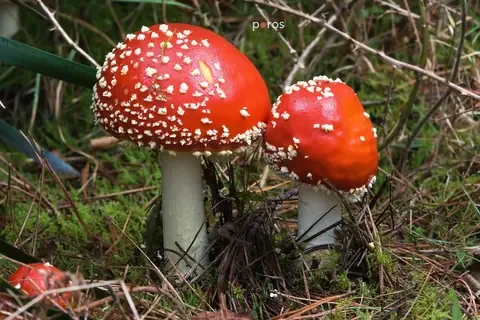
Ibotenic acid is the toxin of certain Amanita species. The most familiar is the red-capped, white-warted fly agaric. The brown-capped panther cap carries the same compounds and is linked with more severe poisonings. The jewelled amanita and the northern royal fly agaric belong to the same group. These mushrooms are relatives of the death cap, but the picture is different: the effects show in the nervous system, not the liver.
What does ibotenic acid do in the body?
Ibotenic acid is built much like glutamate, the brain's excitatory neurotransmitter. It strongly stimulates glutamate receptors, the NMDA receptor above all. In animal experiments this overstimulation floods nerve cells with calcium and kills them, which is why researchers use it to make targeted lesions in the rat brain.
Part of the ibotenic acid that is swallowed loses its carboxyl group and becomes muscimol. Wikipedia puts the proportion at 10 to 20 per cent. Muscimol, for its part, stimulates a calming receptor.
When do symptoms of ibotenic acid poisoning start?
Quickly. With the fly agaric they typically appear after 30 to 90 minutes and peak within three hours. Nausea and vomiting are common. Dizziness, confusion, muscle twitching, hallucinations and deep sleep may follow, and coma has been reported in severe cases. Deaths are extremely rare today.
The amount of toxin varies widely from one mushroom to the next. Drying converts ibotenic acid to muscimol without removing the effect. No method of preparation makes these mushrooms fit for the table. If poisoning is suspected, call 112 at once without waiting for symptoms; in Turkey the national poison centre (UZEM) answers on 114.
Pages related to Ibotenic acid


Related terms
Frequently asked questions
Are ibotenic acid and muscimol the same thing?
No, but they are linked. Ibotenic acid stimulates glutamate receptors. In the body, and during drying, part of it turns into muscimol, which stimulates GABA receptors instead. Both play a part in fly agaric poisoning.
Does drying a fly agaric remove the poison?
It does not. According to Wikipedia, drying converts ibotenic acid into muscimol and the mushroom keeps its effect on the nervous system. A dried fly agaric still causes poisoning. In no form is this mushroom a food.
Can ibotenic acid kill?
Deaths from fly agaric poisoning are extremely rare today. Loss of consciousness, muscle spasms and coma can still occur. According to our species page, the panther cap carries the same compounds in larger amounts and causes more serious poisonings.
Sources
- Wikipedia (EN) – Ibotenic acid en.wikipedia.org
- Wikipedia (EN) – Amanita muscaria en.wikipedia.org
- Wikipedia (EN) – Mushroom poisoning en.wikipedia.org