
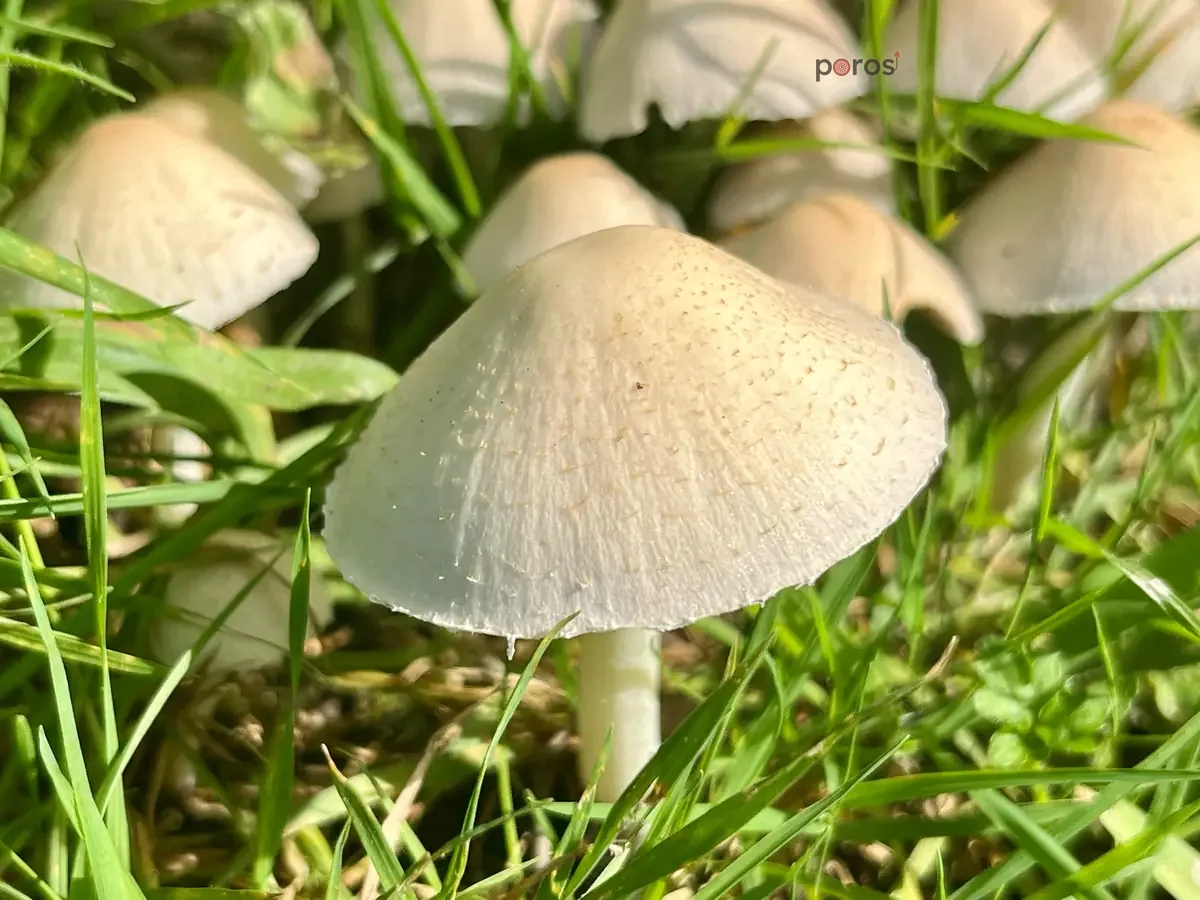
Species map · Candolleomyces candolleanus
Pale brittlestem map of Turkey: where and when it grows
Our map holds 37 verified records of the pale brittlestem (Candolleomyces candolleanus) from 9 provinces of Turkey. Most come from İstanbul, Kocaeli, Manisa and Diyarbakır; records peak in May, September and October.
- records
- 37
- provinces
- 9
- regions
- 6
- latest record
- Oct 2026
Records by province
- Marmara 27
- Aegean 2
- Black Sea 2
- East and Southeast 2
- Central Anatolia 2
- Mediterranean 2
Linked provinces have their own page with every species recorded there. Record density also reflects where observers work.
Which months?
This page covers only where and when the species is recorded in Turkey. For identification and edibility, see the species page. Built from research-grade, geo-referenced GBIF and iNaturalist records, refreshed at the start of every month.
Poisonous look-alikes of the pale brittlestem
- Deadly galerina Galerina marginata Deadly poisonous
- Banded mottlegill Panaeolus cinctulus Poisonous
- Sulphur tuft Hypholoma fasciculare Poisonous
Records by region: Marmara 27; Aegean 2; Black Sea 2; Eastern and Southeastern Anatolia 2; Central Anatolia 2; Mediterranean 2. Most records come from İstanbul, Kocaeli, Manisa, Diyarbakır, Ankara, Adana, Samsun and Balıkesir.
Records peak in May, September and October; about 35% of dated records fall in September–November and 40% in March–May.
The pale brittlestem fruits from spring to late autumn and can appear in mild winters too. Our Turkish records are spread over every month except August; May is the busiest, followed by April, June, September and October.
Gardens, parks, lawns, roadsides and woodland edges; around stumps, on buried rotting wood and plant debris. It usually grows in groups or small clusters and is common in built-up areas.
Deadly galerina (Galerina marginata, deadly): The deadly galerina is also small and brown, but it grows on wood, has a darker honey to rusty brown cap, a brown ring on the stem and a rusty brown spore print. The pale brittlestem has a white, ringless stem and a dark purplish brown spore print.
Banded mottlegill (Panaeolus cinctulus, poisonous): The banded mottlegill grows in manured grass and compost; its cap dries leaving a dark band at the margin, its gills become mottled blackish and its spore print is black. It contains psilocybin.
Sulphur tuft (Hypholoma fasciculare, poisonous): The sulphur tuft also grows in clusters on wood, but its cap and flesh are sulphur yellow, its gills go from yellowish green to purplish brown and it tastes very bitter.
Glistening inkcap (Coprinellus micaceus, inedible): The glistening inkcap forms dense clusters at stump bases; its cap is grooved, honey-coloured and dusted with glittering granules, and its gills blacken and liquefy with age. The pale brittlestem's gills do not dissolve.
Fairy ring champignon (Marasmius oreades, edible): The fairy ring champignon grows in rings in grass; its stem is tough and bends without snapping, its gills are widely spaced and cream, and its spore print is white. The pale brittlestem's stem snaps easily and its gills turn brown.
Frequently asked questions
Where does the pale brittlestem grow in Turkey?
Most records come from İstanbul, Kocaeli, Manisa, Diyarbakır and Ankara.
When does the pale brittlestem fruit in Turkey?
Records peak in May, September and October.
Which province has the most pale brittlestem records?
İstanbul, followed by Kocaeli, Manisa and Diyarbakır. The order also reflects where observers are active.
What habitat does the pale brittlestem prefer?
Gardens, parks, lawns, roadsides and woodland edges; around stumps, on buried rotting wood and plant debris. It usually grows in groups or small clusters and is common in built-up areas.
Can I pick mushrooms where they are recorded?
A record is not a permit. Commercial picking in state forests needs a permit; picking in national parks is prohibited.
How current is this map?
Records are re-fetched from GBIF and iNaturalist at the start of every month and this page updates automatically.
What should I do in case of mushroom poisoning?
Call 112 at once; Turkey's poison centre is 114.
Sources
- 6831 sayılı Orman Kanunu (mevzuat.gov.tr) mevzuat.gov.tr
- 2873 sayılı Millî Parklar Kanunu, md. 14 (mevzuat.gov.tr) mevzuat.gov.tr
- Güler, Türkoğlu ve Kunduz (2013), Hacettepe Journal of Biology and Chemistry 41(3): 249–253, Macrofungi of The Kızılırmak Basin (Kırıkkale) dergipark.org.tr
All sources (6)
- GBIF ve iNaturalist: Türkiye gözlem kayıtları (sitemizin haritası) gbif.org
- Wikipedia (EN): Candolleomyces candolleanus en.wikipedia.org
- First Nature: Psathyrella candolleana, Pale Brittlestem first-nature.com
Data sources and licences
Observations from GBIF.org (human observations and herbarium specimens; records flagged with geospatial issues excluded) and iNaturalist research-grade records, retrieved 10 November 2026. Macrofungi only (Agaricomycetes, Pezizomycetes), named to species. Every point links to its own record, with the recorder and licence (CC0, CC BY, CC BY-NC).
GBIF records come from 25 separate datasets; the largest are Mushroom Observer (591), Aphyllophorales externi (95), Agaricales externi (95), INSDC Host Organism Sequences (36), University of Tennessee Fungal Herbarium (25), INSDC Sequences (23), Herbarium GB, University of Gothenburg (22), NHMD Mycology Collection (12), GENT Lactarius Deliciosi (11). A find entered on two platforms by the same person is counted once. All datasets, publishers and licences: mushroom records in Turkey.
Map: © OpenStreetMap contributors. Province centres: Wikidata. Region comes from the record's GADM province, or the nearest province centre when missing. For protected species (iNaturalist "threatened" or IUCN VU/EN/CR) locations are rounded to ~10 km; locations obscured by iNaturalist are marked "approximate".
An observation shows that a mushroom was seen there on that day, not that it is there now or that it may be picked. Counts reflect how many people record fungi in an area more than how common a species is.
Last updated: Prepared by the Poros Mantar editorial teamReport a correction