
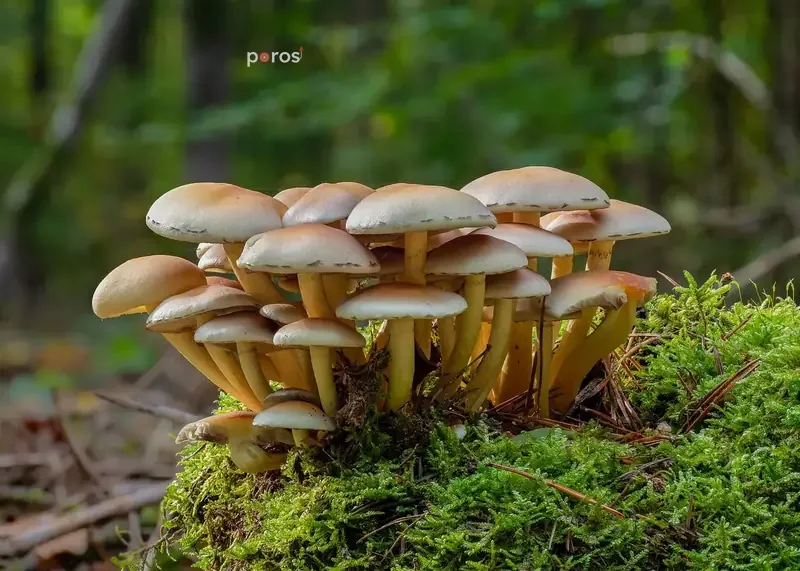


Sulphur tuft
Hypholoma fasciculare · Strophariaceae
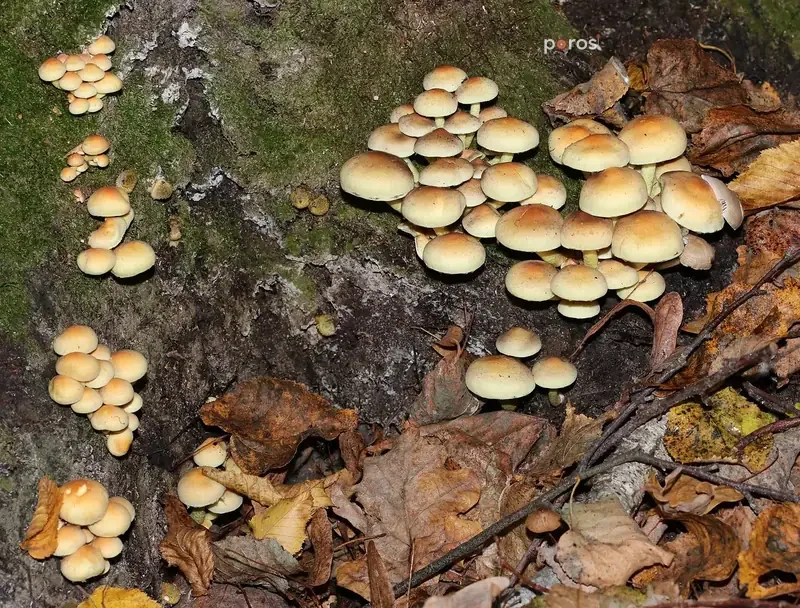
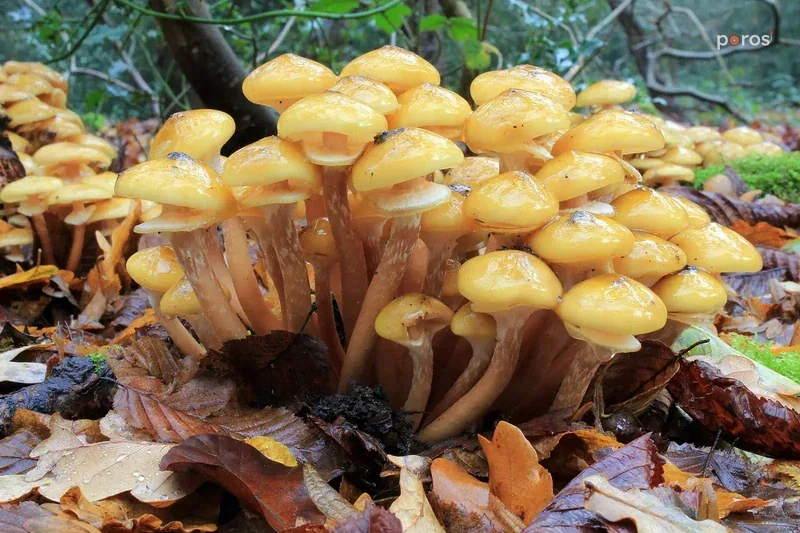
Sulphur tuft is a poisonous, very bitter mushroom that grows in dense clusters on rotting stumps and roots, with a sulphur-yellow cap and greenish-yellow gills.
Last updated: Prepared by the Poros Mantar editorial team6 sources checkedReport a correction
POISONOUS — do not eat.
If sulphur tuft is eaten, symptoms usually start within a few hours: nausea, vomiting, diarrhoea and abdominal pain, and severe cases with visual disturbance and paralysis have been reported. Cooking does not remove the bitterness and no method makes it edible. If poisoning is suspected, keep any leftover mushroom.
Sulphur tuft is a poisonous, very bitter mushroom that grows in dense clusters on rotting stumps and roots, with a sulphur-yellow cap and greenish-yellow gills. The gills darken with purple-brown spores as it ages, and it can be mistaken for honey fungus.
Also called: clustered woodlover Turkish: Kükürt sarısı demet mantarı
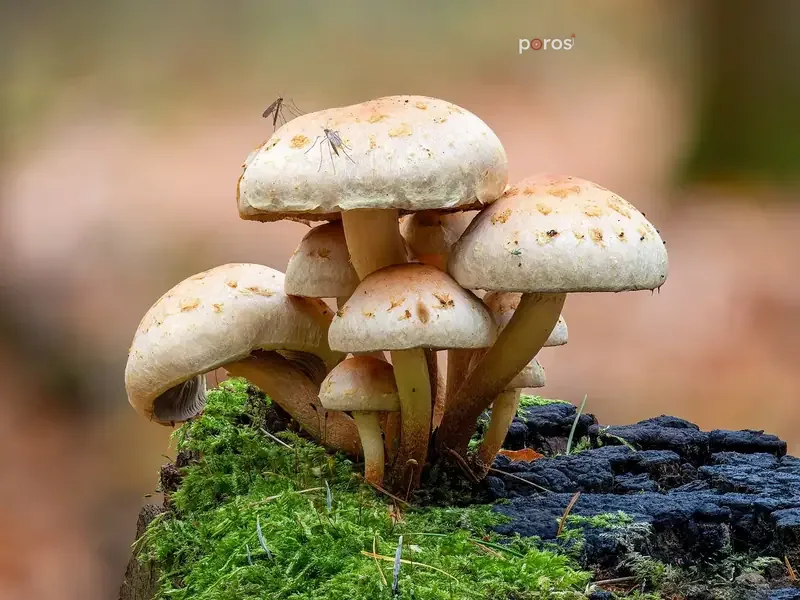
How to recognise it
Sulphur tuft, part by part
No volva Spore print: Purple-brown Not distinctive; the taste is very bitter.

When and where
Feb–Apr, Jun, Aug, Oct–Dec
- Jan
- Febin season
- Marin season
- Aprin season
- May
- Junin season
- Jul
- Augin season
- Sep
- Octin season
- Novin season
- Decin season
Sulphur tuft can be found for much of the year; Turkish GBIF records peak in October–November, with others in late winter and spring.
Type Poisonous
Months seen FebruaryMarchAprilJuneAugustOctoberNovemberDecember
Colour Yellow
Regions Black Sea RegionCentral Anatolia RegionMediterranean RegionAegean RegionMarmara RegionOrduOsmaniyeSamsunKastamonuBoluIstanbulKırklareli
Where does sulphur tuft grow?
It grows in crowded clusters on dead stumps, buried roots and rotting wood of both broadleaf trees and conifers, as a wood-decay (saprotrophic) fungus.
Where is sulphur tuft found in Turkey?
More than half of Turkey's sulphur tuft records come from the forests of İstanbul, with others from Kırklareli, Bolu, Düzce, Sinop, Samsun, Ordu, Kütahya, Ankara, İzmir and Muğla.
- İstanbul27
- Bolu11
- Kırklareli3
- Osmaniye1
- Kütahya1
- Ordu1
- Samsun1
- Kastamonu1
- Sinop1
- Düzce1
- Ankara1
- Edirne1
Which months
- Jan0
- Feb4
- Mar4
- Apr2
- May0
- Jun1
- Jul0
- Aug0
- Sep1
- Oct27
- Nov8
- Dec3
sulphur tuft map of Turkey: all provinces and months →
12 provinces, 50 observations (GBIF, iNaturalist); months from observation dates. Record density also reflects where observers work.
Latest sulphur tuft observations
-
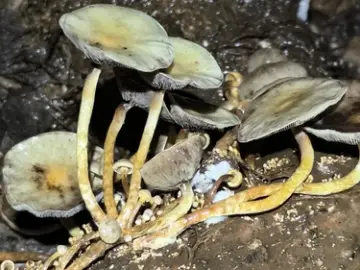 Kütahya16 Feb 2026 · iNaturalist© Umut Nuri Erdoğan · CC BY
-
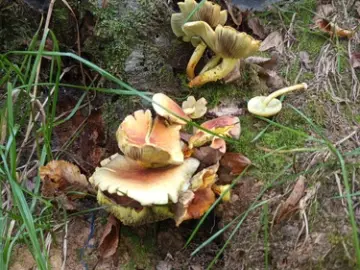 İstanbul23 Nov 2025 · iNaturalist© Umut Nuri Erdoğan · CC BY
-
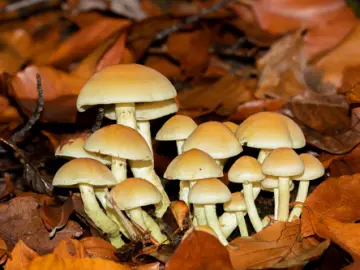 Kırklareli19 Oct 2025 · iNaturalist© Asrın Akıncıoğlu · CC BY
-
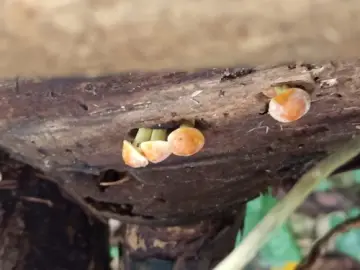 İstanbul14 Nov 2024 · iNaturalist© Umut Nuri Erdoğan · CC BY
-
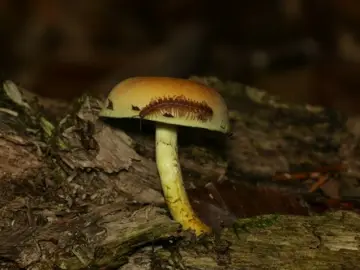 Kırklareli13 Oct 2024 · iNaturalist© Asrın Akıncıoğlu · CC BY
-
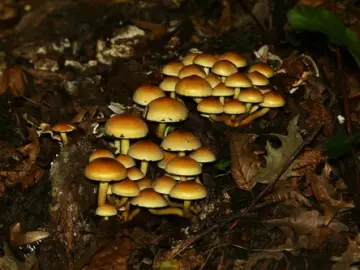 Kırklareli5 Oct 2024 · iNaturalist© Asrın Akıncıoğlu · CC BY
-
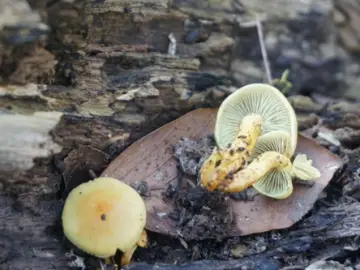 İstanbul17 Mar 2024 · iNaturalist© Umut Nuri Erdoğan · CC BY
-
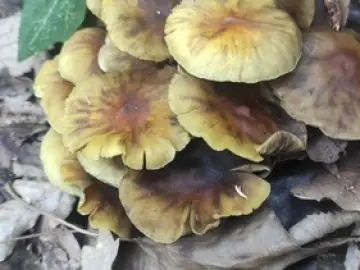 İstanbul20 Feb 2024 · iNaturalist© Umut Nuri Erdoğan · CC BY
- See on the map
Look-alikes
What is it mistaken for?
Sulphur tuft can be mistaken for the species below. Each card shows the look-alike and how it differs from Sulphur tuft.
 Edible species
not Sulphur tuft
Honey fungus Armillaria mellea
Honey fungus has a white spore print, a distinct ring on the stem and small dark scales on the cap, and its gills are cream-white rather than greenish. Sulphur tuft has greenish-yellow gills and a purple-brown spore print.
 Edible species
not Sulphur tuft
Conifer tuft Hypholoma capnoides
It grows only on conifer wood, its young gills are greyish-lilac rather than greenish, and it is not bitter. The two are so alike that it is not recommended for beginners.
 Edible species
not Sulphur tuft
Sheathed woodtuft Kuehneromyces mutabilis
Its cap looks two-toned as it dries, the stem is scaly below the ring and the spore print is rusty brown. It can also be confused with the deadly Galerina marginata, so great care is needed.
 Deadly
not Sulphur tuft
Deadly galerina Galerina marginata
It can grow on wood in the same places; its cap is honey-brown, the spore print rusty brown, and it contains amatoxins.
 Edible species
not Sulphur tuft
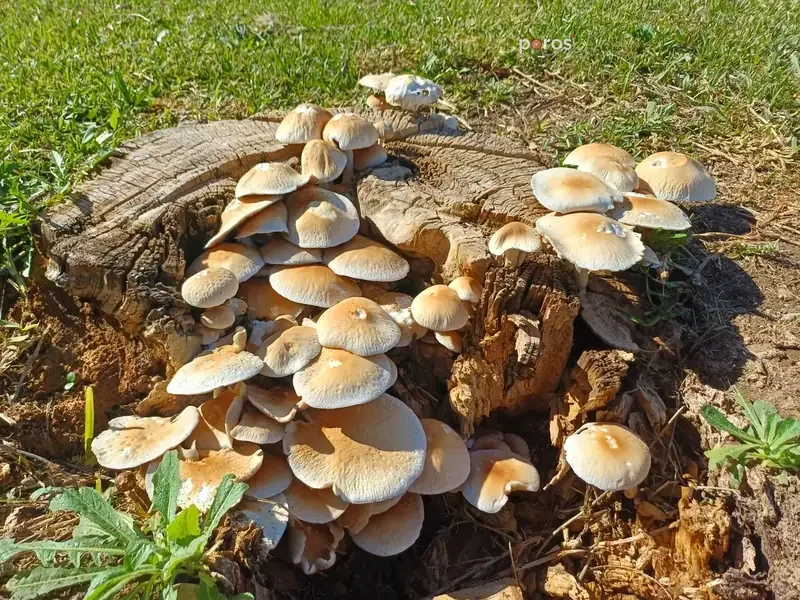
Poplar mushroom Cyclocybe cylindracea
The poplar mushroom clusters on poplar and willow wood, has a pale brown cap and a clear ring, and is not bitter. The sulphur tuft has a sulphur-yellow cap, no ring and a very bitter taste.
 Inedible
not Sulphur tuft
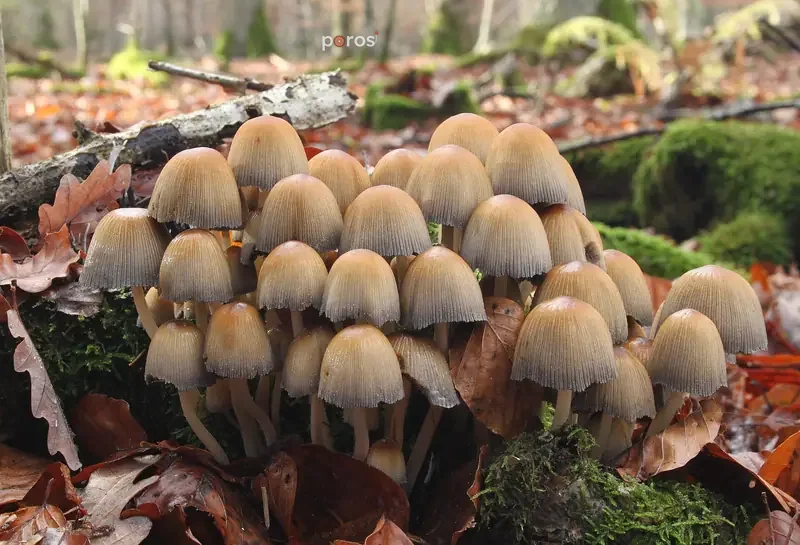
Glistening inkcap Coprinellus micaceus
It too grows in clusters around wood, but its cap is honey to mustard with glittering granules, its gills turn black and dissolve, and its flesh is not bitter.
 Inedible
not Sulphur tuft
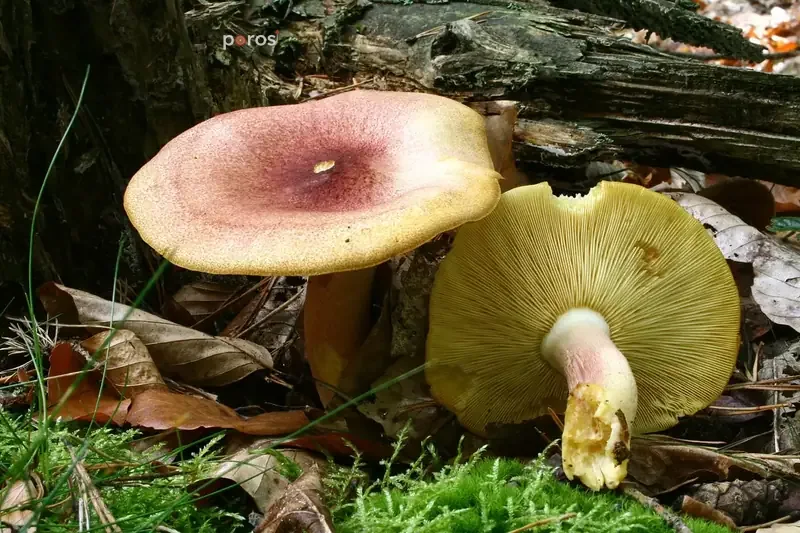
Plums and custard Tricholomopsis rutilans
Plums and custard also grows on conifer stumps and has yellow gills, but its cap is covered in fine purple-red scales, its gills never turn greenish and its spore print is white. Sulphur tuft has a smooth cap and a purple-brown spore print.
 Inedible
not Sulphur tuft
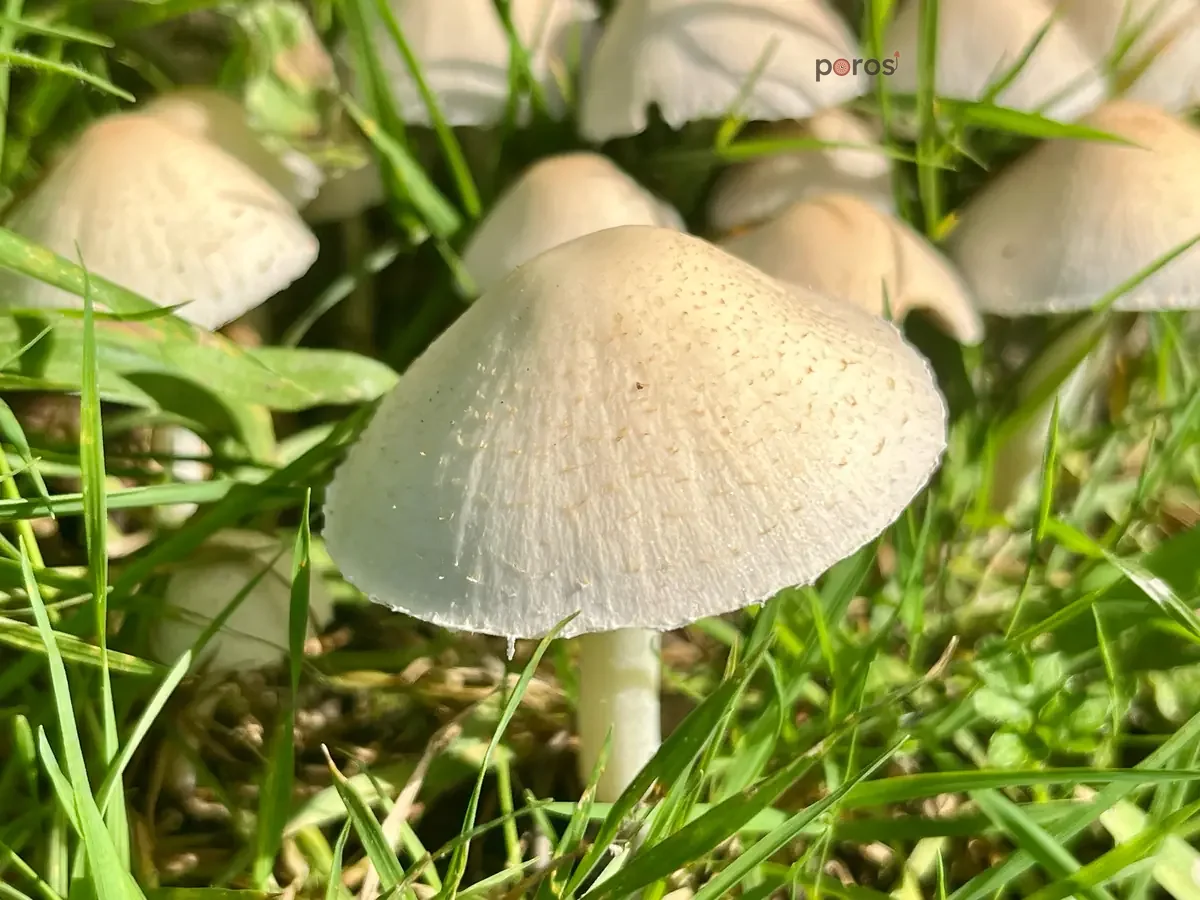
Pale brittlestem Candolleomyces candolleanus
The pale brittlestem's cap and flesh are cream-brown rather than yellow, its stem is white and very brittle, and it is not bitter.
Toxins
The bitterness and toxicity of sulphur tuft are linked to compounds called fasciculols, some of which bind calmodulin. Source
Frequently asked questions
Is sulphur tuft poisonous?
Yes. It causes vomiting, diarrhoea and abdominal pain, and visual disturbance and paralysis have been reported in severe cases. It tastes very bitter and cooking does not make it edible.
How do you identify sulphur tuft?
Dense clusters on stumps and roots, a sulphur-yellow cap with an orange centre, greenish-yellow gills, a purple-brown spore print and only a faint veil zone instead of a ring.
How is it different from honey fungus?
Honey fungus has a white spore print, a clear ring and dark cap scales. Sulphur tuft has greenish gills and a purple-brown spore print.
Does sulphur tuft have a Turkish name?
We could not find an established Turkish common name in the sources; Turkish Wikipedia also lists it under its Latin name. We use a descriptive name on this page.
Where does it grow in Turkey?
In woods with rotting stumps and roots. Most GBIF records come from İstanbul, with others from Kırklareli, Bolu, Düzce, Sinop, Samsun and Muğla.
When does it appear?
It can be seen for much of the year; Turkish records peak in October and November.
Is sulfur tuft the same as sulphur tuft?
Yes. Sulfur tuft is the American spelling of sulphur tuft (Hypholoma fasciculare). It is poisonous: sulphur-yellow caps in dense clusters on stumps, with greenish-yellow gills that darken to purple-brown as the spores ripen.
When is sulphur tuft season in Turkey?
In our calendar, sulphur tuft season runs Feb–Apr, Jun, Aug, Oct–Dec. Sulphur tuft can be found for much of the year; Turkish GBIF records peak in October–November, with others in late winter and spring.
Where does sulphur tuft grow?
It grows in crowded clusters on dead stumps, buried roots and rotting wood of both broadleaf trees and conifers, as a wood-decay (saprotrophic) fungus.
Where is sulphur tuft found in Turkey?
More than half of Turkey's sulphur tuft records come from the forests of İstanbul, with others from Kırklareli, Bolu, Düzce, Sinop, Samsun, Ordu, Kütahya, Ankara, İzmir and Muğla.
What can sulphur tuft be confused with?
Sulphur tuft can be confused with honey fungus (Armillaria mellea, edible species), conifer tuft (Hypholoma capnoides, edible species), sheathed woodtuft (Kuehneromyces mutabilis, edible species), deadly galerina (Galerina marginata, deadly), poplar mushroom (Cyclocybe cylindracea, edible species), glistening inkcap (Coprinellus micaceus, inedible), plums and custard (Tricholomopsis rutilans, inedible) and pale brittlestem (Candolleomyces candolleanus, inedible). Look-alikes are compared on this page.
What is sulphur tuft called in Turkish?
In Turkish, sulphur tuft (Hypholoma fasciculare) is called Kükürt sarısı demet mantarı.
Related species
-
 NamekoPholiota microsporaEdible species
-
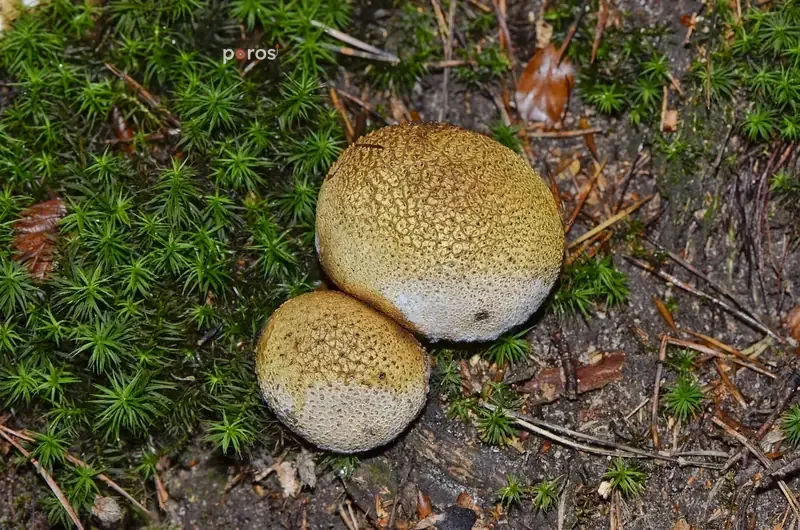 Common earthballScleroderma citrinumPoisonous
-
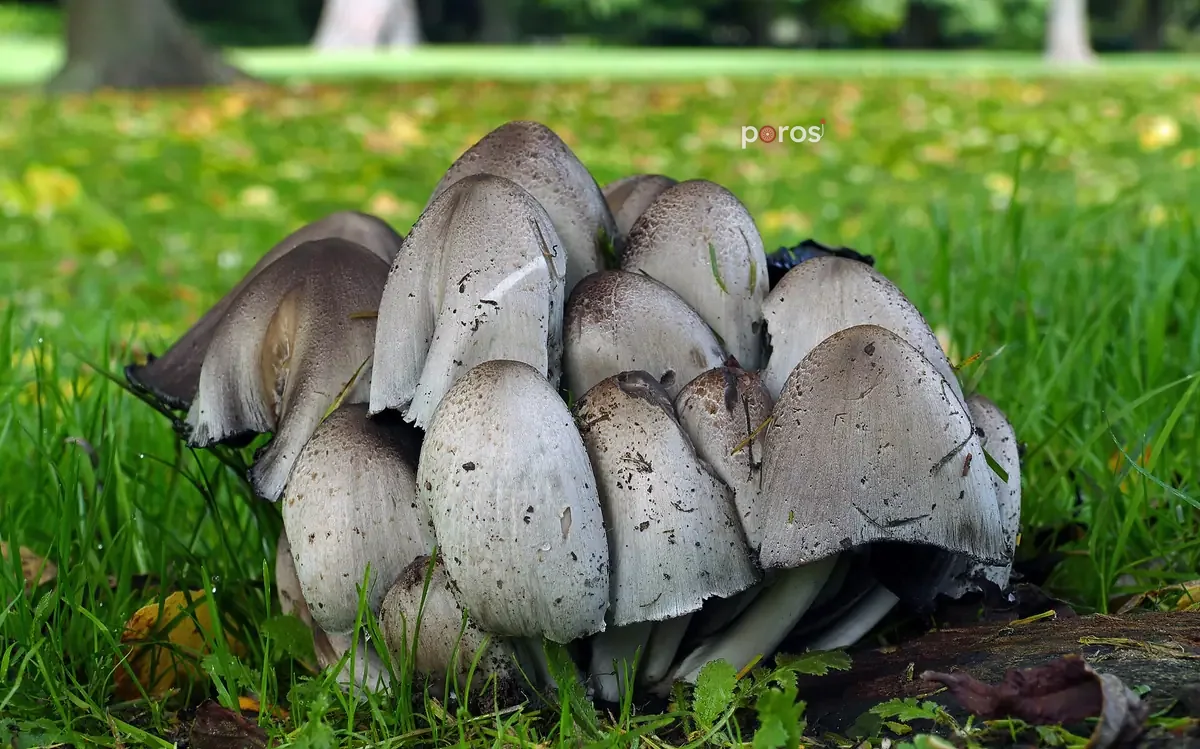 Common ink capCoprinopsis atramentariaPoisonous
-
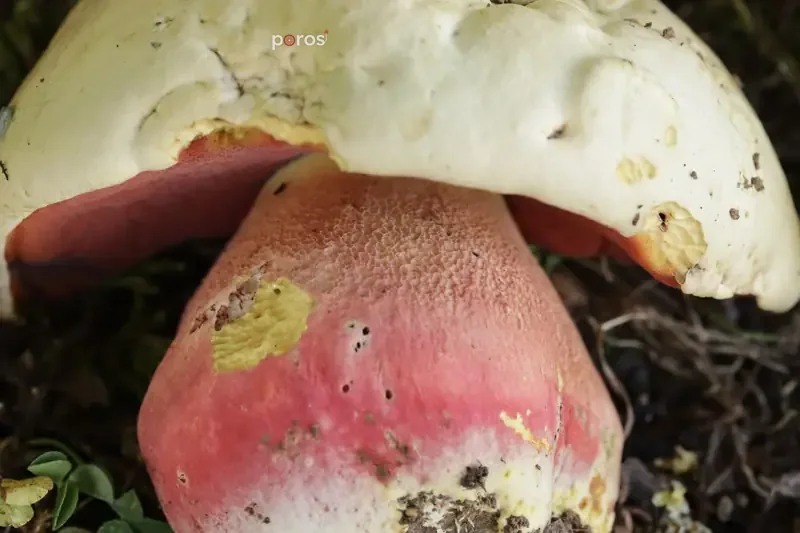 Devil’s boleteRubroboletus satanasPoisonous
-
 Fly agaricAmanita muscariaPoisonous
-
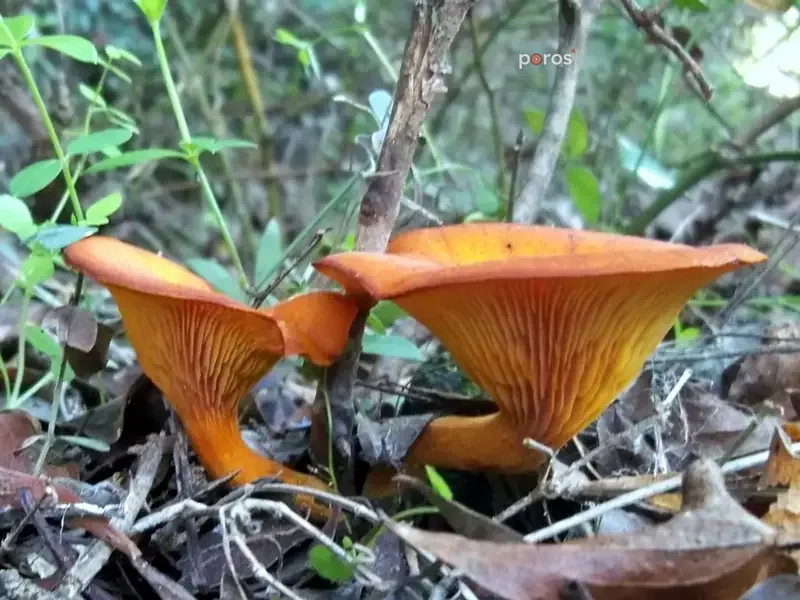 Jack-o’-lantern mushroomOmphalotus oleariusPoisonous
-
 Livid pinkgillEntoloma sinuatumPoisonous
-
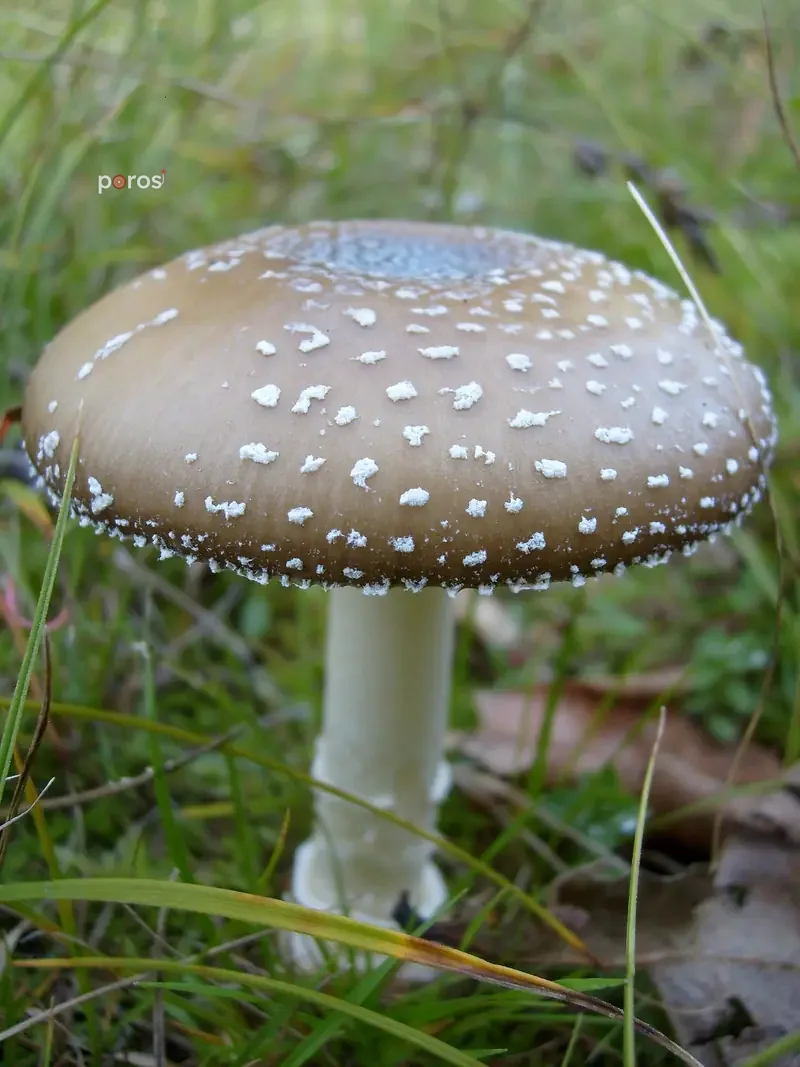 Panther capAmanita pantherinaPoisonous
Sources
- Al-Salihi ve ark. (2021), Frontiers in Bioengineering and Biotechnology: Hypholoma fasciculare metabolom profili pubmed.ncbi.nlm.nih.gov
- Wikipedia (EN): Hypholoma fasciculare en.wikipedia.org
- Vikipedi (TR): Hypholoma fasciculare tr.wikipedia.org
All sources (6)
- First Nature: Hypholoma fasciculare first-nature.com
- GBIF: Türkiye kayıtları gbif.org
- iNaturalist: Türkiye gözlemleri inaturalist.org
Photo credits (16)
- File:Grünblättrige Schwefelköpfe (Hypholoma fasciculare)-20201020-RM-110121.jpg · Ermell · CC BY-SA 4.0
- File:Grünblättriger Schwefelkopf (Hypholoma fasciculare) Bruderwald-20251031-RM-162333.jpg · Reinhold Möller Ermell · CC BY-SA 4.0
- File:2014 Hypholoma fasciculare.jpg · Kreuzschnabel · CC BY-SA 3.0
- File:Hypholoma fasciculare in Haute-Savoie (8).jpg · Krzysztof Golik · CC BY-SA 4.0
- File:Hypholoma fasciculare qtl3.jpg · Quartl · CC BY-SA 3.0
- Hypholoma fasciculare · iNaturalist #104726384 · Michel Langeveld · CC BY 4.0
- Hypholoma fasciculare · iNaturalist #73007027 · Konan Farrelly-Horsfall · CC BY 4.0
- File:Hypholoma fasciculare 2022 G1.jpg · George Chernilevsky · CC BY-SA 4.0
- iNaturalist: Kütahya, 16 Feb 2026 · Umut Nuri Erdoğan · CC BY
- iNaturalist: İstanbul, 23 Nov 2025 · Umut Nuri Erdoğan · CC BY
- iNaturalist: Kırklareli, 19 Oct 2025 · Asrın Akıncıoğlu · CC BY
- iNaturalist: İstanbul, 14 Nov 2024 · Umut Nuri Erdoğan · CC BY
- iNaturalist: Kırklareli, 13 Oct 2024 · Asrın Akıncıoğlu · CC BY
- iNaturalist: Kırklareli, 5 Oct 2024 · Asrın Akıncıoğlu · CC BY
- iNaturalist: İstanbul, 17 Mar 2024 · Umut Nuri Erdoğan · CC BY
- iNaturalist: İstanbul, 20 Feb 2024 · Umut Nuri Erdoğan · CC BY


