
Jewelled amanita (gemmed amanita)
Amanita gemmata · Amanitaceae

Amanita gemmata, the jewelled amanita, has a pale yellow to cream cap dotted with white cottony patches, a fragile ring and a short collar-like volva at the base. It is close to the panther cap and, according to sources, can contain ibotenic acid and muscimol; poisoning resembling panther cap poisoning has been reported. Its yellow cap leads to confusion with Caesar's mushroom (A. caesarea) and the false death cap. In Turkey it has been recorded from Istanbul, Rize and Sakarya.
Also called: gemmed amanita Turkish: Amanita gemmata Synonyms: Amanita junquillea
Last updated: Prepared by the Poros Mantar editorial team4 sources checkedReport a correction
POISONOUS — do not eat.
Amanita gemmata is poisonous. Its toxin content varies by region; sources report ibotenic acid and muscimol and, after eating, panther-cap-like poisoning within 30 minutes to 3 hours: dizziness, a drunken state, muscle twitching, hallucinations and drowsiness. Older books that call it edible are misleading. If poisoning is suspected, call 112 (Turkish poison centre UZEM: 114) and keep any leftover mushroom.
Jewelled amanita photos
-
© Matej Frančeškin · CC BY 4.0
-

© Stuart Fisher · CC BY 4.0
-

Gills© naturewatchwidow · CC BY 4.0
-

Volva© Umut Nuri Erdoğan · CC BY 4.0
-

Cross-section© Lukas Large from Stourbridge, United Kingdom · CC BY-SA 2.0
-

Cap© Simon Colenutt · CC BY 4.0
-
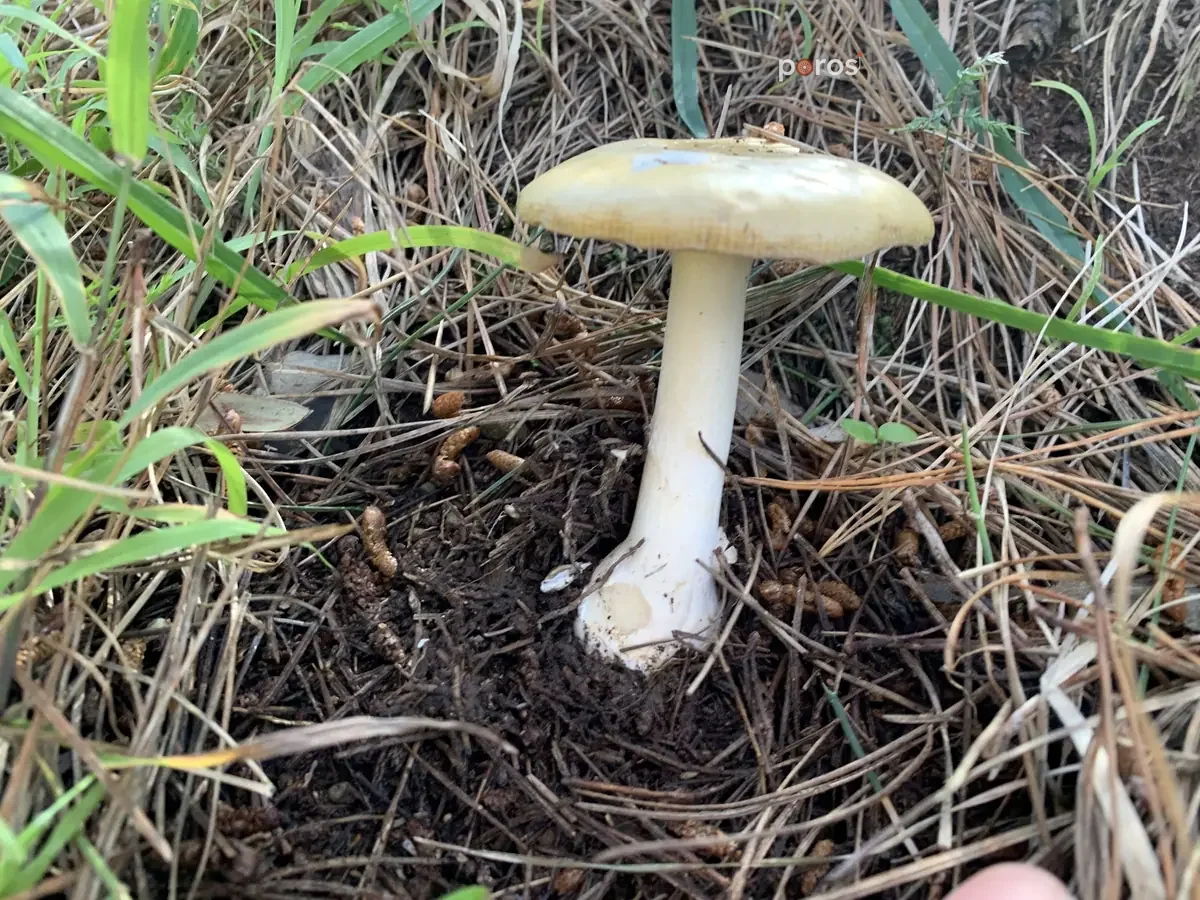
In habitat© eyrezer · CC BY 4.0
-

© Michel Langeveld · CC BY 4.0
-

Gills© Thomas Laxton · CC BY-SA 4.0
-

Stem© Thomas Laxton · CC BY-SA 4.0
-

Cap© garmonb0zia · CC0


These are licensed records of this species; photos alone are not enough to identify a mushroom.
Is the jewelled amanita poisonous?
Yes, the jewelled amanita is poisonous and must not be eaten. It can contain ibotenic acid and muscimol; panther-cap-like nervous system poisoning has been reported. If poisoning is suspected, call 112 at once (Turkish poison centre: 114) and keep any leftover mushroom.
Is the jewelled amanita edible?
No, the jewelled amanita must not be eaten; it is poisonous. It can be picked by mistake for Caesar's mushroom (Amanita caesarea). If poisoning is suspected, call 112 at once (Turkish poison centre: 114) and keep any leftover mushroom.
How to recognise it
Appearance of jewelled amanita
Spore print: White Faintly of radish or not distinctive.
Where does jewelled amanita grow?
Mycorrhizal with conifers, especially pine, and with oak; grows on sandy, acid soils in coastal pine forests and mixed woodland.
Where is jewelled amanita found in Turkey?
Our map data holds seven GBIF records from Turkey (Istanbul, Rize, Sakarya) and six research-grade iNaturalist observations, filed under the name Amanita junquillea. It can be met in autumn in the pine forests of the Black Sea and Marmara regions.
Which months
- Jan2
- Feb0
- Mar0
- Apr0
- May1
- Jun0
- Jul0
- Aug1
- Sep0
- Oct1
- Nov0
- Dec0
3 provinces, 5 observations (GBIF, iNaturalist); months from observation dates. Record density also reflects where observers work.
Latest jewelled amanita observations
-
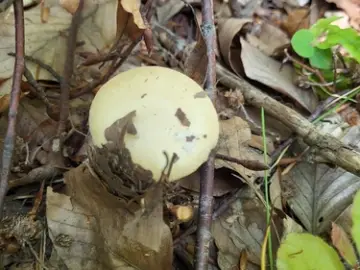 İstanbul28 May 2026 · iNaturalist© Matthew Rozanoff · CC BY
-
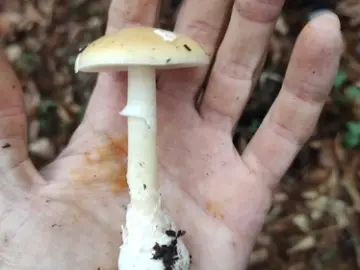 İstanbul11 Jan 2024 · iNaturalist© Umut Nuri Erdoğan · CC BY
-
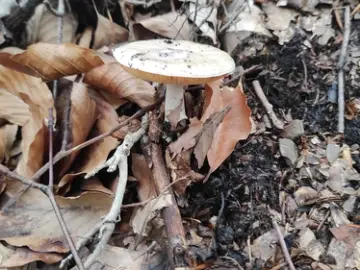 İstanbul11 Jan 2024 · iNaturalist© Umut Nuri Erdoğan · CC BY
-
 Illustrative
Rize10 Aug 2026 · iNaturalist
-
 Illustrative
Sakarya5 Oct 2025 · iNaturalist
- See on the map
On "illustrative" cards the image is a photo of the species; the observation photo cannot be shown here because of its licence, but can be seen at the source.
Look-alikes
What is it mistaken for?
Jewelled amanita can be mistaken for the species below. Each comparison shows Jewelled amanita on the left, the look-alike on the right, and how to tell them apart.
Poisoning risk: Jewelled amanita gets picked by people who think they have found one of the edible species below. If even one feature does not match, do not eat it.
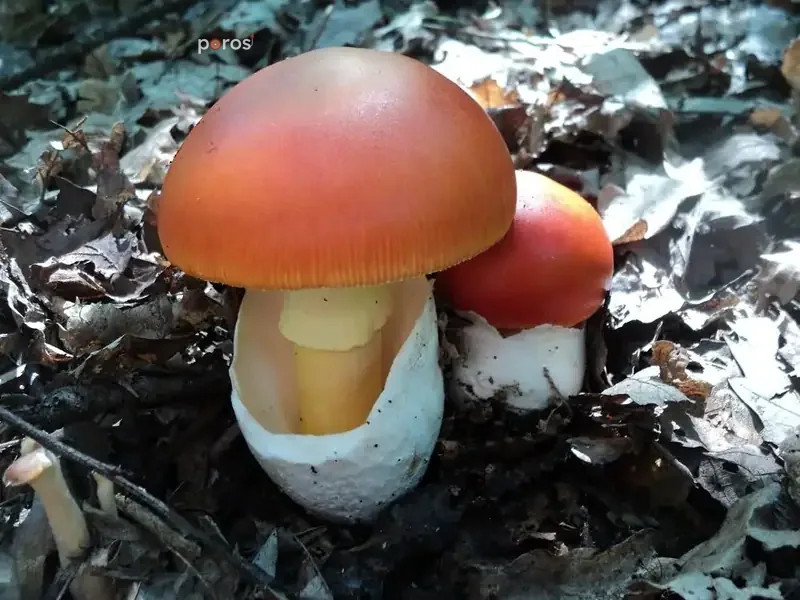
Caesar's mushroom Amanita caesarea
How to tell Caesar's mushroom has a bright orange-red cap, yellow gills and stem, and a thick white sac-like volva.
Other look-alikes (2)
 Inedible
not Jewelled amanita
False death cap Amanita citrina
The false death cap is lemon yellow or white, smells of raw potato, has an unstriated margin and a sharply rimmed bulb.
 Poisonous
not Jewelled amanita
Panther cap Amanita pantherina
The panther cap has a brown cap with the same white patches and collar-like volva. Intermediate forms between the two are reported.
Jewelled amanita and its look-alikes compared
| Species | Status | Underside | Spore print | Season |
|---|---|---|---|---|
| Jewelled amanitaAmanita gemmata | Poisonous | Free, crowded, white gills | White | Apr–Jun, Sep–Nov |
| Caesar’s mushroomAmanita caesarea | Edible species | Yellowish, crowded and free | White | Jul–Nov |
| False death capAmanita citrina | Inedible | Gills white to cream, crowded and free | White | Aug–Dec |
| Panther capAmanita pantherina | Poisonous | Free, crowded, white gills | White | Jul–Dec |
The table is compiled from each species page. The status column is a guide only; do not eat a wild mushroom unless an expert has seen it in person. Compare look-alikes side by side
Frequently asked questions
Is the jewelled amanita poisonous?
Yes, the jewelled amanita is poisonous and must not be eaten. It can contain ibotenic acid and muscimol; panther-cap-like nervous system poisoning has been reported. If poisoning is suspected, call 112 at once (Turkish poison centre: 114) and keep any leftover mushroom.
Is the jewelled amanita edible?
No, the jewelled amanita must not be eaten; it is poisonous. It can be picked by mistake for Caesar's mushroom (Amanita caesarea). If poisoning is suspected, call 112 at once (Turkish poison centre: 114) and keep any leftover mushroom.
Where is it found in Turkey?
GBIF holds seven Turkish records from Istanbul, Rize and Sakarya, mostly from pine forests in autumn.
How is it told from Caesar's mushroom?
Caesar's mushroom has yellow gills and stem, an orange-red cap and a thick sac volva. Amanita gemmata has white gills, a pale yellow cap and a short collar-like volva.
What are the symptoms?
According to sources, within half an hour to three hours: dizziness, a drunken state, muscle twitching, hallucinations and heavy drowsiness. If in doubt, call 112.
Is it the same as Amanita junquillea?
Yes. Amanita junquillea is a synonym of the same species; iNaturalist files its records under that name.
What are the white patches on the cap?
Remnants of the universal veil that wrapped the young mushroom. Rain can wash them off, so a bare cap does not rule the species out.
When does it appear?
In Mediterranean climates in spring and autumn; in the Black Sea and Marmara regions mostly in autumn.
When is jewelled amanita season in Turkey?
In our calendar, jewelled amanita season runs Apr–Jun, Sep–Nov. Around the Mediterranean it has two seasons: spring (April to June) and autumn (September to November).
Where does jewelled amanita grow?
Mycorrhizal with conifers, especially pine, and with oak; grows on sandy, acid soils in coastal pine forests and mixed woodland.
Where is jewelled amanita found in Turkey?
Our map data holds seven GBIF records from Turkey (Istanbul, Rize, Sakarya) and six research-grade iNaturalist observations, filed under the name Amanita junquillea. It can be met in autumn in the pine forests of the Black Sea and Marmara regions.
What can jewelled amanita be confused with?
Jewelled amanita can be confused with Caesar's mushroom (Amanita caesarea, edible species), false death cap (Amanita citrina, inedible) and panther cap (Amanita pantherina, poisonous). Look-alikes are compared on this page.
What is jewelled amanita called in Turkish?
In Turkish, jewelled amanita (Amanita gemmata) is called Amanita gemmata.
Related species
-
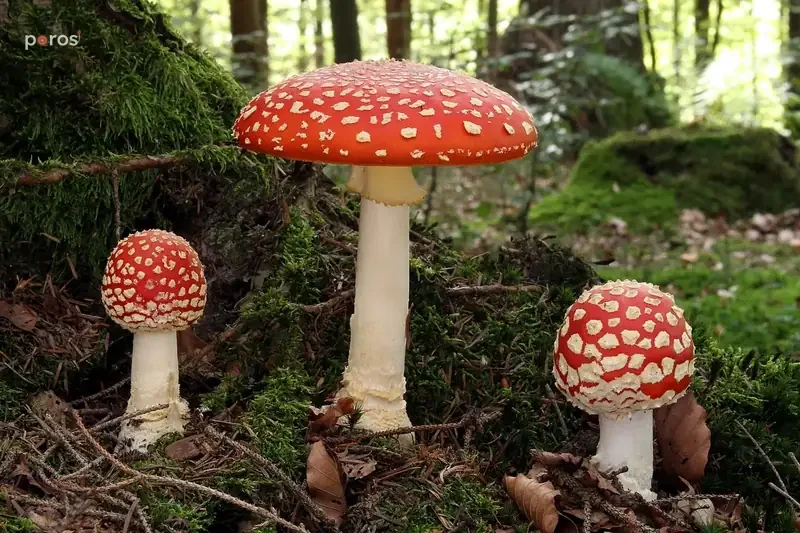 Fly agaricAmanita muscariaPoisonous
-
Panther capAmanita pantherinaPoisonous
-
 Royal fly agaricAmanita regalisPoisonous
-
 Amanita proximaAmanita proximaDeadly poisonous
-
 BlusherAmanita rubescensInedible
-
Caesar’s mushroomAmanita caesareaEdible species
-
 Death capAmanita phalloidesDeadly poisonous
-
 Destroying angelAmanita virosaDeadly poisonous
Sources
- Wikipedia (EN): Amanita gemmata en.wikipedia.org
- First Nature: Amanita gemmata, Jewelled Amanita first-nature.com
- iNaturalist: Amanita junquillea inaturalist.org
All sources (4)
- GBIF: Türkiye kayıtları gbif.org
Photo credits (14)
- File:Amanita Junquillea 443597876.jpg · Matej Frančeškin · CC BY 4.0
- Amanita junquillea · iNaturalist #74401502 · Stuart Fisher · CC BY 4.0
- Amanita junquillea · iNaturalist #22447748 · naturewatchwidow · CC BY 4.0
- Amanita junquillea · iNaturalist #196344350 · Umut Nuri Erdoğan · CC BY 4.0
- File:Lukas Large - Amanita junquillea gemmata (54275139625).jpg · Lukas Large from Stourbridge, United Kingdom · CC BY-SA 2.0
- Amanita junquillea · iNaturalist #330464289 · Simon Colenutt · CC BY 4.0
- Amanita junquillea · iNaturalist #137692725 · eyrezer · CC BY 4.0
- Amanita junquillea · iNaturalist #321896710 · Michel Langeveld · CC BY 4.0
- File:Amanita gemmata 12945644.jpg · Thomas Laxton · CC BY-SA 4.0
- File:Amanita gemmata 12945645.jpg · Thomas Laxton · CC BY-SA 4.0
- File:Amanita gemmata 30107195.jpg · garmonb0zia · CC0
- iNaturalist: İstanbul, 28 May 2026 · Matthew Rozanoff · CC BY
- iNaturalist: İstanbul, 11 Jan 2024 · Umut Nuri Erdoğan · CC BY
- iNaturalist: İstanbul, 11 Jan 2024 · Umut Nuri Erdoğan · CC BY


