
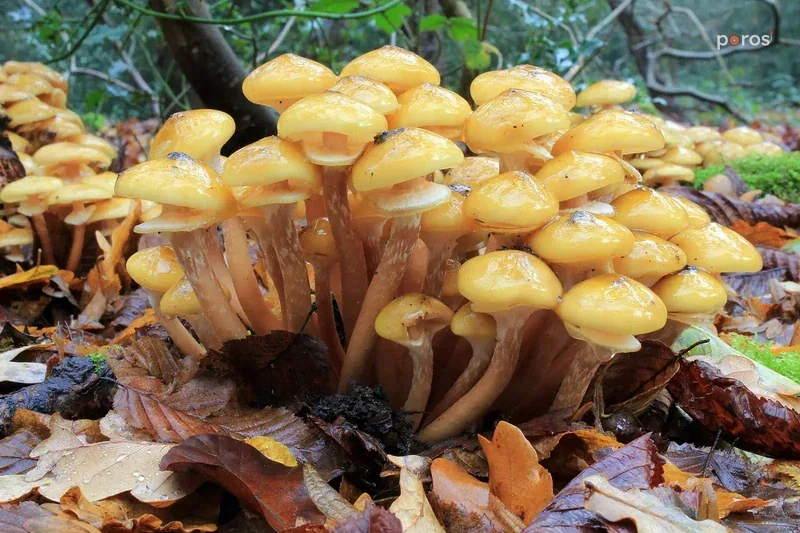
Honey fungus
Armillaria mellea · Physalacriaceae
Honey fungus grows in dense clusters at the base of trees and on stumps, with honey-yellow caps and a white ring on the stem.
Last updated: Prepared by the Poros Mantar editorial team7 sources checkedReport a correction
Honey fungus grows in dense clusters at the base of trees and on stumps, with honey-yellow caps and a white ring on the stem. It is known as an edible species only when thoroughly cooked; raw or undercooked it causes stomach upsets. It is also an aggressive parasite that can kill trees.
Also called: honey mushroom, bootlace fungus Turkish: Bal mantarı, bal rengi mantar
How to recognise it
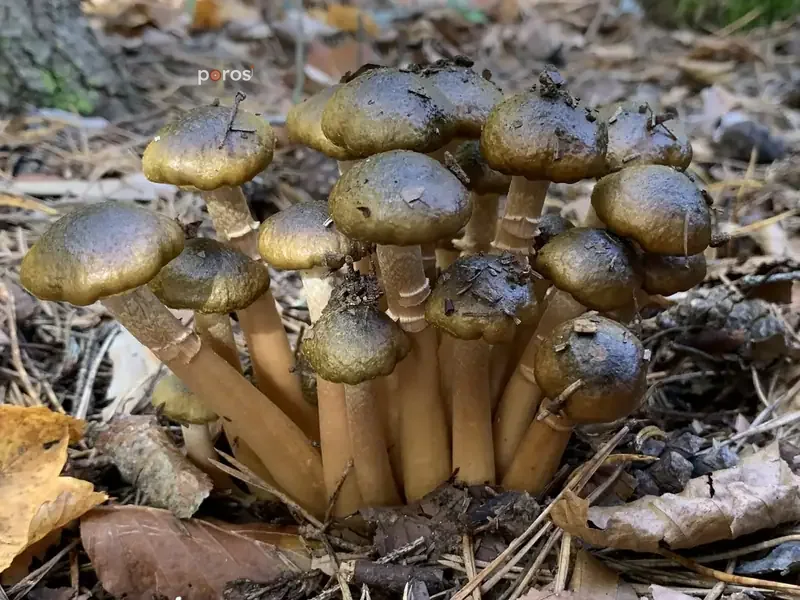
Honey fungus, part by part
No volva Spore print: White Mild mushroomy smell; raw flesh tastes astringent to bitter.


When and where
Sep–Jan
- Janin season
- Feb
- Mar
- Apr
- May
- Jun
- Jul
- Aug
- Sepin season
- Octin season
- Novin season
- Decin season
Honey fungus fruits in autumn after the first rains, from late September to December; Turkish GBIF records cluster between October and January.
Type Edible
In season SeptemberOctoberNovemberDecemberJanuary
Regions Black Sea RegionMediterranean RegionMarmara RegionDüzceOsmaniyeBoluYalovaIstanbul
Where does honey fungus grow?
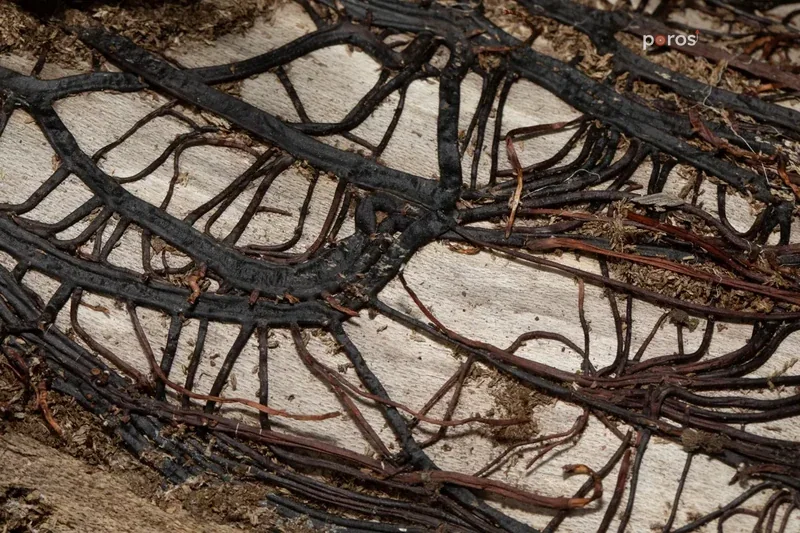
Honey fungus grows on the roots and trunk bases of broadleaf trees, less often conifers, and on stumps; it spreads through the soil with black, bootlace-like strands called rhizomorphs.
Where is honey fungus found in Turkey?
In Turkey, honey fungus records come mostly from the northern forests of İstanbul, with others from Bolu, Düzce and Yalova. A Karadeniz Technical University study examined Armillaria mellea and its damage in the spruce forests of the Black Sea region.
Which months
- Jan7
- Feb0
- Mar0
- Apr0
- May0
- Jun0
- Jul1
- Aug1
- Sep0
- Oct11
- Nov11
- Dec17
honey fungus map of Turkey: all provinces and months →
5 provinces, 48 observations (GBIF, iNaturalist); months from observation dates. Record density also reflects where observers work.
Latest honey fungus observations
-
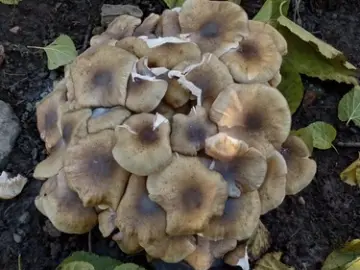 İstanbul2 Nov 2025 · iNaturalist© Umut Nuri Erdoğan · CC BY
-
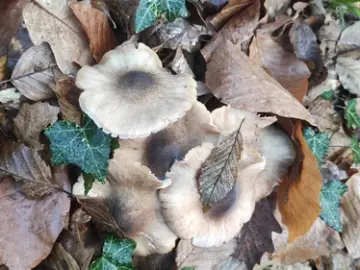 İstanbul4 Jan 2024 · iNaturalist© Umut Nuri Erdoğan · CC BY
-
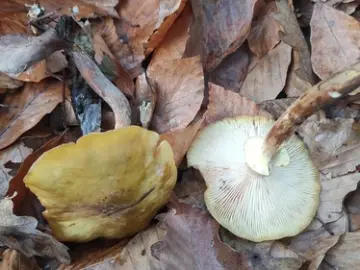 İstanbul4 Jan 2024 · iNaturalist© Umut Nuri Erdoğan · CC BY
-
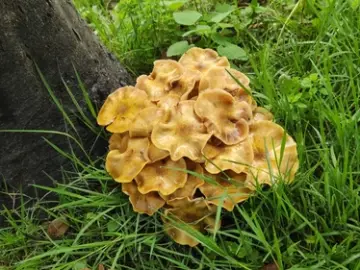 İstanbul3 Jan 2024 · iNaturalist© Umut Nuri Erdoğan · CC BY
-
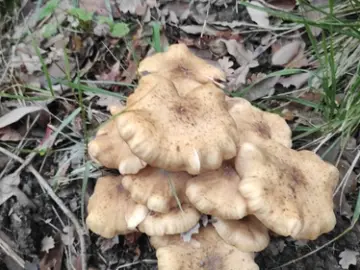 İstanbul30 Dec 2023 · iNaturalist© Umut Nuri Erdoğan · CC BY
-
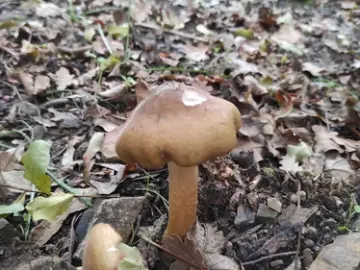 İstanbul30 Dec 2023 · iNaturalist© Umut Nuri Erdoğan · CC BY
-
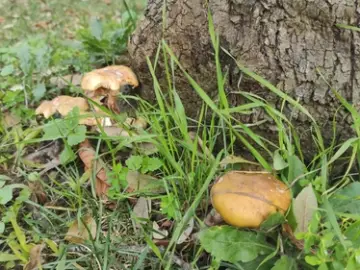 İstanbul30 Dec 2023 · iNaturalist© Umut Nuri Erdoğan · CC BY
-
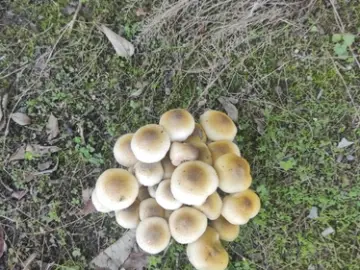 İstanbul28 Dec 2023 · iNaturalist© Umut Nuri Erdoğan · CC BY
- See on the map
Look-alikes
What could it be confused with?
Honey fungus can be mistaken for the species below. Each card shows the look-alike and how it differs from Honey fungus.
 Deadly
not Honey fungus
Deadly galerina Galerina marginata
Smaller and grows singly or in small groups on wood; its spore print is rusty brown and its ring thin and membranous. It contains amatoxins and is deadly.
 Poisonous
not Honey fungus
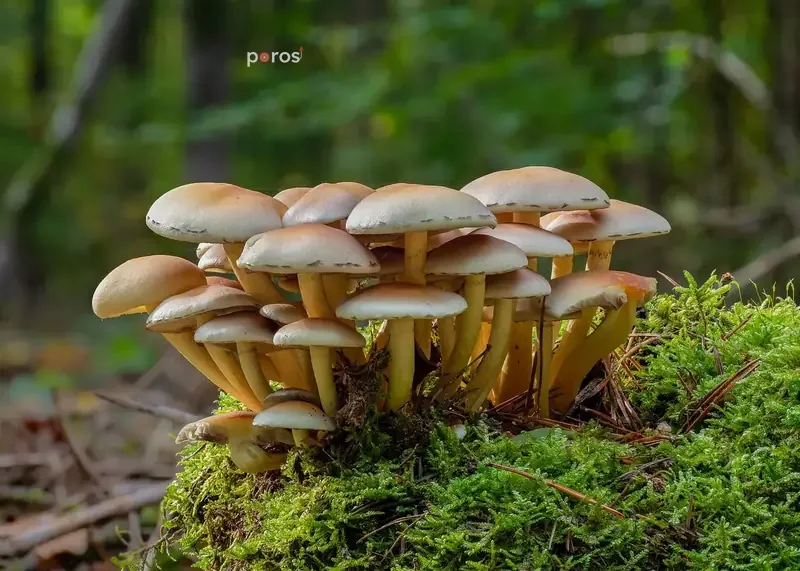
Sulphur tuft Hypholoma fasciculare
Sulphur-yellow cap, gills turning from yellow to greenish and then purple-brown, no ring and a very bitter taste.
 Edible species
not Honey fungus
Ringless honey fungus Armillaria tabescens
Has no ring on the stem; the same cautions as for honey fungus apply.
How to cook and eat honey fungus
Safety first. Honey fungus is never eaten raw or undercooked; even well cooked it upsets some people, so try only a little the first time. Deadly Galerina can grow mixed into a cluster, so check every single mushroom.
How to prepare it
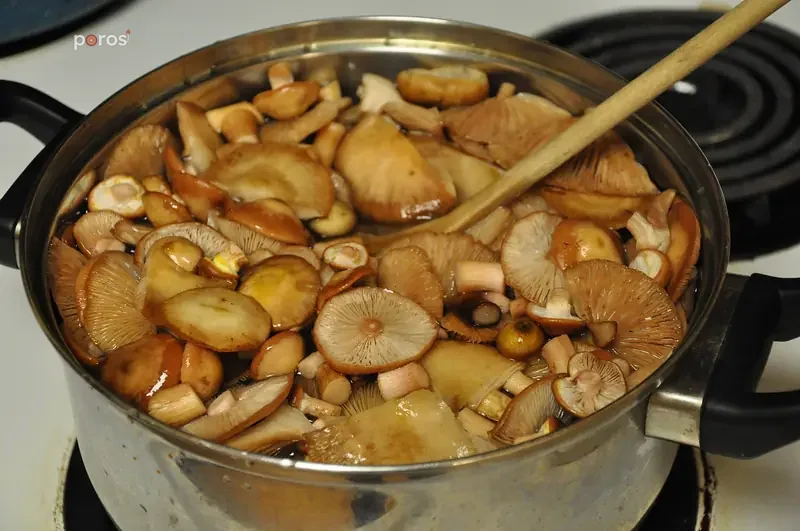
Check every mushroom in the cluster. Remove the tough stems and use young caps. Parboil the caps in boiling salted water for 5 minutes and discard the water: this removes the bitterness of some specimens and may reduce stomach irritants.
How to cook it
After parboiling, cook it thoroughly: our recipe simmers it for another 20 minutes in a stew. It can also be pickled or roasted. Drying intensifies the flavour, though rehydrated mushrooms stay tough.
What goes with it?
Its taste is slightly sweet and nutty, and it suits long-cooked meat dishes.
- sunflower oil
- diced beef
- onions
- celery sticks
- soy sauce
- plain flour
- bean sprouts
Source: Wikipedia · practical details from our recipes.
Recipe
On the blog
How to store honey fungus
Grow it, buy it
Honey fungus price list
| Product | Us | Market (sourced, dated) |
|---|---|---|
| Fresh honey fungus | Made to order · ask | — |
| Dried honey fungus | Made to order · ask | — |
We make our honey fungus products in small batches, to order; send a request and we email you the price and delivery date. The market column shows prices seen on other sellers' pages on the date given; they are not our prices and may have changed.
Frequently asked questions
Is honey fungus edible?
Honey fungus is known as edible when thoroughly cooked. Raw or undercooked it causes stomach upsets, and even well cooked it disagrees with some people. Never eat it without an expert's identification.
What is honey fungus mistaken for?
The most dangerous look-alike is the funeral bell (Galerina marginata), which is smaller with a rusty-brown spore print. Sulphur tuft (Hypholoma fasciculare) also grows in clusters but has no ring and tastes very bitter.
Where does honey fungus grow in Turkey?
At the base of trees and on stumps, especially in the Marmara and Black Sea forests. Most GBIF records come from İstanbul's northern forests, with others in Bolu, Düzce and Yalova.
When does honey fungus appear?
In autumn, after the first rains, from late September to December. Turkish records cluster between October and January.
Does honey fungus harm trees?
Yes. Honey fungus is a root-rot parasite that spreads through soil with black strands called rhizomorphs and can kill weakened trees; a KTÜ study examined its damage in spruce forests.
What colour is the honey fungus spore print?
White. If a similar-looking cluster gives a rusty-brown print it may be deadly Galerina, and none of it should be eaten.
What is the ringless honey mushroom?
The ringless honey mushroom (Desarmillaria tabescens, formerly Armillaria tabescens) looks like honey fungus but has no ring on the stem. It grows in clusters on wood and roots of oaks and other trees. Like honey fungus, it is eaten only well cooked, and deadly Galerina is a look-alike.
Is honey fungus the same as the honey mushroom?
Yes. Honey fungus and honey mushroom are both names for Armillaria mellea and its close relatives, called bal mantarı in Turkish.
What does honey fungus look like?
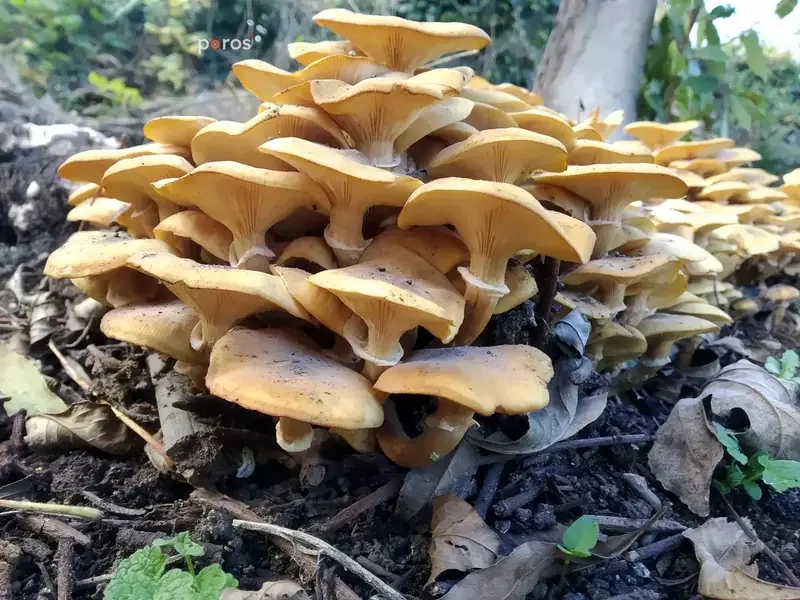
Honey fungus grows in dense clusters on stumps, roots and the base of trees. The caps are honey-yellow to brown with small dark scales near the centre, the gills are white to cream and the stem has a whitish ring. Black, bootlace-like strands often run under the bark.
How do we identify honey fungus?
We look for clusters on wood, a white spore print, a ring on the stem and the black bootlace strands. Deadly galerina and sulphur tuft also grow in clusters on wood, so every find is checked carefully before cooking.
How do we deal with honey fungus in the garden?
There is no reliable home chemical cure. Gardeners remove the infected stump and as many roots as possible, and choose more resistant plants for that spot.
How do we tell honey fungus from the deadly galerina?
Both are brown and grow on wood, but the deadly galerina is smaller, with a thin stem and a rusty-brown spore print, while honey fungus grows in larger clusters and leaves a white spore print. We take a spore print every time.
What is the largest honey fungus?
A single honey fungus (Armillaria ostoyae) in Oregon, USA, spreads underground over several square kilometres and is often called one of the largest living organisms. Most of it is hidden as root-like strands in the soil.
How does honey fungus spread through soil and trees?
Honey fungus spreads underground with black, bootlace-like strands called rhizomorphs. They grow from infected stumps and roots to the roots of nearby trees and shrubs, and the mushrooms appear in clusters at the base of trees or on stumps in autumn.
Is honey fungus dangerous to humans?
Honey fungus is not deadly, but eaten raw or undercooked it often causes stomach upsets, and some people react even when it is well cooked. We only eat young caps, cook them thoroughly and try a small amount the first time. The real danger is mistaking the deadly galerina or sulphur tuft for honey fungus.
When is honey fungus season in Turkey?
In our calendar, honey fungus season runs Sep–Jan. Honey fungus fruits in autumn after the first rains, from late September to December; Turkish GBIF records cluster between October and January.
Where does honey fungus grow?
Honey fungus grows on the roots and trunk bases of broadleaf trees, less often conifers, and on stumps; it spreads through the soil with black, bootlace-like strands called rhizomorphs.
Where is honey fungus found in Turkey?
In Turkey, honey fungus records come mostly from the northern forests of İstanbul, with others from Bolu, Düzce and Yalova. A Karadeniz Technical University study examined Armillaria mellea and its damage in the spruce forests of the Black Sea region.
What can honey fungus be confused with?
Honey fungus can be confused with funeral bell (Galerina marginata, deadly), sulphur tuft (Hypholoma fasciculare, poisonous) and ringless honey fungus (Armillaria tabescens, edible species). Look-alikes are compared on this page.
What is honey fungus called in Turkish?
In Turkish, honey fungus (Armillaria mellea) is called Bal mantarı; other local names include bal rengi mantar.
Related species
-
 EnokiFlammulina filiformisEdible species
-
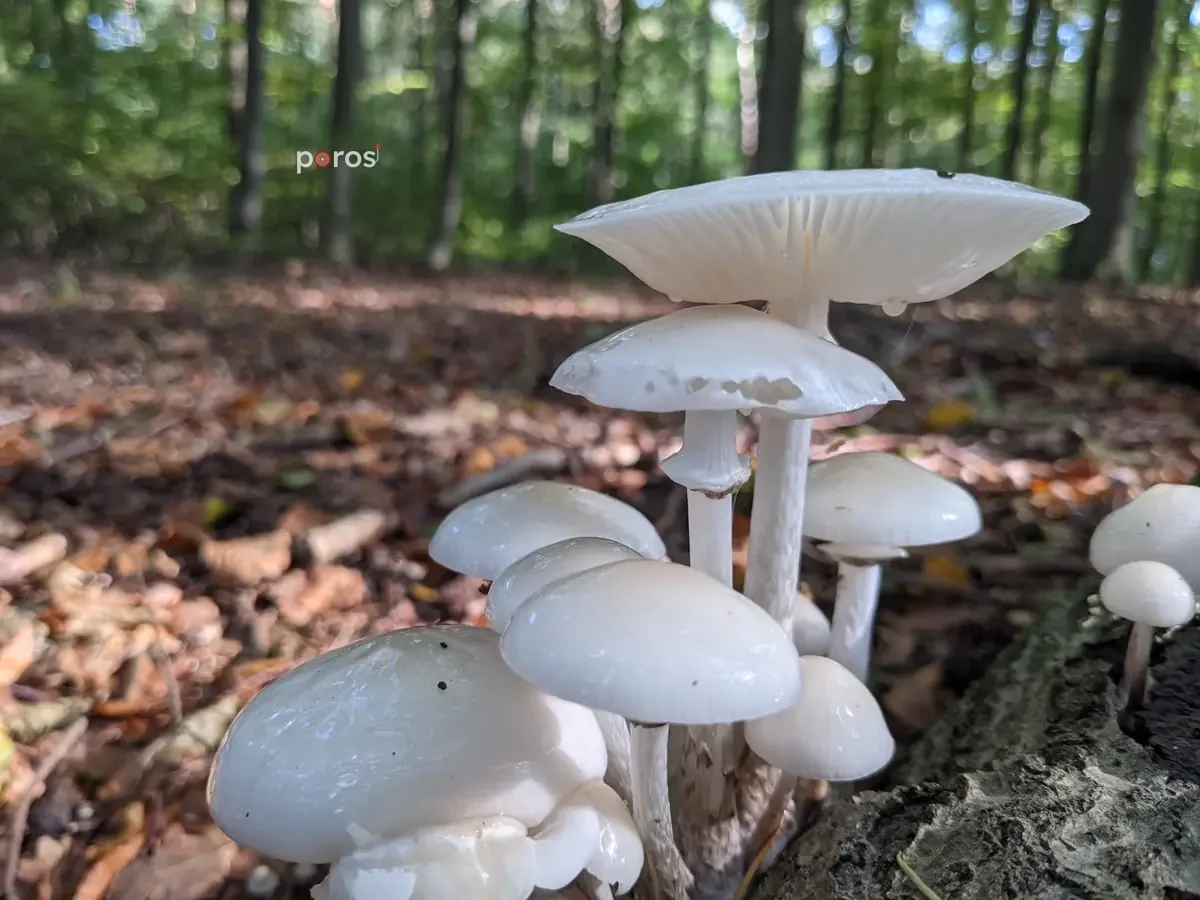 Porcelain fungusOudemansiella mucidaInedible
-
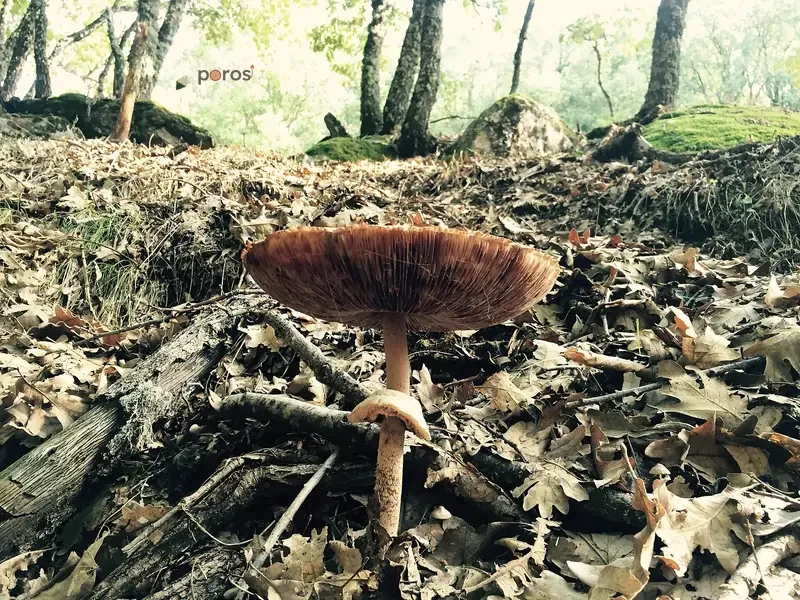 Anatolian matsutakeTricholoma anatolicumEdible species
-
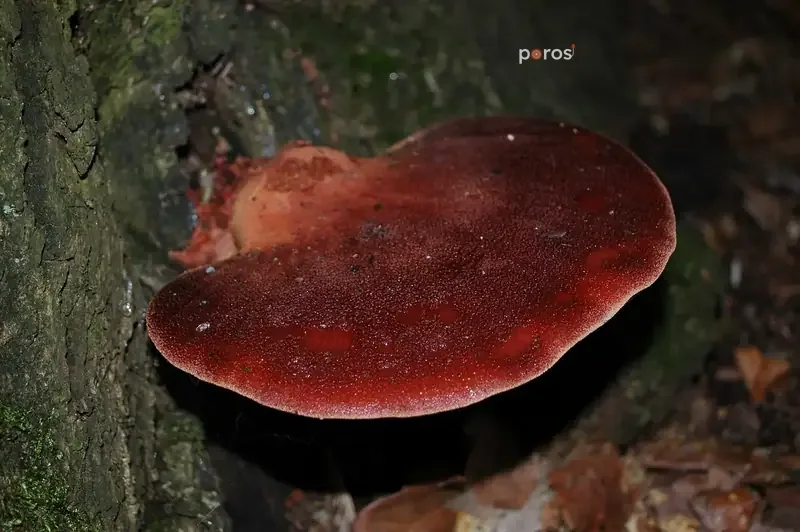 Beefsteak fungusFistulina hepaticaEdible species
-
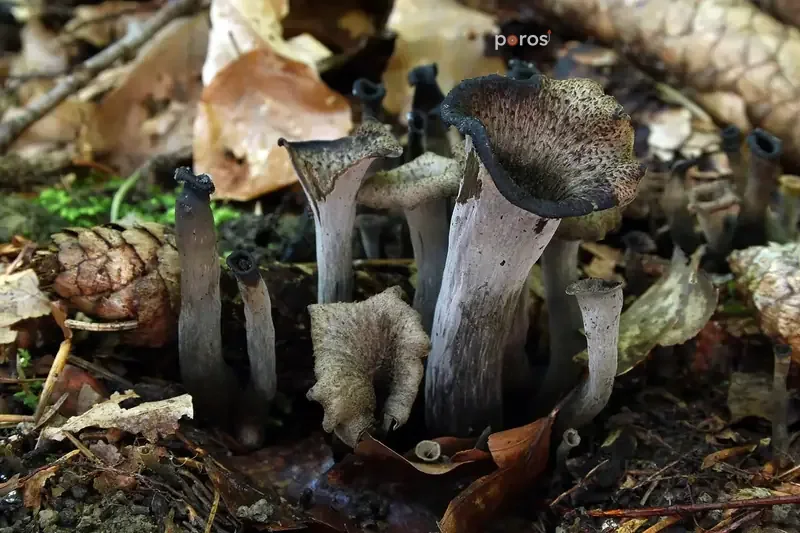 Black trumpetCraterellus cornucopioidesEdible species
-
 Bloody milk capLactarius sanguifluusEdible species
-
 Button mushroomAgaricus bisporusEdible species
-
 Caesar’s mushroomAmanita caesareaEdible species
Sources
- Huang ve Xu (2023), Food & Function: Armillaria mellea fitokimyasal profil derlemesi pubmed.ncbi.nlm.nih.gov
- KTÜ: Ladin ormanlarında Armillaria mellea mantarı avesis.ktu.edu.tr
- Adanacıoğlu ve ark. (2014), ANADOLU (Ege Tarımsal Araştırma Enstitüsü): Türkiye makromantar genetik kaynakları I. Ege Bölgesi dergipark.org.tr
All sources (7)
- Wikipedia (EN): Armillaria mellea en.wikipedia.org
- First Nature: Armillaria mellea first-nature.com
- GBIF: Türkiye kayıtları gbif.org
- iNaturalist: Türkiye gözlemleri inaturalist.org
Photo credits (16)
- File:Armillaria mellea, Honey Fungus, UK 1.jpg · Stu's Images · CC BY-SA 3.0
- Armillaria mellea · iNaturalist #139156344 · MichellePrice_CJBG · CC BY 4.0
- Armillaria mellea · iNaturalist #64821123 · Daniel Ellehammer Larsen · CC BY 4.0
- Armillaria mellea · iNaturalist #330948079 · Elizabete Marchante · CC BY 4.0
- Armillaria mellea · iNaturalist #46434711 · Katja Schulz · CC BY 4.0
- File:Armillaria mellea20100914 304.jpg · Bff · CC BY-SA 3.0
- Armillaria mellea · iNaturalist #75522042 · Stephen James McWilliam · CC0
- Armillaria mellea · iNaturalist #73316781 · natomik · CC BY 4.0
- iNaturalist: İstanbul, 2 Nov 2025 · Umut Nuri Erdoğan · CC BY
- iNaturalist: İstanbul, 4 Jan 2024 · Umut Nuri Erdoğan · CC BY
- iNaturalist: İstanbul, 4 Jan 2024 · Umut Nuri Erdoğan · CC BY
- iNaturalist: İstanbul, 3 Jan 2024 · Umut Nuri Erdoğan · CC BY
- iNaturalist: İstanbul, 30 Dec 2023 · Umut Nuri Erdoğan · CC BY
- iNaturalist: İstanbul, 30 Dec 2023 · Umut Nuri Erdoğan · CC BY
- iNaturalist: İstanbul, 30 Dec 2023 · Umut Nuri Erdoğan · CC BY
- iNaturalist: İstanbul, 28 Dec 2023 · Umut Nuri Erdoğan · CC BY

