
Guide · farming
How does mushroom farming work?
Mushroom farming means preparing a substrate (compost, straw or sawdust), pasteurising it, adding spawn, incubating, fruiting and harvesting. Oyster mushrooms incubate for about 14 days and need no compost fermentation or casing layer; button mushrooms need fermented compost and casing, and can yield 200–250 kg per tonne of compost. At Poros Mantar we set out the stages, Turkish production data, facility needs and how to work out profit, with sources.
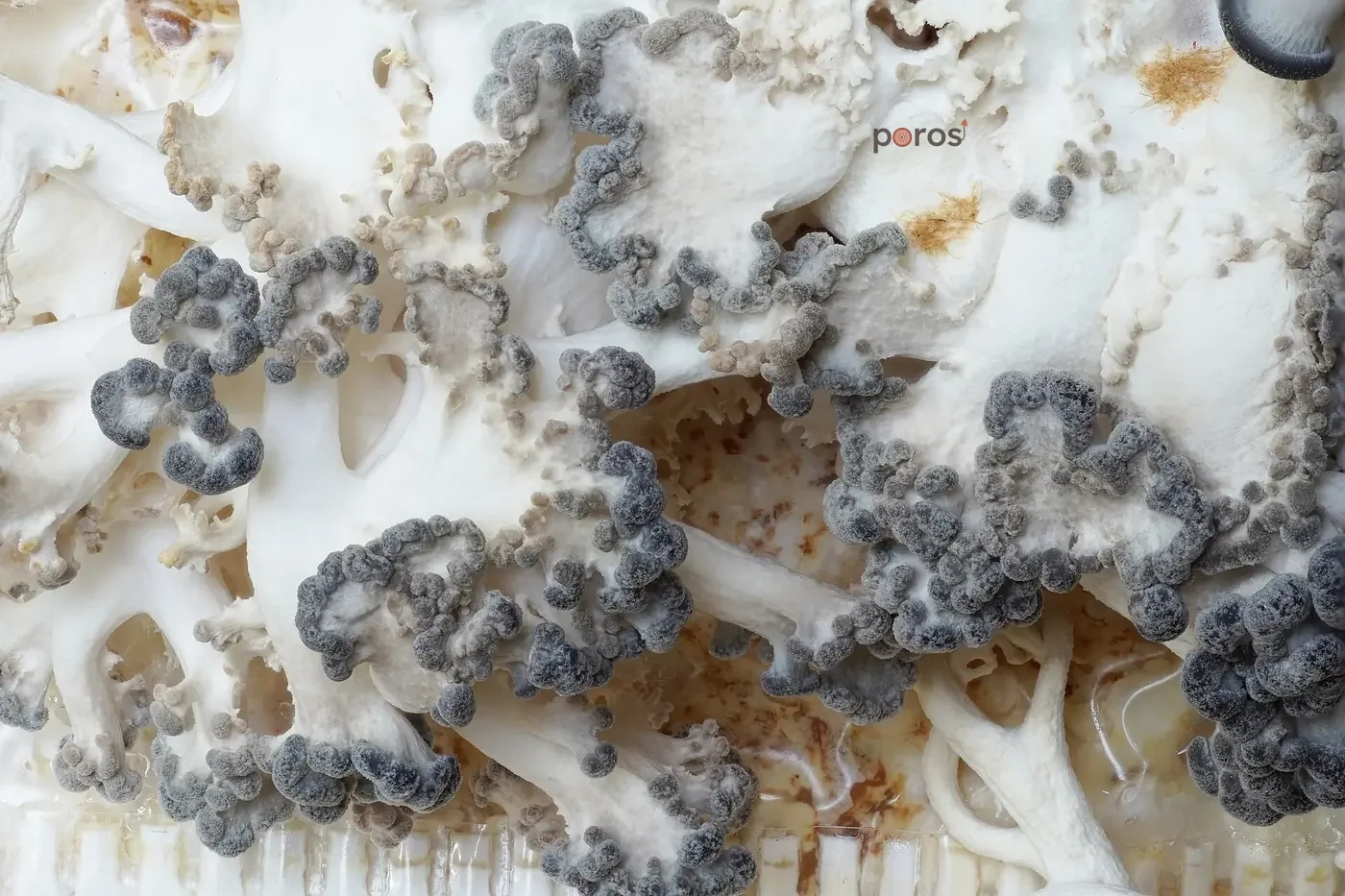
Oyster mushroom farming, step by step
Oyster mushrooms need no compost fermentation or casing layer, which makes them the closest route to small-scale farming. Figures come from a guide by Çukurova University researchers.
-
1
Prepare the substrate
Straw, stalks or sawdust are cut to 3–4 cm and watered to about 75% moisture; gypsum and lime are mixed in to adjust the pH.
-
2
Pasteurise
Held in crates at 60 °C for 12 hours. Without a pasteurising room, the material goes into a 70–72 °C water bath for 45 minutes. The aim is to clear pests and disease.
-
3
Add the spawn
Once cooled to 24–26 °C, 2 kg of spawn goes into every 100 kg of substrate. Bags hold 3–20 kg depending on the season.
-
4
Incubate
About 14 days, ideally 24 °C inside the substrate and 90–95% humidity. Mycelium grows poorly below 20 °C and dies above 32 °C. No light is needed at this stage.
-
5
Start fruiting
Once the bag is colonised, 1 cm² holes are cut. The room drops to 15–16 °C, CO₂ goes below 600 ppm, air is changed 2–3 times an hour and light is given 12 hours a day.
-
6
Harvest
Pins appear within 4–6 days and the first flush is picked about 6 days later. During harvest the room stays at 15–18 °C and 75–85% humidity; water goes into the air, not onto the bags.
Mushroom grow kits compared
Time, difficulty, yield and price by species. Times count from the day you set the kit up.
| Kit | Difficulty | Room temperature | First harvest | Published yield | Price |
|---|---|---|---|---|---|
| Oyster mushroom grow kit Pleurotus ostreatus | Easy | 13–24 °C (best 16–20) | 10–14 days | Biological efficiency 65–124% (depends on substrate) [a] [b] | 900 ₺ |
| Pink oyster mushroom grow kit Pleurotus djamor | Easy | 21–27 °C (stalls below 18 °C) | 7–12 days | No single published figure | 1.080 ₺ |
| Golden oyster mushroom grow kit Pleurotus citrinopileatus | Easy | 20–24 °C (no growth below 18 °C) | 8–12 days | No single published figure | 1.080 ₺ |
| Shiitake grow kit Lentinula edodes | Medium | 13–21 °C (fridge for the shock) | 10–16 days | Biological efficiency 74% (best mix in the trial) [c] | 1.500 ₺ |
| Button mushroom grow kit Agaricus bisporus | Medium | 21–25 °C to colonise, 15–18 °C to pin | 21–35 days | 200–250 kg per tonne of compost [e] | On request |
| Lion’s mane grow kit Hericium erinaceus | Medium | 13–21 °C (best 15–20) | 14–21 days | Biological efficiency 43% (best substrate in the trial) [d] | 890 ₺ |
| Reishi grow kit Ganoderma lucidum | Hard | 18–27 °C | At maturity | No single published figure | On request |
| Cordyceps grow kit Cordyceps militaris | Medium | 18–22 °C (20–25 °C to colonise) | 7.–9. weeks | No single published figure | 540 ₺ |
| Oyster mushroom trial kit Pleurotus ostreatus | Easy | 20–24 °C to colonise, 16–20 °C to fruit | 28–35 days | Biological efficiency 65–124% (depends on substrate) [a] [b] | 510 ₺ |
Biological efficiency is fresh mushrooms per unit of dry substrate (100% = 1 kg fresh from 1 kg dry substrate). These figures come from commercial and research trials; they are not a guarantee for a kit at home. Kits come in one type; each kit has the single price shown in the table. To order, send a request from the product page; no payment is taken at that point. Price, stock and delivery date are confirmed by email, and the kit is prepared fresh.
Mushroom production in Turkey
According to Ministry of Agriculture and Forestry data, Turkey produced 75,340 tonnes of mushrooms in 2024, up from 39,495 tonnes in 2015: close to double in nine years. The leading provinces for cultivated mushrooms in 2024 were Antalya, Ankara and Isparta, followed by Afyonkarahisar, Konya, Istanbul and Adana.
The main species traded are white button, chestnut, oyster, truffle and morel. For newcomers the practical choice is usually between oyster and button mushrooms.
| Year | Production (tonnes) |
|---|---|
| 2015 | 39,495 |
| 2020 | 55,455 |
| 2022 | 65,636 |
| 2023 | 71,479 |
| 2024 | 75,340 |
Source: Anadolu Agency, Ministry of Agriculture and Forestry data (24 June 2025).
Oyster or button mushrooms?
The two work very differently. Oyster mushrooms grow on plant waste, while button mushrooms need specially prepared compost. That difference shapes the setup, the raw materials and how long it takes to learn.
| Oyster (Pleurotus) | Button (Agaricus) | |
|---|---|---|
| Substrate | Straw, stalks, sawdust, paper and other plant waste | Fermented compost and a casing layer |
| Preparation | Pasteurise: 60 °C for 12 hours or 70–72 °C water for 45 minutes | Compost fermentation, then steam pasteurisation at 55–60 °C for 5–6 days |
| Spawn rate | 2 kg per 100 kg of substrate | 6–7 kg per tonne of compost |
| Incubation | About 14 days, ideally 24 °C in the substrate | 15–18 days, compost 24–25 °C, room 22–23 °C |
| Fruiting temperature | 15–18 °C | About 15–17 °C |
| First crop | Pins 4–6 days after cutting holes, first flush about 6 days later | 18–20 days after casing |
| Published yield | Biological efficiency 86–124% (depends on raw material) | 200–250 kg per tonne of compost, about 15 kg/m² |
Sources: Büyükalaca, Taşkın, Baktemur; Çukurova University farmer brochure; Penn State Extension; Vieira & Andrade 2016. Figures come from commercial and research conditions and are not a guarantee.
The stages of button mushroom farming
Penn State Extension sums up button mushroom farming in six steps: phase I and phase II composting, spawning, casing, pinning and cropping. Harvest starts 15–21 days after casing, which is 7–8 weeks from the start of composting. Mushrooms come in 7–10 day cycles, each picked over 2–4 days.
Compost is the hardest and most equipment-heavy part, which is why small growers often start with ready-spawned compost. Even then, yields drop if casing moisture, room temperature and carbon dioxide are not managed well. Penn State advises fresh air at pinning, keeping CO₂ at or below 0.08%.
What does a mushroom farm need?
Unlike a plant greenhouse, a mushroom house is an insulated space that manages humidity, temperature and fresh air rather than light. The basic principle is to separate the stages: raw material preparation and pasteurisation, clean spawning, incubation room, growing room, then cooling and packing after harvest.
The main things to plan for are:
- An insulated room with a washable floor, plus adequate water and power
- Heating and cooling: incubation and fruiting temperatures differ
- Humidification and fresh air, with thermometer, humidity and CO₂ meters
- A pasteurising setup or a supply of ready compost
- Shelving, bags, and a cleaning and disinfection routine
- Cold storage after harvest: fresh mushrooms spoil quickly
Is mushroom farming profitable?
There's no honest single-figure answer. Profit depends on yield, selling price, energy and labour costs, losses and whether you have a regular buyer. Most 'earn this much a month' figures online don't explain these variables, and we don't give an amount here either.
You can build your own estimate like this: multiply the expected crop for one cycle (for button mushrooms, your compost quantity times the published 200–250 kg per tonne) by a realistic selling price, then subtract the costs below. Using the low end of the range is safer, because losses tend to be higher in the first cycles.
A few kits or bags at home are for your own table and for learning; we don't suggest treating them as income. Before investing, a small trial, talking to buyers early and speaking to your provincial agriculture directorate are the cheapest insurance.
- Compost or substrate, and spawn
- Energy for heating, cooling and humidifying
- Labour and cleaning
- Packaging, cold storage and transport
- Losses: mould and unsold crop
- The share of investment and rent for each cycle
Registration and support in Turkey
Turkey's Ministry of Agriculture and Forestry says indoor mushroom-growing areas are now recorded under its regulation on the registration of indoor plant production. Communiqué No. 2024/43 on rural development support also lists fixed investments in cultivated mushroom production among eligible agricultural investments.
Application periods, grant rates and conditions change by year and province, so we don't quote a rate here. Ask your provincial directorate of agriculture and forestry about current calls and the registrations needed to sell fresh mushrooms. This section is general information, not legal or financial advice.
Where to learn
Turkish-language starting points include the Ministry of Education's module on cultivated mushroom growing and the oyster mushroom guide by Çukurova University researchers. The Mushroom Research Centre in Yalova works on exotic species, developing bottle culture for beech mushrooms, enoki, wood ear, reishi and lion's mane, and has run hands-on training for growers (for example in May 2024).
If you want to start small, a kit teaches the humidity, air and harvest side at low risk. The next step is making your own bags with spawn and sterile substrate, covered in our guide to growing mushrooms at home.
Safety
Mature mushrooms release a lot of spores in a closed growing room, so don't delay harvest and keep the room ventilated. Never eat or sell a mushroom that appears by itself in the growing area if you don't know the species. If you suspect poisoning in Turkey, call 112 or the National Poison Information Centre (114).
Before you start farming
- Have you worked out which species you'll sell, to whom and at what price?
- Have you run a small trial with a kit or a few bags first?
- Will you make your own compost or buy it ready?
- Can you measure and manage temperature, humidity and CO₂?
- Do you have a plan for cold storage and transport?
- Did you work out profit using the low end of the yield range?
- Have you spoken to your provincial agriculture directorate about registration and support?
Frequently asked questions
How does mushroom farming work?
The substrate is prepared and pasteurised, spawn is mixed in once it cools, bags go into incubation, and once colonised the room is cooled and ventilated and the mushrooms are harvested. Button mushrooms add fermented compost and a casing layer.
How long do mushrooms take to grow?
Oyster mushrooms incubate for about 14 days, then the first flush comes in about 6 days. Button mushrooms incubate for 15–18 days, and the first mushrooms appear 18–20 days after casing.
How many kilos of mushrooms does a tonne of compost give?
A Çukurova University farmer brochure reports 200–250 kg per tonne of compost for button mushrooms, about 15 kg/m². Actual results depend on compost quality and room management.
Is mushroom farming profitable?
No single figure is honest. Profit depends on yield, selling price, energy, labour, losses and a regular buyer. We suggest working it out from the low end of the yield range and running a small trial before investing.
Can you farm mushrooms at home?
Yes, with a kit or a few bags, but that scale is for your own use and for learning. Growing to sell needs a separate space where temperature, humidity and air are managed.
What temperature do mushrooms need?
Oyster mycelium does best at about 24 °C inside the substrate and dies above 32 °C; the room is kept at 15–18 °C during harvest. For button mushrooms, compost stays at 24–25 °C during incubation and room air at about 15–17 °C during pinning and harvest.
Which species suits small-scale farming?
Oyster mushrooms are usually easier at small scale because they need no compost fermentation or casing. Button mushrooms have a bigger market but harder preparation, so most small growers start with ready compost.
Is there government support for mushroom farming in Turkey?
Communiqué No. 2024/43 on rural development support includes fixed investments in cultivated mushroom production. Calls, rates and conditions change, so check with your provincial directorate of agriculture and forestry.
Sources
- Anadolu Ajansı (24.06.2025): Türkiye'de mantar üretimi artmaya devam ediyor (Tarım ve Orman Bakanlığı verileri) aa.com.tr
- Büyükalaca, Taşkın, Baktemur: İstiridye Mantarı Yetiştiriciliği (Kayseri Tarım ve Orman İl Müdürlüğü duyurusu) kayseri.tarimorman.gov.tr
- Tarım ve Orman Bakanlığı Tebliği No 2024/43, Resmî Gazete 20.02.2025, Sayı 32819: Kırsal Kalkınma Destekleri Kapsamında Tarıma Dayalı Yatırımlar bingol.tarimorman.gov.tr
All sources (9)
- Yalova Atatürk Bahçe Kültürleri Merkez Araştırma Enstitüsü, Mantar Araştırma Merkezi arastirma.tarimorman.gov.tr
- MEB MEGEP: Kültür Mantarı Yetiştiriciliği modülü megep.meb.gov.tr
- Çukurova Üniversitesi Tarımsal Yayım Merkezi, Çiftçi Broşürü (2007): Mantar Yetiştiriciliği tyhm.cu.edu.tr
- Penn State Extension: Six Steps to Mushroom Farming extension.psu.edu
- Penn State Extension: Basic Procedures for Agaricus Mushroom Growing extension.psu.edu
- Vieira & Andrade (2016), World Journal of Microbiology and Biotechnology: oyster substrate preparation doi.org
Last updated: Prepared by the Poros Mantar editorial teamReport a correction