
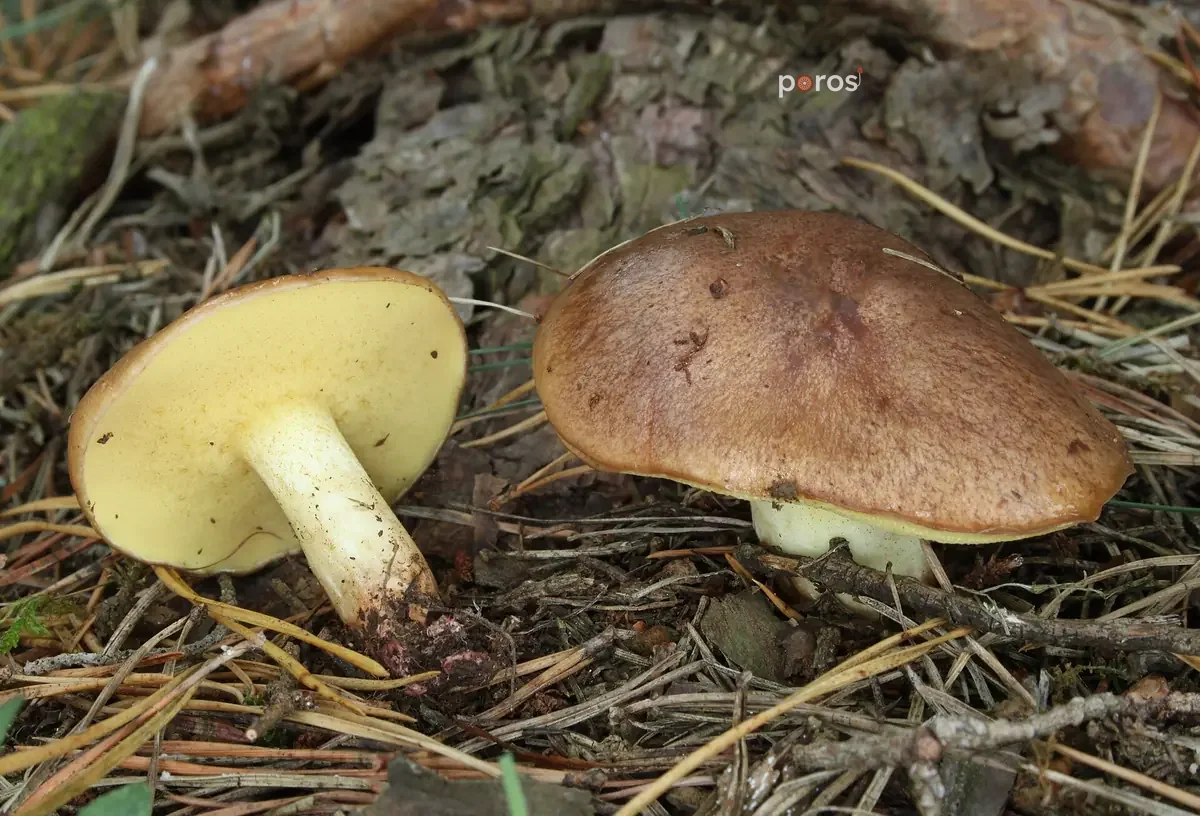
Species map · Suillus collinitus
Suillus collinitus map of Turkey: where and when it grows
Our map holds 15 verified records of the suillus collinitus (Suillus collinitus) from 8 provinces of Turkey. Most come from İstanbul, Ankara, Bursa and Sakarya; records peak in May, October and December.
- records
- 15
- provinces
- 8
- regions
- 5
- latest record
- Nov 2026
Records by province
- Marmara 8
- Central Anatolia 3
- Black Sea 2
- Mediterranean 1
- Aegean 1
Linked provinces have their own page with every species recorded there. Record density also reflects where observers work.
Which months?
This page covers only where and when the species is recorded in Turkey. For identification and edibility, see the species page. Built from research-grade, geo-referenced GBIF and iNaturalist records, refreshed at the start of every month.
Poisonous look-alikes of the suillus collinitus
- Brown roll-rim Paxillus involutus Deadly poisonous
Records by region: Marmara 8; Central Anatolia 3; Black Sea 2; Mediterranean 1; Aegean 1. Most records come from İstanbul, Ankara, Bursa, Sakarya, Isparta, Manisa, Samsun and Bolu.
Records peak in May, October and December; about 46% of dated records fall in September–November and 20% in March–May.
In mild climates it fruits from autumn into midwinter. Our Turkish records fall in January, May and August to December, mostly in October and December.
It lives only with pines, such as Turkish red pine, Aleppo pine and black pine, mostly on calcareous soils, and is common in Mediterranean pine forests. It grows from soil singly or in groups.
Brown roll-rim (Paxillus involutus, deadly): Its cap is also brown and sticky when damp, but it has gills running down the stem instead of pores, an inrolled cap margin and bruises brown.
Weeping bolete (Suillus granulatus, edible): Its closest look-alike; the cap is paler orange-brown, there is no pink mycelium at the stem base and young pores weep milky droplets.
Slippery jack (Suillus luteus, edible): It has a distinct membranous ring on the stem; Suillus collinitus never has one.
Frequently asked questions
Where does the suillus collinitus grow in Turkey?
Most records come from İstanbul, Ankara, Bursa, Sakarya and Isparta.
When does the suillus collinitus fruit in Turkey?
Records peak in May, October and December.
Which province has the most suillus collinitus records?
İstanbul, followed by Ankara, Bursa and Sakarya. The order also reflects where observers are active.
What habitat does the suillus collinitus prefer?
It lives only with pines, such as Turkish red pine, Aleppo pine and black pine, mostly on calcareous soils, and is common in Mediterranean pine forests. It grows from soil singly or in groups.
Can I pick mushrooms where they are recorded?
A record is not a permit. Commercial picking in state forests needs a permit; picking in national parks is prohibited.
How current is this map?
Records are re-fetched from GBIF and iNaturalist at the start of every month and this page updates automatically.
What should I do in case of mushroom poisoning?
Call 112 at once; Turkey's poison centre is 114.
Sources
- 6831 sayılı Orman Kanunu (mevzuat.gov.tr) mevzuat.gov.tr
- 2873 sayılı Millî Parklar Kanunu, md. 14 (mevzuat.gov.tr) mevzuat.gov.tr
- Akkoyunlu, Dülger ve Dülger (2025), Anatolian Journal of Botany 9(1): 11-15: Evaluation of antifungal activities of the ethanolic extract of the macrofungus Suillus collinitus against dermatophytes dergipark.org.tr
All sources (6)
- GBIF ve iNaturalist: Türkiye gözlem kayıtları (sitemizin haritası) gbif.org
- Wikipedia (EN): Suillus collinitus en.wikipedia.org
- iNaturalist: Suillus collinitus (Türkçe ad ve Türkiye gözlemleri) inaturalist.org
Data sources and licences
Observations from GBIF.org (human observations and herbarium specimens; records flagged with geospatial issues excluded) and iNaturalist research-grade records, retrieved 10 November 2026. Macrofungi only (Agaricomycetes, Pezizomycetes), named to species. Every point links to its own record, with the recorder and licence (CC0, CC BY, CC BY-NC).
GBIF records come from 25 separate datasets; the largest are Mushroom Observer (591), Aphyllophorales externi (95), Agaricales externi (95), INSDC Host Organism Sequences (36), University of Tennessee Fungal Herbarium (25), INSDC Sequences (23), Herbarium GB, University of Gothenburg (22), NHMD Mycology Collection (12), GENT Lactarius Deliciosi (11). A find entered on two platforms by the same person is counted once. All datasets, publishers and licences: mushroom records in Turkey.
Map: © OpenStreetMap contributors. Province centres: Wikidata. Region comes from the record's GADM province, or the nearest province centre when missing. For protected species (iNaturalist "threatened" or IUCN VU/EN/CR) locations are rounded to ~10 km; locations obscured by iNaturalist are marked "approximate".
An observation shows that a mushroom was seen there on that day, not that it is there now or that it may be picked. Counts reflect how many people record fungi in an area more than how common a species is.
Last updated: Prepared by the Poros Mantar editorial teamReport a correction