
Smith’s amanita
Amanita smithiana · Amanitaceae

Amanita smithiana is a large, white, cottony-scaled amanita of the conifer forests of the Pacific Northwest. It is known because pickers mistake it for western matsutake (Tricholoma murrillianum). It carries kidney-damaging amino acids: vomiting and diarrhoea within hours, then acute kidney failure within days, with some patients needing dialysis. It has not been recorded in Turkey, but since matsutake (sedir mantarı) is picked in Turkey too, the species is worth knowing.
Turkish: Amanita smithiana
Last updated: Prepared by the Poros Mantar editorial team5 sources checkedReport a correction
DEADLY POISONOUS — keep it out of any basket of mushrooms to eat.
Amanita smithiana is poisonous. According to sources it carries kidney-damaging amino acids such as 2-amino-4,5-hexadienoic acid. Symptoms start 1–12 hours after the meal with vomiting, abdominal pain and diarrhoea; acute kidney failure can follow within 2–6 days. Cases needing dialysis have been reported in North America. If poisoning is suspected, call 112 (Turkish poison centre UZEM: 114) and keep any leftover mushroom.
Smith’s amanita photos
-
© Hilary Rose Dawson · CC BY 4.0
-

© Nathan Wilson · CC BY-SA 3.0
-

Gills© jerryn · CC BY 4.0
-

© Mandy Hackney · CC BY 4.0
-

Cap© Mandy Hackney · CC BY 4.0
-

Stem© dpcmiller · CC BY 4.0
-

© jerryn · CC BY 4.0
-

© Mandy Hackney · CC BY 4.0
-
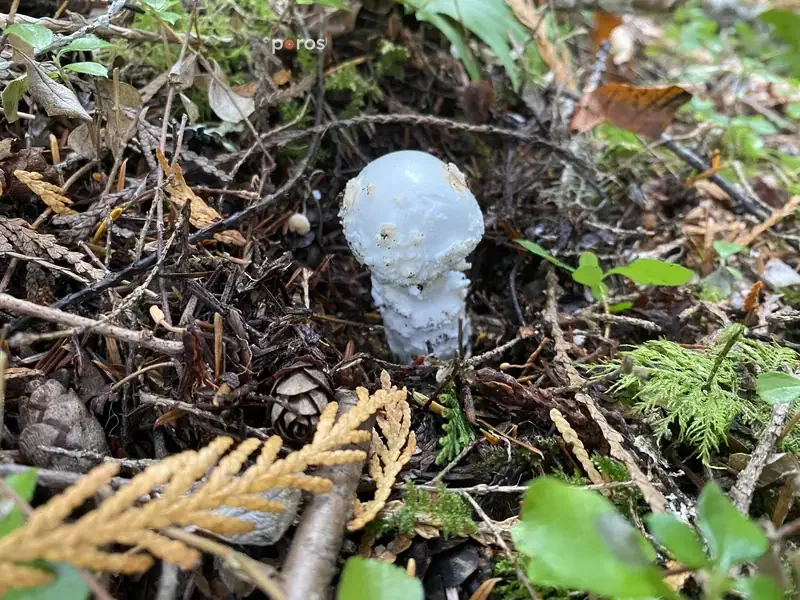
In habitat© Kaitlyn Kaluza · CC BY 4.0
-

Gills© Michele Wiseman · CC BY 4.0


These are licensed records of this species; photos alone are not enough to identify a mushroom.
Is the smith's amanita poisonous?
Yes, the smith's amanita is deadly poisonous and must never be eaten. It carries kidney-damaging amino acids and has caused cases of acute kidney failure. It can be mistaken for western matsutake (Tricholoma murrillianum), Anatolian matsutake (Tricholoma anatolicum) and destroying angel (Amanita virosa). If poisoning is suspected, call 112 at once (Turkish poison centre: 114) and keep any leftover mushroom.
Is the smith's amanita edible?
No, the smith's amanita must never be eaten; it is deadly poisonous. It can be picked by mistake for western matsutake (Tricholoma murrillianum) and Anatolian matsutake (Tricholoma anatolicum). If poisoning is suspected, call 112 at once (Turkish poison centre: 114) and keep any leftover mushroom.
How to recognise it
Appearance of smith's amanita
Spore print: White Faint or indistinct; it lacks matsutake's strong cinnamon-pine smell.
Where does smith's amanita grow?
Mycorrhizal with western hemlock, Douglas fir and other conifers; grows in damp coastal forest, often in the same places as matsutake.
In Turkey
There are no Turkish records: our map data (GBIF and iNaturalist) holds no observations from Turkey. The species belongs to the Pacific coast from British Columbia to northern California. In Turkey the white amanita matsutake pickers must watch for is the destroying angel.
Our map has no observations of smith's amanita from Turkey yet.
Look-alikes
What is it mistaken for?
Smith’s amanita can be mistaken for the species below. Each comparison shows Smith’s amanita on the left, the look-alike on the right, and how to tell them apart.
Deadly mix-up: Smith’s amanita gets picked by people who think they have found one of the edible species below. If even one feature does not match, do not eat it.
Western matsutake Tricholoma murrillianum
How to tell Matsutake has a strong spicy smell, very firm flesh, a thick cottony ring and brown stains on the stem, and no amanita bulb.

Anatolian matsutake Tricholoma anatolicum
How to tell The Anatolian matsutake grows under cedar in the Taurus Mountains and smells strongly; its stem tapers but has no amanita bulb or cottony white cap. This North American confusion is a warning for Turkish matsutake pickers too.
Other look-alikes (1)
 Deadly
not Smith’s amanita
Destroying angel Amanita virosa
The destroying angel has a smoother cap, a sac-like volva and carries amatoxins.
Smith’s amanita and its look-alikes compared
| Species | Status | Underside | Spore print | Season |
|---|---|---|---|---|
| Smith’s amanitaAmanita smithiana | Deadly poisonous | Free or narrowly attached, crowded, white to cream gills | White | Aug–Nov |
| Anatolian matsutakeTricholoma anatolicum | Edible species | Gilled (genus Tricholoma) | White, as in Tricholoma | Sep–Nov |
| Destroying angelAmanita virosa | Deadly poisonous | Crowded, white, free gills | White | Aug–Nov |
The table is compiled from each species page. The status column is a guide only; do not eat a wild mushroom unless an expert has seen it in person. Compare look-alikes side by side
Frequently asked questions
Is the smith's amanita poisonous?
Yes, the smith's amanita is deadly poisonous and must never be eaten. It carries kidney-damaging amino acids and has caused cases of acute kidney failure. It can be mistaken for western matsutake (Tricholoma murrillianum), Anatolian matsutake (Tricholoma anatolicum) and destroying angel (Amanita virosa). If poisoning is suspected, call 112 at once (Turkish poison centre: 114) and keep any leftover mushroom.
Is the smith's amanita edible?
No, the smith's amanita must never be eaten; it is deadly poisonous. It can be picked by mistake for western matsutake (Tricholoma murrillianum) and Anatolian matsutake (Tricholoma anatolicum). If poisoning is suspected, call 112 at once (Turkish poison centre: 114) and keep any leftover mushroom.
How do you tell it from matsutake?
Matsutake smells strongly and spicily, has very firm flesh and no basal bulb. Smith's amanita is scentless, white and cottony-scaled, and its stem ends in a bulb in the soil.
Does it grow in Turkey?
No, there are no Turkish records; it belongs to North America's Pacific coast.
Why does it matter to Turkish matsutake pickers?
Sedir mantarı is also a matsutake. The North American poisonings show the danger of taking a white, scentless mushroom for matsutake; in Turkey that role could be played by the white, deadly destroying angel.
When do symptoms start?
According to sources, digestive symptoms within 1 to 12 hours, and kidney failure within 2–6 days. If in doubt, call 112.
How is it related to Amanita proxima?
Both carry the same kidney toxin: Amanita proxima in the Mediterranean and Amanita smithiana in North America cause a similar picture of kidney failure.
Does cooking reduce the toxin?
No; most reported cases involved cooked mushrooms.
When is smith's amanita season in Turkey?
In our calendar, smith's amanita season runs Aug–Nov. Fruits in the North American Pacific Northwest from late August to November, at the same time as matsutake.
Where does smith's amanita grow?
Mycorrhizal with western hemlock, Douglas fir and other conifers; grows in damp coastal forest, often in the same places as matsutake.
Where is smith's amanita found in Turkey?
There are no Turkish records: our map data (GBIF and iNaturalist) holds no observations from Turkey. The species belongs to the Pacific coast from British Columbia to northern California. In Turkey the white amanita matsutake pickers must watch for is the destroying angel.
What can smith's amanita be confused with?
Smith's amanita can be confused with western matsutake (Tricholoma murrillianum, edible species), anatolian matsutake (Tricholoma anatolicum, edible species) and destroying angel (Amanita virosa, deadly). Look-alikes are compared on this page.
What is smith's amanita called in Turkish?
In Turkish, smith's amanita (Amanita smithiana) is called Amanita smithiana.
Related species
-
 Amanita proximaAmanita proximaDeadly poisonous
-
 Death capAmanita phalloidesDeadly poisonous
-
Destroying angelAmanita virosaDeadly poisonous
-
 Eastern destroying angelAmanita bisporigeraDeadly poisonous
-
 Fool’s mushroomAmanita vernaDeadly poisonous
-
 Western destroying angelAmanita ocreataDeadly poisonous
-
 BlusherAmanita rubescensInedible
-
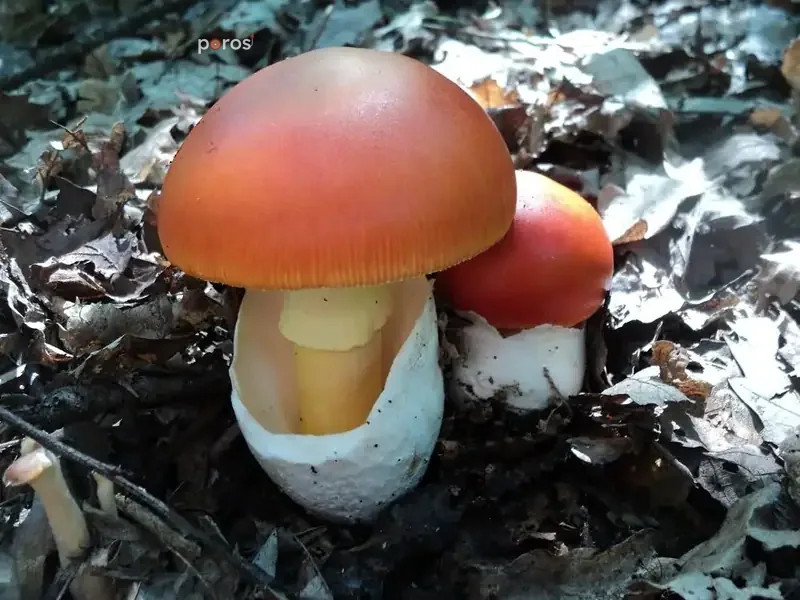 Caesar’s mushroomAmanita caesareaEdible species
Sources
- West ve ark. (2009), J Med Toxicol: Amanita smithiana mushroom ingestion, a case of delayed renal failure pubmed.ncbi.nlm.nih.gov
- Apperley ve ark. (2013), Clin Toxicol: Laboratory confirmation of Amanita smithiana mushroom poisoning pubmed.ncbi.nlm.nih.gov
- Wikipedia (EN): Amanita smithiana en.wikipedia.org
All sources (5)
- iNaturalist: Amanita smithiana inaturalist.org
- GBIF: Türkiye kayıtları gbif.org
Photo credits (10)
- Amanita smithiana · iNaturalist #99681705 · Hilary Rose Dawson · CC BY 4.0
- File:Amanita smithiana 1403.jpg · Nathan Wilson · CC BY-SA 3.0
- Amanita smithiana · iNaturalist #199801218 · jerryn · CC BY 4.0
- Amanita smithiana · iNaturalist #67380259 · Mandy Hackney · CC BY 4.0
- Amanita smithiana · iNaturalist #98076134 · Mandy Hackney · CC BY 4.0
- Amanita smithiana · iNaturalist #328856725 · dpcmiller · CC BY 4.0
- Amanita smithiana · iNaturalist #199801218 · jerryn · CC BY 4.0
- Amanita smithiana · iNaturalist #67380259 · Mandy Hackney · CC BY 4.0
- Amanita smithiana · iNaturalist #321492462 · Kaitlyn Kaluza · CC BY 4.0
- Amanita smithiana · iNaturalist #63551236 · Michele Wiseman · CC BY 4.0
