


Blusher
Amanita rubescens · Amanitaceae
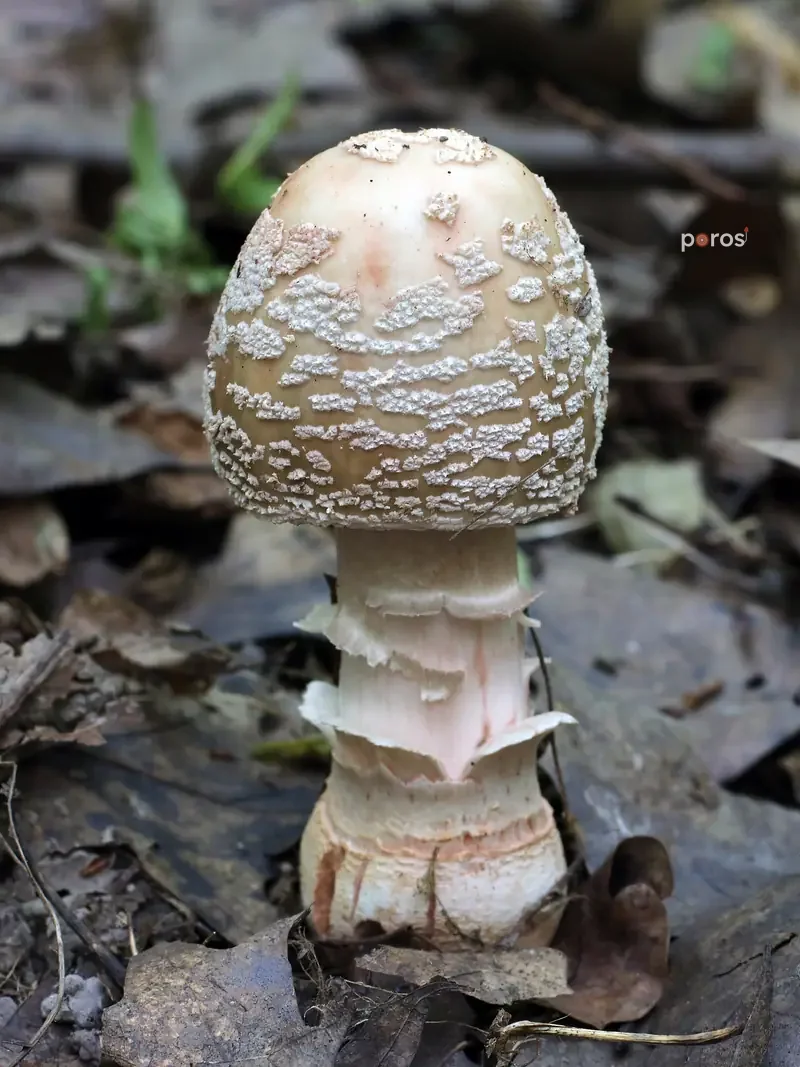
The blusher (Amanita rubescens) is an Amanita with a reddish-brown cap dotted with grey-pink warts, whose flesh turns pink-red where cut or eaten by insects.
Last updated: Prepared by the Poros Mantar editorial team5 sources checkedReport a correction
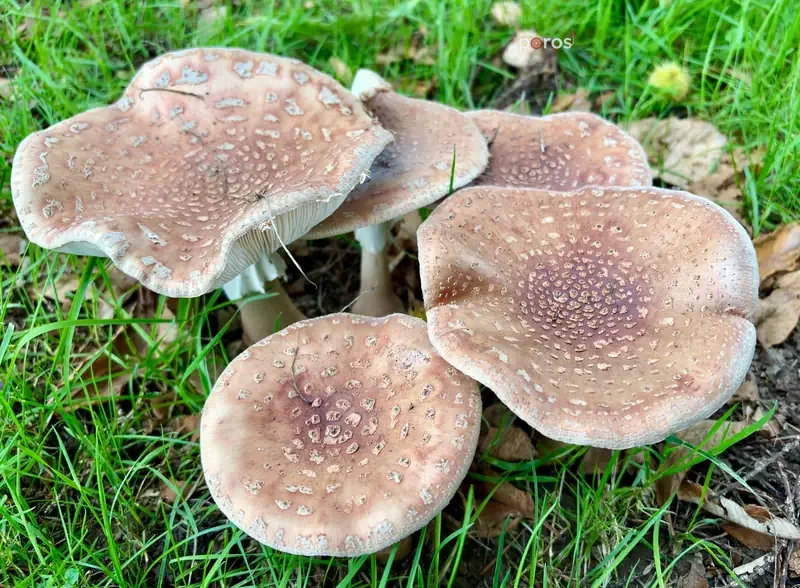
The blusher (Amanita rubescens) is an Amanita with a reddish-brown cap dotted with grey-pink warts, whose flesh turns pink-red where cut or eaten by insects. Its gills are white and the ring on its stem is striated on the upper side. In Europe it is described as edible when thoroughly cooked, but it is harmful raw and easily confused with the poisonous panther cap, so we treat it as inedible.
Also called: the blusher, blushing amanita Turkish: Kızaran gelin mantarı
How to recognise it
Blusher, part by part
Spore print: White No distinctive smell; the white flesh slowly turns pink on exposure to air.


When and where
Jun–Nov
- Jan
- Feb
- Mar
- Apr
- May
- Junin season
- Julin season
- Augin season
- Sepin season
- Octin season
- Novin season
- Dec
The blusher fruits in summer and autumn; Turkish records fall between June and November.
Type Inedible
Months seen JuneJulyAugustSeptemberOctoberNovember
Regions Black Sea RegionMarmara RegionRizeSakaryaBoluYalovaIstanbulKırklareli
Where does blusher grow?
In broadleaf and conifer woods, especially under oak, beech, chestnut and pine; mycorrhizal on acid to neutral soils. It appears singly or in scattered groups.
Where is blusher found in Turkey?
Our map data (GBIF and iNaturalist) holds 37 Turkish records: 23 from Istanbul and the rest from Rize, Kırklareli, Bolu, Yalova and Sakarya, concentrated in the forests of Marmara and the Black Sea.
Which months
- Jan2
- Feb0
- Mar0
- Apr0
- May0
- Jun6
- Jul7
- Aug4
- Sep5
- Oct6
- Nov6
- Dec1
blusher map of Turkey: all provinces and months →
6 provinces, 37 observations (GBIF, iNaturalist); months from observation dates. Record density also reflects where observers work.
Latest blusher observations
-
 Yalova31 Oct 2026 · iNaturalist© Mehmet · CC BY
-
 Kırklareli13 Dec 2025 · iNaturalist© Asrın Akıncıoğlu · CC BY
-
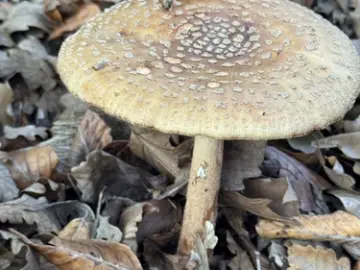 İstanbul8 Nov 2025 · iNaturalist© Selim Türeli · CC BY
-
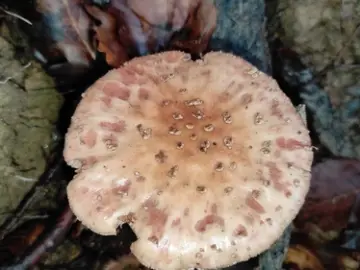 İstanbul21 Sep 2024 · iNaturalist© Umut Nuri Erdoğan · CC BY
-
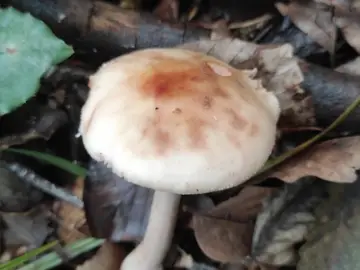 İstanbul21 Sep 2024 · iNaturalist© Umut Nuri Erdoğan · CC BY
-
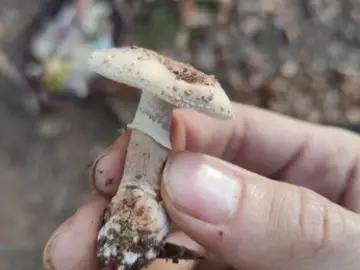 İstanbul4 Jan 2024 · iNaturalist© Umut Nuri Erdoğan · CC BY
-
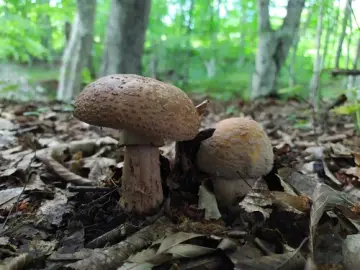 Kırklareli3 Jun 2020 · iNaturalist© Asrın Akıncıoğlu · CC BY
-
 Illustrative
Bolu29 Oct 2026 · iNaturalist
- See on the map
On "illustrative" cards the image is a photo of the species; the observation photo cannot be shown here because of its licence, but can be seen at the source.
Look-alikes
What could it be confused with?
Blusher can be mistaken for the species below. Each card shows the look-alike and how it differs from Blusher.
 Poisonous
not Blusher
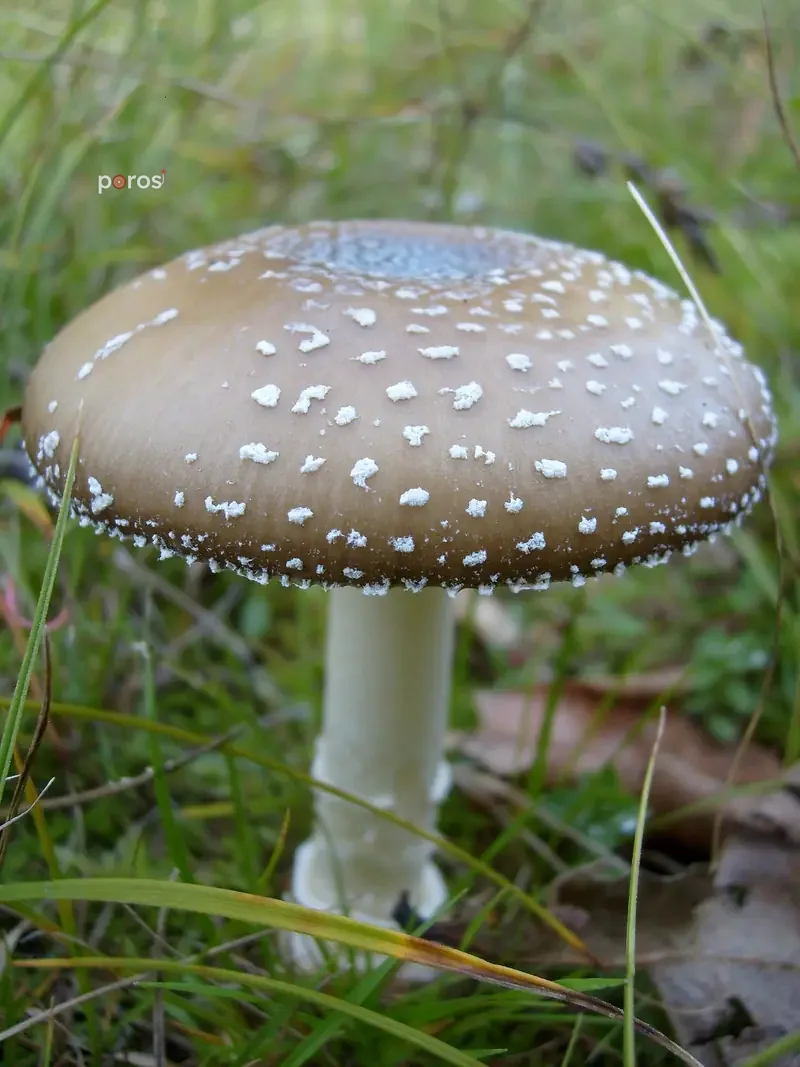
Panther cap Amanita pantherina
The panther cap is brown to olive with pure white warts and a striated margin; its flesh does not turn pink, its ring is not grooved on top, and it has a collar-like volva rim at the base.
 Poisonous
not Blusher
Fly agaric Amanita muscaria
Its cap is bright red or orange with white warts, and its flesh does not redden when cut.
 Inedible
not Blusher
Grey spotted amanita Amanita excelsa
Its cap is grey-brown with grey warts, and its flesh does not redden when cut.
What it contains
Since we treat it as inedible, no nutrition data is given.
General information, not a health claim.
We treat the blusher as inedible. Raw, it contains a substance that damages red blood cells; European sources call it edible when thoroughly cooked, but confusion with the poisonous panther cap leads to serious poisonings. Never pick any Amanita without an expert's identification. If poisoning is suspected, call poison control and keep any leftover mushroom.
Frequently asked questions
Is the blusher edible?
We treat it as inedible. It is harmful raw; in Europe it is described as edible when thoroughly cooked, but the risk of confusing it with the poisonous panther cap is high.
How is it told apart from the panther cap?
The blusher's flesh turns pink-red where cut or insect-eaten, its warts are grey-pink and its ring is grooved on top. The panther cap has pure white warts and a striated cap edge, and its flesh does not change colour.
Why is it called the blusher?
Its flesh slowly turns pink-red when cut, bruised or eaten by insects; this is its most reliable identification feature.
Is it poisonous?
Raw, it contains a substance that damages red blood cells, which cooking is said to destroy. It is not deadly, but the risk of misidentification means it should not be eaten.
How do you identify it?
A reddish-brown cap, grey-pink warts, white gills, a ring grooved on top, a swollen stem base and flesh that turns pink when cut.
When and where does it appear?
From June to November, in oak, beech, chestnut and pine woods. Turkish records come mostly from Istanbul, Rize, Kırklareli and Bolu.
Can it be cultivated?
No. It lives in partnership with tree roots (mycorrhizal), so it cannot be grown from spawn or a kit.
When is blusher season in Turkey?
In our calendar, blusher season runs Jun–Nov. The blusher fruits in summer and autumn; Turkish records fall between June and November.
Where does blusher grow?
In broadleaf and conifer woods, especially under oak, beech, chestnut and pine; mycorrhizal on acid to neutral soils. It appears singly or in scattered groups.
Where is blusher found in Turkey?
Our map data (GBIF and iNaturalist) holds 37 Turkish records: 23 from Istanbul and the rest from Rize, Kırklareli, Bolu, Yalova and Sakarya, concentrated in the forests of Marmara and the Black Sea.
What can blusher be confused with?
Blusher can be confused with panther cap (Amanita pantherina, poisonous), fly agaric (Amanita muscaria, poisonous) and grey spotted amanita (Amanita excelsa, inedible). Look-alikes are compared on this page.
What is blusher called in Turkish?
In Turkish, blusher (Amanita rubescens) is called Kızaran gelin mantarı.
Related species
-
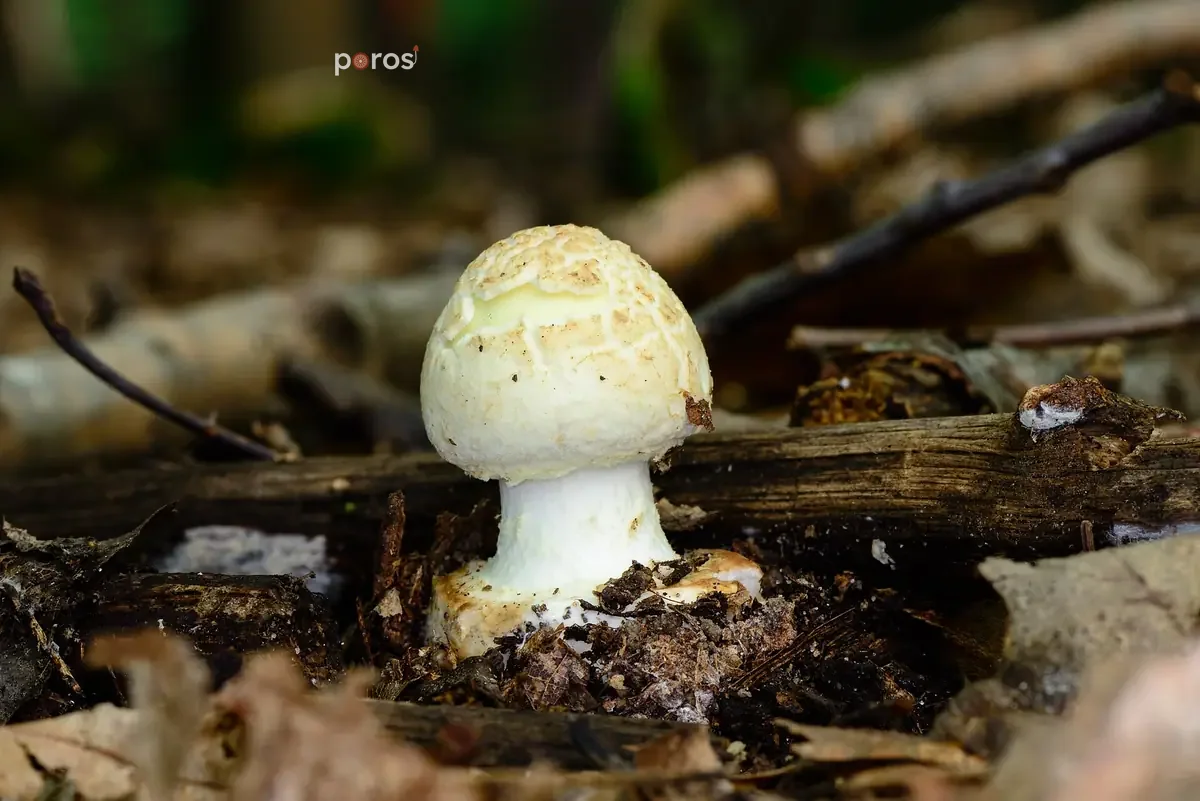 False death capAmanita citrinaInedible
-
 Caesar’s mushroomAmanita caesareaEdible species
-
 Death capAmanita phalloidesDeadly poisonous
-
 Destroying angelAmanita virosaDeadly poisonous
-
Fly agaricAmanita muscariaPoisonous
-
Panther capAmanita pantherinaPoisonous
-
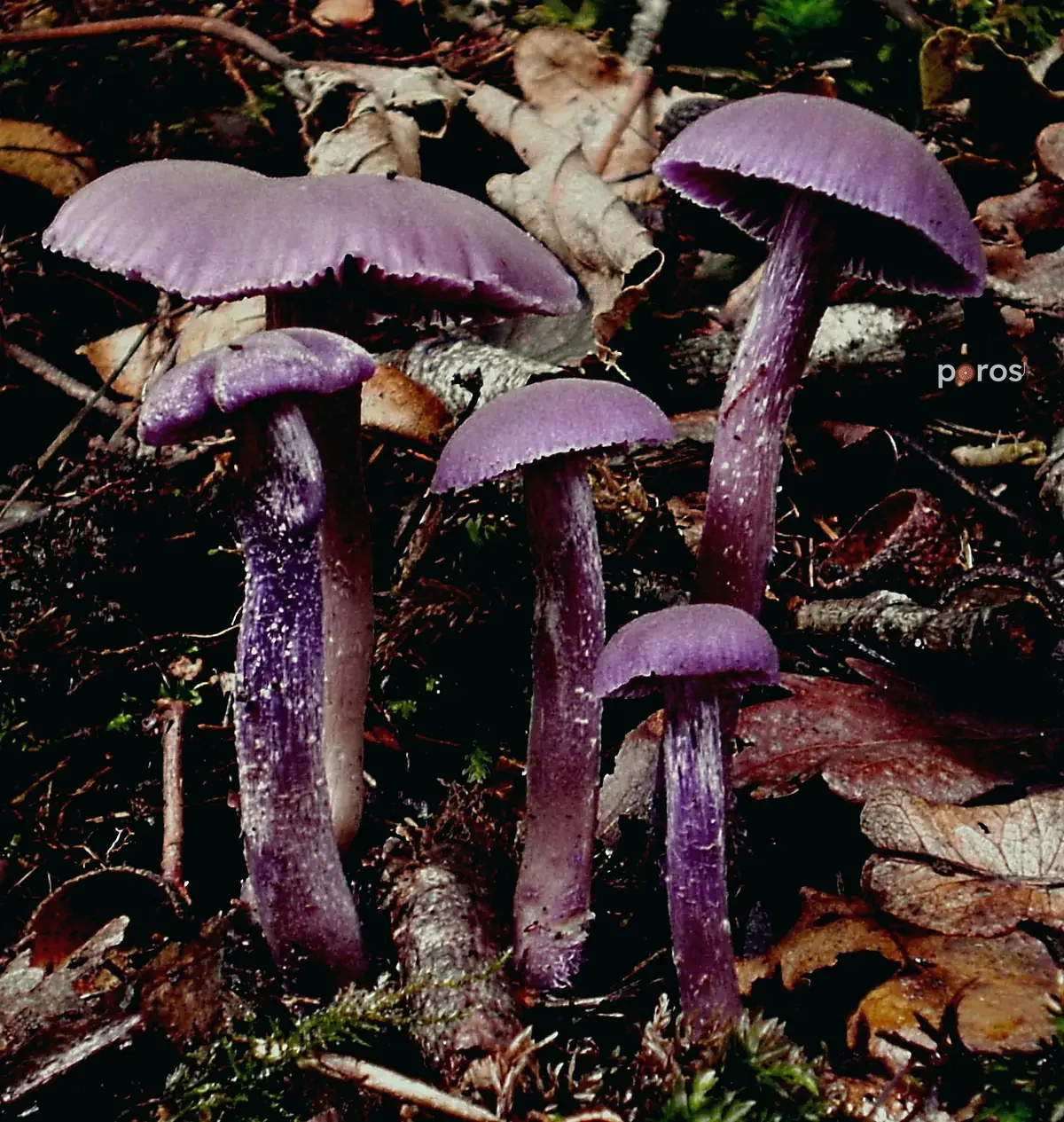 Amethyst deceiverLaccaria amethystinaInedible
-
 Artist’s bracketGanoderma applanatumInedible
Sources
- Quintero-Corrales ve ark. (2024), Mycologia: Amanita rubescens tür kompleksi çeşitliliği pubmed.ncbi.nlm.nih.gov
- Wikipedia (EN): Amanita rubescens en.wikipedia.org
- First Nature: Amanita rubescens first-nature.com
All sources (5)
- iNaturalist: Amanita rubescens (Türkçe ad ve Türkiye gözlemleri) inaturalist.org
- GBIF: Türkiye kayıtları gbif.org
Photo credits (15)
- File:Amanita rubescens 2022 G1.jpg · George Chernilevsky · CC BY-SA 4.0
- Amanita rubescens · iNaturalist #404478693 · Kieran Roy Powell · CC BY 4.0
- Amanita rubescens · iNaturalist #404478693 · Kieran Roy Powell · CC BY 4.0
- Amanita rubescens · iNaturalist #139251664 · Thomas · CC0
- Amanita rubescens · iNaturalist #250466360 · Sarah Crowder · CC0
- Amanita rubescens · iNaturalist #187028349 · Stuart · CC0
- Amanita rubescens · iNaturalist #304920154 · Myles McSweeney · CC BY 4.0
- File:Amanita rubescens 110284913.jpg · Jan Vršovský · CC BY-SA 4.0
- iNaturalist: Yalova, 31 Oct 2026 · Mehmet · CC BY
- iNaturalist: Kırklareli, 13 Dec 2025 · Asrın Akıncıoğlu · CC BY
- iNaturalist: İstanbul, 8 Nov 2025 · Selim Türeli · CC BY
- iNaturalist: İstanbul, 21 Sep 2024 · Umut Nuri Erdoğan · CC BY
- iNaturalist: İstanbul, 21 Sep 2024 · Umut Nuri Erdoğan · CC BY
- iNaturalist: İstanbul, 4 Jan 2024 · Umut Nuri Erdoğan · CC BY
- iNaturalist: Kırklareli, 3 Jun 2020 · Asrın Akıncıoğlu · CC BY

