
Eastern destroying angel
Amanita bisporigera · Amanitaceae

Amanita bisporigera, the eastern destroying angel, is a pure white amanita of eastern North America with a skirt-like ring and a sac-like volva at the base. It carries the same amatoxins as the death cap and, after a quiet delay of several hours, causes poisoning that destroys the liver and kidneys. Its name refers to its basidia, most of which bear two spores instead of four. It has not been recorded in Turkey, but it is a close relative of Europe's destroying angel.
Also called: destroying angel Turkish: Amanita bisporigera
Caution: the name “destroying angel” is also used for another species: Destroying angel (deadly)
Last updated: Prepared by the Poros Mantar editorial team6 sources checkedReport a correction
DEADLY POISONOUS — keep it out of any basket of mushrooms to eat.
Amanita bisporigera is deadly. Amatoxins are not destroyed by cooking, drying or freezing. Symptoms usually start 6–12 hours after eating, sometimes as late as 24 hours, with violent vomiting and diarrhoea, followed by a deceptive lull while liver and kidney damage continues (Şahin et al. 2023; CDC MMWR 2017). The lack of early symptoms is what makes it so dangerous. If poisoning is suspected, call 112 without waiting for symptoms (Turkish poison centre UZEM: 114) and keep any leftover mushroom.
Eastern destroying angel photos
-
© Dan Molter (shroomydan) · CC BY-SA 3.0
-

© Alan Rockefeller · CC BY 4.0
-

Gills© Judy Dobles · CC BY 4.0
-

Volva© Alan Rockefeller · CC BY 4.0
-

Stem© Django Grootmyers · CC BY-SA 4.0
-

© Sigrid Jakob · CC0
-

Volva© Garrett Taylor · CC0
-

Cap© Erick Vélez Sánchez · CC BY 4.0
-

Gills© Dan Molter (shroomydan) (Mushroom Observer) · CC BY-SA 3.0
-

Volva© cgmayers · CC0
-

© Dan Molter (shroomydan) (Mushroom Observer) · CC BY-SA 3.0


These are licensed records of this species; photos alone are not enough to identify a mushroom.
Are eastern destroying angels poisonous?
Yes, eastern destroying angels are deadly poisonous and must never be eaten. It carries the same amatoxins as the death cap and can cause liver and kidney failure. They can be mistaken for destroying angel (Amanita virosa), field mushroom (Agaricus campestris), horse mushroom (Agaricus arvensis) and western destroying angel (Amanita ocreata). If poisoning is suspected, call 112 at once (Turkish poison centre: 114) and keep any leftover mushroom.
Are eastern destroying angels edible?
No, eastern destroying angels must never be eaten; they are deadly poisonous. Amatoxins are not destroyed by cooking, drying or freezing. They can be picked by mistake for field mushroom (Agaricus campestris) and horse mushroom (Agaricus arvensis). If poisoning is suspected, call 112 at once (Turkish poison centre: 114) and keep any leftover mushroom.
How to recognise it
Appearance of eastern destroying angels
Spore print: White Not distinctive or faintly unpleasant; never taste it.
Where do eastern destroying angels grow?
Mycorrhizal with oak, beech, birch and pine; grows singly or scattered in mixed and deciduous woods, at woodland edges and under trees bordering lawns.
In Turkey
There are no Turkish records: our map data (GBIF and iNaturalist) holds not a single observation from Turkey. The species belongs to eastern North America, from Canada to Mexico. In Turkey the look-alike white destroying angels are Amanita virosa and Amanita verna.
Our map has no observations of eastern destroying angels from Turkey yet.
Look-alikes
What is it mistaken for?
Eastern destroying angel can be mistaken for the species below. Each comparison shows Eastern destroying angel on the left, the look-alike on the right, and how to tell them apart.
Deadly mix-up: Eastern destroying angel gets picked by people who think they have found one of the edible species below. If even one feature does not match, do not eat it.
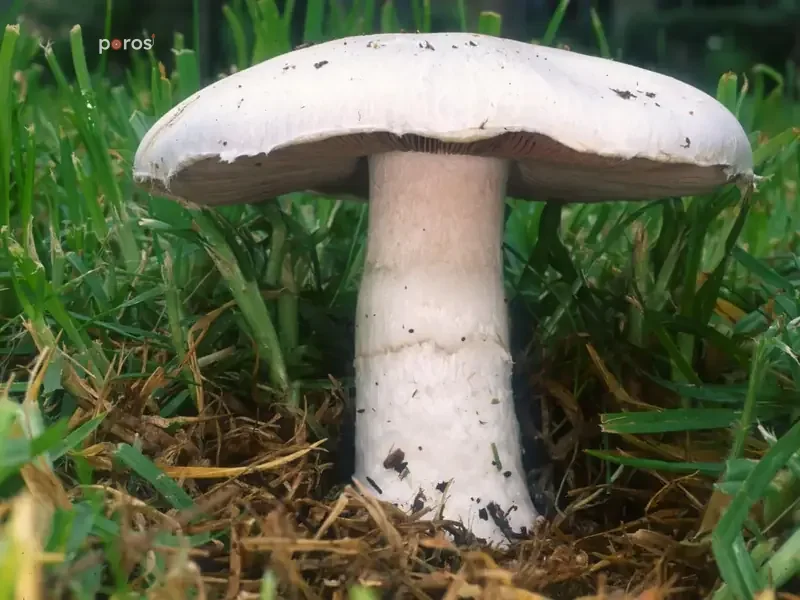
Field mushroom Agaricus campestris
How to tell The field mushroom's gills turn from pink to chocolate brown, its spore print is dark brown and it has no volva.

Horse mushroom Agaricus arvensis
How to tell The horse mushroom smells of aniseed, its gills darken from grey to brown and it has no volva.
Other look-alikes (2)
 Deadly
not Eastern destroying angel
Destroying angel Amanita virosa
Its European and Asian twin; it has four-spored basidia and a shaggier stem. Both are deadly and only a microscope separates them reliably.
 Deadly
not Eastern destroying angel
Western destroying angel Amanita ocreata
Grows on North America's west coast under oak in winter and spring; its cap is often creamy yellowish at the centre.
Eastern destroying angel and its look-alikes compared
| Species | Status | Underside | Spore print | Season |
|---|---|---|---|---|
| Eastern destroying angelAmanita bisporigera | Deadly poisonous | Free, crowded, white gills that stay white with age | White | Jun–Oct |
| Destroying angelAmanita virosa | Deadly poisonous | Crowded, white, free gills | White | Aug–Nov |
| Field mushroomAgaricus campestris | Edible species | Pink at first, then red-brown, finally dark brown | Deep chocolate brown | Jun–Oct |
| Horse mushroomAgaricus arvensis | Edible species | Gills free and crowded | Dark purplish brown | May–Jun, Sep–Dec |
| Western destroying angelAmanita ocreata | Deadly poisonous | Free, crowded, white gills | White | Dec–Apr |
The table is compiled from each species page. The status column is a guide only; do not eat a wild mushroom unless an expert has seen it in person. Compare look-alikes side by side
Frequently asked questions
Are eastern destroying angels poisonous?
Yes, eastern destroying angels are deadly poisonous and must never be eaten. It carries the same amatoxins as the death cap and can cause liver and kidney failure. They can be mistaken for destroying angel (Amanita virosa), field mushroom (Agaricus campestris), horse mushroom (Agaricus arvensis) and western destroying angel (Amanita ocreata). If poisoning is suspected, call 112 at once (Turkish poison centre: 114) and keep any leftover mushroom.
Are eastern destroying angels edible?
No, eastern destroying angels must never be eaten; they are deadly poisonous. Amatoxins are not destroyed by cooking, drying or freezing. They can be picked by mistake for field mushroom (Agaricus campestris) and horse mushroom (Agaricus arvensis). If poisoning is suspected, call 112 at once (Turkish poison centre: 114) and keep any leftover mushroom.
Which other mushroom is called “destroying angel”?
Warning: both mushrooms called “destroying angel” are deadly poisonous; neither is edible. Besides the species on this page (Amanita bisporigera), the name “destroying angel” is also used for Destroying angel (Amanita virosa, deadly). Other species with “destroying angel” in their name: Fool’s mushroom (“spring destroying angel”; Amanita verna, deadly) and Western destroying angel (Amanita ocreata, deadly). Common names overlap between species, so tell them apart by the Latin name and the identification features, not by the common name.
Does Amanita bisporigera grow in Turkey?
No, it has not been recorded in Turkey; it belongs to eastern North America. Its Turkish look-alikes are the destroying angel and Amanita verna.
Why is it called two-spored?
Bisporigera means two-spore-bearing: most of its basidia produce two spores instead of four, which separates it from relatives under the microscope.
When do symptoms start?
Usually 6–12 hours after eating, sometimes as late as 24 hours, with vomiting and diarrhoea, then a deceptive lull and then liver damage. If in doubt, call 112 without waiting for symptoms.
Does cooking destroy the toxin?
No. Amatoxins are heat-stable; cooking, drying or freezing does not reduce them.
How is it told from the field mushroom?
Look at the gills and the base: this species keeps white gills and sits in a sac-like volva. The field mushroom has pink to brown gills and no volva.
What should you check when picking a white mushroom?
Dig the whole mushroom out and look for a volva; never pick a white mushroom with white gills, a ring and a sac at the base.
When is eastern destroying angel season in Turkey?
In our calendar, eastern destroying angel season runs Jun–Oct. Fruits in eastern North America from late June to October, after summer rain.
Where do eastern destroying angels grow?
Mycorrhizal with oak, beech, birch and pine; grows singly or scattered in mixed and deciduous woods, at woodland edges and under trees bordering lawns.
Where are eastern destroying angels found in Turkey?
There are no Turkish records: our map data (GBIF and iNaturalist) holds not a single observation from Turkey. The species belongs to eastern North America, from Canada to Mexico. In Turkey the look-alike white destroying angels are Amanita virosa and Amanita verna.
What can the eastern destroying angel be confused with?
The eastern destroying angel can be confused with destroying angel (Amanita virosa, deadly), field mushroom (Agaricus campestris, edible species), horse mushroom (Agaricus arvensis, edible species) and western destroying angel (Amanita ocreata, deadly). Look-alikes are compared on this page.
What is the eastern destroying angel called in Turkish?
In Turkish, the eastern destroying angel (Amanita bisporigera) is called Amanita bisporigera.
Related species
-
 Amanita proximaAmanita proximaDeadly poisonous
-
 Death capAmanita phalloidesDeadly poisonous
-
Destroying angelAmanita virosaDeadly poisonous
-
 Fool’s mushroomAmanita vernaDeadly poisonous
-
 Smith’s amanitaAmanita smithianaDeadly poisonous
-
Western destroying angelAmanita ocreataDeadly poisonous
-
 BlusherAmanita rubescensInedible
-
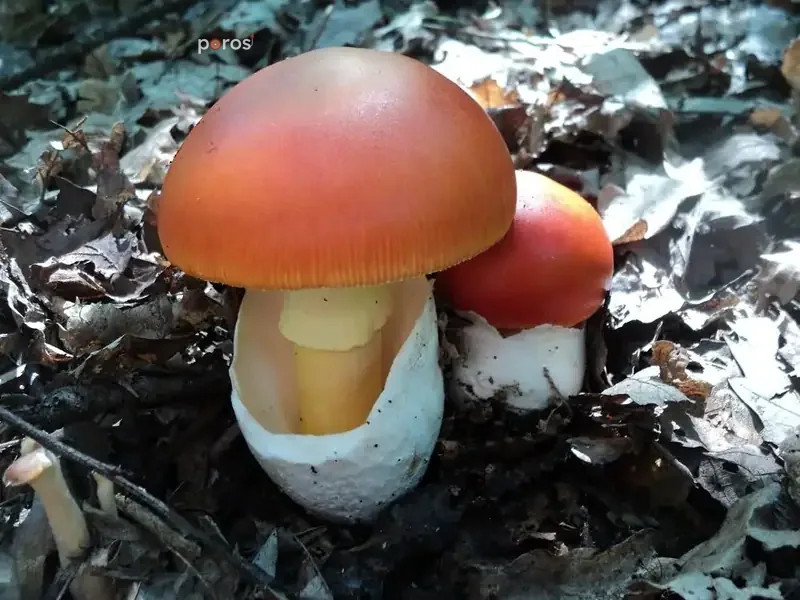 Caesar’s mushroomAmanita caesareaEdible species
Sources
- CDC MMWR (2017): Amanita phalloides mushroom poisonings, Northern California, December 2016 cdc.gov
- Şahin ve ark. (2023), Recent Trends in Pharmacology: Assessment and management of poisonous mushrooms in Türkiye dergipark.org.tr
- Wikipedia (EN): Amanita bisporigera en.wikipedia.org
All sources (6)
- iNaturalist: Amanita bisporigera inaturalist.org
- GBIF: Türkiye kayıtları gbif.org
- MushroomExpert: Amanita bisporigera mushroomexpert.com
Photo credits (11)
- File:Amanita bisporigera 17933.jpg · Dan Molter (shroomydan) · CC BY-SA 3.0
- Amanita bisporigera · iNaturalist #178768388 · Alan Rockefeller · CC BY 4.0
- Amanita bisporigera · iNaturalist #401314960 · Judy Dobles · CC BY 4.0
- Amanita bisporigera · iNaturalist #178767383 · Alan Rockefeller · CC BY 4.0
- Amanita bisporigera · iNaturalist #11196395 · Django Grootmyers · CC BY-SA 4.0
- Amanita bisporigera · iNaturalist #135163573 · Sigrid Jakob · CC0
- Amanita bisporigera · iNaturalist #138312321 · Garrett Taylor · CC0
- Amanita bisporigera · iNaturalist #86645253 · Erick Vélez Sánchez · CC BY 4.0
- File:Amanita bisporigera 49421.jpg · Dan Molter (shroomydan) (Mushroom Observer) · CC BY-SA 3.0
- Amanita bisporigera · iNaturalist #88022511 · cgmayers · CC0
- File:Amanita bisporigera 89478.jpg · Dan Molter (shroomydan) (Mushroom Observer) · CC BY-SA 3.0


