

Look-alikes · comparison
Field mushroom vs death cap: how to tell them apart
The field mushroom (Turkish: çayır mantarı, Agaricus campestris) and the death cap (Turkish: ölüm mantarı, Amanita phalloides) differ at the gills and the stem base. Field mushroom gills turn from pink to dark brown and there is no sac at the base. Death cap gills stay white, the base sits in a white, bag-like sac, and the mushroom is deadly.

Field mushroom vs death cap: the three signs that matter
-
Gill colour: pink-brown or white?
Field mushroom gills are pink at first, then reddish brown and finally dark brown; they never stay white. Death cap gills are white and remain white with age. The danger lies in unopened young caps, where the gills cannot yet be seen and this check is impossible. So we do not consider closed white buttons, and we recommend leaving any specimen whose gills are not pink.
-
Stem base: is there a sac?
For us this is the most important sign. The death cap has a swollen, bulb-like base wrapped in a white, bag-like sac (volva) buried in the soil. The field mushroom has no sac. If the mushroom is cut at the stem, the sac stays in the ground unseen, so the base is dug out whole. We do not accept a white mushroom as a field mushroom unless its base has been seen.
-
Spore print and ring: brown or white?
The field mushroom leaves a dark chocolate-brown spore print; the death cap's is white. The rings differ too: a single, thin ring that is easily lost on the field mushroom, and a hanging, membranous white ring high on the death cap's stem. Death caps are usually pale green or olive, but rarely entirely white, so we never rely on cap colour.
White gills, a sac at the base or an unseen base all mean the mushroom is left alone. We never trust a single sign; when in doubt we recommend not eating it and showing it to an expert.
Side-by-side differences
This table is built from the sourced descriptions on the two species pages.
| Feature | Field mushroom | Death cap |
|---|---|---|
| Cap | 3–12 cm, white, sometimes finely scaly; hemispherical then flat. | 5–15 cm; hemispherical, then flat. Pale green, yellow-green, olive or bronze; rarely pure white. Paler towards the edge, often with fine dark streaks; sticky when wet and easily peeled (peeling is NOT a safety test). |
| Gills | Pink at first, then red-brown, finally dark brown. Never stays white. | Gills white and free from the stem; stay white with age. |
| Stem | 3–10 cm tall, 1–2 cm thick, white. | White, often with faint cap-coloured streaks; bulbous at the base. |
| Ring | A single thin ring (easily lost). | A hanging, skirt-like white ring high on the stem (may fall off later). |
| Volva (cup at the base) | None — dig out the base and check there is no sac. | YES: a white, sack-like cup at the stem base, often buried in soil. You only see it if you dig the base out instead of cutting — the single most important sign. |
| Smell and taste | Not distinctive; mild taste. | Faint and honey-sweet at first, becoming sickly-sweet and foul with age. Never taste it. |
| Spore print | Deep chocolate brown. | White. |
| Habitat | The field mushroom grows on soil among grass in meadows, pastures, playing fields and parks, and is rarely found in woodland. It appears singly, in small groups or in fairy rings. | The death cap grows with broadleaf trees, most often under oak but also beech, chestnut, horse chestnut, birch, hazel and hornbeam, and sometimes pine and spruce. It is native to Europe and has spread to other continents with planted trees. |
| Season | Jun–Oct | Jul–Nov |
| Edibility | Edible species | Deadly poisonous |
The same view of both species


This page is not a definitive identification. The signs we describe help separate these two species, but they do not prove what your mushroom is; other poisonous species can grow in the same place.
Frequently asked questions
Are the field mushroom and the death cap the same?
No. The field mushroom is an Agaricus, a wild relative of the cultivated mushroom, while the death cap is an Amanita. The field mushroom is listed in our sources as an edible species; the death cap is the most poisonous mushroom known. They are confused because the death cap's white form and unopened young caps can resemble a field mushroom.
Field mushroom or death cap: which one is poisonous?
The death cap is the deadly one; its toxins (amatoxins) are not destroyed by cooking, drying or freezing. The field mushroom is described in our sources as an edible species, but because it is confused with deadly white Amanitas we advise against eating it without expert identification.
How do we tell a field mushroom from a death cap?
We check the gills, the stem base and the spore print together. Field mushroom gills turn from pink to dark brown, the base has no sac and the spore print is dark chocolate brown. The death cap has white gills, a white spore print and a white, bag-like sac at the base.
What happens if a death cap is eaten?
Symptoms usually begin 6–12 hours after eating, sometimes as late as 24 hours, with stomach pain, vomiting and watery diarrhoea (Şahin et al. 2023; CDC MMWR 2017). A deceptive recovery lasting up to three days may follow, during which the liver and kidneys continue to be damaged. In Turkey, call 112 at once without waiting for symptoms, and keep any leftover mushroom.
Do the field mushroom and the death cap grow in the same place?
Mostly not. The field mushroom grows in meadows, pastures and parks and is rare in woodland. The death cap grows with broadleaved trees, most often under oak, and also under beech, chestnut, birch, hazel and hornbeam. Even so, habitat alone identifies nothing; we look at the gills and the stem base.
In which season do they appear?
In Europe the field mushroom appears from June to October, after rain, and Turkish GBIF records also fall between October and December. The death cap fruits from July to November in Europe, with Turkish records concentrated in August and in October and November. Their seasons overlap in late summer and autumn.
Is a mushroom safe if its cap peels?
No. The death cap's cap is sticky when wet and peels easily, so peeling is not a sign of safety. The signs we rely on are gill colour, the sac at the stem base and the spore print, and we always weigh them together.
Can they be told apart from a photo?
A photo helps, but it is not a firm identification. The sac at the base stays underground and is missing from most photos, and the gills cannot be seen in an unopened young cap. We advise against deciding to eat anything from a photo; the whole mushroom, base included, should be shown to an expert.
Sources
The facts in this comparison come from the sourced data on our field mushroom and death cap pages:
More comparisons
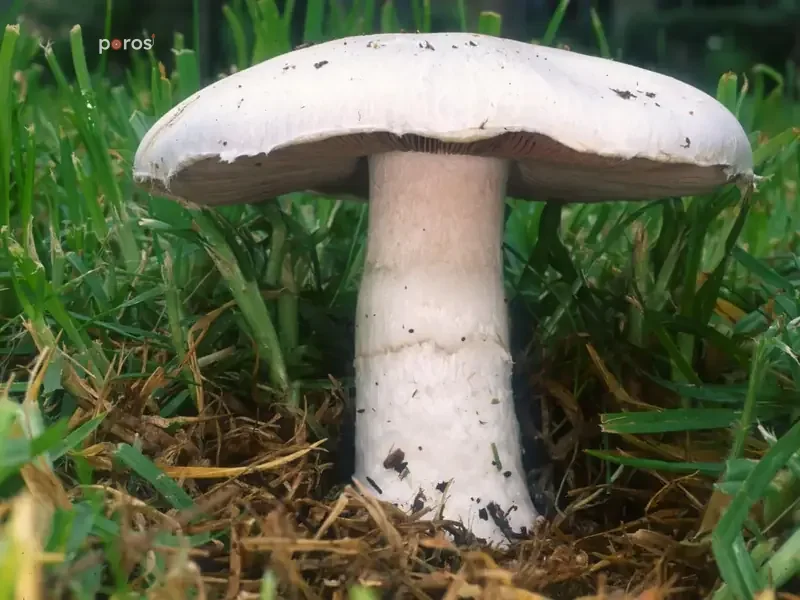
 ≠Field mushroom vs yellow stainerAgaricus campestris · Agaricus xanthodermusPoisonous
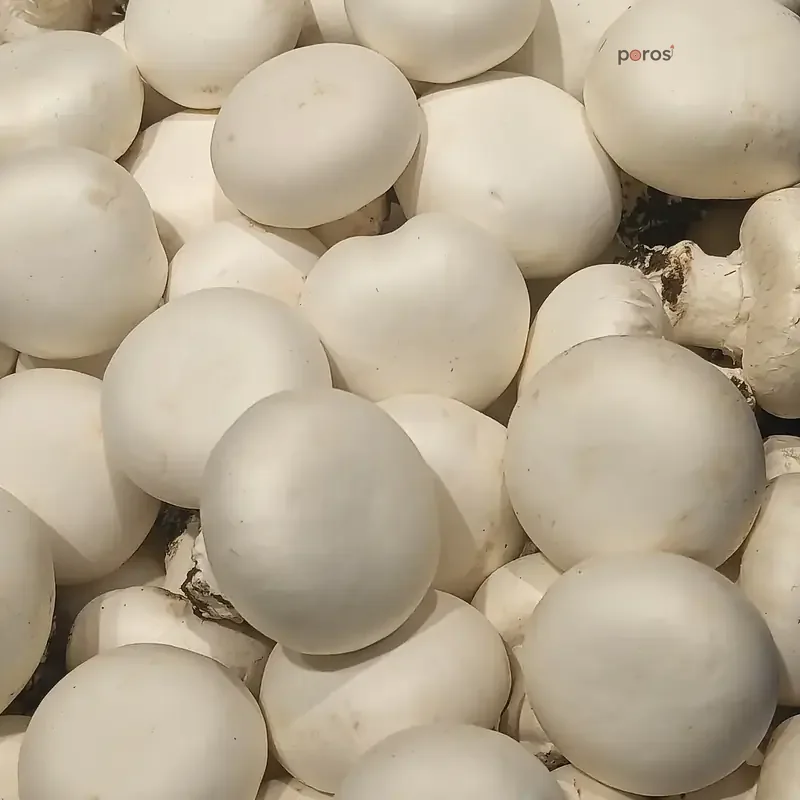 ≠Button mushroom vs death capAgaricus bisporus · Amanita phalloidesDeadly poisonous
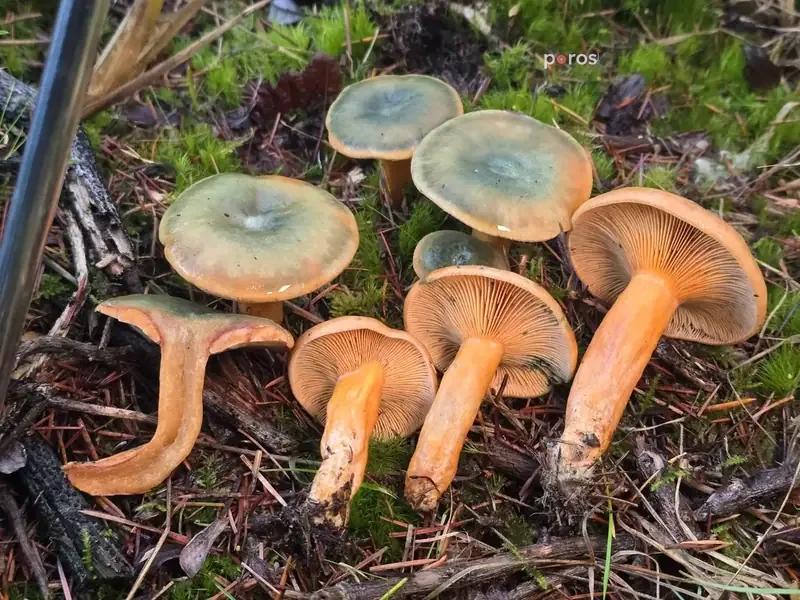
 ≠Saffron milk cap vs woolly milkcapLactarius deliciosus · Lactarius torminosusPoisonous
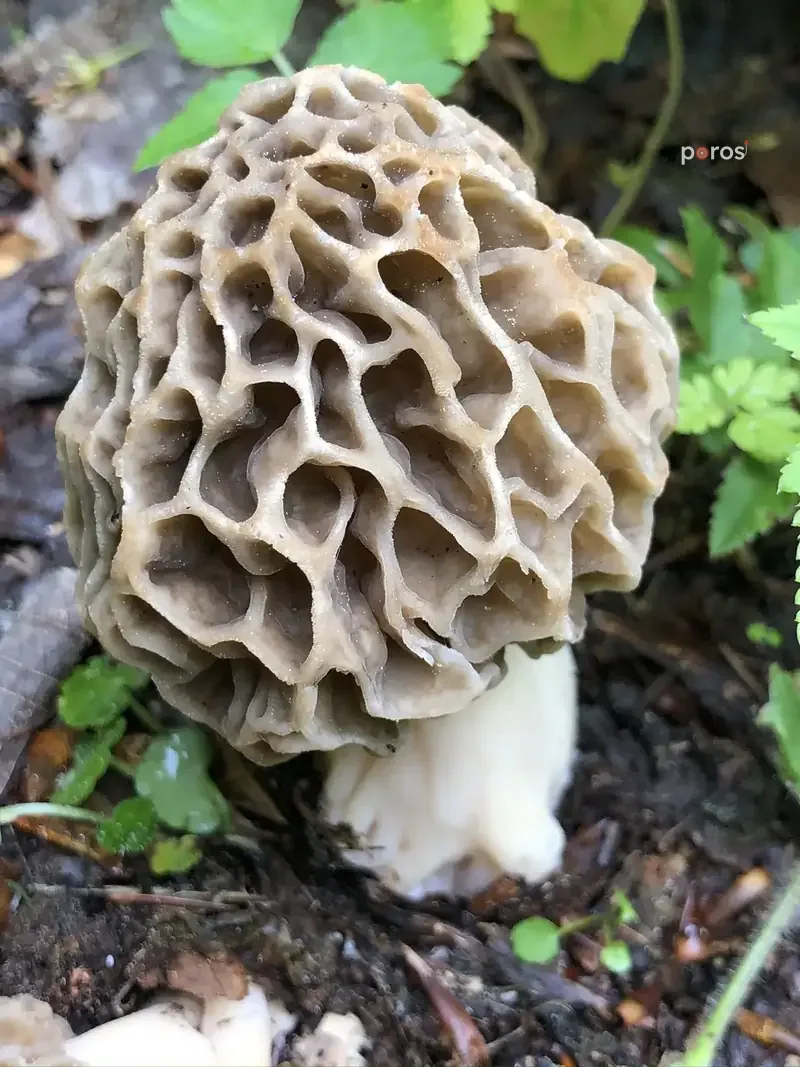
 ≠Morel vs false morelMorchella esculenta · Gyromitra esculentaDeadly poisonous
 ≠Parasol mushroom vs green-spored parasolMacrolepiota procera · Chlorophyllum molybditesPoisonous
 ≠Parasol mushroom vs deadly dapperlingMacrolepiota procera · Lepiota brunneoincarnataDeadly poisonous
Last updated: Prepared by the Poros Mantar editorial teamReport a correction