

Look-alikes · comparison
Parasol mushroom vs false parasol: how to tell them apart
The parasol mushroom (Turkish: şemsiye mantarı, Macrolepiota procera) and the false parasol or green-spored parasol (Turkish: yeşil şemsiye mantarı, Chlorophyllum molybdites) are both large, with scaly caps and movable rings. The decisive difference is the spore print: white in the parasol, green in the false parasol, whose mature gills turn greyish green. The false parasol is poisonous.

Parasol mushroom vs green-spored parasol: the three signs that matter
-
Spore print: white or green?
The spore print is the only decisive sign between the two. The parasol's print is white or very pale cream; the false parasol's is green or greyish green. In young specimens the gills are still white, so the eye cannot separate them, and that is why we treat a spore print as essential. We recommend not considering any large, parasol-like mushroom until its spore print has been taken.
-
Gills: white or greyish green?
The parasol has crowded, free, white gills that may turn pale pink in old specimens. The false parasol's gills are also free and crowded and are white when young, but become greyish green or olive green at maturity. We leave any specimen with greenish gills. White gills, however, are no guarantee, because a young false parasol has white gills too.
-
Stem: is there a snakeskin pattern?
The parasol's stem is slender and tall, reaching 12–40 cm, and below the ring it carries a brown snakeskin pattern. The false parasol's stem is 10–25 cm, white and smooth, with no pattern, and may brown when handled. Both have a thick, movable ring, so the ring does not separate them. Habitat adds a hint: the false parasol grows on lawns, in parks and in gardens, often in rings.
If the spore print is green, the gills are greenish or the stem lacks a snakeskin pattern, the mushroom is left behind. We never trust one sign alone; when unsure we recommend not eating it and consulting an expert.
Side-by-side differences
This table is built from the sourced descriptions on the two species pages.
| Feature | Parasol mushroom | Green-spored parasol |
|---|---|---|
| Cap | Up to 25 cm; egg-shaped when young, then flat with a smooth dark central boss; dark, easily removed flakes on a pale background. | 10–30 cm, egg-shaped to flat; white with flat brown scales and a smooth brown centre. |
| Gills | Crowded, free, white (pale pink with age). | Free, crowded; white when young, greyish green or olive-green at maturity. |
| Stem | Slender and tall, 12–40 cm; snakeskin-like brown pattern below the ring. | 10–25 cm, white, smooth, slightly swollen at the base; may bruise brown. |
| Ring | A thick, fleshy ring that slides up and down the stem. | A thick, double-edged, movable ring. |
| Volva (cup at the base) | None; bulbous base but no sac. | None. |
| Smell and taste | Pleasant and nutty; sweetish taste. Flesh does not change colour when cut. | Not distinctive. |
| Spore print | White or very pale cream. | Green or greyish green (white in edible parasols). |
| Habitat | The parasol mushroom grows in woodland clearings, grassy places next to woods, pasture and dunes, appearing singly, in small groups or sometimes in fairy rings. | A saprotroph of lawns, parks, gardens, pastures and fertilised ground in warm climates, often in fairy rings. |
| Season | Jul–Nov | Jun–Oct |
| Edibility | Edible species | Poisonous |
The same view of both species


This page is not a definitive identification. The signs we describe help separate these two species, but they do not prove what your mushroom is; other poisonous species can grow in the same place.
Frequently asked questions
Are the parasol mushroom and the false parasol the same?
No. The parasol belongs to the genus Macrolepiota and the false parasol to Chlorophyllum. Both have large caps with brown scales on a pale background and look very much alike. The parasol is listed in our sources as an edible species; the false parasol is poisonous and has a green spore print.
Parasol mushroom or false parasol: which one is poisonous?
The false parasol is the poisonous one; it causes severe vomiting and diarrhoea and is the most frequent cause of mushroom poisoning in North America. The parasol is described in our sources as an edible species, and only fully opened specimens identified by an expert are considered.
How do we tell a parasol mushroom from a false parasol?
We take a spore print: green in the false parasol, white in the parasol. In addition, the false parasol's mature gills turn greenish and its stem has no snakeskin pattern. The parasol's gills stay white and its stem is patterned in brown below the ring.
What happens if a false parasol is eaten?
According to our sources, severe and repeated vomiting, stomach cramps and watery, sometimes bloody diarrhoea begin 30 minutes to 3 hours after the meal; fluid loss can be serious, especially in children. If poisoning is suspected in Turkey, call 112 and keep any leftover piece of the mushroom.
Does the false parasol grow in Turkey?
Our map data (GBIF and iNaturalist) holds no record from Turkey. It is a warm-climate species, widespread in tropical and subtropical regions and reported to be spreading north as temperatures rise; it may turn up on irrigated lawns along the Mediterranean and Aegean coasts. The parasol, by contrast, is widespread in Turkey.
Do the parasol mushroom and the false parasol grow in the same place?
Their habitats partly overlap. The parasol grows in woodland clearings, on grassland next to woods, in pastures and on dunes. The false parasol grows in warm climates on lawns and in parks, gardens, pastures and manured ground, mostly in fairy rings. With large parasols found on grass we always take a spore print.
In which season do they appear?
In Europe the parasol appears from July to November, and Turkish GBIF records peak in October. The false parasol appears in summer and autumn on lawns, after warm, wet spells. Because their seasons overlap, the calendar cannot separate the two species.
Can they be told apart from a photo?
A photo helps, but it is not a firm identification. The snakeskin pattern on the stem may show in a picture, but a young false parasol has white gills and cannot be told from edible parasols by eye. The decisive sign, the spore print, cannot be judged from a photo; we recommend showing the mushroom to an expert.
Sources
The facts in this comparison come from the sourced data on our parasol mushroom and green-spored parasol pages:
- Wikipedia (EN): Macrolepiota procera
- First Nature: Macrolepiota procera
- FAO AGROVOC: Macrolepiota procera (Türkçe: şemsiye mantarı)
- TR Dizin: Yabani yenebilir mantar M. procera'nın yetiştiriciliği
- Wikipedia (EN): Chlorophyllum molybdites
- MushroomExpert: Chlorophyllum molybdites
- iNaturalist: Chlorophyllum molybdites (Türkçe ad)
- GBIF: Türkiye kayıtları
More comparisons
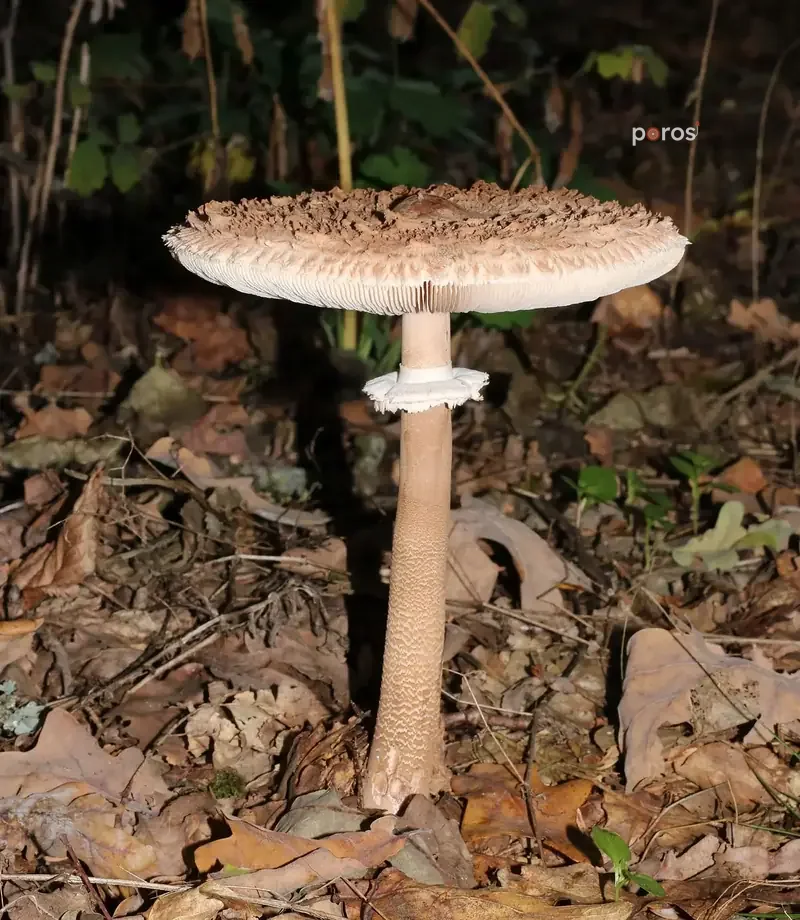
 ≠Parasol mushroom vs deadly dapperlingMacrolepiota procera · Lepiota brunneoincarnataDeadly poisonous
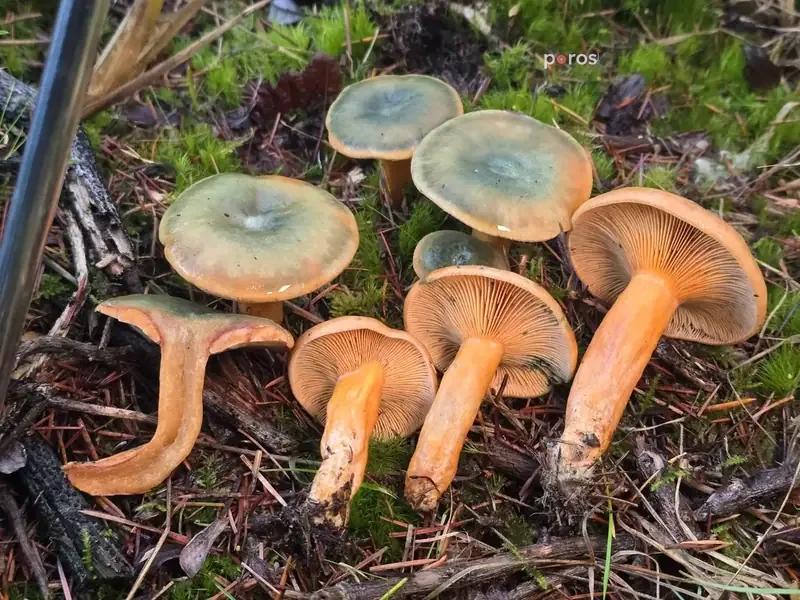
 ≠Saffron milk cap vs woolly milkcapLactarius deliciosus · Lactarius torminosusPoisonous
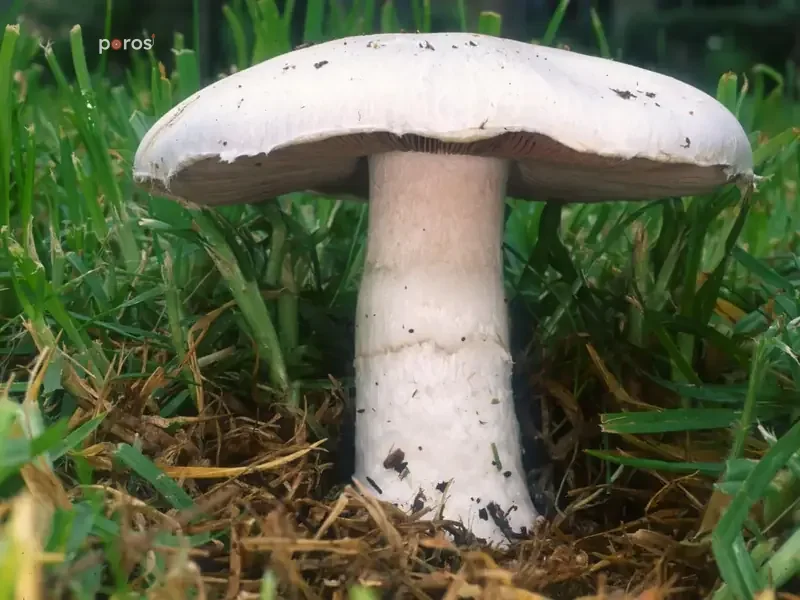
 ≠Field mushroom vs death capAgaricus campestris · Amanita phalloidesDeadly poisonous
 ≠Field mushroom vs yellow stainerAgaricus campestris · Agaricus xanthodermusPoisonous
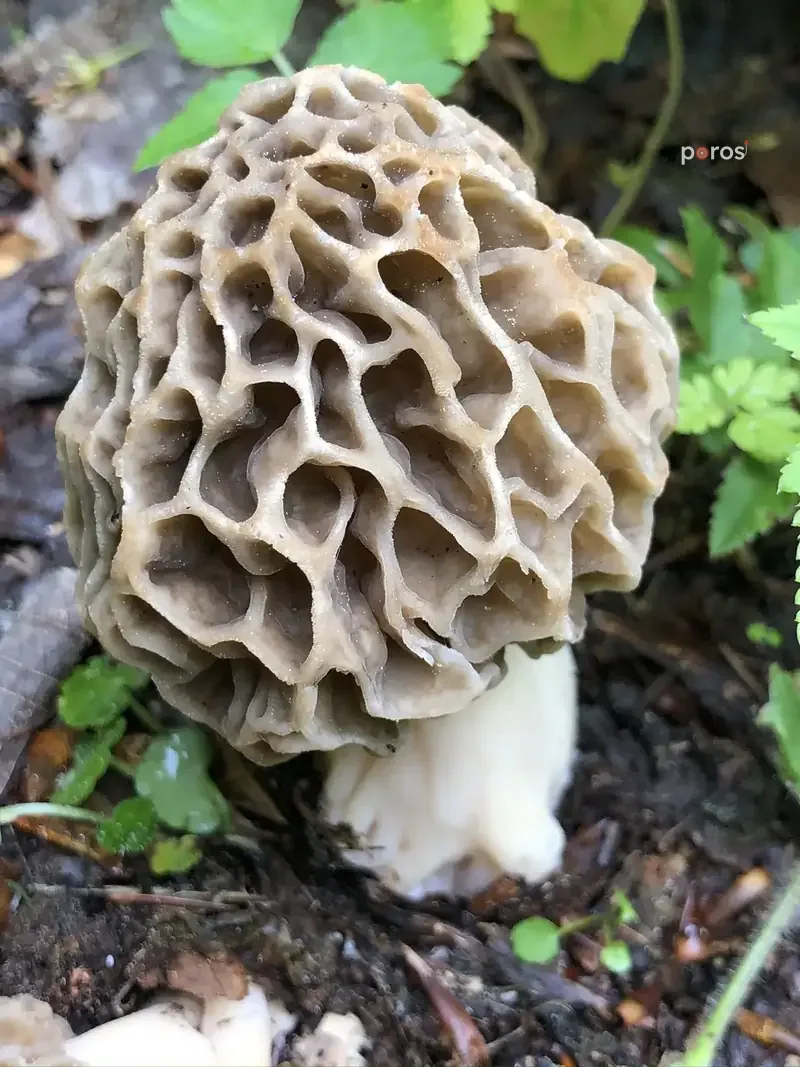
 ≠Morel vs false morelMorchella esculenta · Gyromitra esculentaDeadly poisonous
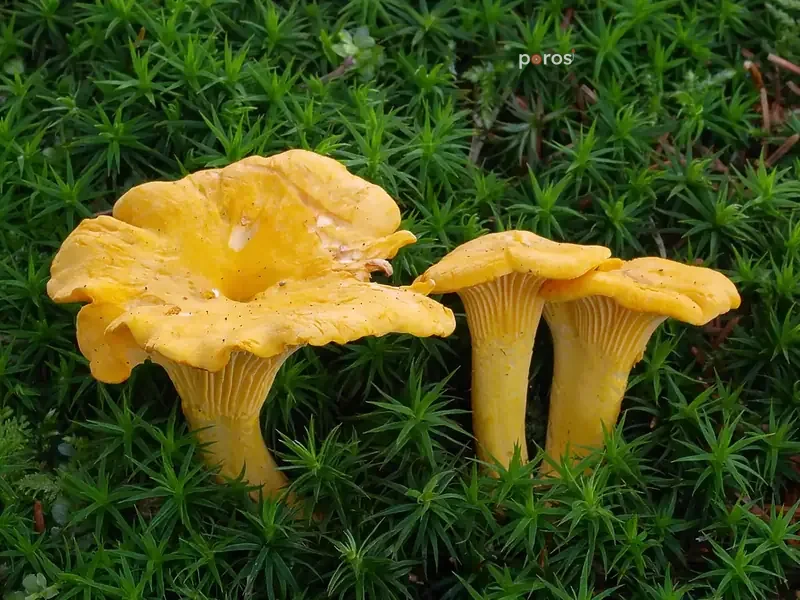
 ≠Chanterelle vs false chanterelleCantharellus cibarius · Hygrophoropsis aurantiacaInedible
Last updated: Prepared by the Poros Mantar editorial teamReport a correction