

Look-alikes · comparison
Field mushroom vs yellow stainer: how to tell them apart
The field mushroom (Turkish: çayır mantarı, Agaricus campestris) and the yellow stainer (Turkish: sararan çayır mantarı, Agaricus xanthodermus) are close relatives, and both have gills that turn from pink to brown. The difference shows when they are scratched: the yellow stainer's cap and stem base instantly turn bright chrome yellow and smell of ink or phenol. It is poisonous.

Field mushroom vs yellow stainer: the three signs that matter
-
Does the cut stem base turn yellow?
This is the most useful test. When the base of a yellow stainer's stem is cut, the flesh turns chrome yellow, and its cap also flushes bright yellow as soon as it is scratched or bruised. The field mushroom does not yellow when scratched, and its cut base stays white or faintly pink. Some edible relatives, such as the horse mushroom, can slowly stain yellowish, so what we look for is a fast, vivid chrome yellow.
-
Smell: any ink or phenol?
The yellow stainer has an unpleasant smell reminiscent of ink, phenol or hospital disinfectant, and it grows stronger during cooking. The field mushroom has no such smell; it smells pleasantly of mushroom and tastes mild. Smell alone is not enough, so we judge it alongside the yellowing test. We recommend not picking any white Agaricus that smells unpleasant.
-
Ring: thin or double-layered?
The field mushroom has a single, thin ring that is easily lost. The yellow stainer's ring is large, white, hanging and double-layered, thickened at the edge on its underside. The cap offers a hint as well: young yellow stainers are angular-convex and white to greyish white. Gill colour follows the same course in both species, so we do not use the gills to separate them.
A mushroom that yellows where scratched or smells of ink is left behind. We never trust a single sign; we recommend not cooking even one doubtful specimen and showing whatever is collected to an expert.
Side-by-side differences
This table is built from the sourced descriptions on the two species pages.
| Feature | Field mushroom | Yellow stainer |
|---|---|---|
| Cap | 3–12 cm, white, sometimes finely scaly; hemispherical then flat. | 5–15 cm, squarish-convex when young, later flattened; white to greyish white, instantly turning bright yellow when scratched or bruised. |
| Gills | Pink at first, then red-brown, finally dark brown. Never stays white. | Free, crowded gills; pale pink at first, later chocolate brown. |
| Stem | 3–10 cm tall, 1–2 cm thick, white. | 5–15 cm, white, slightly bulbous; the flesh in the stem base turns chrome yellow when cut. |
| Ring | A single thin ring (easily lost). | Large, white, double-layered hanging ring, thickened at the edge underneath. |
| Volva (cup at the base) | None — dig out the base and check there is no sac. | Absent. |
| Smell and taste | Not distinctive; mild taste. | An unpleasant ink-like or phenol (hospital disinfectant) smell, stronger when cooked. |
| Spore print | Deep chocolate brown. | Dark brown. |
| Habitat | The field mushroom grows on soil among grass in meadows, pastures, playing fields and parks, and is rarely found in woodland. It appears singly, in small groups or in fairy rings. | It grows on soil in parks, gardens, field edges, scrub and woodland, often in groups or rings. |
| Season | Jun–Oct | May, Oct–Nov |
| Edibility | Edible species | Poisonous |
The same view of both species


This page is not a definitive identification. The signs we describe help separate these two species, but they do not prove what your mushroom is; other poisonous species can grow in the same place.
Frequently asked questions
Are the field mushroom and the yellow stainer the same?
No. Both belong to the genus Agaricus and have white caps and pink-to-brown gills, but they are separate species. The field mushroom is listed in our sources as an edible species; the yellow stainer is poisonous and turns bright chrome yellow when scratched.
Field mushroom or yellow stainer: which one is poisonous?
The yellow stainer is the poisonous one: in most people it causes nausea, vomiting, diarrhoea and stomach cramps. Not everyone reacts in the same way, but the species is regarded as inedible. The field mushroom is described in our sources as an edible species; even so, we advise against eating it without expert identification.
How do we tell a field mushroom from a yellow stainer?
We cut the stem base and look at the colour: in the yellow stainer the flesh turns chrome yellow, in the field mushroom it stays white or faintly pink. Then we check the smell and the ring: the yellow stainer smells of ink or phenol and has a large, double-layered ring.
What happens if a yellow stainer is eaten?
Symptoms usually begin within a few hours: nausea, vomiting, diarrhoea and stomach cramps. Not everyone reacts in the same way, and cooking does not make the mushroom safe. If poisoning is suspected in Turkey, call 112 and keep any leftover piece of the mushroom.
Does cooking remove the yellow stainer's toxin?
No. Cooking does not remove the yellow stainer's poisonous effect, and its unpleasant ink-like or phenolic smell becomes even more noticeable in the pan. If such a smell rises during cooking, we recommend that the dish is not brought to the table.
Do the field mushroom and the yellow stainer grow in the same place?
Yes, they can. The field mushroom grows in meadows, pastures, playing fields and parks; the yellow stainer in parks, gardens, meadow edges, scrub and wooded areas. Both may appear in groups or rings. That is why we look at the yellowing test and the smell, not at where the mushroom was found.
In which season do they appear?
In Europe the field mushroom appears from June to October, after rain, and Turkish GBIF records also fall between October and December. The yellow stainer fruits from late summer into autumn; its few Turkish records are from October, November and May. Their seasons overlap in autumn.
Can they be told apart from a photo?
A photo helps, but it is not a firm identification. Both species have white caps and pink-to-brown gills, and the yellowing and the smell that separate them do not show in a picture. A photo of a scratched stem base gives a hint, but before anything is eaten we recommend showing the mushroom itself to an expert.
Sources
The facts in this comparison come from the sourced data on our field mushroom and yellow stainer pages:
More comparisons
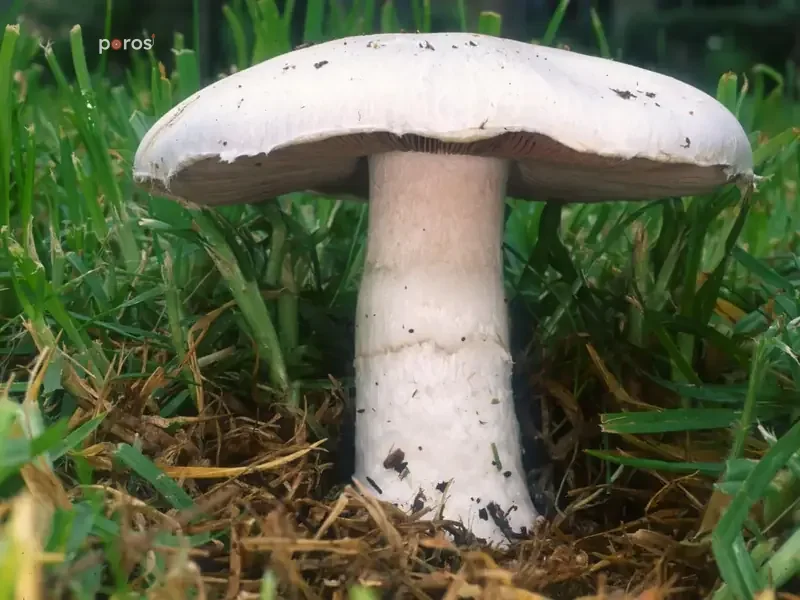
 ≠Field mushroom vs death capAgaricus campestris · Amanita phalloidesDeadly poisonous
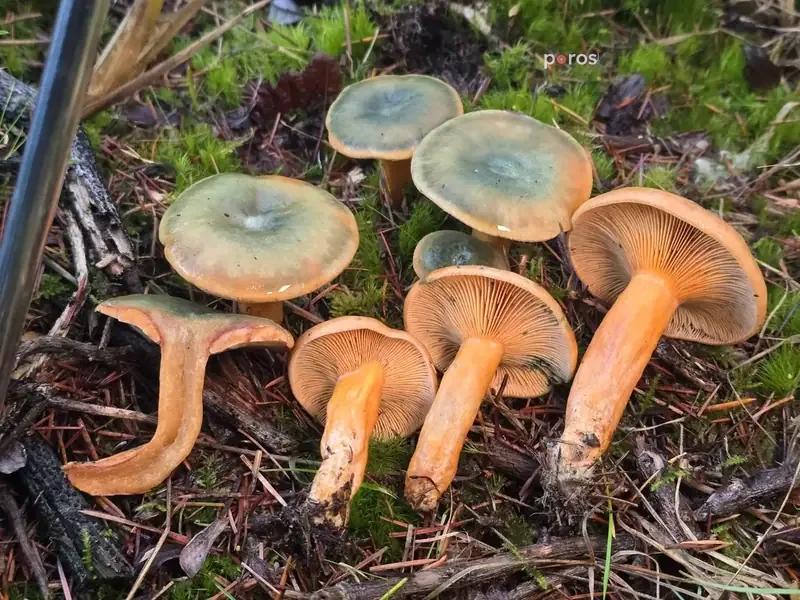
 ≠Saffron milk cap vs woolly milkcapLactarius deliciosus · Lactarius torminosusPoisonous
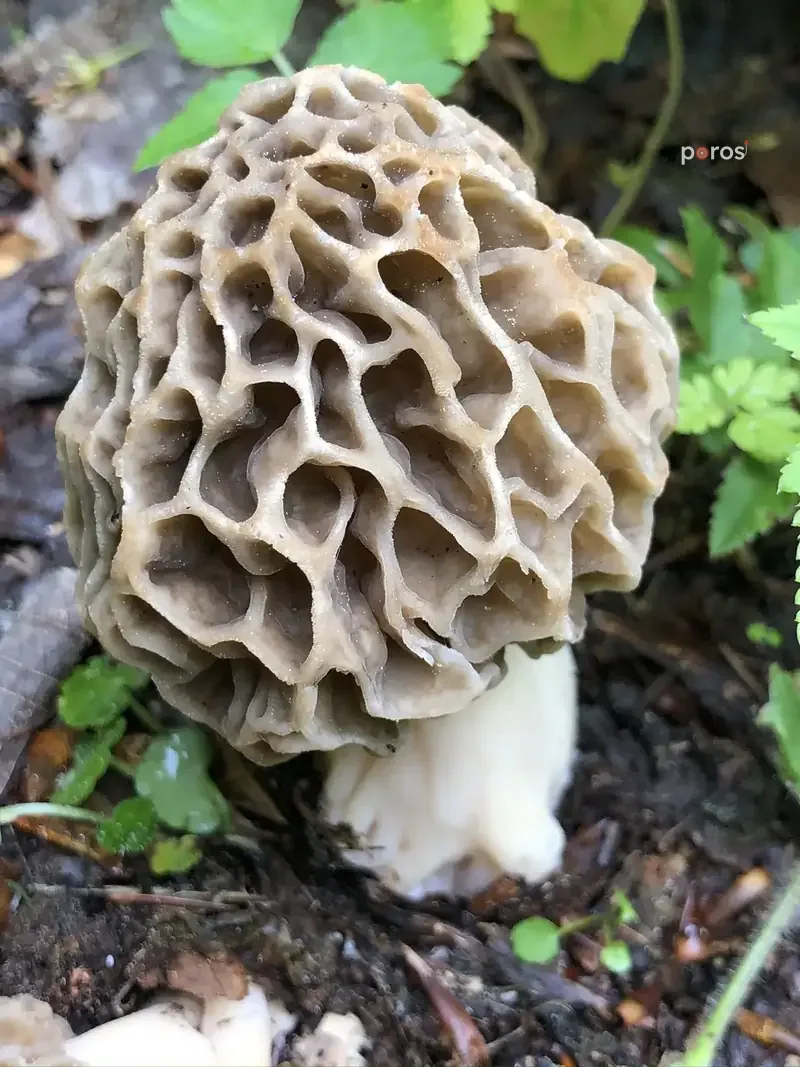
 ≠Morel vs false morelMorchella esculenta · Gyromitra esculentaDeadly poisonous
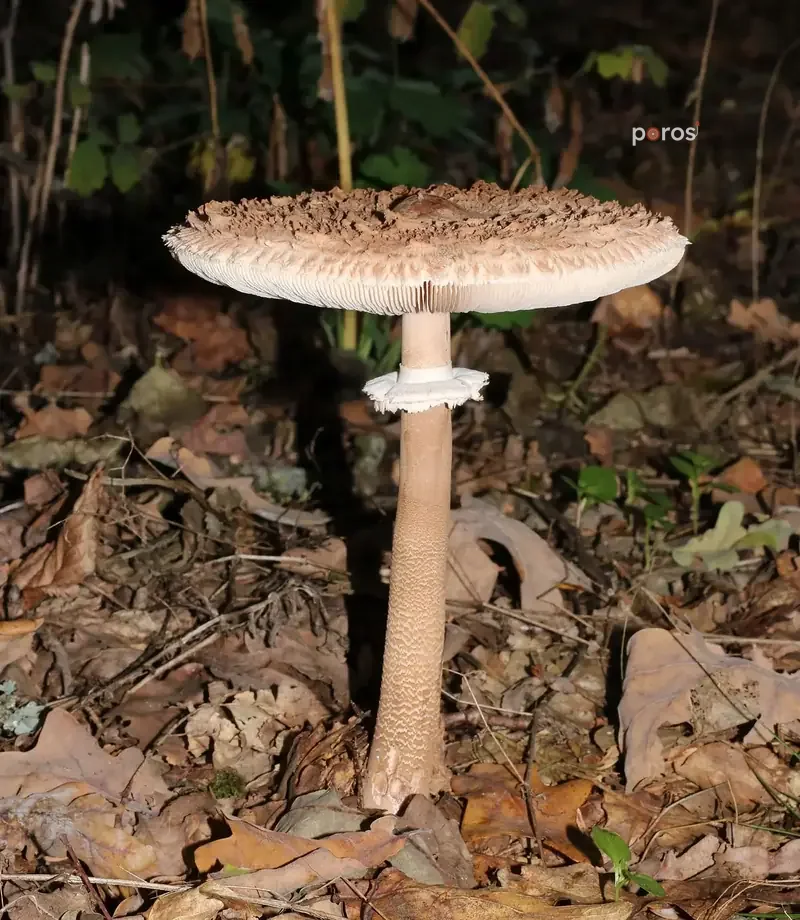
 ≠Parasol mushroom vs green-spored parasolMacrolepiota procera · Chlorophyllum molybditesPoisonous
 ≠Parasol mushroom vs deadly dapperlingMacrolepiota procera · Lepiota brunneoincarnataDeadly poisonous
 ≠Chanterelle vs false chanterelleCantharellus cibarius · Hygrophoropsis aurantiacaInedible
Last updated: Prepared by the Poros Mantar editorial teamReport a correction