

Look-alikes · comparison
Morel vs false morel: how to tell them apart
The morel (Turkish: kuzugöbeği, Morchella esculenta) and the false morel (Turkish: sahte kuzugöbeği, Gyromitra esculenta) appear in the same weeks of spring. A morel has a honeycomb cap and, cut lengthways, is one single hollow from cap to stem. A false morel has a brain-like, wrinkled cap and a chambered interior; it contains gyromitrin and can be deadly.

Morel vs false morel: the three signs that matter
-
Lengthways cut: one hollow or chambers?
We slice every specimen in half lengthways and look inside; this is the main check. In a morel, cap and stem form a single hollow from the tip to the base of the stem. In a false morel the inside is not hollow throughout: the stem is chambered and the interior looks divided or cottony. If the cut does not show one clean hollow, we recommend leaving the mushroom.
-
Cap surface: honeycomb or brain?
A morel's cap is egg-shaped or bluntly conical and covered in irregular pits like a honeycomb or sponge, with ridges paler than the pits. A false morel's cap is irregular and folded like a brain, with no true pits on its surface. To tell a pit from a fold we look closely: a honeycomb has distinct cells, whereas a brain-like cap is simply a wrinkled, folded surface.
-
Colour: yellow-brown or reddish brown?
A morel's cap ranges from cream-yellow to grey-brown, and its stem is white to pale yellow and brittle. A false morel's cap is brown, reddish brown, chestnut or purplish and darkens with age; its stem is white and thick. Habitat adds a hint: the false morel grows mostly under pine on sandy soil. Colour alone is never enough, so we weigh it with the cut.
If the cut does not show a single hollow, or the cap is folded like a brain, the mushroom is left behind. We never trust one sign alone; when unsure we recommend not eating it and consulting an expert.
Side-by-side differences
This table is built from the sourced descriptions on the two species pages.
| Feature | Morel | False morel |
|---|---|---|
| Cap | 2–7 cm wide, 2–10 cm tall; egg- or blunt cone-shaped with irregular pits. Ridges paler than the pits; cream-yellow to grey-brown. | Up to 12 cm, irregular and brain-like; brown with reddish, chestnut or purplish tones, darkening with age. |
| Underside | No gills or pores; spores form inside the pits. | No gills or pits; the surface is folded, not honeycombed. |
| Stem | 2–9 cm, white to pale yellow, brittle; forms one continuous hollow with the cap. | White and stout, up to 6 cm; chambered inside, not one continuous hollow. |
| Ring | None. | None. |
| Volva (cup at the base) | None. | None. |
| Smell and taste | Not distinctive. | Not distinctive. |
| Spore print | Creamy white to pale ochre (hard to obtain). | Whitish to yellowish buff. |
| Habitat | The morel grows under broadleaf and conifer trees, in old orchards and on disturbed ground, and prefers chalky soil. It is often abundant the spring after a forest fire. | The false morel grows in coniferous woods on sandy soil, mostly under pines, and is more common in the mountains than in the lowlands. |
| Season | Mar–May | Mar–May |
| Edibility | Edible species | Deadly poisonous |
The same view of both species


This page is not a definitive identification. The signs we describe help separate these two species, but they do not prove what your mushroom is; other poisonous species can grow in the same place.
Frequently asked questions
Are the morel and the false morel the same?
No. The morel belongs to the genus Morchella and the false morel to Gyromitra. In Turkey the false morel also goes by the folk names kuzugöbeği ebesi and yarım kafa mantarı. The morel is listed in our sources as an edible species; the false morel contains gyromitrin and can be deadly.
Morel or false morel: which one is poisonous?
The false morel is the potentially deadly one; the gyromitrin it contains is converted in the body into monomethylhydrazine. The morel is described in our sources as an edible species, but raw or undercooked it can upset the stomach and gut, and old specimens that have begun to rot may be poisonous.
How do we tell a morel from a false morel?
We cut the mushroom in half lengthways. A morel is one hollow from cap to stem and its cap is pitted like a honeycomb. A false morel has a brain-like, reddish-brown cap, and its inside is not hollow throughout but chambered or cottony.
What happens if a false morel is eaten?
Its gyromitrin is converted in the body into monomethylhydrazine, which affects the liver and the nervous system and can be fatal. If poisoning is suspected in Turkey, call 112 at once without waiting for symptoms, and keep any leftover piece of the mushroom.
Does cooking make a false morel safe?
No. Although it is reportedly boiled and eaten in some places, thorough cooking has been shown not to remove all of the toxin. We therefore recommend that the false morel is not brought to the table however it is prepared. The true morel is not eaten raw either: it contains gut irritants and is always cooked thoroughly.
Do the morel and the false morel grow in the same place?
They can. The false morel grows in coniferous forests on sandy soil, mostly under pine, and is commoner in the mountains. The morel grows under both broadleaved and coniferous trees, in old orchards and on burnt ground. As either may turn up in coniferous woodland, we cut every specimen.
In which season do they appear?
Both are spring mushrooms. Turkish GBIF records of the morel run from March to June, with April and May the busiest months. The false morel appears in spring and early summer, at the same time as the morel, and most Turkish records are from April. Season does not separate them.
Can they be told apart from a photo?
A photo helps, but it is not a firm identification. Honeycomb pits and brain-like folds can be made out in a close-up, yet the inside, which is the real check, cannot be seen from outside. A photo of a specimen cut lengthways tells us more; even so, we recommend showing the mushroom to an expert before eating.
Sources
The facts in this comparison come from the sourced data on our morel and false morel pages:
More comparisons
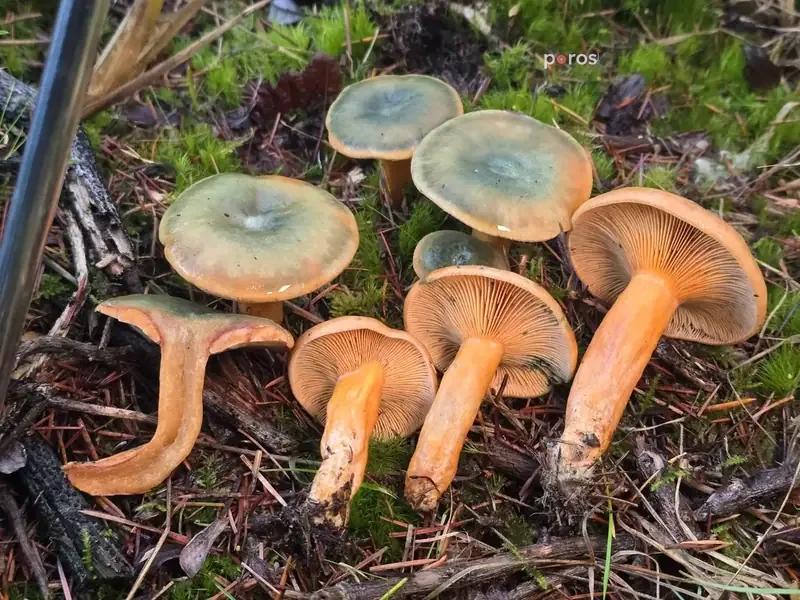
 ≠Saffron milk cap vs woolly milkcapLactarius deliciosus · Lactarius torminosusPoisonous
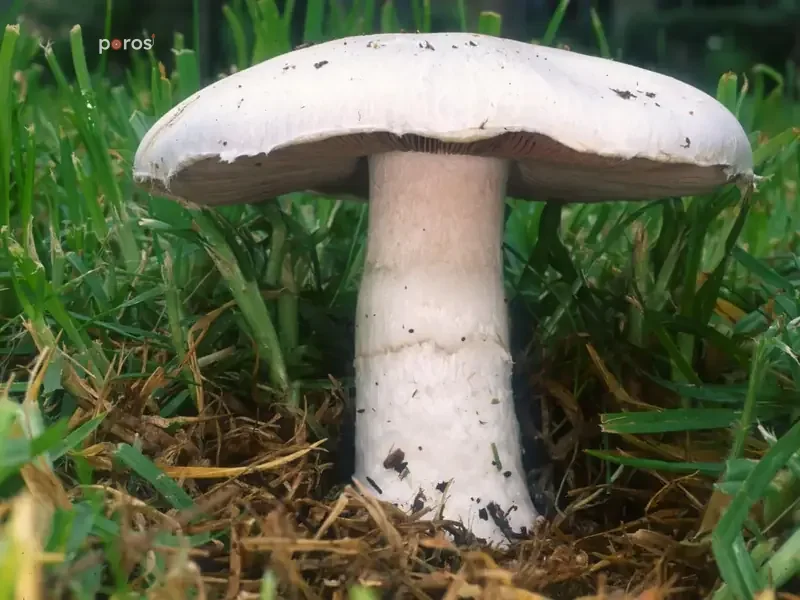
 ≠Field mushroom vs death capAgaricus campestris · Amanita phalloidesDeadly poisonous
 ≠Field mushroom vs yellow stainerAgaricus campestris · Agaricus xanthodermusPoisonous
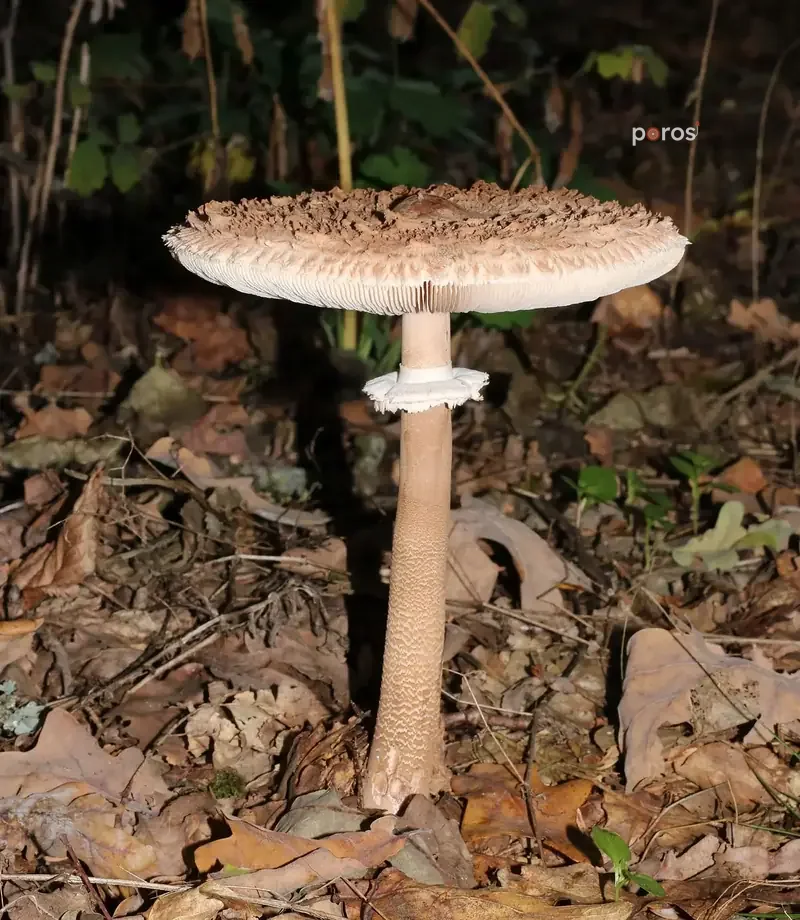
 ≠Parasol mushroom vs green-spored parasolMacrolepiota procera · Chlorophyllum molybditesPoisonous
 ≠Parasol mushroom vs deadly dapperlingMacrolepiota procera · Lepiota brunneoincarnataDeadly poisonous
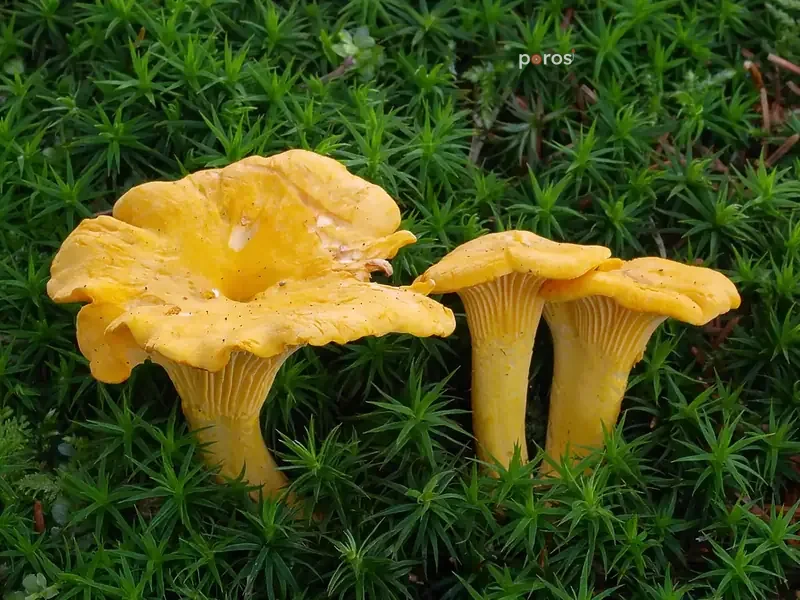
 ≠Chanterelle vs false chanterelleCantharellus cibarius · Hygrophoropsis aurantiacaInedible
Last updated: Prepared by the Poros Mantar editorial teamReport a correction