
Willow shield
Pluteus salicinus · Pluteaceae

A mushroom of dead hardwood such as willow, alder, beech and poplar, with a silver-grey cap that takes on bluish-green tones with age and free pink gills. It contains low amounts of psilocybin. It is one of the so-called magic mushrooms. It is one of the few psilocybin species with GBIF records from Turkey. This page is for identification and warning only.
Also called: willow shield Turkish: Pluteus salicinus
Last updated: Prepared by the Poros Mantar editorial team9 sources checkedReport a correction
Willow shield photos
-
© Richard Daniel (RichardDaniel) at Mushroom Observer, a source for myc · CC BY-SA 3.0
-

Cap© victor laborde · CC BY 4.0
-

Gills© Johan Adler · CC BY 4.0
-

Stem© Patrick Bayan · CC BY 4.0
-

Spore print© Richard Daniel (RichardDaniel) at Mushroom Observer, a source for myc · CC BY-SA 3.0
-
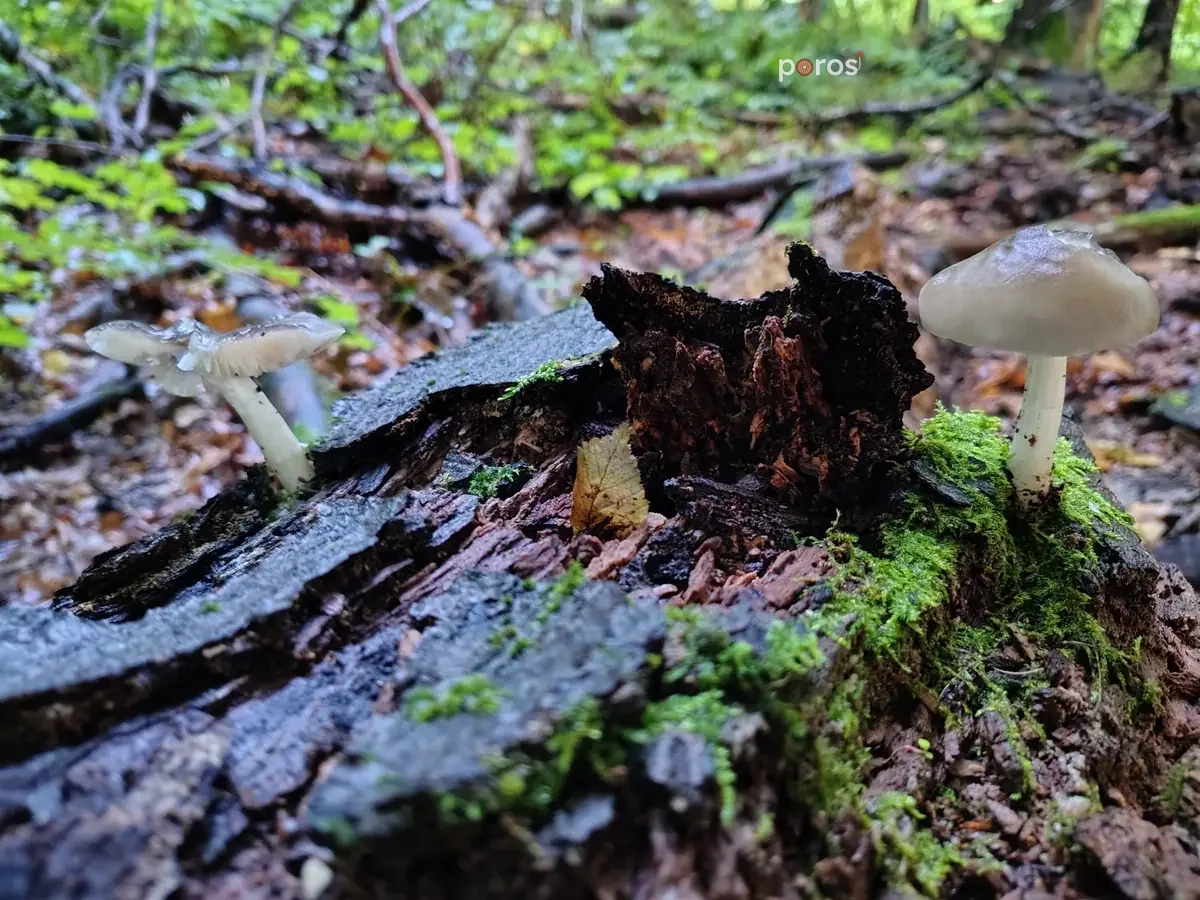
In habitat© vuikaan · CC BY 4.0
-

© Daniel Ghyselinck · CC BY 4.0
-

Gills© yellowplant · CC BY 4.0
These are licensed records of this species; photos alone are not enough to identify a mushroom.
Is the willow shield poisonous?
Not safe: the willow shield contains psilocybin and psilocin and is legally controlled. The deadly risk is confusion with small brown look-alikes: livid pinkgill (Entoloma sinuatum) and deadly galerina (Galerina marginata). If poisoning is suspected, call 112 at once (Turkish poison centre: 114) and keep any leftover mushroom.
Is the willow shield edible?
No, the willow shield is not a food. Psilocybin and psilocin are Schedule I substances under the UN 1971 Convention; in Turkey, picking or possessing it may be a crime (Penal Code arts. 188 and 191). This page is for identification and warning only. If poisoning is suspected, call 112 at once (Turkish poison centre: 114) and keep any leftover mushroom.
How to recognise it
Appearance of willow shield
No ring or volva Spore print: Flesh-pink to brownish pink Unpleasant, radish-like. Never taste it.
When and where
When to find willow shield
Jun–Oct
Summer and autumn; there are GBIF records from Turkey.
Type Psilocybin
Months seen JuneJulyAugustSeptemberOctober
Colour Grey
Regions Eastern Anatolia RegionBlack Sea RegionAegean RegionAydınRizeArtvinBolu
Where does willow shield grow?
Singly or in small groups on dead hardwood (Alnus, Fagus, Populus, Quercus, Salix) in damp floodplain forests across Europe and Siberia.
In Turkey
GBIF has fifteen records from Turkey based on herbarium and DNA samples, from Ardahan, Artvin, Aydın, Bolu, Denizli, Erzincan, Erzurum and Rize.
- Ardahan
- Artvin
- Aydın
- Bolu
- Denizli
- Erzincan
- Erzurum
- Rize
GBIF lists 15 records from Turkey; none yet has verified coordinates for our map.
Look-alikes
What is it mistaken for?
Willow shield can be mistaken for the species below. Each comparison shows Willow shield on the left, the look-alike on the right, and how to tell them apart.

Livid pinkgill Entoloma sinuatum
How to tell Its pink spore print means it can be confused with Pluteus, and it causes severe gastrointestinal poisoning. It grows on soil and its gills are attached to the stem, whereas Pluteus grows on wood and has free gills.

Deadly galerina Galerina marginata
How to tell A small brown deadly species that can grow on the same dead wood. It has a rusty brown spore print and a ring on the stem.
Willow shield and its look-alikes compared
| Species | Status | Underside | Spore print | Season |
|---|---|---|---|---|
| Willow shieldPluteus salicinus | Inedible · legally controlled | Crowded, broad, free gills | Flesh-pink to brownish pink | Jun–Oct |
| Livid pinkgillEntoloma sinuatum | Poisonous | Distant, notched at the stem | Pink (reddish brown) | Aug–Dec |
| Deadly galerinaGalerina marginata | Deadly poisonous | Crowded, pale brown when young, tawny when mature | Rusty (snuff) brown | Aug–Nov |
The table is compiled from each species page. The status column is a guide only; do not eat a wild mushroom unless an expert has seen it in person. Compare look-alikes side by side
Frequently asked questions
Is the willow shield poisonous?
Not safe: the willow shield contains psilocybin and psilocin and is legally controlled. The deadly risk is confusion with small brown look-alikes: livid pinkgill (Entoloma sinuatum) and deadly galerina (Galerina marginata). If poisoning is suspected, call 112 at once (Turkish poison centre: 114) and keep any leftover mushroom.
Is the willow shield edible?
No, the willow shield is not a food. Psilocybin and psilocin are Schedule I substances under the UN 1971 Convention; in Turkey, picking or possessing it may be a crime (Penal Code arts. 188 and 191). This page is for identification and warning only. If poisoning is suspected, call 112 at once (Turkish poison centre: 114) and keep any leftover mushroom.
Where is Pluteus salicinus found in Turkey?
GBIF has fifteen records from Turkey: Ardahan, Artvin, Aydın, Bolu, Denizli, Erzincan, Erzurum and Rize, mostly based on herbarium and DNA samples. This is not a picking guide.
How do you tell Pluteus salicinus from other Pluteus species?
Its silver-grey cap, the blue-green tones that appear with age and the greenish stem base are distinctive. A firm identification is made under the microscope from its horned cystidia; identification by appearance alone is not safe.
Why is the willow shield a health risk?
Psilocin alters perception and thinking; panic, anxiety, disorientation, accidents and, in susceptible people, prolonged psychotic states have been reported. Content varies greatly between specimens and is unpredictable. Clinical studies use purified, measured psilocybin under medical supervision, not mushrooms, and it is not an approved medicine in Turkey.
Is the willow shield legal in Turkey?
No. The psilocybin and psilocin it contains are in Schedule I of the UN 1971 Convention and count as narcotic substances in Turkey under Penal Code arts. 188 and 191. Picking, possessing, selling or using it may be a crime; this page is for identification and warning only.
What should you do if the willow shield is eaten by mistake?
Call 112 or the Turkish National Poison Information Centre (114) straight away, and keep a piece or a photo of the mushroom. Seek help even without symptoms: misidentified little brown mushrooms can cause deadly amatoxin poisoning whose symptoms start hours later.
Related species
-
 Paddy straw mushroomVolvariella volvaceaEdible species
-
 Stubble rosegillVolvopluteus gloiocephalusInedible
-
 Almond mushroomAgaricus subrufescensEdible species
-
 Amanita proximaAmanita proximaDeadly poisonous
-
 Amethyst deceiverLaccaria amethystinaInedible
-
 Anatolian matsutakeTricholoma anatolicumEdible species
-
 Anemone stinkhornAseroe rubraInedible
-
 Aniseed funnelClitocybe odoraEdible species
Sources
- Mevzuat: 5237 sayılı Türk Ceza Kanunu (md. 188, 191) mevzuat.gov.tr
- T.C. Sağlık Bakanlığı: Mantar zehirlenmelerine dikkat saglik.gov.tr
- Ulusal Zehir Danışma Merkezi (UZEM), 114 uzem.saglik.gov.tr
All sources (9)
- Bradshaw ve ark. (2022), Applied and Environmental Microbiology: Psilocybe örneklerinde DNA ile tür doğrulama ve kimyasal analiz pubmed.ncbi.nlm.nih.gov
- Wikipedia (EN): Pluteus salicinus en.wikipedia.org
- GBIF: Pluteus salicinus gbif.org
- Wikipedia (EN): Entoloma sinuatum en.wikipedia.org
- UNODC: 1971 Psikotrop Maddeler Sözleşmesi çizelgeleri (Çizelge I: psilosibin, psilosin) importlicensing.wto.org
- BM Antlaşmalar Derlemesi: 1971 Sözleşmesi tarafları (Türkiye, onay 1 Nisan 1981) treaties.un.org
Photo credits (8)
- File:Pluteus salicinus 191012m.JPG · Richard Daniel (RichardDaniel) at Mushroom Observer, a source for myc · CC BY-SA 3.0
- Pluteus salicinus · iNaturalist #408033842 · victor laborde · CC BY 4.0
- Pluteus salicinus · iNaturalist #303401187 · Johan Adler · CC BY 4.0
- Pluteus salicinus · iNaturalist #388502924 · Patrick Bayan · CC BY 4.0
- File:Pluteus salicinus 1228872.jpg · Richard Daniel (RichardDaniel) at Mushroom Observer, a source for myc · CC BY-SA 3.0
- Pluteus salicinus · iNaturalist #316615979 · vuikaan · CC BY 4.0
- Pluteus salicinus · iNaturalist #302955632 · Daniel Ghyselinck · CC BY 4.0
- Pluteus salicinus · iNaturalist #315841557 · yellowplant · CC BY 4.0

