
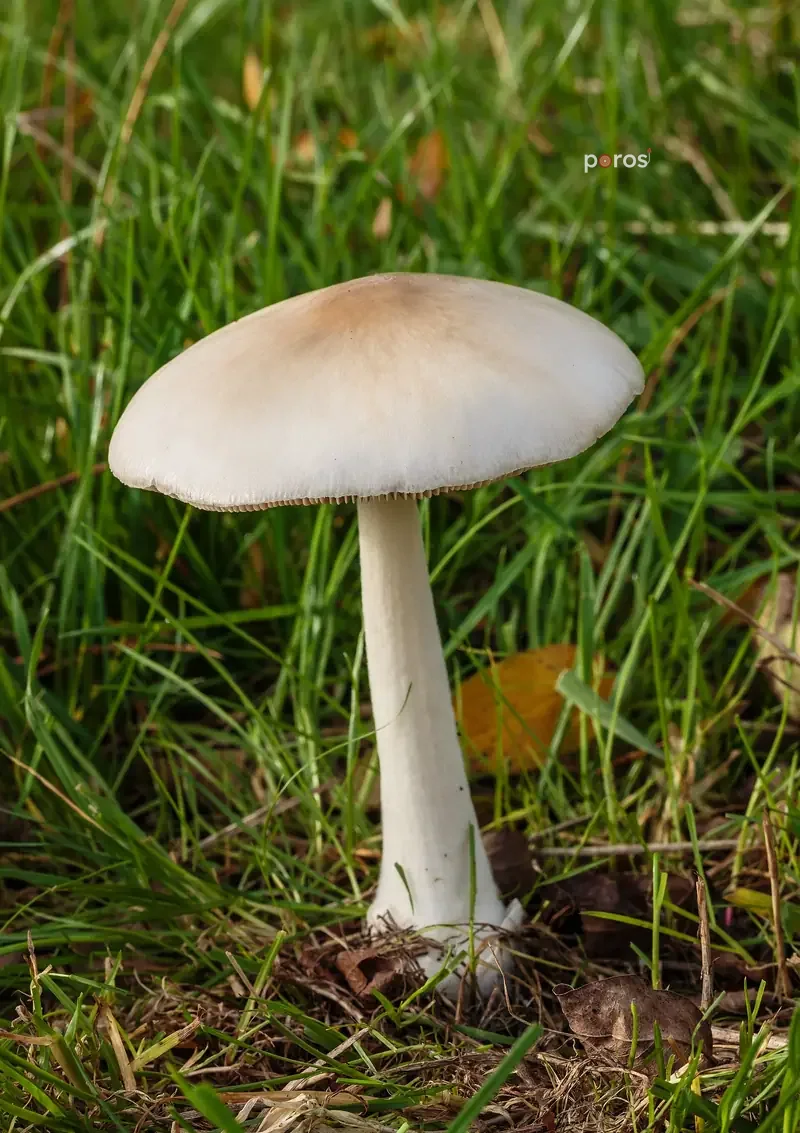


Stubble rosegill
Volvopluteus gloiocephalus · Pluteaceae
The stubble rosegill (Volvopluteus gloiocephalus) is a large mushroom of fields, gardens, meadows and manured soil, with a white to grey cap, pink gills and a white sac (volva) at the stem base.
Last updated: Prepared by the Poros Mantar editorial team6 sources checkedReport a correction
The stubble rosegill (Volvopluteus gloiocephalus) is a large mushroom of fields, gardens, meadows and manured soil, with a white to grey cap, pink gills and a white sac (volva) at the stem base. Its volva and pale cap make it easy to confuse with the deadly death cap and destroying angel. Sources call it edible, but because of that risk we list it as not edible.
Also called: big sheath mushroom, rose-gilled grisette Turkish: Danaburnu mantarı, anız gülü mantarı, sümüklüce, kakilvik Synonyms: Volvariella gloiocephala, Volvariella speciosa
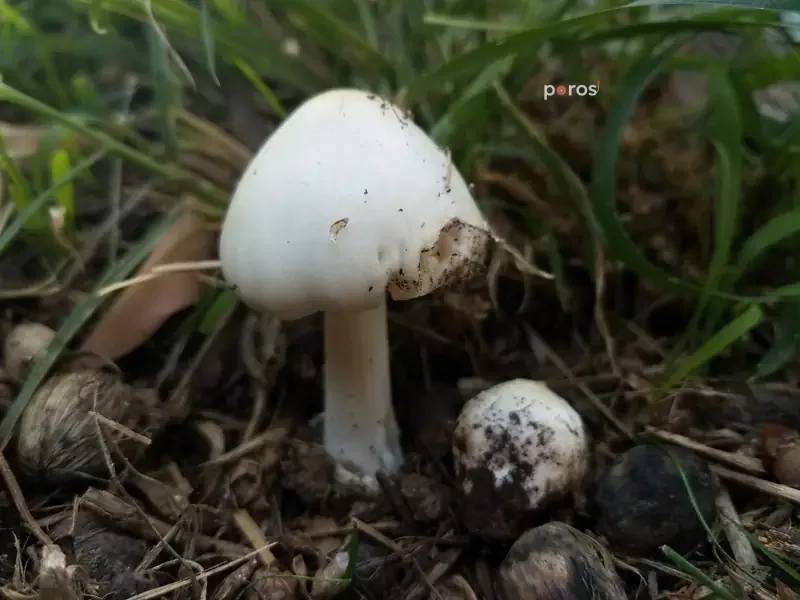
Other Turkish names of the stubble rosegill
According to Mantarlı Yaşam the stubble rosegill (Volvopluteus gloiocephalus) is also called anız gülü ("stubble rose") and sümüklüce in Turkish, and appears as kakilvik in the Turkish Mushroom Checklist. The same source also lists geyik mantarı, but that name is mostly used for the milky weeping milk cap (Lactifluus volemus); the two look nothing alike.
The name anız gülü describes its habitat: it grows not under trees but in harvested stubble fields, along roadsides and in parks, gardens and meadows.
Is it edible? Why sources disagree
Sources disagree about the stubble rosegill: some call it edible but of little culinary value, others say it may be toxic and should not be eaten. The main risk lies less in the mushroom itself than in its look-alikes: young specimens have white gills and a sack-like volva, so they are confused with the deadly death cap and destroying angel.
That is why it stays inedible on our site. Look for three signs together: pink gills when mature, a pink spore print and a ringless stem. A white spore print or a ring on the stem may mean a deadly species.
How to recognise it
Stubble rosegill, part by part
No ring Spore print: Pink to pinkish-brown Faint, sometimes radish-like or earthy; the flesh is white and soft.


When and where
Oct–Feb
- Janin season
- Febin season
- Mar
- Apr
- May
- Jun
- Jul
- Aug
- Sep
- Octin season
- Novin season
- Decin season
The stubble rosegill appears in Turkey with the autumn and winter rains; our records run from October to February, peaking in December and January, with a stray record in May.
Type Inedible
Months seen OctoberNovemberDecemberJanuaryFebruary
Regions Eastern Anatolia RegionBlack Sea RegionMediterranean RegionAegean RegionMarmara RegionAydınManisaİzmirMuğlaSakaryaYalovaBursaIstanbul
Where does stubble rosegill grow?
On stubble fields, field margins, lawns, gardens, compost and manured soil; it is not tied to trees and feeds on decaying plant matter. It appears singly or in small groups.
Where is stubble rosegill found in Turkey?
Our map data (GBIF and iNaturalist) holds 49 Turkish records, mostly from Aydın, Istanbul, Manisa, Muğla and İzmir, plus Bursa, Sakarya, Yalova, Çanakkale, Denizli, Giresun and Mersin. They cluster in the mild coastal lowlands of the Aegean and Marmara regions.
- Aydın10
- İstanbul8
- Manisa7
- Muğla5
- İzmir4
- Bursa3
- Sakarya3
- Yalova2
- Çanakkale2
- Denizli1
- Giresun1
- Mersin1
Other provinces: Erzurum (1), Osmaniye (1)
Which months
- Jan11
- Feb1
- Mar0
- Apr0
- May1
- Jun0
- Jul0
- Aug0
- Sep0
- Oct4
- Nov10
- Dec22
stubble rosegill map of Turkey: all provinces and months →
14 provinces, 49 observations (GBIF, iNaturalist); months from observation dates. Record density also reflects where observers work.
Latest stubble rosegill observations
-
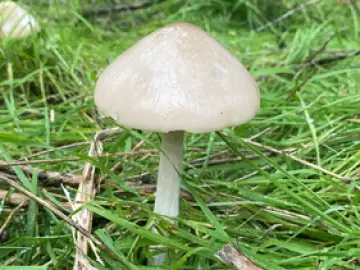 Yalova11 Nov 2025 · iNaturalist© Mehmet · CC BY
-
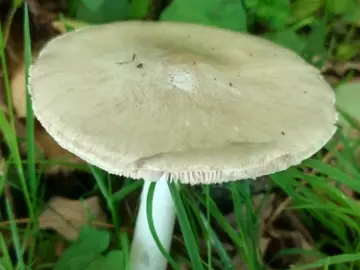 Giresun5 Nov 2025 · iNaturalist© no rights reserved · CC0
-
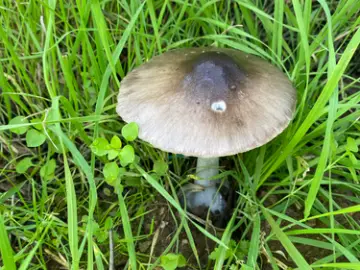 Yalova1 Nov 2025 · iNaturalist© Mehmet · CC BY
-
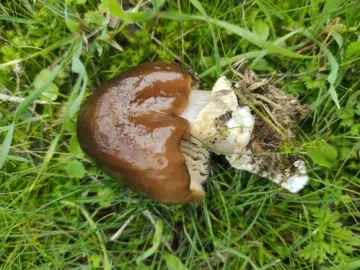 Manisa15 Jan 2024 · iNaturalist© Umut Nuri Erdoğan · CC BY
-
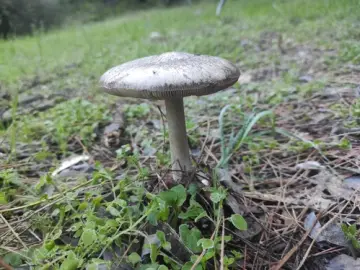 Manisa13 Jan 2024 · iNaturalist© Umut Nuri Erdoğan · CC BY
-
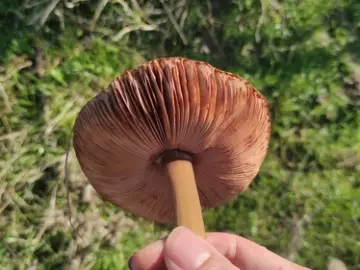 Manisa18 Dec 2023 · iNaturalist© Umut Nuri Erdoğan · CC BY
-
 Illustrative
İstanbul27 Oct 2026 · iNaturalist
-
 Illustrative
Bursa24 Oct 2026 · iNaturalist
- See on the map
On "illustrative" cards the image is a photo of the species; the observation photo cannot be shown here because of its licence, but can be seen at the source.
Look-alikes
What could it be confused with?
Stubble rosegill can be mistaken for the species below. Each card shows the look-alike and how it differs from Stubble rosegill.
 Deadly
not Stubble rosegill
Death cap Amanita phalloides
The death cap also has a volva, but its gills stay white, its stem has a ring and its cap is usually olive green; it grows under trees. The stubble rosegill's gills turn pink, it has no ring and it grows in the open.
 Deadly
not Stubble rosegill
Destroying angel Amanita virosa
Pure white, with a volva and white gills; its stem has a ragged ring and it grows in woodland. Its spore print is white; the stubble rosegill's is pink.
 Edible species
not Stubble rosegill
Paddy straw mushroom Volvariella volvacea
The cultivated paddy straw mushroom is smaller, with a grey-brown fibrous cap; it too has pink gills and a volva. In Turkey it is seen in shops, not in the wild.
What it contains
Its taste is described as bland and its flesh as watery and soft; it has little culinary value.
General information, not a health claim.
The stubble rosegill is listed as edible in the literature, but telling young, white specimens from the death cap and destroying angel takes experience, and poisonings from this confusion have been reported in Mediterranean countries. Do not eat a white-capped mushroom with a volva. If poisoning is suspected, call poison control and keep any leftover mushroom.
Frequently asked questions
Is the stubble rosegill poisonous?
It is not considered poisonous itself and is listed as edible. The real danger is confusing it with the deadly death cap and destroying angel, so we list it as not edible.
Is it edible?
Sources say it is edible, but it tastes bland and picking a white mushroom with a volva carries a risk of a fatal mistake. Our advice is not to eat it.
How do you tell it from the death cap?
Look at the gills and stem: the stubble rosegill's gills are pink when mature, it has no ring and its spore print is pink. The death cap's gills stay white, it has a ring and its spore print is white.
Where does it grow?
Not under trees but in open, rich ground such as fields, stubble, lawns, gardens and compost.
When does it appear?
In Turkey with the autumn and winter rains; records run from October to February, peaking in December and January.
Where is it found in Turkey?
Our map data has 49 records from Aydın, Istanbul, Manisa, Muğla, İzmir, Bursa, Sakarya, Yalova, Çanakkale, Denizli, Giresun and Mersin.
Is it sold?
It is not regularly sold at Turkish markets. Make sure any wild mushroom you buy comes from someone who knows the species.
What is its Turkish name?
Its Turkish name on iNaturalist is danaburnu mantarı, sometimes written as dana burnu mantarı.
Is anız gülü edible?
Anız gülü is another Turkish name for the stubble rosegill; sources disagree on its edibility and it is confused with deadly Amanita species. We treat it as inedible.
What are the other names of danaburnu?
Danaburnu is also called anız gülü, sümüklüce and kakilvik; its Latin name is Volvopluteus gloiocephalus.
How is danaburnu cooked?
We do not recommend cooking danaburnu; with its volva it is easily confused with deadly species and it is listed as inedible on our site.
Does danaburnu have health benefits?
We know of no proven health benefit of danaburnu and make no such claim.
When is stubble rosegill season in Turkey?
In our calendar, stubble rosegill season runs Oct–Feb. The stubble rosegill appears in Turkey with the autumn and winter rains; our records run from October to February, peaking in December and January, with a stray record in May.
Where does stubble rosegill grow?
On stubble fields, field margins, lawns, gardens, compost and manured soil; it is not tied to trees and feeds on decaying plant matter. It appears singly or in small groups.
Where is stubble rosegill found in Turkey?
Our map data (GBIF and iNaturalist) holds 49 Turkish records, mostly from Aydın, Istanbul, Manisa, Muğla and İzmir, plus Bursa, Sakarya, Yalova, Çanakkale, Denizli, Giresun and Mersin. They cluster in the mild coastal lowlands of the Aegean and Marmara regions.
What can stubble rosegill be confused with?
Stubble rosegill can be confused with death cap (Amanita phalloides, deadly), destroying angel (Amanita virosa, deadly) and paddy straw mushroom (Volvariella volvacea, edible species). Look-alikes are compared on this page.
What is stubble rosegill called in Turkish?
In Turkish, stubble rosegill (Volvopluteus gloiocephalus) is called Danaburnu mantarı; other local names include anız gülü mantarı, sümüklüce and kakilvik.
Related species
-
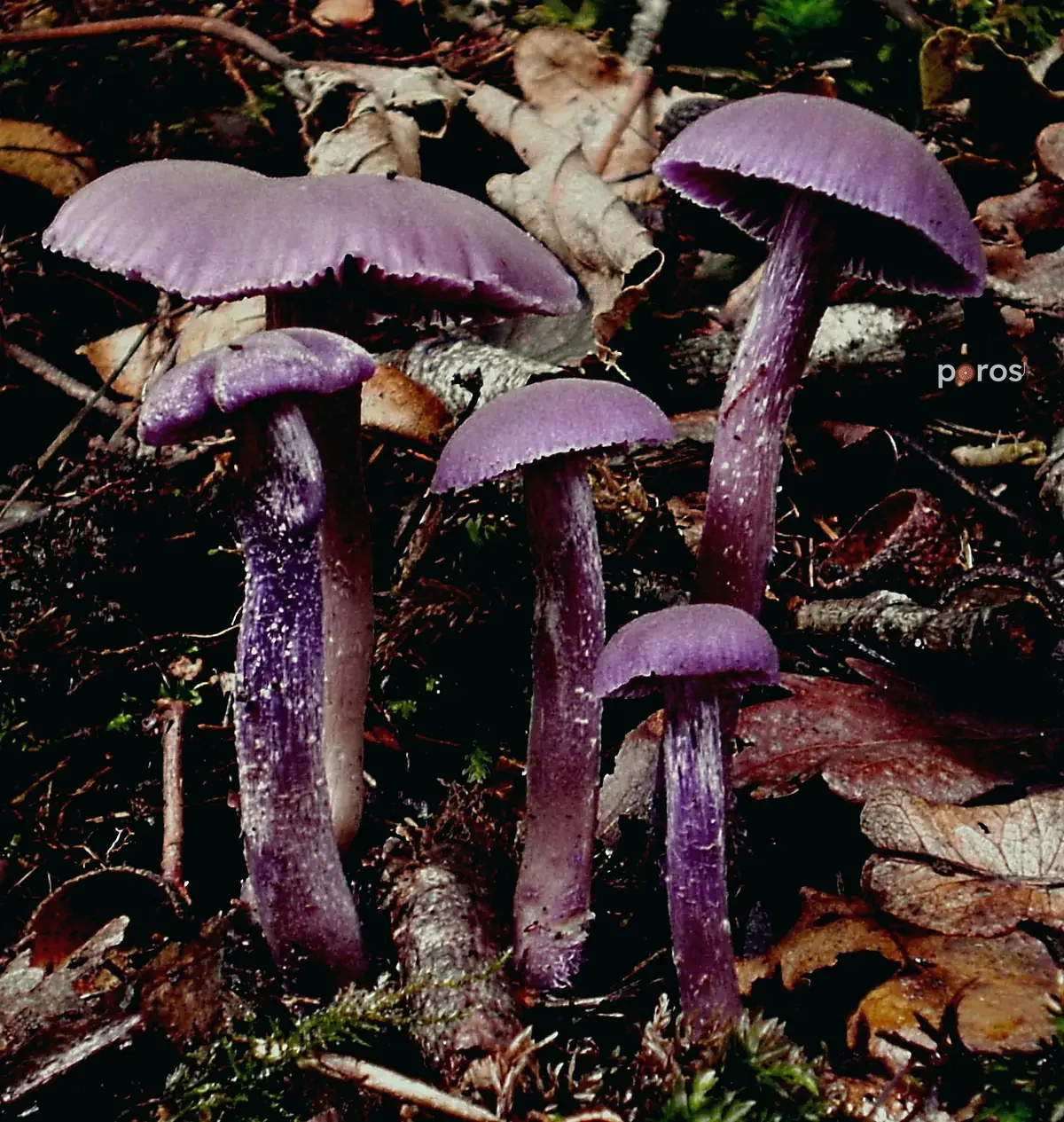 Amethyst deceiverLaccaria amethystinaInedible
-
 Artist’s bracketGanoderma applanatumInedible
-
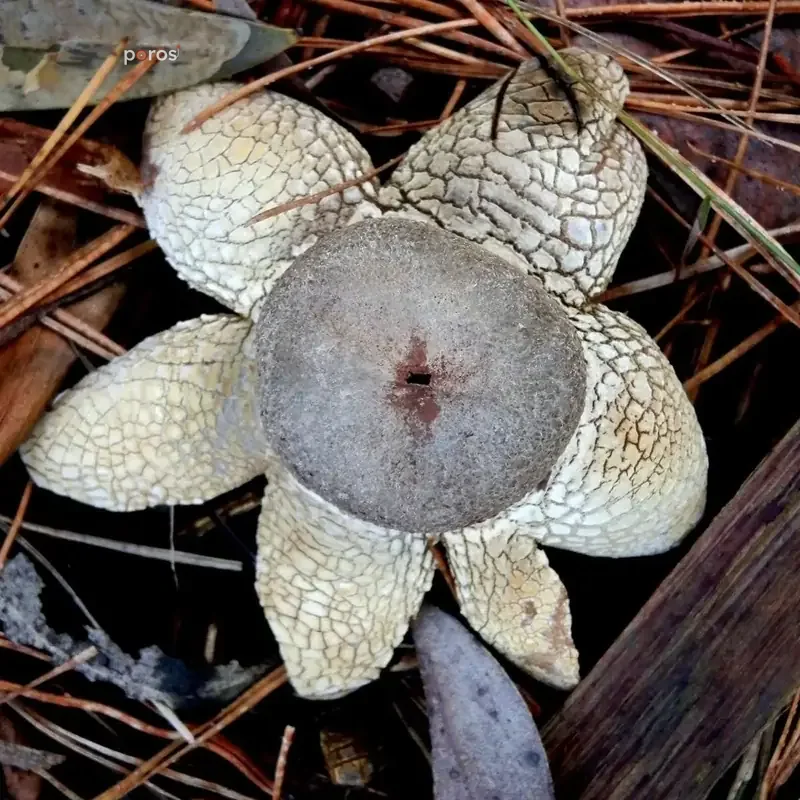 Barometer earthstarAstraeus hygrometricusInedible
-
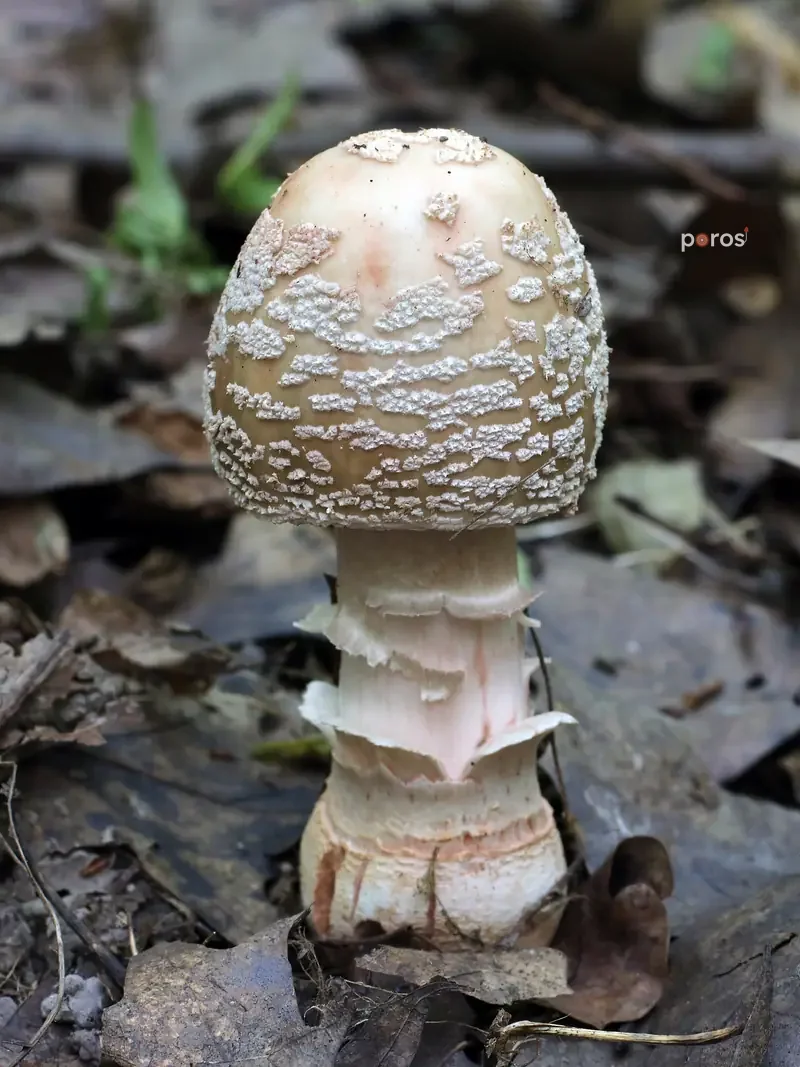 BlusherAmanita rubescensInedible
-
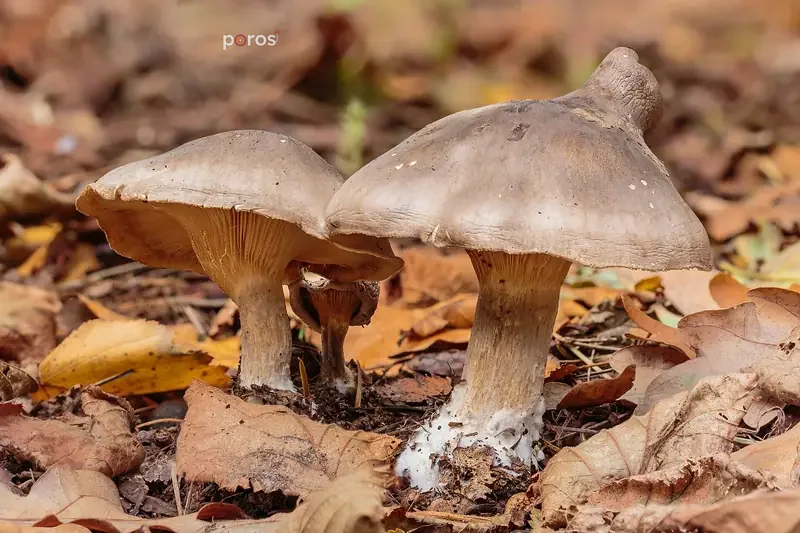 Clouded funnelClitocybe nebularisInedible
-
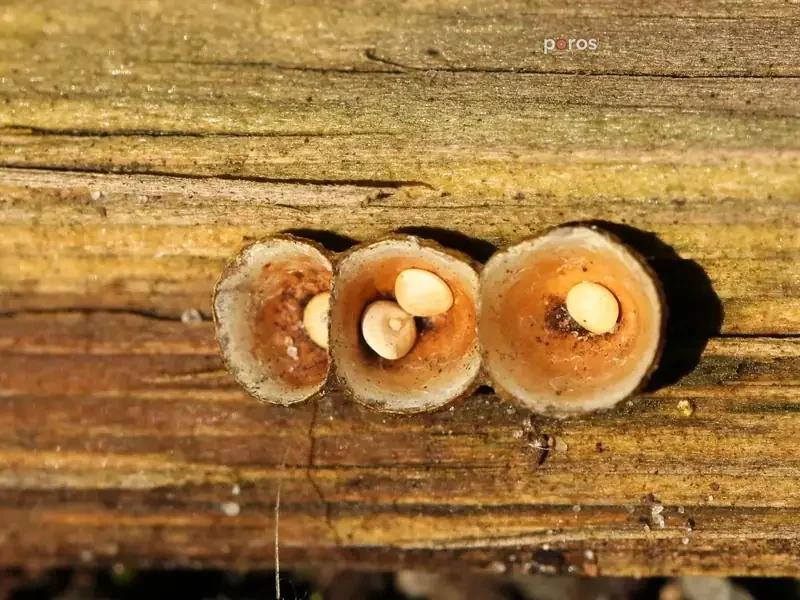 Common bird’s nest fungusCrucibulum laeveInedible
-
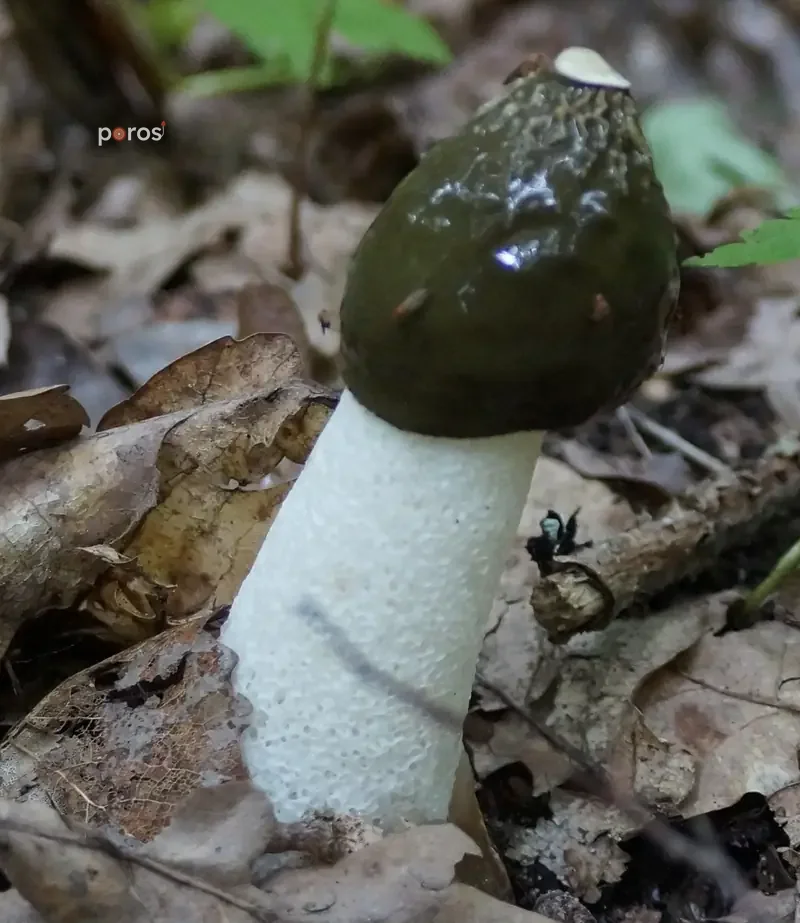 Common stinkhornPhallus impudicusInedible
-
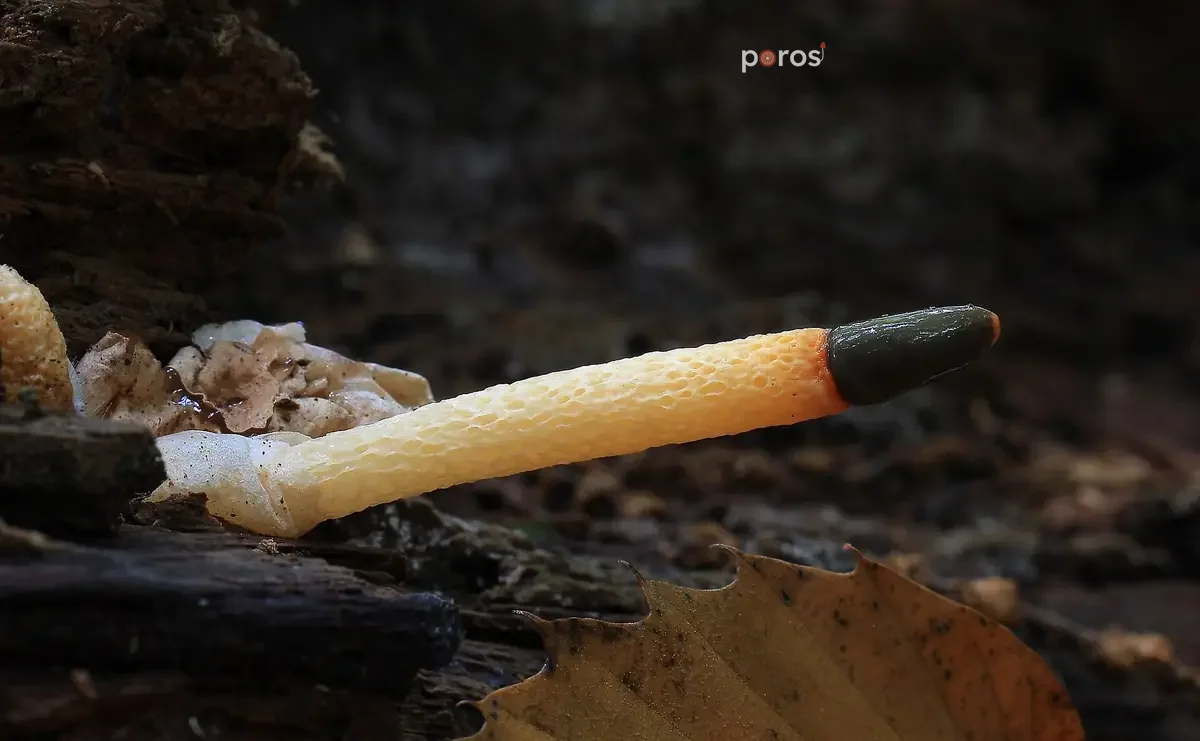 Dog stinkhornMutinus caninusInedible
Sources
- Sadi ve ark. (2016), International Journal of Medicinal Mushrooms: Türkiye'den yenen yabani mantarlar (Volvopluteus gloiocephalus dahil) pubmed.ncbi.nlm.nih.gov
- Wikipedia (EN): Volvopluteus gloiocephalus en.wikipedia.org
- First Nature: Volvopluteus gloiocephalus first-nature.com
All sources (6)
- iNaturalist: Volvopluteus gloiocephalus (Türkçe ad ve Türkiye gözlemleri) inaturalist.org
- GBIF: Türkiye kayıtları gbif.org
- Mantarlı Yaşam: Dana Burnu Mantarı (Volvopluteus gloiocephalus) mantarliyasam.com
Photo credits (14)
- File:Gewone beurszwam (Volvopluteus gloiocephalus). 31-10-2022. (actm.) 05.jpg · Agnes Monkelbaan · CC BY-SA 4.0
- Volvopluteus gloiocephalus · iNaturalist #9820652 · Alan Rockefeller · CC BY 4.0
- Volvopluteus gloiocephalus · iNaturalist #192927266 · Ross Krisztina · CC BY 4.0
- Volvopluteus gloiocephalus · iNaturalist #9820652 · Alan Rockefeller · CC BY 4.0
- File:Volvopluteus gloiocephalus 151114w.JPG · Strobilomyces · CC BY-SA 3.0
- Volvopluteus gloiocephalus · iNaturalist #328205988 · Nick Butcher · CC BY 4.0
- Volvopluteus gloiocephalus · iNaturalist #146667640 · August Frisk · CC0
- Volvopluteus gloiocephalus · iNaturalist #130462804 · Alan Rockefeller · CC BY 4.0
- iNaturalist: Yalova, 11 Nov 2025 · Mehmet · CC BY
- iNaturalist: Giresun, 5 Nov 2025 · no rights reserved · CC0
- iNaturalist: Yalova, 1 Nov 2025 · Mehmet · CC BY
- iNaturalist: Manisa, 15 Jan 2024 · Umut Nuri Erdoğan · CC BY
- iNaturalist: Manisa, 13 Jan 2024 · Umut Nuri Erdoğan · CC BY
- iNaturalist: Manisa, 18 Dec 2023 · Umut Nuri Erdoğan · CC BY

