
Paddy straw mushroom
Volvariella volvacea · Pluteaceae

The paddy straw mushroom (Volvariella volvacea) is grown on rice straw in Southeast and East Asia and is mostly harvested in its egg stage, before the sac (volva) opens. Canned straw mushrooms are sold worldwide. Once open it becomes a grey-brown mushroom with pink spores. Its egg stage looks very much like the egg of deadly Amanita species.
Also called: straw mushroom, paddy straw mushroom Turkish: Saman mantarı
Last updated: Prepared by the Poros Mantar editorial team3 sources checkedReport a correction
Paddy straw mushroom photos
-
Volva© Joel Trejos · CC BY-SA 4.0
-

Cross-section© Jerry Cooper · CC BY 4.0
-

© Turner Brockman · CC BY-SA 4.0
-
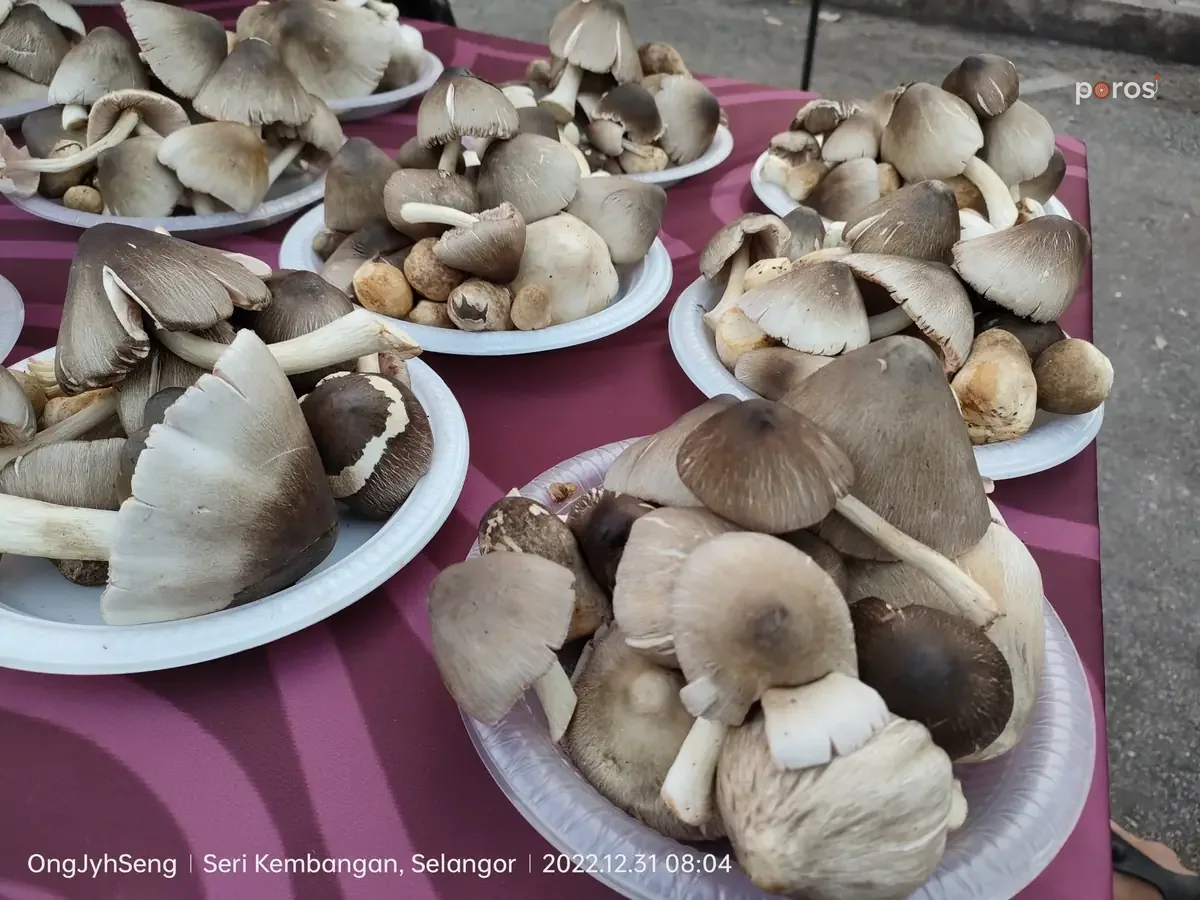
In cultivation© Ong Jyh Seng · CC BY-SA 4.0
-
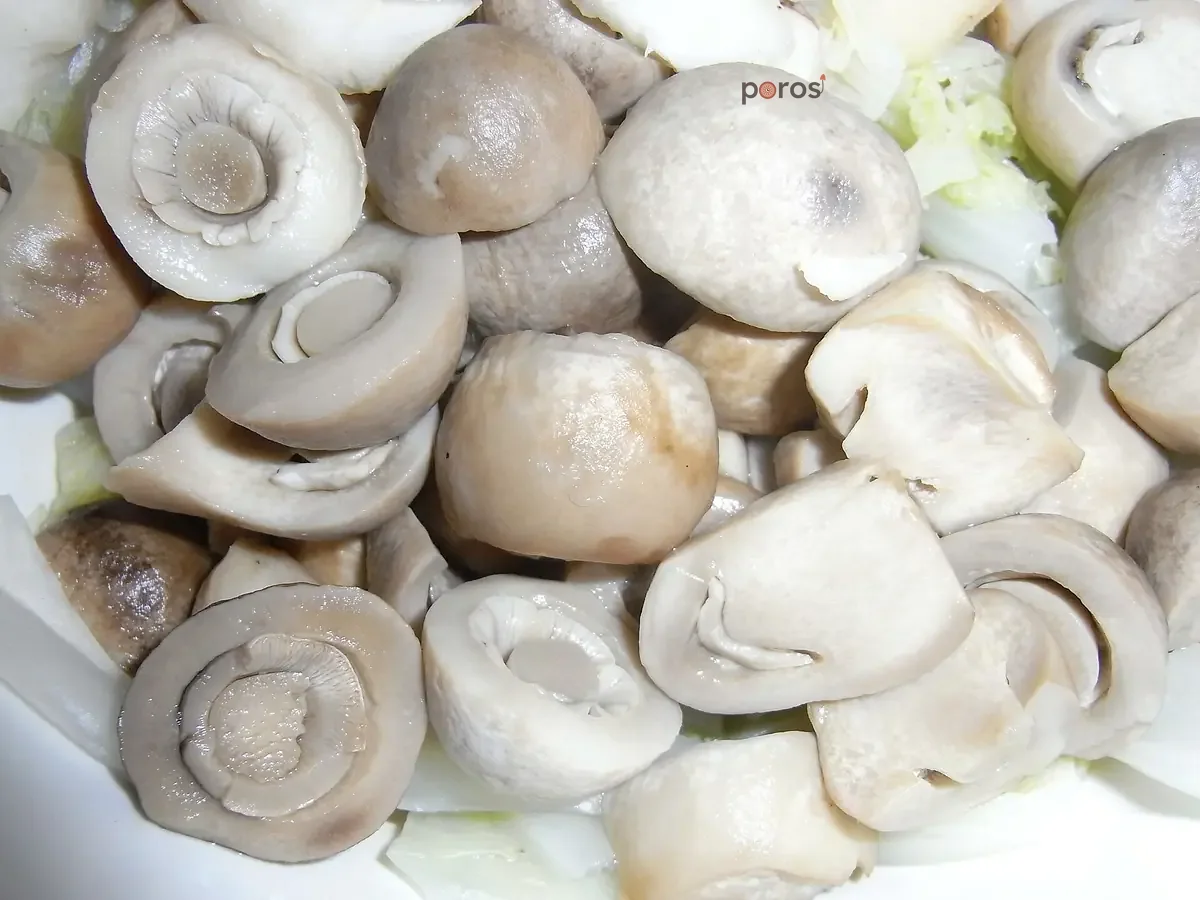
In cultivation© Cathiniamoa · CC BY-SA 3.0
-

Gills© Tara Severns · CC BY 4.0
-

© asivitskis · CC0
-

Volva© Bertis Y. Franco Pérez · CC BY 4.0
-

Stem© Liubov Ilminska · CC0
-

In habitat© Ian Cowie · CC BY 4.0
-

Cap© Kurt Miller · CC BY-SA 4.0


These are licensed records of this species; photos alone are not enough to identify a mushroom.
Are paddy straw mushrooms poisonous?
Paddy straw mushrooms are not listed as poisonous in our sources. The paddy straw mushroom is safe as a cultivated and canned product. Never pick an egg-stage mushroom with a sac in the wild as a straw mushroom: the eggs of the death cap and destroying angel look the same outside, and fatal poisonings from this mix-up have been reported among people who emigrated from Asia. The real risk is confusing them with death cap (Amanita phalloides) and destroying angel (Amanita virosa), so never eat wild ones without certain identification. If poisoning is suspected, call 112 at once (Turkish poison centre: 114) and keep any leftover mushroom.
Are paddy straw mushrooms edible?
Paddy straw mushrooms are listed as edible in our sources and are cultivated; even so, never eat wild ones without certain identification: they have poisonous look-alikes, such as death cap (Amanita phalloides) and destroying angel (Amanita virosa). Do not eat them without an expert's approval. The paddy straw mushroom is safe as a cultivated and canned product. Never pick an egg-stage mushroom with a sac in the wild as a straw mushroom: the eggs of the death cap and destroying angel look the same outside, and fatal poisonings from this mix-up have been reported among people who emigrated from Asia.
How to recognise it
Appearance of paddy straw mushrooms
No ring Spore print: Pink to pinkish brown Mild and pleasant.
Where do paddy straw mushrooms grow?
It grows on plant waste such as rice straw, banana leaves and cotton waste in hot, humid regions; in cultivation it is grown at 30–35 °C.
In Turkey
No record from Turkey: GBIF and iNaturalist hold no Turkish records. Worldwide it ranges through the tropics of Southeast Asia, China, India, Africa and the Americas; in Turkey it is sold canned in Asian grocery shops.
Our map has no observations of paddy straw mushrooms from Turkey yet.
Look-alikes
What could it be confused with?
Paddy straw mushroom can be mistaken for the species below. Each comparison shows Paddy straw mushroom on the left, the look-alike on the right, and how to tell them apart.
Take care when foraging: Poisonous look-alikes of Paddy straw mushroom come first. If in doubt, leave it.

Death cap Amanita phalloides
How to tell Its egg stage looks very similar outside, but cut lengthwise it shows an olive-greenish cap and white gills; when mature it has a ring and a white spore print. It is deadly.

Destroying angel Amanita virosa
How to tell It is pure white; when mature it has a ring on the stem and a sac at the base, and its spore print is white. It is deadly.
Other look-alikes (1)
 Inedible
not Paddy straw mushroom
Stubble rosegill Volvopluteus gloiocephalus
A close relative with a basal sac and pink gills; its cap is paler grey and sticky when wet. It grows wild in Turkey.
Paddy straw mushroom and its look-alikes compared
| Species | Status | Underside | Spore print | Season |
|---|---|---|---|---|
| Paddy straw mushroomVolvariella volvacea | Edible species | Free gills, white when young and pink when mature | Pink to pinkish brown | All year |
| Death capAmanita phalloides | Deadly poisonous | Gills white and free from the stem | White | Jul–Nov |
| Destroying angelAmanita virosa | Deadly poisonous | Crowded, white, free gills | White | Aug–Nov |
| Stubble rosegillVolvopluteus gloiocephalus | Inedible | Gills free (not touching the stem) and crowded | Pink to pinkish-brown | Oct–Feb |
The table is compiled from each species page. The status column is a guide only; do not eat a wild mushroom unless an expert has seen it in person. Compare look-alikes side by side
How to cook and eat paddy straw mushrooms
Safety first. The paddy straw mushroom is safe as a cultivated and canned product. Never pick an egg-stage mushroom with a sac in the wild as a straw mushroom: the eggs of the death cap and destroying angel look the same outside, and fatal poisonings from this mix-up have been reported among people who emigrated from Asia. If poisoning is suspected, call poison control and keep any leftover mushroom.
What goes with it?
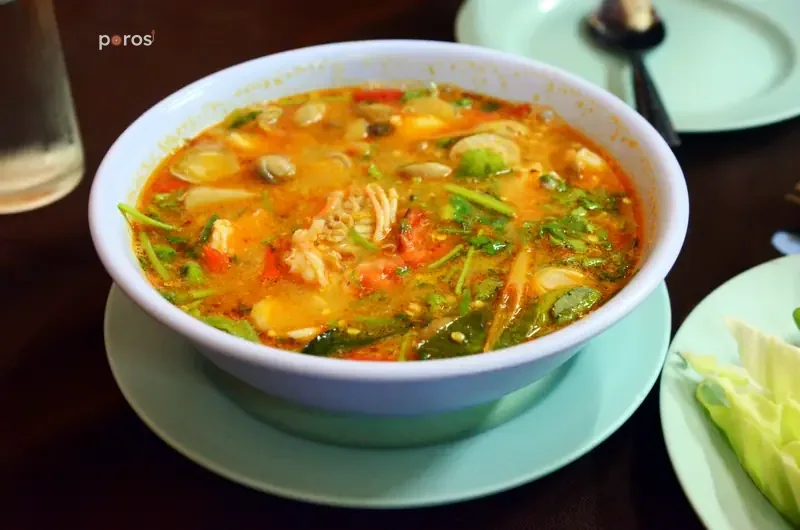
- shell-on prawns, heads on
- vegetable oil
- lemongrass stalks
- galangal
- makrut lime leaves
- Thai bird's eye chillies
- red onion
- tomatoes
- fish sauce
- limes
Recipe
How to store paddy straw mushrooms
Grow it, buy it
Paddy straw mushroom price list
| Product | Poros Mantar | Market |
|---|---|---|
| Fresh paddy straw mushrooms | Made to order · ask | — |
| Dried paddy straw mushrooms | Made to order · ask | — |
We make our paddy straw mushrooms products in small batches, to order; send a request and we email you the price and delivery date. The market column shows prices seen on other sellers' pages on the date given; they are not our prices and may have changed.
Frequently asked questions
Are paddy straw mushrooms poisonous?
Paddy straw mushrooms are not listed as poisonous in our sources. The paddy straw mushroom is safe as a cultivated and canned product. Never pick an egg-stage mushroom with a sac in the wild as a straw mushroom: the eggs of the death cap and destroying angel look the same outside, and fatal poisonings from this mix-up have been reported among people who emigrated from Asia. The real risk is confusing them with death cap (Amanita phalloides) and destroying angel (Amanita virosa), so never eat wild ones without certain identification. If poisoning is suspected, call 112 at once (Turkish poison centre: 114) and keep any leftover mushroom.
Are paddy straw mushrooms edible?
Paddy straw mushrooms are listed as edible in our sources and are cultivated; even so, never eat wild ones without certain identification: they have poisonous look-alikes, such as death cap (Amanita phalloides) and destroying angel (Amanita virosa). Do not eat them without an expert's approval. The paddy straw mushroom is safe as a cultivated and canned product. Never pick an egg-stage mushroom with a sac in the wild as a straw mushroom: the eggs of the death cap and destroying angel look the same outside, and fatal poisonings from this mix-up have been reported among people who emigrated from Asia.
What is the paddy straw mushroom?
It is a mushroom grown on rice straw in Southeast and East Asia, mostly harvested in its egg stage before the sac opens; canned straw mushrooms are sold worldwide.
Why is it confused with the death cap?
Its egg stage with the sac looks very like the egg of the death cap and destroying angel. Fatal poisonings from this mix-up have been reported among people who emigrated from Asia to new countries.
Does it grow wild in Turkey?
There is no Turkish record; it is a tropical species. An egg-stage mushroom with a sac found in Turkey could be a deadly Amanita.
How is it cultivated?
It is grown on wet rice straw or cotton waste at 30–35 °C; it grows very fast and crops within a few weeks.
What colour is its spore print?
Pink to pinkish brown. Deadly Amanitas have white spore prints, but this check only works on mature mushrooms.
Is it related to the stubble rosegill?
Yes. The stubble rosegill (Volvopluteus gloiocephalus) is a relative with a basal sac and pink gills; it grows wild in Turkey.
When is paddy straw mushroom season in Turkey?
In our calendar, paddy straw mushroom is recorded all year. It is grown all year in hot, humid tropical climates; canned and dried forms are available all year.
Where do paddy straw mushrooms grow?
It grows on plant waste such as rice straw, banana leaves and cotton waste in hot, humid regions; in cultivation it is grown at 30–35 °C.
Where are paddy straw mushrooms found in Turkey?
No record from Turkey: GBIF and iNaturalist hold no Turkish records. Worldwide it ranges through the tropics of Southeast Asia, China, India, Africa and the Americas; in Turkey it is sold canned in Asian grocery shops.
What can the paddy straw mushroom be confused with?
The paddy straw mushroom can be confused with death cap (Amanita phalloides, deadly), destroying angel (Amanita virosa, deadly) and stubble rosegill (Volvopluteus gloiocephalus, inedible). Look-alikes are compared on this page.
What is the paddy straw mushroom called in Turkish?
In Turkish, the paddy straw mushroom (Volvariella volvacea) is called Saman mantarı.
Related species
-
Stubble rosegillVolvopluteus gloiocephalusInedible
-
 Almond mushroomAgaricus subrufescensEdible species
-
 Anatolian matsutakeTricholoma anatolicumEdible species
-
 Aniseed funnelClitocybe odoraEdible species
-
 Bay boleteImleria badiaEdible species
-
 Beefsteak fungusFistulina hepaticaEdible species
-
 Black morelMorchella elataEdible species
-
 Black trumpetCraterellus cornucopioidesEdible species
Sources
- Wikipedia (EN): Volvariella volvacea en.wikipedia.org
- iNaturalist: Volvariella volvacea (Türkçe ad ve Türkiye gözlemleri) inaturalist.org
- GBIF: Türkiye kayıtları gbif.org
Photo credits (11)
- Volvariella volvacea · iNaturalist #49083949 · Joel Trejos · CC BY-SA 4.0
- Volvariella volvacea · iNaturalist #1049331 · Jerry Cooper · CC BY 4.0
- Volvariella volvacea · iNaturalist #241213757 · Turner Brockman · CC BY-SA 4.0
- Volvariella volvacea · iNaturalist #145464608 · Ong Jyh Seng · CC BY-SA 4.0
- File:HK food 草菇 Volvariella volvacea Straw Mushroom May-2012.JPG · Cathiniamoa · CC BY-SA 3.0
- Volvariella volvacea · iNaturalist #351068390 · Tara Severns · CC BY 4.0
- Volvariella volvacea · iNaturalist #314674638 · asivitskis · CC0
- Volvariella volvacea · iNaturalist #245724450 · Bertis Y. Franco Pérez · CC BY 4.0
- Volvariella volvacea · iNaturalist #215265326 · Liubov Ilminska · CC0
- Volvariella volvacea · iNaturalist #257062440 · Ian Cowie · CC BY 4.0
- Volvariella volvacea · iNaturalist #150235437 · Kurt Miller · CC BY-SA 4.0
