
Aniseed funnel (aniseed toadstool, blue-green funnel)
Clitocybe odora · Tricholomataceae

The aniseed funnel (Clitocybe odora) is a medium-sized funnel mushroom with a blue-green to grey-green cap and a strong smell of aniseed. Its colour and smell make it easy to recognise, and it is used in small amounts like a spice. But faded or whitish specimens can be confused with poisonous white funnels; do not eat one without the smell.
Also called: aniseed toadstool, blue-green funnel, anise mushroom Turkish: Anason cincile Synonyms: Collybia odora
Last updated: Prepared by the Poros Mantar editorial team3 sources checkedReport a correction
Aniseed funnel photos
-
Cap© Dominicus Johannes Bergsma · CC BY-SA 4.0
-

© Dominicus Johannes Bergsma · CC BY-SA 4.0
-

© Dominicus Johannes Bergsma · CC BY-SA 4.0
-
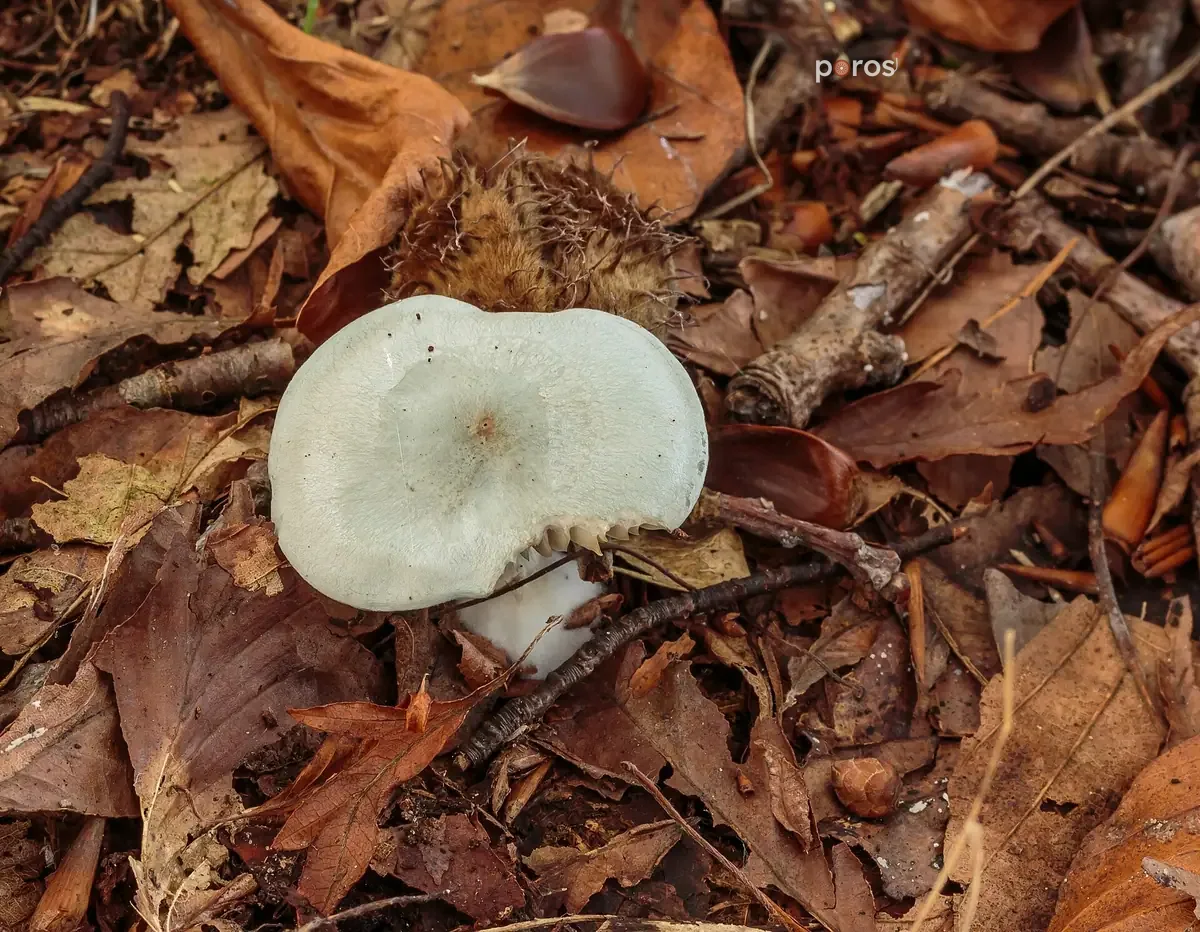
In habitat© Dominicus Johannes Bergsma · CC BY-SA 4.0
-

© Strobilomyces · CC BY-SA 3.0
-

Gills© Jean-Pol GRANDMONT · CC BY 3.0
-

Gills© Jose Angel Urquia Goitia · CC BY-SA 4.0
-

Gills© Jose Angel Urquia Goitia · CC BY-SA 4.0
-

Gills© Jerzy Opioła · CC BY-SA 3.0
-
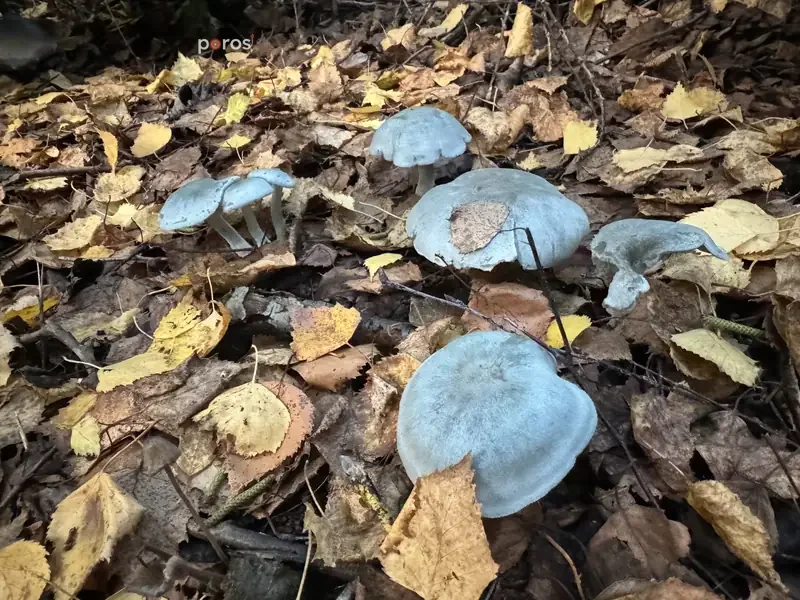
In habitat© jjfeiler · CC BY 4.0
-

Cap© Jean-Pol GRANDMONT · CC BY 3.0


These are licensed records of this species; photos alone are not enough to identify a mushroom.
Is the aniseed funnel poisonous?
The aniseed funnel is not listed as poisonous in our sources. The real risk is confusing it with fool's funnel (Clitocybe rivulosa) and death cap (Amanita phalloides), so never eat a wild one without certain identification. If poisoning is suspected, call 112 at once (Turkish poison centre: 114) and keep any leftover mushroom.
Is the aniseed funnel edible?
The aniseed funnel is listed as edible in our sources; even so, never eat a wild one without certain identification: it has poisonous look-alikes, such as fool's funnel (Clitocybe rivulosa) and death cap (Amanita phalloides). Do not eat it without an expert's approval. The aniseed funnel is edible, but its smell is so strong that it is used sparingly, like a spice. Never eat a faded or whitish funnel mushroom without a clear aniseed smell: poisonous white funnels (Clitocybe rivulosa) cause muscarine poisoning. Do not eat a wild one an expert has not checked.
How to recognise it
Appearance of aniseed funnel
No ring or volva Spore print: Pale pinkish cream A very strong smell of aniseed that persists when dried.
Where does aniseed funnel grow?
It grows singly or in groups in leaf litter in broadleaf and conifer woods, especially under beech and oak.
Where is aniseed funnel found in Turkey?
Our map data holds one Turkish GBIF record from Yalova and 7 research-grade iNaturalist observations. Worldwide it ranges through the temperate forests of Europe, North America and Asia. iNaturalist now lists it as Collybia odora.
Which months
- Jan0
- Feb0
- Mar0
- Apr0
- May0
- Jun0
- Jul0
- Aug0
- Sep1
- Oct3
- Nov1
- Dec1
5 provinces, 6 observations (GBIF, iNaturalist); months from observation dates. Record density also reflects where observers work.
Latest aniseed funnel observations
-
 Illustrative
Bursa31 Oct 2026 · iNaturalist
-
 Illustrative
Artvin23 Sep 2026 · iNaturalist
-
 Illustrative
Bolu18 Oct 2025 · iNaturalist
-
 Illustrative
Bolu12 Oct 2025 · iNaturalist
-
 Illustrative
Balıkesir10 Dec 2022 · iNaturalist
-
 Illustrative
Kocaeli21 Nov 2009 · Mushroom Observer
- See on the map
On "illustrative" cards the image is a photo of the species; the observation photo cannot be shown here because of its licence, but can be seen at the source.
Look-alikes
What could it be confused with?
Aniseed funnel can be mistaken for the species below. Each comparison shows Aniseed funnel on the left, the look-alike on the right, and how to tell them apart.
Take care when foraging: Poisonous look-alikes of Aniseed funnel come first. If in doubt, leave it.

Fool's funnel Clitocybe rivulosa
How to tell Its cap is frosty white to pinkish and it does not smell of aniseed; it contains muscarine and is poisonous.

Other look-alikes (1)
 Inedible
not Aniseed funnel
Clouded funnel Clitocybe nebularis
It is larger and grey-brown with a sharp, unpleasant smell; it upsets the stomach in some people.
Aniseed funnel and its look-alikes compared
| Species | Status | Underside | Spore print | Season |
|---|---|---|---|---|
| Aniseed funnelClitocybe odora | Edible species | Whitish to pale greenish, attached or slightly decurrent | Pale pinkish cream | Aug–Nov |
| Fool’s funnelClitocybe rivulosa | Deadly poisonous | Crowded, whitish-cream gills running slightly down the stem | White | Aug–Nov |
| Death capAmanita phalloides | Deadly poisonous | Gills white and free from the stem | White | Jul–Nov |
| Clouded funnelClitocybe nebularis | Inedible | Gills crowded, cream to pale yellowish, slightly decurrent and easily scraped off with a finger | Cream to pale yellow | Oct–Jan |
The table is compiled from each species page. The status column is a guide only; do not eat a wild mushroom unless an expert has seen it in person. Compare look-alikes side by side
How to cook and eat aniseed funnel
Safety first. The aniseed funnel is edible, but its smell is so strong that it is used sparingly, like a spice. Never eat a faded or whitish funnel mushroom without a clear aniseed smell: poisonous white funnels (Clitocybe rivulosa) cause muscarine poisoning. Do not eat a wild one an expert has not checked. If poisoning is suspected, call poison control and keep any leftover mushroom.
How to store aniseed funnel
Grow it, buy it
Aniseed funnel price list
| Product | Poros Mantar | Market |
|---|---|---|
| Fresh aniseed funnel | Made to order · ask | — |
| Dried aniseed funnel | Made to order · ask | — |
We make our aniseed funnel products in small batches, to order; send a request and we email you the price and delivery date. The market column shows prices seen on other sellers' pages on the date given; they are not our prices and may have changed.
Frequently asked questions
Is the aniseed funnel poisonous?
The aniseed funnel is not listed as poisonous in our sources. The real risk is confusing it with fool's funnel (Clitocybe rivulosa) and death cap (Amanita phalloides), so never eat a wild one without certain identification. If poisoning is suspected, call 112 at once (Turkish poison centre: 114) and keep any leftover mushroom.
Is the aniseed funnel edible?
The aniseed funnel is listed as edible in our sources; even so, never eat a wild one without certain identification: it has poisonous look-alikes, such as fool's funnel (Clitocybe rivulosa) and death cap (Amanita phalloides). Do not eat it without an expert's approval. The aniseed funnel is edible, but its smell is so strong that it is used sparingly, like a spice. Never eat a faded or whitish funnel mushroom without a clear aniseed smell: poisonous white funnels (Clitocybe rivulosa) cause muscarine poisoning. Do not eat a wild one an expert has not checked.
Why does it smell of aniseed?
Its flesh contains aromatic compounds similar to those that give aniseed its smell; the scent persists when dried and is the species' most reliable sign.
Can a green funnel without the smell be eaten?
No. Without the aniseed smell, do not eat it; faded specimens can be confused with poisonous white funnels.
Can it be confused with the death cap?
Both can have greenish caps. The death cap has a ring on the stem and a sac (volva) at the base and does not smell of aniseed; the aniseed funnel has neither ring nor volva.
Where has it been recorded in Turkey?
GBIF holds one record from Yalova and iNaturalist has 7 research-grade observations.
When does it fruit?
From late summer to late autumn, in the leaf litter of beech and oak woods.
How is it used in the kitchen?
In small amounts, dried and powdered or mixed with other mushrooms, to give an aniseed note to soups, sauces and baking.
When is aniseed funnel season in Turkey?
In our calendar, aniseed funnel season runs Aug–Nov. It fruits from late summer to late autumn in leaf litter.
Where does aniseed funnel grow?
It grows singly or in groups in leaf litter in broadleaf and conifer woods, especially under beech and oak.
Where is aniseed funnel found in Turkey?
Our map data holds one Turkish GBIF record from Yalova and 7 research-grade iNaturalist observations. Worldwide it ranges through the temperate forests of Europe, North America and Asia. iNaturalist now lists it as Collybia odora.
What can aniseed funnel be confused with?
Aniseed funnel can be confused with Fool's funnel (Clitocybe rivulosa, deadly), death cap (Amanita phalloides, deadly) and clouded funnel (Clitocybe nebularis, inedible). Look-alikes are compared on this page.
What is aniseed funnel called in Turkish?
In Turkish, aniseed funnel (Clitocybe odora) is called Anason cincile.
Related species
-
 Anatolian matsutakeTricholoma anatolicumEdible species
-
 Field blewitLepista personataEdible species
-
 MatsutakeTricholoma matsutakeEdible species
-
 Trooping funnelInfundibulicybe geotropaEdible species
-
 Wood blewitLepista nudaEdible species
-
Fool’s funnelClitocybe rivulosaDeadly poisonous
-
 Grey knightTricholoma terreumInedible
-
 Tawny funnelParalepista flaccidaInedible
Sources
- Wikipedia (EN): Clitocybe odora en.wikipedia.org
- iNaturalist: Clitocybe odora (Türkçe ad ve Türkiye gözlemleri) inaturalist.org
- GBIF: Türkiye kayıtları gbif.org
Photo credits (11)
- File:Groene anijstrechterzwam (Clitocybe odora). Locatie, Hortus (Haren, Groningen) 03.JPG · Dominicus Johannes Bergsma · CC BY-SA 4.0
- File:Groene anijstrechterzwam (Clitocybe odora). Locatie, Hortus (Haren, Groningen) 01.JPG · Dominicus Johannes Bergsma · CC BY-SA 4.0
- File:Groene anijstrechterzwam (Clitocybe odora). Locatie, Hortus (Haren, Groningen) 02.JPG · Dominicus Johannes Bergsma · CC BY-SA 4.0
- File:Aangetaste groene anijstrechterzwam (Clitocybe odora). Locatie, Hortus (Haren, Groningen).jpg · Dominicus Johannes Bergsma · CC BY-SA 4.0
- File:Clitocybe odora 161112w.JPG · Strobilomyces · CC BY-SA 3.0
- File:Clitocybe odora JPG3.jpg · Jean-Pol GRANDMONT · CC BY 3.0
- File:Clitocybe odora 2.jpg · Jose Angel Urquia Goitia · CC BY-SA 4.0
- File:Clitocybe odora bat.jpg · Jose Angel Urquia Goitia · CC BY-SA 4.0
- File:Clitocybe odora G2.jpg · Jerzy Opioła · CC BY-SA 3.0
- Collybia odora · iNaturalist #188441010 · jjfeiler · CC BY 4.0
- File:Clitocybe odora JPG2.jpg · Jean-Pol GRANDMONT · CC BY 3.0


