

Look-alikes · comparison
Caesar's mushroom vs fly agaric: how to tell them apart
Caesar's mushroom (Amanita caesarea; Turkish: imparator mantarı or Sezar mantarı) has yellow gills and a yellow stem, while the fly agaric (Amanita muscaria; Turkish: sinek mantarı) has white ones. Caesar's cap is smooth and orange, with a white sac at the base; the poisonous fly agaric has a red, white-warted cap and a scaly bulb.
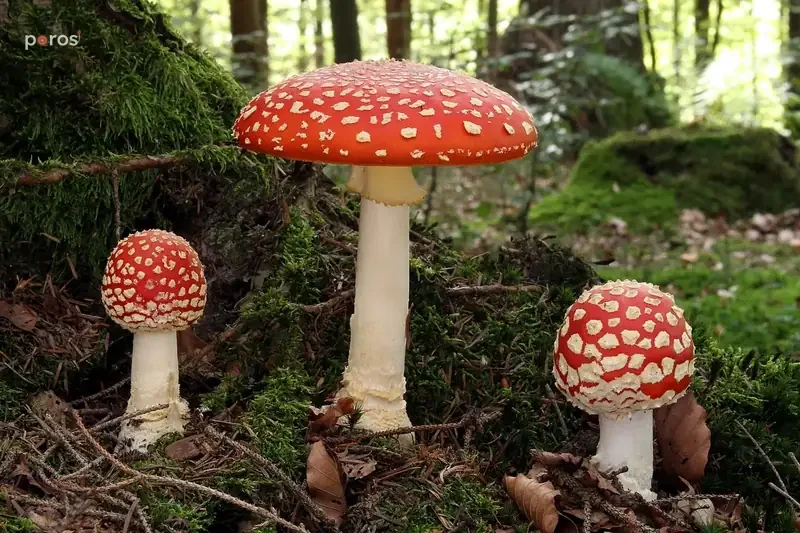
Caesar's mushroom vs fly agaric: the three signs that matter
-
Gills and stem: yellow or white?
Caesar's mushroom has crowded, yellowish gills and a yellow stem that is a little paler than the cap; even its loose, hanging ring is yellow and lined. In the fly agaric the gills, the stem and the drooping ring are all white. Turning the cap over is the quickest way to separate the two. Both leave a white spore print, so a spore print does not help here.
-
Cap surface: smooth or warted?
The cap of Caesar's mushroom runs from orange to red, is smooth and has a lined edge. The fly agaric's cap is bright red, sometimes orange-yellow, and dotted with white or yellowish pyramid-shaped warts. Rain can wash those warts away, though, and a fly agaric without its warts can be mistaken for Caesar's mushroom. That is why we never rely on the cap alone and always check gill and stem colour as well.
-
Stem base: white sac or scaly bulb?
Caesar's mushroom sits in a white, sac-like volva, and a young one is wholly enclosed in this white egg. The fly agaric has no sac: the bulb at the foot of its stem carries two to four rings of scaly remnants. As closed eggs, the death cap and the destroying angel sit in a white sac too, so eggs are not picked.
If yellow gills, a yellow stem and a white sac are not all present, we suggest leaving the mushroom where it is. Never trust a single sign; if in doubt, do not eat it and show it to an expert.
Side-by-side differences
This table is built from the sourced descriptions on the two species pages.
| Feature | Caesar's mushroom | Fly agaric |
|---|---|---|
| Cap | Up to 20 cm; orange to red, smooth with a striated margin; hemispherical then flat. | Bright red (sometimes orange-yellow) with white to yellowish pyramid warts; rain can wash the warts off. |
| Gills | Yellowish, crowded and free. | White gills, free from the stem. |
| Stem | Yellow (paler than the cap), 5–15 cm. | White, 5–20 cm tall, 1–2 cm thick, fibrous. |
| Ring | A loose, hanging, striate yellow ring. | Yes; white and hanging. |
| Volva (cup at the base) | Yes: a white, sack-like cup. When young the whole mushroom sits inside this white "egg". | Not a sack: the basal bulb carries 2–4 rings or ruffs of veil remnants. |
| Smell and taste | Not distinctive. | Not distinctive. |
| Spore print | White. | White. |
| Habitat | Caesar's mushroom grows in the oak and pine woods of southern Europe and North Africa, singly or in groups, in partnership with tree roots (ectomycorrhizal). | The fly agaric grows in temperate and boreal forests across the northern hemisphere, forming mycorrhizal partnerships with pine, oak, spruce, fir, birch and cedar. In warmer regions it grows at higher altitudes. |
| Season | Jul–Nov | Aug–Nov |
| Edibility | Edible species | Poisonous |
The same view of both species


This page is not a definitive identification. The signs we describe help separate these two species, but they do not prove what your mushroom is; other poisonous species can grow in the same place.
Frequently asked questions
Are Caesar's mushroom and the fly agaric the same?
No. Both belong to the genus Amanita, but they are separate species. Caesar's mushroom (Amanita caesarea) is listed in the sources as an edible species, while the fly agaric (Amanita muscaria) is poisonous. Caesar's mushroom has yellow gills, a yellow stem and a smooth cap without warts; the fly agaric has white gills and a white stem.
Caesar's mushroom or fly agaric: which one is poisonous?
The fly agaric is the poisonous one. It contains ibotenic acid and muscimol, which act on the central nervous system. Caesar's mushroom is listed in the sources as an edible species, but its genus also includes deadly species such as the death cap and the destroying angel, so it is not eaten without a certain identification.
How do you tell Caesar's mushroom from the fly agaric?
We look at three signs together: gill and stem colour (yellow in Caesar's mushroom, white in the fly agaric), the cap surface (smooth with a lined edge in Caesar's mushroom, white-warted in the fly agaric) and the stem base (a white sac in Caesar's mushroom, a bulb with rings of scales in the fly agaric).
What happens if you eat a fly agaric?
The fly agaric is poisonous and causes intoxication, hallucinations, muscle spasms and confusion. Symptoms usually begin within 30–90 minutes and peak within 3 hours. With modern treatment deaths are very rare. If poisoning is suspected, call for emergency help straight away and keep whatever is left of the mushroom.
Can a fly agaric that has lost its warts pass for Caesar's mushroom?
Yes. Rain can wash the white warts off a fly agaric, and its cap is sometimes orange-yellow, so from above it can resemble Caesar's mushroom. The difference is underneath: the fly agaric's gills and stem stay white, and instead of a sac its base is a bulb with rings of scales.
Do Caesar's mushroom and the fly agaric grow in the same places?
Both live in partnership with tree roots and occur in oak and pine woods; the fly agaric also grows with spruce, fir, birch and cedar. In Turkey, Caesar's mushroom is recorded mostly from Istanbul and Thrace, the fly agaric mostly from the Black Sea and Marmara forests, and both have records from Istanbul, Kırklareli and Bolu.
When do Caesar's mushroom and the fly agaric appear?
Caesar's mushroom fruits from early summer to mid-autumn in Europe, and Turkish records peak in September–October. The fly agaric appears from August to November in Europe, with Turkish records peaking in October. In early autumn, then, the two can be in the woods at the same time.
Can you tell Caesar's mushroom from the fly agaric in a photo?
A photo helps, but it is not a firm identification. A single shot may not show gill colour, the ring and the stem base together, and separating these two means checking the cap, gills, stem and base as a whole. We suggest showing any specimen you are unsure of to an expert.
Sources
The facts in this comparison come from the sourced data on our Caesar's mushroom and fly agaric pages:
More comparisons
 ≠Fly agaric vs panther capAmanita muscaria · Amanita pantherinaPoisonous
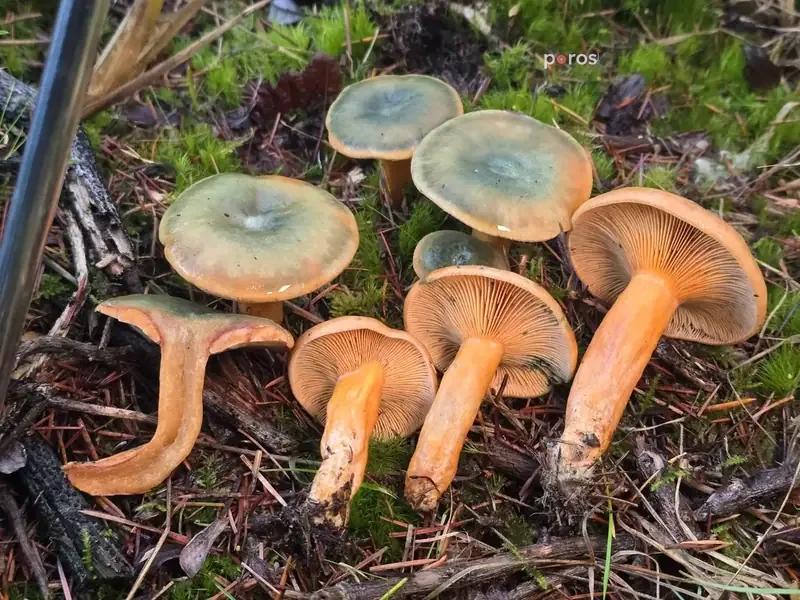
 ≠Saffron milk cap vs woolly milkcapLactarius deliciosus · Lactarius torminosusPoisonous
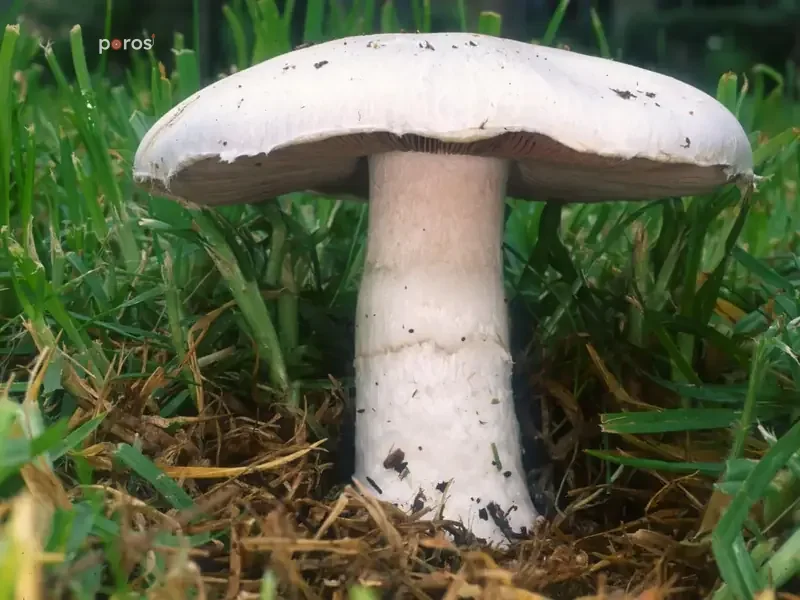
 ≠Field mushroom vs death capAgaricus campestris · Amanita phalloidesDeadly poisonous
 ≠Field mushroom vs yellow stainerAgaricus campestris · Agaricus xanthodermusPoisonous
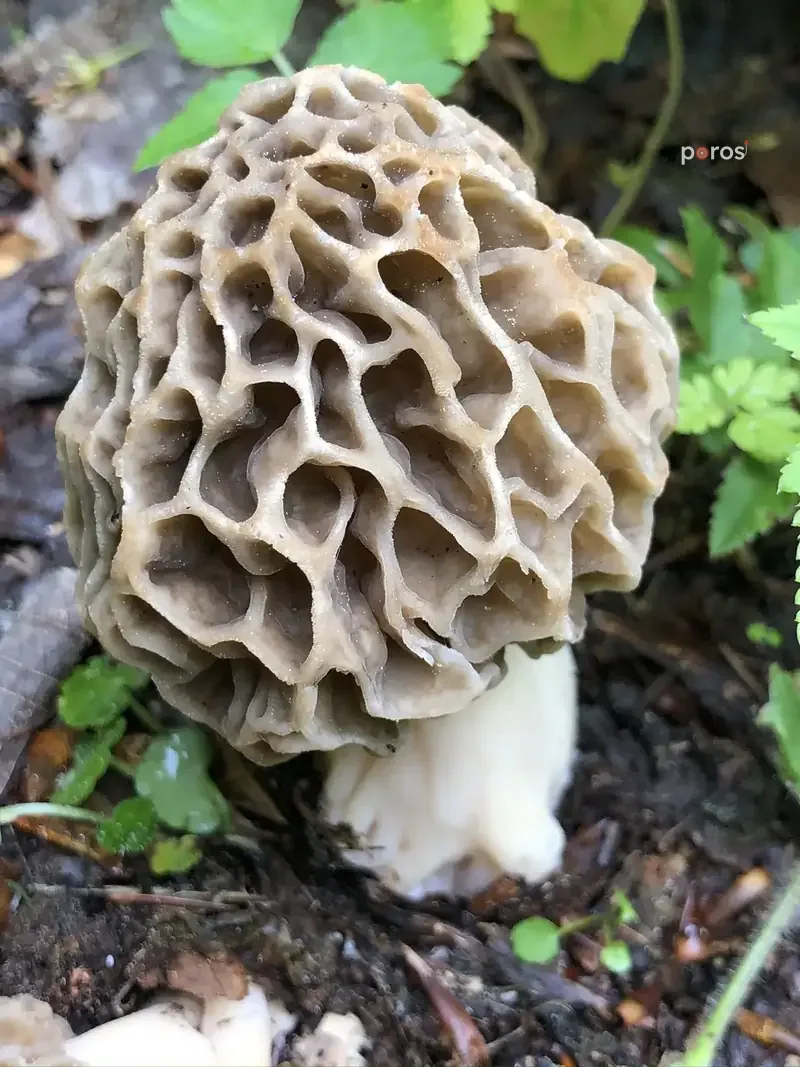
 ≠Morel vs false morelMorchella esculenta · Gyromitra esculentaDeadly poisonous
 ≠Parasol mushroom vs green-spored parasolMacrolepiota procera · Chlorophyllum molybditesPoisonous
Last updated: Prepared by the Poros Mantar editorial teamReport a correction