

Look-alikes · comparison
Fly agaric vs panther cap: how to tell them apart
The fly agaric (Turkish: sinek mantarı) and the panther cap (Turkish: panter mantarı) are two poisonous species of Amanita. The fly agaric has a bright red, sometimes orange-yellow cap; the panther cap is olive-brown to dark brown. Both have white warts, white gills and a white ring, but the remains at the stem base differ. Neither is eaten.

Fly agaric vs panther cap: the three signs that matter
-
Cap colour: red or brown?
The fly agaric (Amanita muscaria) has a bright red cap, sometimes orange-yellow, dotted with white or yellowish pyramid-shaped warts. The panther cap (Amanita pantherina) has a cap 5–12 cm across, olive-brown to dark brown, with small pure white warts and a short-lined margin. Rain can wash the warts off a fly agaric, and a faded one can look like a panther cap, so we never go by colour alone.
-
Stem base: scaly rings or rim?
At the base of the fly agaric's stem the bulb carries two to four rings of scaly remains; there is no sack-like volva. The panther cap's stem ends in a round bulb with a sharp-edged rim just above it, often compared to the top of a sock. Both species have a white stem and a white hanging ring, so we look for the difference at the very bottom of the stem.
-
Woodland and records in Turkey
Both species live in partnership with trees (mycorrhiza). The fly agaric grows with pine, oak, spruce, fir, birch and cedar; the panther cap mostly under oak, beech and pine. In Turkey the fly agaric is recorded mainly in the Black Sea (Rize, Artvin, Trabzon) and Marmara forests, while most panther cap records come from the forests of Istanbul.
Both are poisonous; knowing which one it is changes nothing. We leave any mushroom with white warts, a ring and a bulbous base, never rely on a single sign, and show doubtful finds to an expert.
Side-by-side differences
This table is built from the sourced descriptions on the two species pages.
| Feature | Fly agaric | Panther cap |
|---|---|---|
| Cap | Bright red (sometimes orange-yellow) with white to yellowish pyramid warts; rain can wash the warts off. | 5–12 cm, convex to flat; olive-brown to dark brown with small pure-white warts; margin finely striate. |
| Gills | White gills, free from the stem. | Free, crowded, white gills. |
| Stem | White, 5–20 cm tall, 1–2 cm thick, fibrous. | 6–12 cm, white; a rounded bulb at the base with a sharp, collar-like rim on top. |
| Ring | Yes; white and hanging. | White, thin, hanging ring without striations. |
| Volva (cup at the base) | Not a sack: the basal bulb carries 2–4 rings or ruffs of veil remnants. | Fused to the bulb, forming a sharp-edged rim. |
| Smell and taste | Not distinctive. | Not distinctive; the flesh does not change colour when cut. |
| Spore print | White. | White. |
| Habitat | The fly agaric grows in temperate and boreal forests across the northern hemisphere, forming mycorrhizal partnerships with pine, oak, spruce, fir, birch and cedar. In warmer regions it grows at higher altitudes. | The panther cap grows in broadleaf and conifer woods, especially under oak, beech and pine, forming a mycorrhizal partnership with the trees. |
| Season | Aug–Nov | Jul–Dec |
| Edibility | Poisonous | Poisonous |
The same view of both species


This page is not a definitive identification. The signs we describe help separate these two species, but they do not prove what your mushroom is; other poisonous species can grow in the same place.
Frequently asked questions
Are the fly agaric and the panther cap the same mushroom?
No. Both belong to the genus Amanita and both contain ibotenic acid and muscimol, but they are separate species. The fly agaric (Amanita muscaria) has a bright red or orange cap; the panther cap (Amanita pantherina) has a brown one. Both have white warts and white gills.
Fly agaric or panther cap: which one is poisonous?
Both are poisonous and neither is eaten. Both contain ibotenic acid and muscimol. The panther cap is reported to cause stronger poisonings than the fly agaric, with coma in severe cases. Deaths from the fly agaric are very rare with modern treatment, though poisoning can be severe in children. Cooking or boiling makes neither of them safe.
How do we tell a fly agaric from a panther cap?
We start with the cap: bright red or orange-yellow in the fly agaric, olive-brown to dark brown in the panther cap. Then we check the stem base: the fly agaric has two to four rings of scaly remains on its bulb, while the panther cap has a sharp-edged rim above a round bulb. Both are poisonous.
What happens if someone eats a panther cap?
Symptoms of panther cap poisoning usually begin between 30 minutes and 2 hours after eating: dizziness, confusion, muscle twitching and vomiting, with coma in severe cases. No cooking method destroys the toxin. If one may have been eaten, call emergency services at once (112 in Turkey; Poison Information Centre: 114), do not leave the person alone and take any leftover mushroom to hospital.
Can a rain-washed fly agaric look like a panther cap?
Yes, it can. Rain can wash the white warts off a fly agaric, and a specimen whose colour has faded may resemble the brown-capped panther cap. In that case we check the stem base: rings of scales on the fly agaric, a sharp-edged rim on the panther cap. Since both are poisonous the outcome is the same: neither is eaten.
Do the fly agaric and the panther cap grow in the same places?
Both live in partnership with trees, and both can appear under oak and pine. The fly agaric also grows with spruce, fir, birch and cedar, the panther cap with beech. In Turkey, fly agaric records come mainly from the Black Sea and Marmara forests, and panther cap records mostly from the forests of Istanbul, with others from Kırklareli, Giresun, Kastamonu and Sinop.
When do the fly agaric and the panther cap appear?
The fly agaric fruits from August to November in Europe; GBIF records in Turkey run from August to October and peak in October. The panther cap appears in summer and autumn, from summer through to December, and its Turkish records cluster in August and in October and November. The two seasons largely overlap.
Can we tell a fly agaric from a panther cap in a photo?
A photo helps, but it is not a firm identification. Cap colour usually gives a hint, yet rain can wash the warts off a fly agaric and fade its colour, and the sign at the stem base does not show in a picture of the cap. As both are poisonous, we never suggest eating any Amanita on the strength of a photo; doubtful finds go to an expert.
Sources
The facts in this comparison come from the sourced data on our fly agaric and panther cap pages:
More comparisons
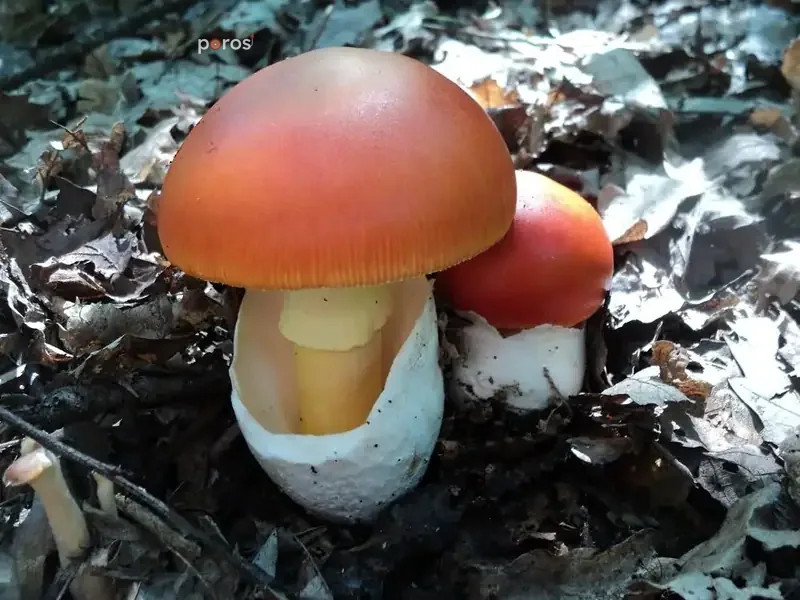
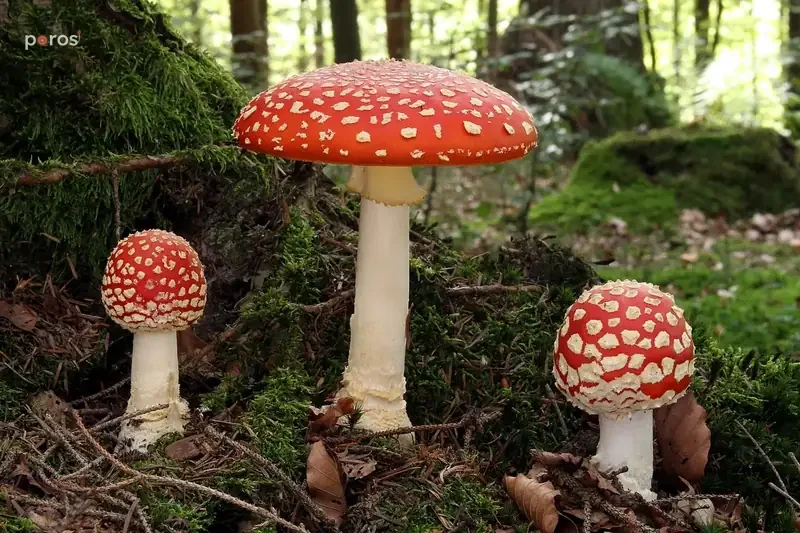 ≠Caesar's mushroom vs fly agaricAmanita caesarea · Amanita muscariaPoisonous
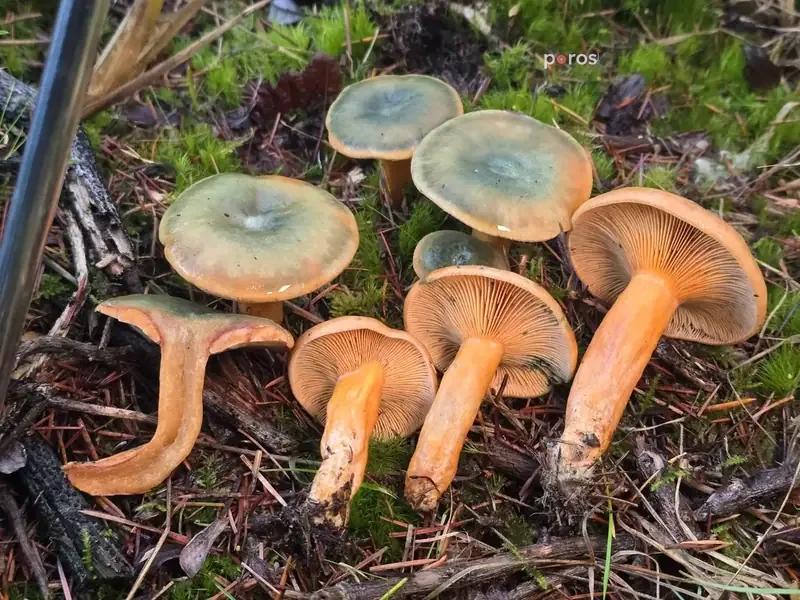
 ≠Saffron milk cap vs woolly milkcapLactarius deliciosus · Lactarius torminosusPoisonous
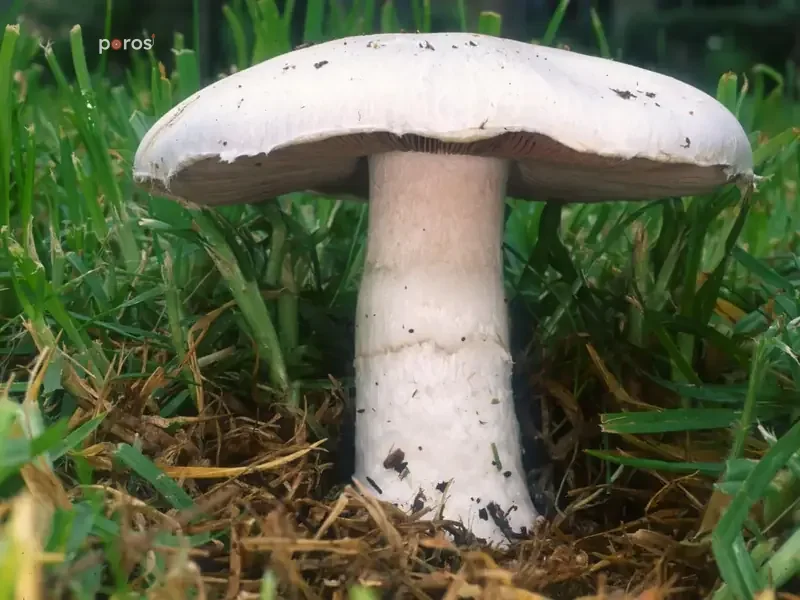
 ≠Field mushroom vs death capAgaricus campestris · Amanita phalloidesDeadly poisonous
 ≠Field mushroom vs yellow stainerAgaricus campestris · Agaricus xanthodermusPoisonous
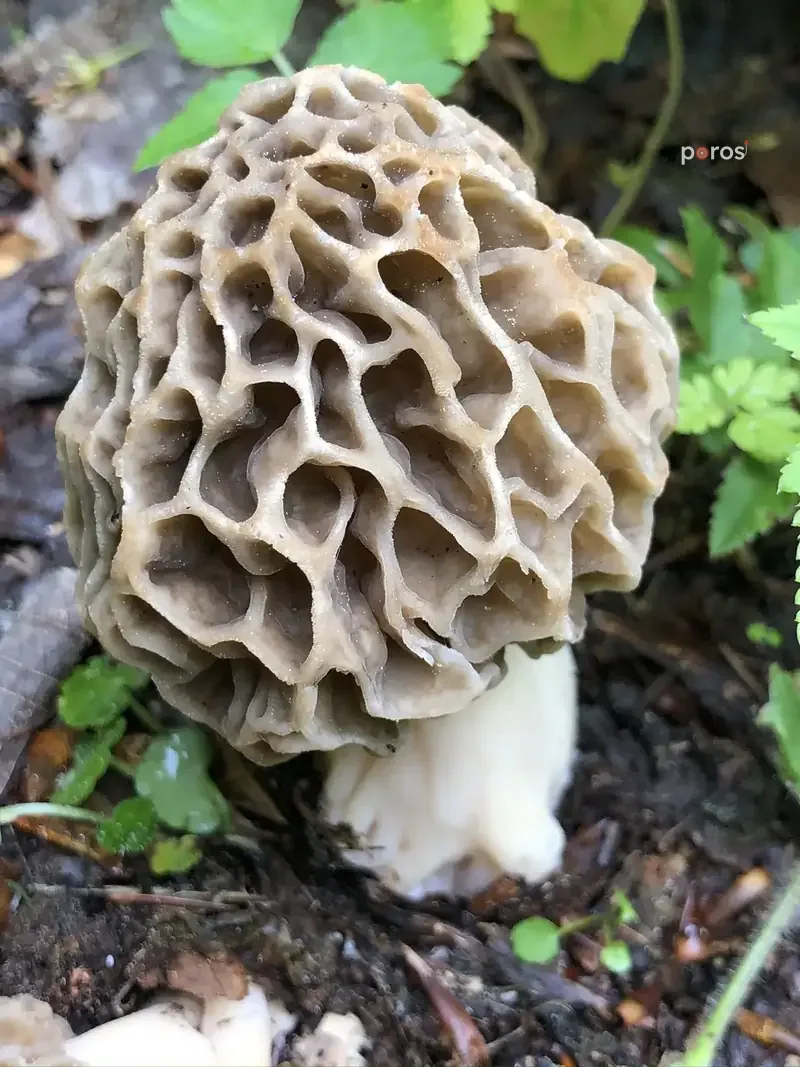
 ≠Morel vs false morelMorchella esculenta · Gyromitra esculentaDeadly poisonous
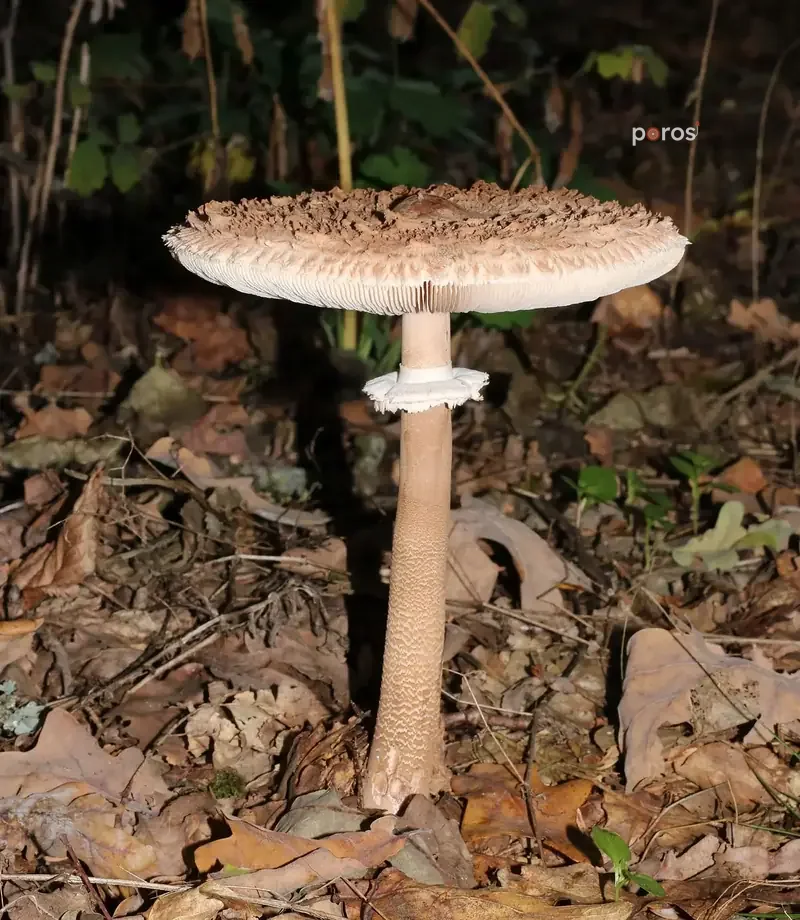
 ≠Parasol mushroom vs green-spored parasolMacrolepiota procera · Chlorophyllum molybditesPoisonous
Last updated: Prepared by the Poros Mantar editorial teamReport a correction