

Look-alikes · comparison
Chanterelle vs false chanterelle: how to tell them apart
The chanterelle (Turkish: horozmantarı) and the false chanterelle (Turkish: yalancı kazayağı mantarı) are separated by the underside of the cap: the chanterelle has thick, blunt ridges and no true gills, the false chanterelle thin, crowded, repeatedly forking true gills. The chanterelle is yellow and smells faintly of apricots; the false chanterelle is orange, lacks that smell and is considered inedible.

Chanterelle vs false chanterelle: the three signs that matter
-
Underside: blunt ridges or true gills?
Turn a chanterelle over and there are no true gills, only thick, blunt, forking ridges running down the stem. Under a false chanterelle we find long-decurrent, crowded, thin, repeatedly forking true gills in bright orange. Both fork, so forking alone tells us nothing; thickness does. Thick, blunt-edged ridges point to the chanterelle, thin crowded gills to the false chanterelle.
-
Colour and cap: yellow or orange?
A chanterelle cap is 3–15 cm across, yellow to deep yellow with a wavy edge, on a short, stout stem of the same colour. The false chanterelle is smaller: its cap is 2–8 cm, orange or orange-brown and finely velvety, depressed at the centre with an inrolled margin. Its stem is 2–5 cm, slender, orange-brown and often curved.
-
Smell and flesh: any apricot scent?
The chanterelle has a faint scent of apricots and firm, whitish, fibrous flesh. The false chanterelle has no distinctive smell and lacks the apricot note. Habitat differs too: chanterelles grow mostly in broadleaf woods with oak, chestnut or hazel, on a mossy, damp forest floor, while the false chanterelle lives on pine and other conifer litter, rotting wood and stumps.
We never rely on a single sign: an orange mushroom with thin, true gills under the cap stays out of the basket. If in doubt, do not eat it; we suggest showing any find to an expert first.
Side-by-side differences
This table is built from the sourced descriptions on the two species pages.
| Feature | Chanterelle | False chanterelle |
|---|---|---|
| Cap | 3–15 cm, convex then funnel-shaped; yellow to deep yellow with a wavy edge. May spot reddish where damaged. | 2–8 cm, convex to funnel-shaped, depressed at the centre; orange or orange-brown, finely velvety, with an inrolled margin. |
| Underside | No true gills: thick, blunt, forking ridges (false gills) running down the stem. | Long-decurrent, crowded, thin, repeatedly forking, bright orange true gills. |
| Stem | Short and stout, same colour as the cap; flesh whitish and fibrous. | 2–5 cm, slender, orange-brown, often curved. |
| Ring | None. | None. |
| Volva (cup at the base) | None. | None. |
| Smell and taste | Faint scent of apricots. | Not distinctive; it lacks the chanterelle's apricot smell. |
| Spore print | Pale yellow to creamy white. | White to cream. |
| Habitat | The chanterelle is ectomycorrhizal, growing mostly in broadleaf woods with oak, chestnut or hazel, and also under conifers. It likes a mossy, damp forest floor. | A saprotroph of pine and other conifer litter, rotting wood and stumps, on acid soil. |
| Season | Jun–Nov | Aug–Dec |
| Edibility | Edible species | Inedible |
The same view of both species


This page is not a definitive identification. The signs we describe help separate these two species, but they do not prove what your mushroom is; both have other look-alikes.
Frequently asked questions
Are the chanterelle and the false chanterelle the same?
No, they are two separate species. The chanterelle (Cantharellus cibarius) is listed as edible in our sources, while the false chanterelle (Hygrophoropsis aurantiaca) is considered inedible. As its name says, the false chanterelle is most often confused with the chanterelle; the key difference is the thin, true gills under its cap.
Chanterelle or false chanterelle: which one is poisonous?
The chanterelle is not listed as poisonous in our sources. For the false chanterelle, sources report no serious toxin, but nausea, vomiting and diarrhoea in some people, which is why it is considered inedible. We advise against eating it.
How do you tell a chanterelle from a false chanterelle?
We look under the cap first: the chanterelle has thick, blunt ridges, the false chanterelle thin, crowded true gills. Then we check colour and smell: the chanterelle is yellow with a faint apricot scent, while the false chanterelle is orange or orange-brown with no distinctive smell.
What happens if you eat a false chanterelle?
Sources report no serious toxin, but nausea, vomiting and diarrhoea in some people. The real danger is orange mushrooms with true gills ending up in a chanterelle basket; making the same mistake with the jack-o'-lantern has serious consequences. If poisoning is suspected, keep any leftover mushroom.
Do chanterelles and false chanterelles grow in the same places?
Mostly not, though they can overlap. The chanterelle is ectomycorrhizal, growing in woods with oak, chestnut or hazel and also under conifers. The false chanterelle is a saprotroph of pine and other conifer litter, rotting wood and acid soil. In conifer woodland we may therefore meet both.
What time of year do chanterelles and false chanterelles appear?
Chanterelles fruit from June to November. The false chanterelle's months run from August to December. From August to November the two can be up at the same time, so the season alone separates nothing; the underside of the cap has to be checked.
Where are chanterelles and false chanterelles found in Turkey?
The chanterelle has been recorded mainly in the forests of the Black Sea and Marmara regions. For the false chanterelle, our map data holds one GBIF record from Balıkesir and one iNaturalist observation; it is thought to be common in pine forests and may be under-recorded.
Can you tell a chanterelle from a false chanterelle in a photo?
A photo helps, but it is not a firm identification. The deciding detail in this pair is the underside of the cap; a picture taken from above shows neither ridges nor gills, and the apricot scent never comes through. Shots from below and from the side are useful, but we still suggest showing the mushroom to an expert.
Sources
The facts in this comparison come from the sourced data on our chanterelle and false chanterelle pages:
- Wikipedia (EN): Cantharellus cibarius
- Vikipedi (TR): Cantharellus cibarius
- First Nature: Cantharellus cibarius
- First Nature: Omphalotus olearius
- Wikipedia (EN): Hygrophoropsis aurantiaca
- First Nature: Hygrophoropsis aurantiaca, False Chanterelle
- iNaturalist: Hygrophoropsis aurantiaca (Türkçe ad)
- GBIF: Türkiye kayıtları
More comparisons
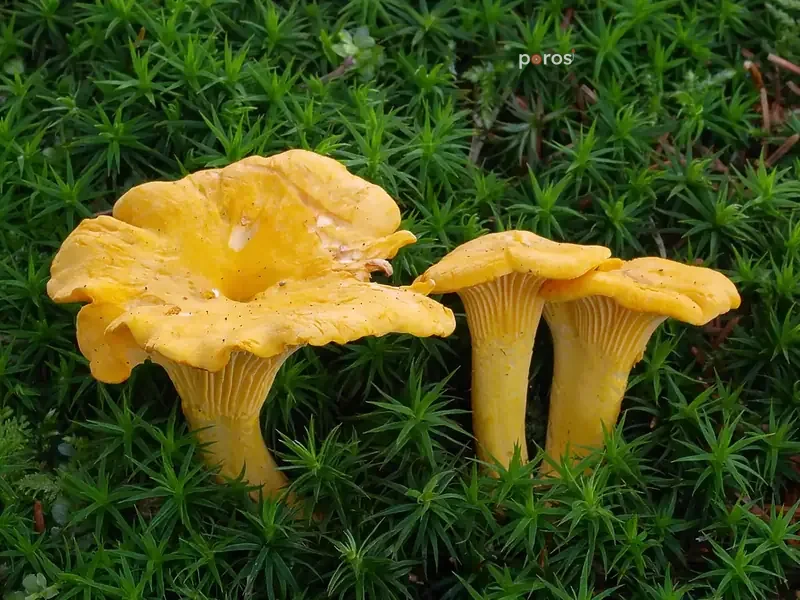
 ≠Chanterelle vs jack-o'-lantern mushroomCantharellus cibarius · Omphalotus oleariusPoisonous
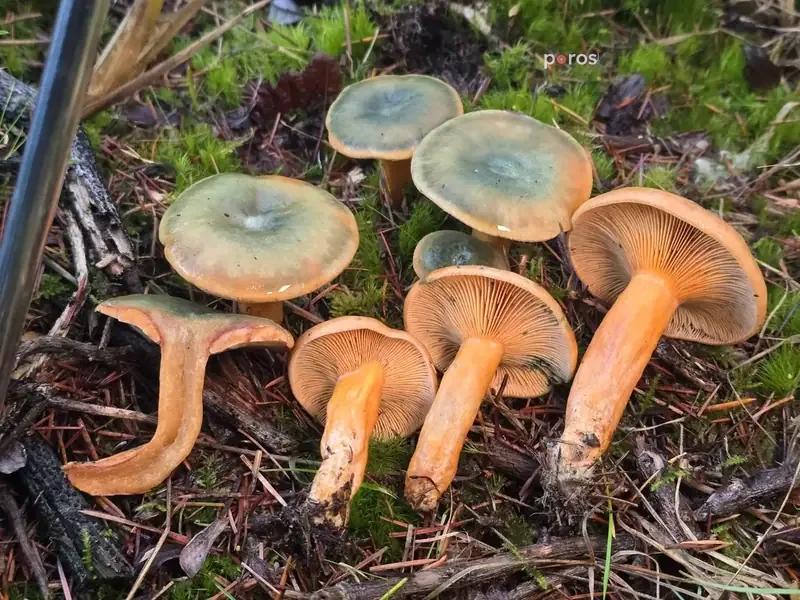
 ≠Saffron milk cap vs woolly milkcapLactarius deliciosus · Lactarius torminosusPoisonous
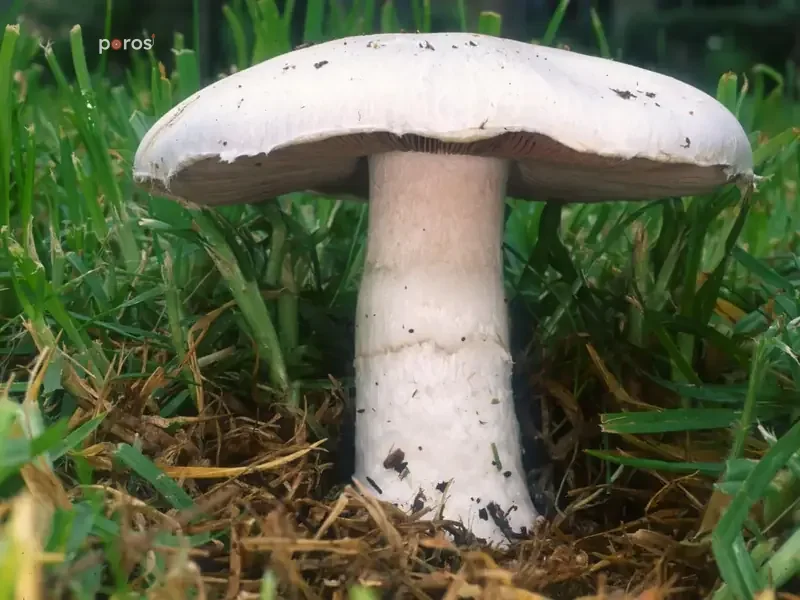
 ≠Field mushroom vs death capAgaricus campestris · Amanita phalloidesDeadly poisonous
 ≠Field mushroom vs yellow stainerAgaricus campestris · Agaricus xanthodermusPoisonous
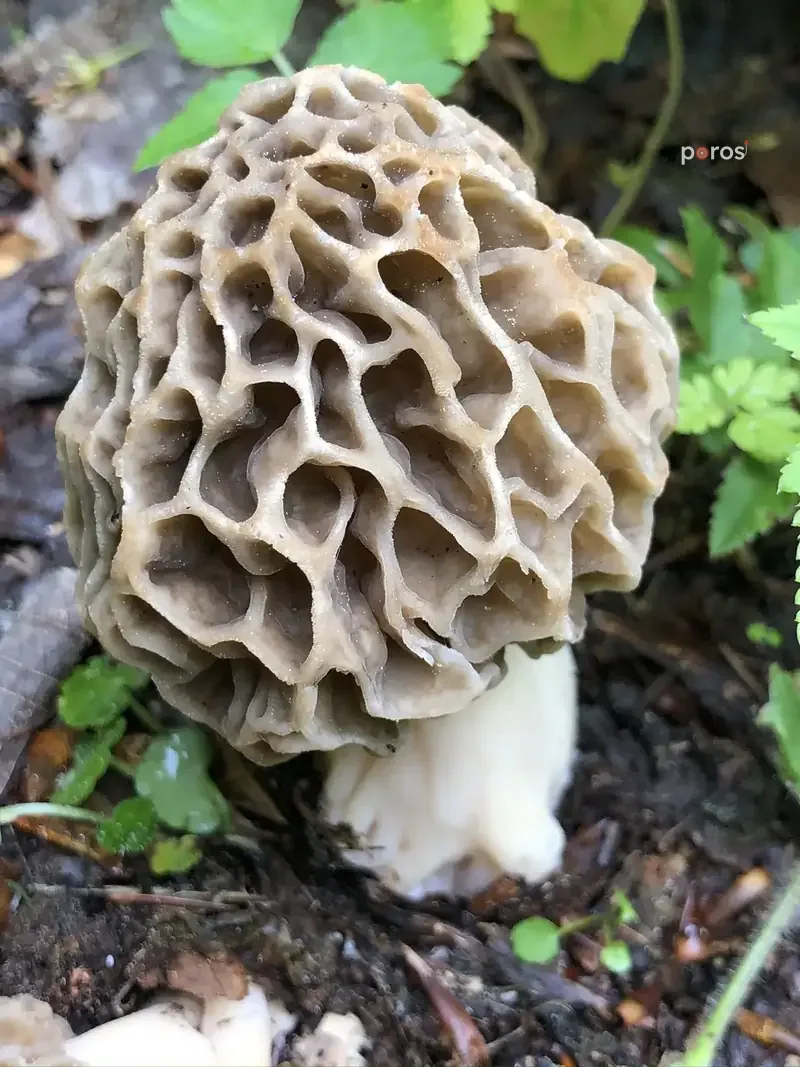
 ≠Morel vs false morelMorchella esculenta · Gyromitra esculentaDeadly poisonous
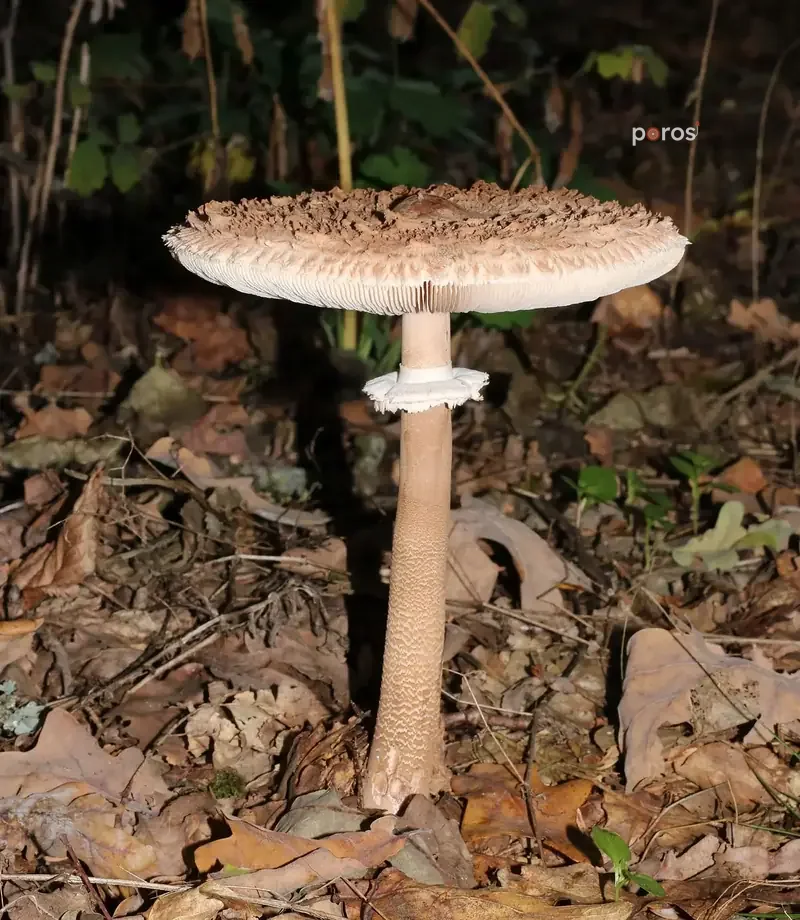
 ≠Parasol mushroom vs green-spored parasolMacrolepiota procera · Chlorophyllum molybditesPoisonous
Last updated: Prepared by the Poros Mantar editorial teamReport a correction