

Look-alikes · comparison
Chicken of the woods vs hen of the woods: how to tell them apart
Chicken of the woods (Laetiporus sulphureus; Turkish: kükürt mantarı) is sulphur yellow to bright orange, while hen of the woods (Grifola frondosa; Turkish: maitake) is grey-brown. Chicken of the woods forms broad, stalkless shelves on tree trunks; maitake is a cluster of small spoon-shaped caps on a branched stem at the foot of old oaks.

Chicken of the woods vs maitake: the three signs that matter
-
Colour: yellow-orange or grey-brown?
The shelves of chicken of the woods range from sulphur yellow to bright orange, with a sulphur-yellow underside; old specimens fade. Maitake has grey-brown caps and a cream-coloured shared stem. Neither has gills, both have pores underneath and both leave a white spore print, so the structure of the underside does not separate them and we go by colour.
-
Shape: broad shelves or small caps?
Chicken of the woods grows as fan-shaped, suede-textured shelves 5–60 cm across, stacked one above another; it has no stem and attaches directly to the trunk. Maitake is made up of many spoon- or fan-shaped caps 2–10 cm wide with wavy edges, all joined to a cream-coloured, much-branched common stem, and the whole cluster can reach 50 cm. The size of the individual pieces and the shared stem set the two apart easily.
-
Place and season: trunk or base?
Chicken of the woods grows in tiers on the trunks of dead or old broadleaf trees and appears from April to November in Europe. Maitake grows at the foot of old oaks, sometimes maple and other broadleaf trees; in Europe it appears from August to October and returns to the same spot for years. Chicken of the woods is widely recorded in Turkey, whereas maitake has no geo-referenced Turkish records.
If colour, shape and growing place do not all fit one of these two species, we suggest leaving the mushroom alone. Never trust a single sign; if in doubt, do not eat it and show it to an expert.
Side-by-side differences
This table is built from the sourced descriptions on the two species pages.
| Feature | Chicken of the woods | Maitake |
|---|---|---|
| Cap | Fan-shaped shelves 5–60 cm across in overlapping tiers; sulphur-yellow to bright orange with a suede texture. Pale with age. | Many grey-brown caps 2–10 cm across, spoon- or fan-shaped with wavy edges. |
| Pores | No gills; sulphur-yellow underside with small pores. | No gills; 1–3 pores per millimetre underneath, tubes rarely deeper than 3 mm. |
| Stem | No stem; attached straight to the trunk. | A cream, much-branched shared stem. |
| Ring | None. | None. |
| Volva (cup at the base) | None. | None. |
| Smell and taste | Fresh flesh is succulent with a strong mushroomy smell; slightly sour taste. | Pleasant and sweetish when young; older ones can taste acrid. |
| Spore print | White. | White. |
| Habitat | Chicken of the woods grows on dead or old hardwoods (oak, chestnut, beech, cherry, willow, poplar, black locust…), occasionally on conifers, and causes brown cubical rot in the heartwood. | Maitake grows at the base of old oaks, sometimes maples and other hardwoods. It comes up from a potato-sized underground sclerotium and returns to the same spot for years. |
| Season | May–Nov | Aug–Oct |
| Edibility | Edible species | Edible species |
The same view of both species


This page is not a definitive identification. The signs we describe help separate these two species, but they do not prove what your mushroom is; both have other look-alikes.
Frequently asked questions
Are chicken of the woods and hen of the woods the same?
No, they are separate species, and the mix-up is mostly down to the names. Chicken of the woods is Laetiporus sulphureus, also known as the sulphur polypore; hen of the woods is one of the English names of maitake, Grifola frondosa. The first forms yellow-orange shelves, the second a cluster of grey-brown caps.
How do you tell chicken of the woods from maitake?
We look at colour, shape and position. Chicken of the woods is sulphur yellow to orange and grows as broad, stalkless shelves on the trunk. Maitake is grey-brown, its spoon-shaped caps of 2–10 cm are joined to a branched common stem, and it forms a cluster at the foot of old oaks.
Do chicken of the woods and maitake differ in taste and use?
According to the sources, chicken of the woods is said to taste like chicken, and its fresh flesh is juicy and slightly sour. Young maitake smells pleasant and sweetish, and its flavour can sharpen with age; it has been used in Chinese and Japanese cooking for centuries. Both are listed as edible species and are cooked thoroughly, and allergic reactions have been reported for each.
Where do chicken of the woods and maitake grow?
Chicken of the woods grows on the trunks of broadleaf trees such as oak, chestnut, beech, cherry, willow and poplar, and rarely on conifers. Maitake grows at the foot of old oaks, sometimes maple and other broadleaf trees, arising from an underground tuber. Both can turn up on oak, but one sits on the trunk and the other at the base.
When do chicken of the woods and maitake appear?
Chicken of the woods fruits from April to November in Europe, and Turkish records peak in September–October. Maitake appears from August to October in Europe and is cultivated all year round. Early autumn is when the two species overlap in the wild.
Is maitake found in Turkey?
Our data holds no geo-referenced records of maitake from Turkey. Chicken of the woods, by contrast, is widely recorded there, most often around Istanbul and Ankara. Because maitake is cultivated all year round, it can be obtained as a grown product without searching for it in the wild.
Which dangerous lookalikes do chicken of the woods and maitake have?
The poisonous lookalikes of chicken of the woods are the jack-o'-lantern mushroom (Omphalotus olearius), which is orange but gilled and clustered, and the cinnamon bracket (Hapalopilus rutilans), which is smaller, cinnamon-coloured and spongy. Maitake's lookalike in Europe and Turkey is the giant polypore (Meripilus giganteus): its lobes are larger, its pores blacken when touched and it is not an edible species.
Can you tell chicken of the woods from maitake in a photo?
A photo helps, but it is not a firm identification. The colour and shape of these two usually come across clearly in a picture, yet old chicken of the woods fades and each species has other lookalikes. We suggest showing anything gathered from the wild to an expert before it is eaten.
Sources
The facts in this comparison come from the sourced data on our chicken of the woods and maitake pages:
- Wikipedia (EN): Laetiporus sulphureus
- Vikipedi (TR): Kükürt mantarı
- First Nature: Laetiporus sulphureus
- GBIF: Türkiye kayıtları
- Wikipedia (EN): Grifola frondosa
- First Nature: Grifola frondosa
- GBIF: Türkiye kayıtları
- He ve ark. (2017), International Journal of Biological Macromolecules: Grifola frondosa polisakkaritleri derlemesi
More comparisons
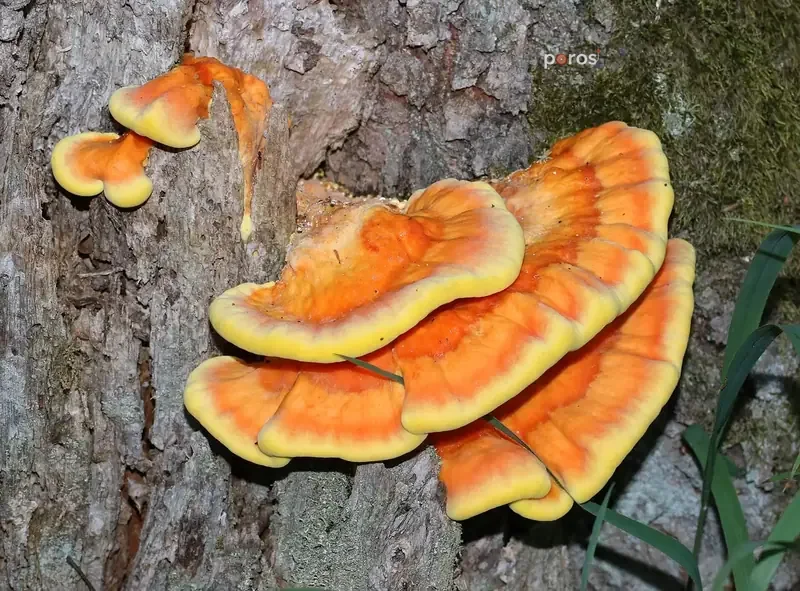
 ≠Chicken of the woods vs jack-o'-lantern mushroomLaetiporus sulphureus · Omphalotus oleariusPoisonous
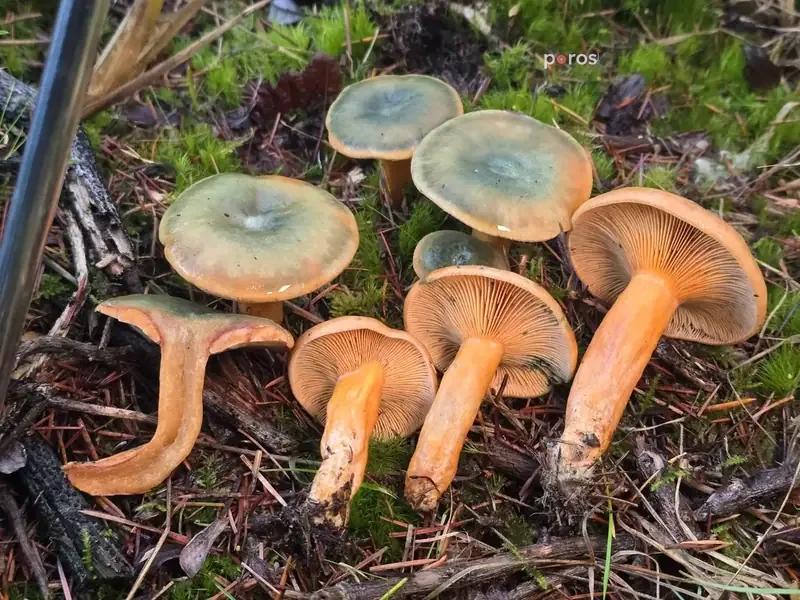
 ≠Saffron milk cap vs woolly milkcapLactarius deliciosus · Lactarius torminosusPoisonous
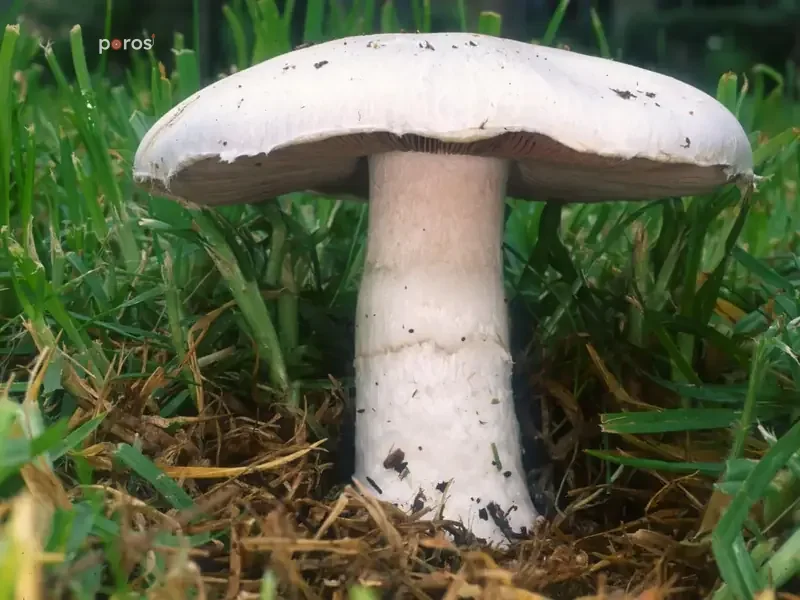
 ≠Field mushroom vs death capAgaricus campestris · Amanita phalloidesDeadly poisonous
 ≠Field mushroom vs yellow stainerAgaricus campestris · Agaricus xanthodermusPoisonous
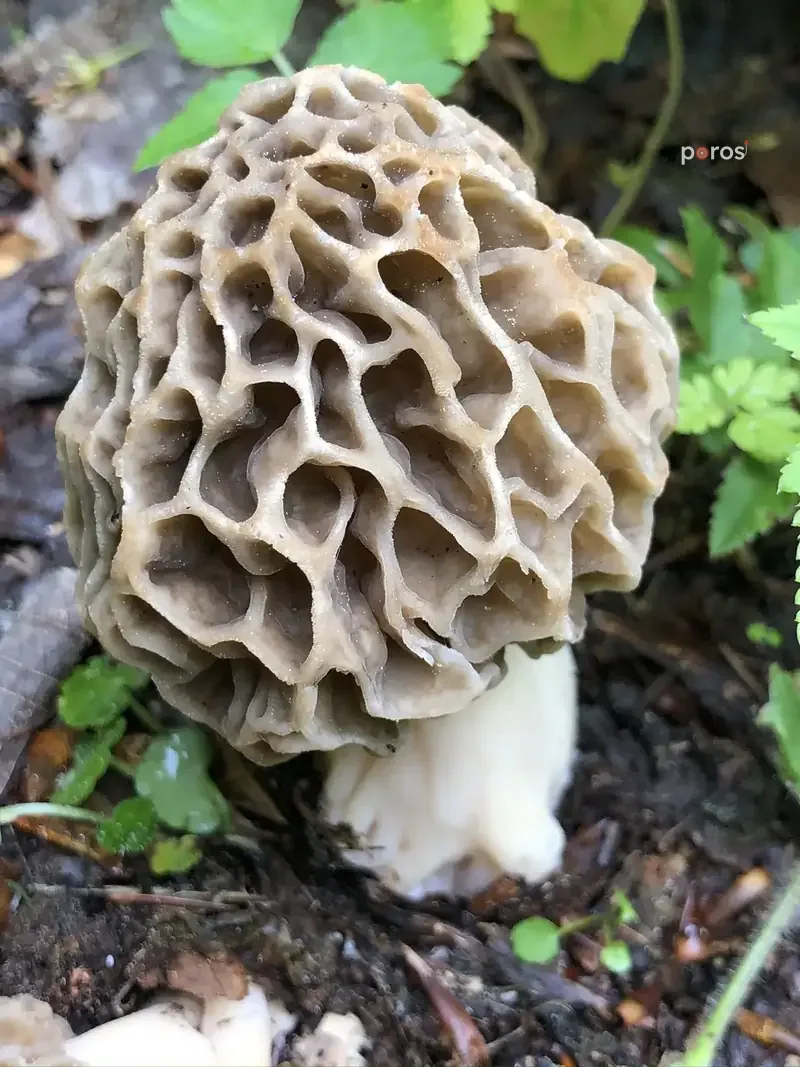
 ≠Morel vs false morelMorchella esculenta · Gyromitra esculentaDeadly poisonous
 ≠Parasol mushroom vs green-spored parasolMacrolepiota procera · Chlorophyllum molybditesPoisonous
Last updated: Prepared by the Poros Mantar editorial teamReport a correction