

Look-alikes · comparison
Chicken of the woods vs jack-o'-lantern: how to tell them apart
Chicken of the woods (Laetiporus sulphureus; Turkish: kükürt mantarı) and the jack-o'-lantern mushroom (Omphalotus olearius; Turkish: ağulu mantar) are both orange, but chicken of the woods has small pores and no gills, while the poisonous jack-o'-lantern has crowded true gills running down the stem. One forms stalkless shelves on the trunk; the other grows as clustered, stalked caps.

Chicken of the woods vs jack-o'-lantern mushroom: the three signs that matter
-
Underside: pores or gills?
Chicken of the woods has no gills: its underside is sulphur yellow and covered in small pores. The jack-o'-lantern has thin, crowded true gills that run down the stem and are the same orange as the cap. If we see gills beneath an orange mushroom growing on wood, we do not treat it as chicken of the woods.
-
Shape: stalkless shelf or stalked cap?
Chicken of the woods grows as fan-shaped shelves 5–60 cm across, stacked one above another; it has no stem, attaches directly to the trunk and has a suede-like surface. The jack-o'-lantern's cap is 5–12 cm wide, convex at first and then funnel-shaped, silky and shiny with a wavy edge. Below it is a firm orange stem 5–12 cm long that tapers towards the base, and the stems are often joined in a cluster.
-
Place and season: trunk or base?
Chicken of the woods grows in tiers on the trunks of broadleaf trees such as oak, chestnut and willow, and Turkish records peak in September–October. The jack-o'-lantern forms clusters on the stumps, roots and trunk bases of trees such as olive, oak and chestnut; it appears in autumn and early winter, with Turkish records running from October to January. Place and season are supporting signs; the underside settles it.
If an orange mushroom on wood shows gills or an obvious stem, we suggest leaving it alone. Never trust a single sign; if in doubt, do not pick it and show it to an expert.
Side-by-side differences
This table is built from the sourced descriptions on the two species pages.
| Feature | Chicken of the woods | Jack-o'-lantern mushroom |
|---|---|---|
| Cap | Fan-shaped shelves 5–60 cm across in overlapping tiers; sulphur-yellow to bright orange with a suede texture. Pale with age. | 5–12 cm, convex then funnel-shaped; bright orange to orange-brown, silky and shiny, with a wavy margin. |
| Underside | No gills; sulphur-yellow underside with small pores. | Crowded, thin, true gills running down the stem (decurrent), the same orange as the cap. |
| Stem | No stem; attached straight to the trunk. | 5–12 cm, tough and tapering towards the base; orange, often joined in clusters. |
| Ring | None. | Absent. |
| Volva (cup at the base) | None. | Absent. |
| Smell and taste | Fresh flesh is succulent with a strong mushroomy smell; slightly sour taste. | Not distinctive; the flesh is yellow-orange and fibrous. |
| Spore print | White. | Creamy white. |
| Habitat | Chicken of the woods grows on dead or old hardwoods (oak, chestnut, beech, cherry, willow, poplar, black locust…), occasionally on conifers, and causes brown cubical rot in the heartwood. | It grows in clusters on stumps, roots and trunk bases of broadleaf trees such as olive, oak and chestnut, and is common in Mediterranean climates. |
| Season | May–Nov | Oct–Jan |
| Edibility | Edible species | Poisonous |
The same view of both species


This page is not a definitive identification. The signs we describe help separate these two species, but they do not prove what your mushroom is; other poisonous species can grow in the same place.
Frequently asked questions
Are chicken of the woods and the jack-o'-lantern the same?
No. Chicken of the woods (Laetiporus sulphureus) is a pored bracket fungus and is listed in the sources as an edible species. The jack-o'-lantern mushroom (Omphalotus olearius), also called the olive-tree mushroom, is a gilled, stalked and poisonous species. They get confused because both are orange and both grow on trees.
Chicken of the woods or jack-o'-lantern: which is poisonous?
The jack-o'-lantern is the poisonous one; it contains illudin S, and cooking does not destroy it. Chicken of the woods is not listed as a poisonous species, but allergic reactions or stomach upsets have been reported in many people. Only young, fresh parts are used, cooked thoroughly and tried in a small amount first.
How do you tell chicken of the woods from a jack-o'-lantern?
We check the underside first: chicken of the woods has sulphur-yellow pores, while the jack-o'-lantern has orange gills running down the stem. Then we look at the shape: chicken of the woods clings to the trunk as stalkless shelves, whereas the jack-o'-lantern grows as stalked caps clustered at the foot of the tree.
What happens if you eat a jack-o'-lantern mushroom?
The jack-o'-lantern is poisonous. Symptoms usually start within half an hour to a few hours: severe vomiting, diarrhoea and cramps, which can last for several days. Its toxin is illudin S, and cooking does not remove it. If poisoning is suspected, call for emergency help straight away and keep whatever is left of the mushroom.
Do chicken of the woods and the jack-o'-lantern grow in the same places?
Both can grow on broadleaf trees such as oak and chestnut. Chicken of the woods forms tiers of shelves on the trunk; the jack-o'-lantern clusters on stumps, roots and trunk bases and is common in Mediterranean climates. In Turkey both species have records from Istanbul, Kırklareli and İzmir.
When do chicken of the woods and the jack-o'-lantern appear?
Chicken of the woods fruits from April to November in Europe, and Turkish records peak in September–October. The jack-o'-lantern appears in autumn and early winter, with Turkish records running from October to January. In autumn, especially October and November, the two can be found at the same time.
Does the jack-o'-lantern mushroom glow in the dark?
The jack-o'-lantern can glow faintly in the dark; nothing of the kind is reported for chicken of the woods. Even so, a glow is not a sign to rely on in the field. We separate the two by gills versus pores on the underside and by whether the mushroom is stalked or shelf-shaped.
Can you tell chicken of the woods from a jack-o'-lantern in a photo?
A photo helps, but it is not a firm identification. Shot from above, both look like an orange cluster, and the underside and stem that separate them are often out of view. Pictures showing the underside and the point of attachment are useful, but a specimen you are unsure of should still go to an expert.
Sources
The facts in this comparison come from the sourced data on our chicken of the woods and jack-o'-lantern mushroom pages:
More comparisons
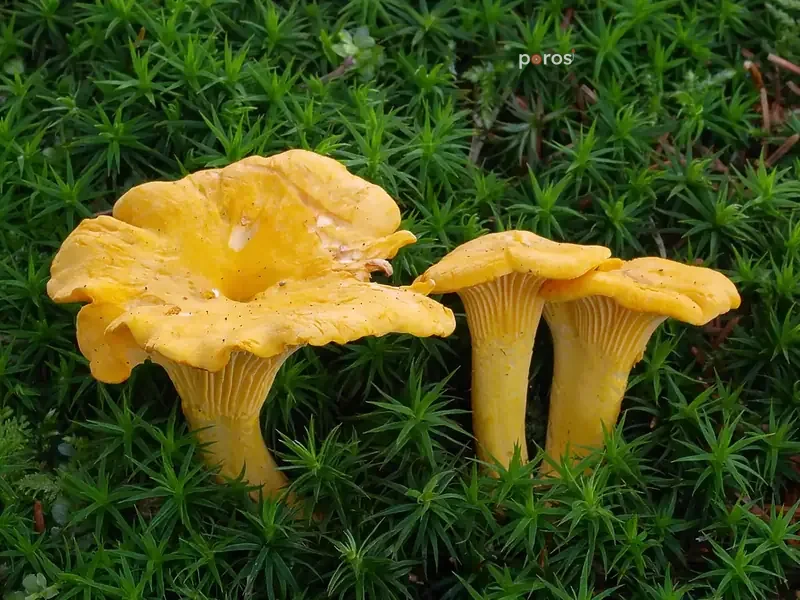 ≠Chanterelle vs jack-o'-lantern mushroomCantharellus cibarius · Omphalotus oleariusPoisonous
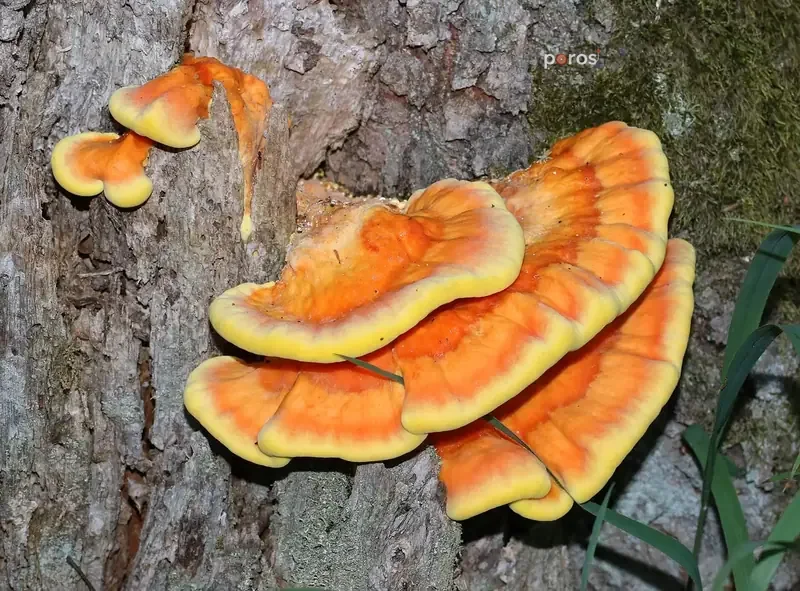
 ≠Chicken of the woods vs maitakeLaetiporus sulphureus · Grifola frondosaEdible species
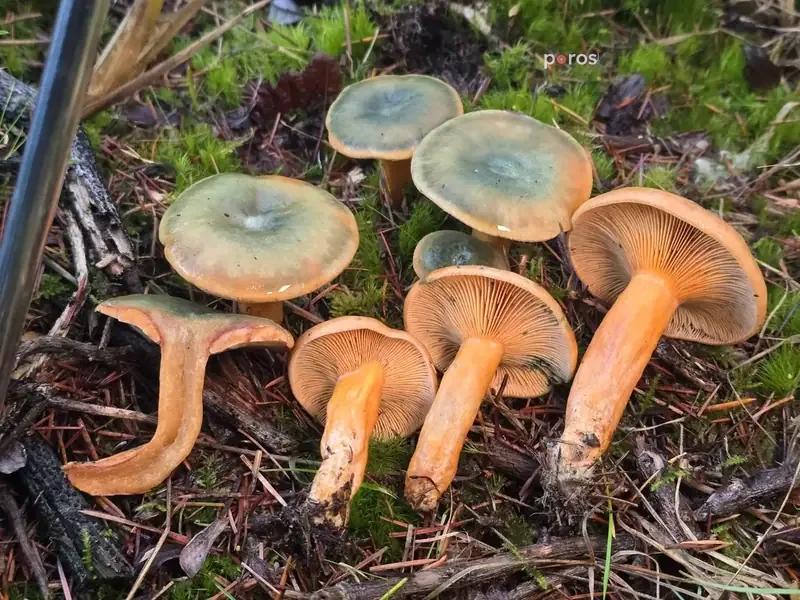
 ≠Saffron milk cap vs woolly milkcapLactarius deliciosus · Lactarius torminosusPoisonous
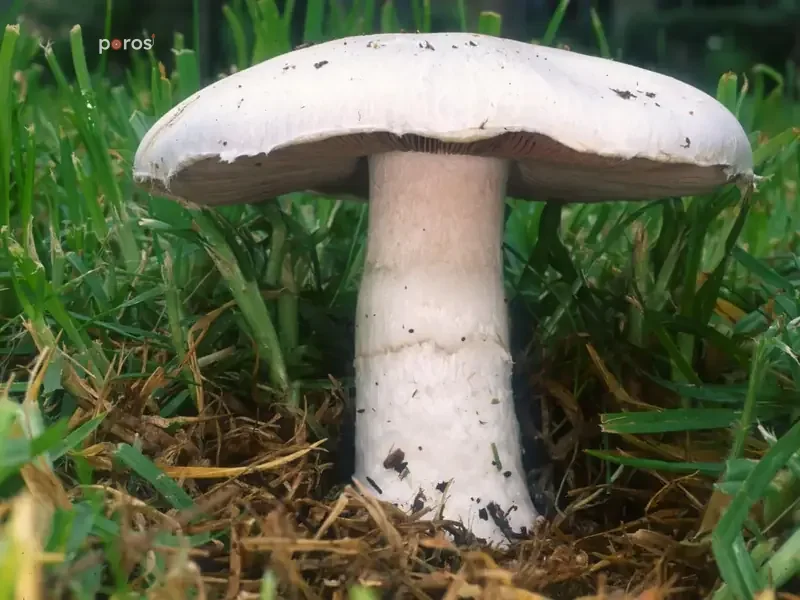
 ≠Field mushroom vs death capAgaricus campestris · Amanita phalloidesDeadly poisonous
 ≠Field mushroom vs yellow stainerAgaricus campestris · Agaricus xanthodermusPoisonous
 ≠Morel vs false morelMorchella esculenta · Gyromitra esculentaDeadly poisonous
Last updated: Prepared by the Poros Mantar editorial teamReport a correction