
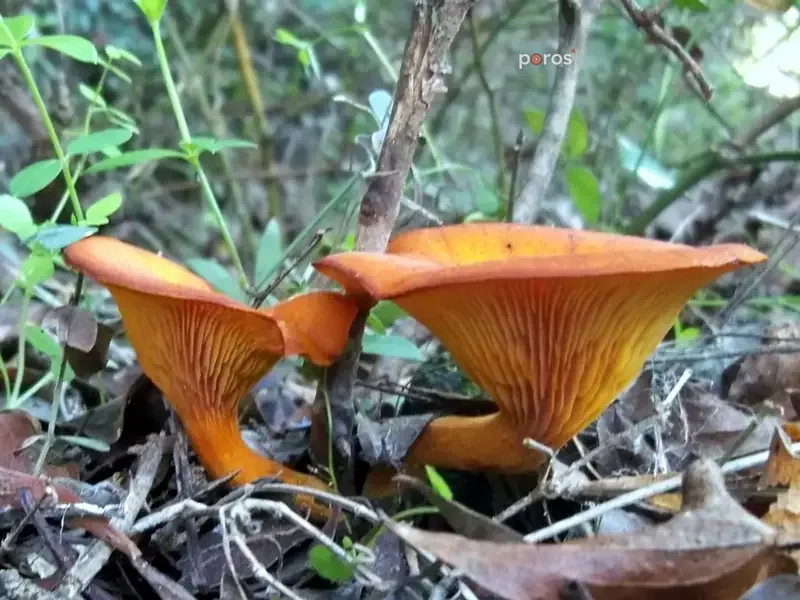


Jack-o’-lantern mushroom
Omphalotus olearius · Omphalotaceae
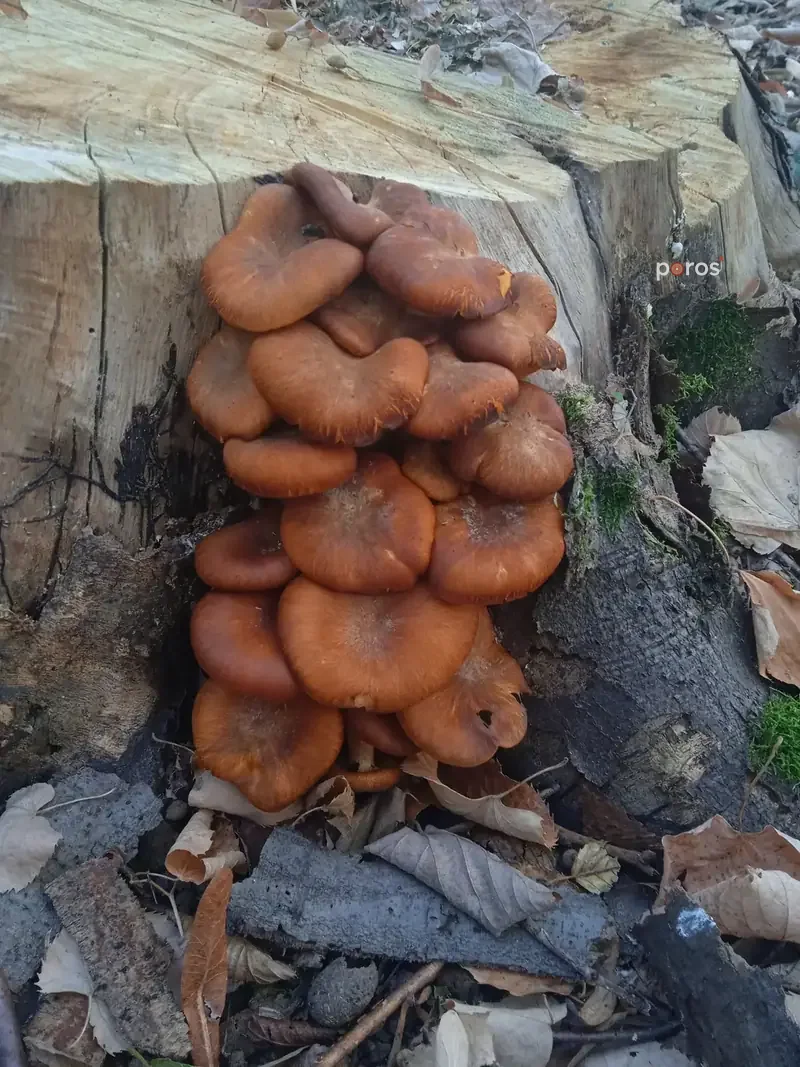
The jack-o'-lantern mushroom is a bright orange poisonous species that grows in clusters on roots and stumps at the base of olive, oak and other broadleaf trees.
Last updated: Prepared by the Poros Mantar editorial team7 sources checkedReport a correction
POISONOUS — do not eat.
If the jack-o'-lantern mushroom is eaten, symptoms usually begin within half an hour to a few hours: severe vomiting, diarrhoea and cramps, which can last several days. The toxin is illudin S and is not destroyed by cooking. If poisoning is suspected, keep any leftover mushroom.
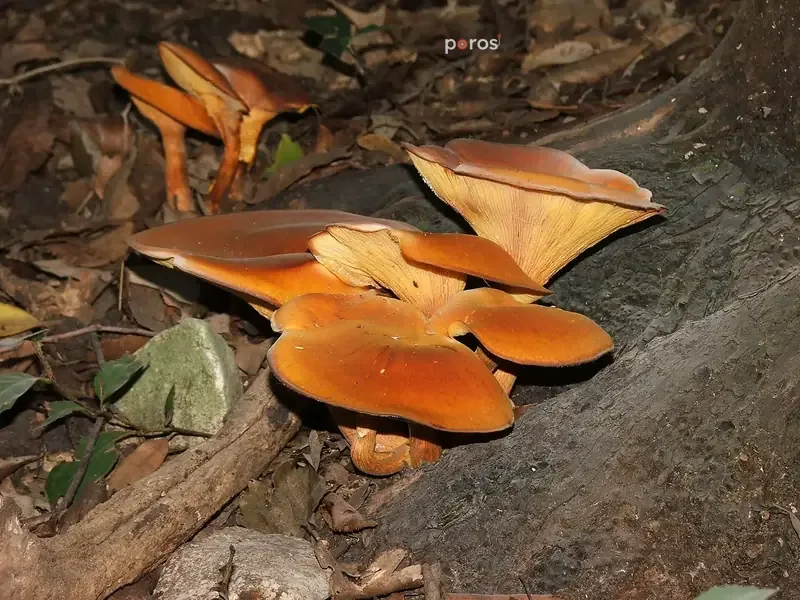
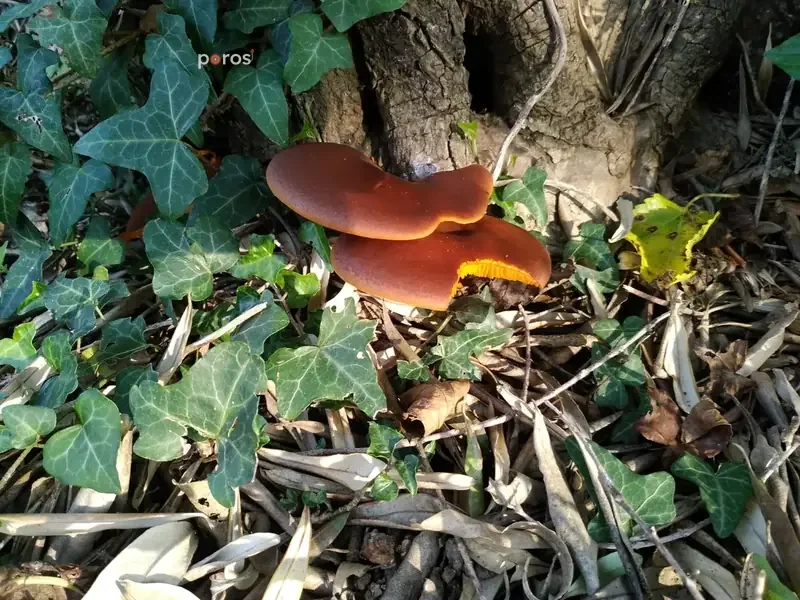
The jack-o'-lantern mushroom is a bright orange poisonous species that grows in clusters on roots and stumps at the base of olive, oak and other broadleaf trees. It has crowded gills running down the stem, can glow faintly in the dark, and is mistaken for the chanterelle.
Also called: olive-tree mushroom Turkish: Ağulu mantar
How to recognise it
Jack-o’-lantern mushroom, part by part
No ring or volva Spore print: Creamy white Not distinctive; the flesh is yellow-orange and fibrous.


When and where
Oct–Jan
- Janin season
- Feb
- Mar
- Apr
- May
- Jun
- Jul
- Aug
- Sep
- Octin season
- Novin season
- Decin season
The jack-o'-lantern mushroom fruits in autumn and early winter; Turkish GBIF records run from October to January.
Type Poisonous
Months seen JanuaryOctoberNovemberDecember
Colour Orange
Regions Black Sea RegionCentral Anatolia RegionMediterranean RegionAegean RegionMarmara RegionManisaİzmirMuğlaKaramanYalovaIstanbulBalıkesirKırklareli
Where do jack-o'-lantern mushrooms grow?
It grows in clusters on stumps, roots and trunk bases of broadleaf trees such as olive, oak and chestnut, and is common in Mediterranean climates.
Where is jack-o'-lantern mushrooms found in Turkey?
In Turkey, jack-o'-lantern mushroom records come mostly from the Aegean and Marmara regions: İzmir, Manisa, Balıkesir, Yalova, İstanbul and Kırklareli, with others from Osmaniye and Samsun.
Which months
- Jan3
- Feb0
- Mar0
- Apr0
- May0
- Jun0
- Jul0
- Aug0
- Sep0
- Oct6
- Nov3
- Dec4
jack-o'-lantern mushroom map of Turkey: all provinces and months →
11 provinces, 16 observations (GBIF, iNaturalist); months from observation dates. Record density also reflects where observers work.
Latest jack-o'-lantern mushroom observations
-
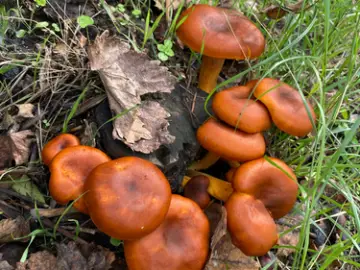 Yalova25 Oct 2025 · iNaturalist© Mehmet · CC BY
-
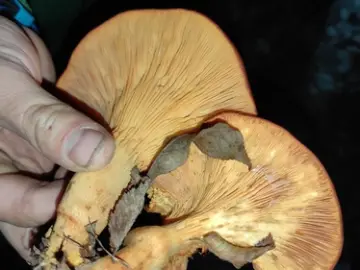 Kırklareli20 Oct 2024 · iNaturalist© Umut Nuri Erdoğan · CC BY
-
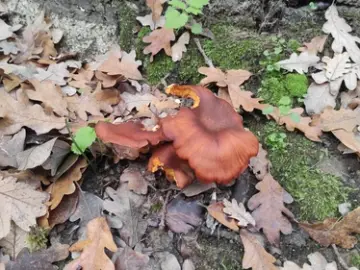 İstanbul3 Jan 2024 · iNaturalist© Umut Nuri Erdoğan · CC BY
-
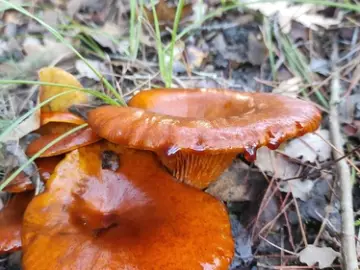 Manisa20 Dec 2023 · iNaturalist© Umut Nuri Erdoğan · CC BY
-
 Illustrative
Karaman24 Oct 2026 · iNaturalist
-
 Illustrative
Muğla1 Nov 2025 · iNaturalist
-
 Illustrative
İzmir29 Oct 2025 · iNaturalist
-
 Illustrative
İzmir25 Oct 2025 · iNaturalist
- See on the map
On "illustrative" cards the image is a photo of the species; the observation photo cannot be shown here because of its licence, but can be seen at the source.
Look-alikes
What is it mistaken for?
Jack-o’-lantern mushroom can be mistaken for the species below. Each card shows the look-alike and how it differs from Jack-o’-lantern mushroom.
 Edible species
not Jack-o’-lantern mushroom
Chanterelle Cantharellus cibarius
The chanterelle grows singly from soil, not in clusters on wood; under the cap it has thick, forked, blunt ridges rather than true gills. It is egg-yolk yellow with whitish flesh and a faint apricot smell.
 Inedible
not Jack-o’-lantern mushroom
False chanterelle Hygrophoropsis aurantiaca
It is smaller, with crowded, forked orange gills, and usually grows on soil or rotting wood in conifer forests.
 Edible species
not Jack-o’-lantern mushroom
Chicken of the woods Laetiporus sulphureus
Chicken of the woods is also orange but forms tiers of pored brackets without gills. The jack-o'-lantern has true gills and grows in clusters.
Toxins
The toxicity of the jack-o'-lantern mushroom is attributed to a compound called illudin S. Its gills can show bioluminescence, a faint greenish glow. Source
Frequently asked questions
Is the jack-o'-lantern mushroom poisonous?
Yes. It contains illudin S and causes severe vomiting, diarrhoea and cramps. Cooking does not destroy the toxin.
How do you identify the jack-o'-lantern mushroom?
Bright orange caps in clusters on roots or stumps at the base of trees, crowded thin true gills running down the stem, and a creamy white spore print.
How is it told apart from the chanterelle?
The chanterelle grows singly from soil and has thick, forked ridges instead of gills. The jack-o'-lantern grows in clusters on wood and has true, thin gills.
Does it glow in the dark?
Its gills can give off a faint greenish glow (bioluminescence), though it is not visible in every specimen or in daylight.
Where does it grow in Turkey?
At the base of broadleaf trees such as olive and oak. GBIF records come from İzmir, Manisa, Balıkesir, Yalova, İstanbul, Kırklareli, Osmaniye and Samsun.
When does it appear?
In autumn and early winter; Turkish records run from October to January.
Is the jack-o'-lantern fungus the same as the jack-o'-lantern mushroom?
Yes. Both names refer to orange Omphalotus species. In Europe and Turkey it is Omphalotus olearius; in North America the similar Omphalotus illudens. All of them are poisonous and cause severe vomiting.
What is the orange mushroom growing in clusters on trees?
An orange cluster with true gills at the base of a tree or on a stump is often the jack-o'-lantern mushroom, which is poisonous. Chicken of the woods also grows on trees, but as shelves without gills, and chanterelles grow on the ground. We do not eat an orange cluster unless the species is certain.
What is the western jack-o'-lantern mushroom?
The western jack-o'-lantern (Omphalotus olivascens) is a related species from western North America with an olive tint. It is poisonous, like Omphalotus olearius, the species recorded in Turkey.
Is a bright orange mushroom poisonous?
Not always, but we treat it with caution. In Turkey, a bright orange mushroom growing in dense clusters from olive or oak roots is most likely the poisonous jack-o'-lantern. Edible orange species such as the chanterelle and the saffron milk cap grow singly on the ground and have different undersides. We never judge a mushroom by its colour.
Which mushrooms glow in the dark?
More than a hundred fungi are bioluminescent. In Turkey the best known is the jack-o'-lantern (Omphalotus olearius), whose gills give off a faint green glow in complete darkness. The mycelium of honey fungus can also make rotting wood glow, which is known as foxfire.
How do we tell the jack-o'-lantern from chicken of the woods?
Chicken of the woods forms overlapping shelves with a yellow, pored underside and no gills. The jack-o'-lantern has a cap, a stem and true orange gills running down the stem, and it grows in clusters from roots or stumps. Both can be orange, but only the jack-o'-lantern has gills.
What is the eastern jack-o'-lantern?
The eastern jack-o'-lantern is Omphalotus illudens, the species of eastern North American forests. It is poisonous like Omphalotus olearius, the species that grows in Turkey and that this page describes, and both are mistaken for chanterelles.
Are jack-o'-lantern mushrooms poisonous?
Yes, the jack-o'-lantern mushroom is poisonous and must not be eaten. If the jack-o'-lantern mushroom is eaten, symptoms usually begin within half an hour to a few hours: severe vomiting, diarrhoea and cramps, which can last several days. The toxin is illudin S and is not destroyed by cooking. If poisoning is suspected, keep any leftover mushroom.
When is jack-o'-lantern mushroom season in Turkey?
In our calendar, jack-o'-lantern mushroom season runs Oct–Jan. The jack-o'-lantern mushroom fruits in autumn and early winter; Turkish GBIF records run from October to January.
Where do jack-o'-lantern mushrooms grow?
It grows in clusters on stumps, roots and trunk bases of broadleaf trees such as olive, oak and chestnut, and is common in Mediterranean climates.
Where are jack-o'-lantern mushrooms found in Turkey?
In Turkey, jack-o'-lantern mushroom records come mostly from the Aegean and Marmara regions: İzmir, Manisa, Balıkesir, Yalova, İstanbul and Kırklareli, with others from Osmaniye and Samsun.
What can the jack-o'-lantern mushroom be confused with?
The jack-o'-lantern mushroom can be confused with chanterelle (Cantharellus cibarius, edible species), false chanterelle (Hygrophoropsis aurantiaca, inedible) and chicken of the woods (Laetiporus sulphureus, edible species). Look-alikes are compared on this page.
What is the jack-o'-lantern mushroom called in Turkish?
In Turkish, the jack-o'-lantern mushroom (Omphalotus olearius) is called Ağulu mantar.
Related species
-
 ShiitakeLentinula edodesEdible species
-
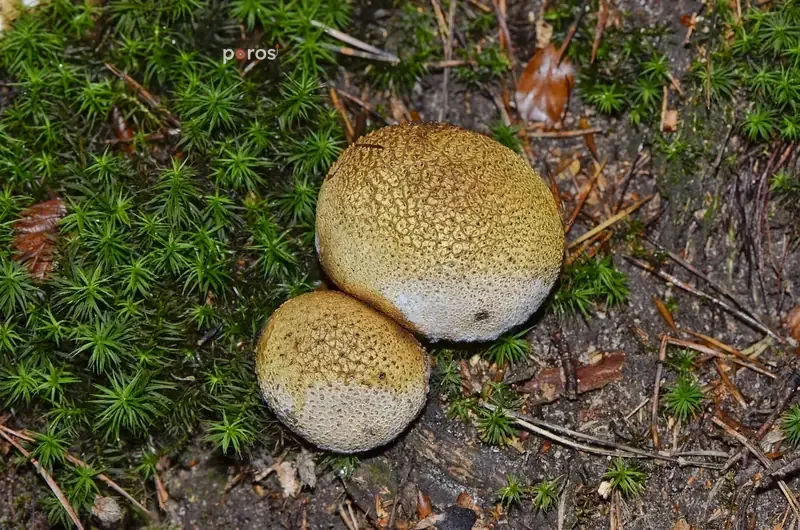 Common earthballScleroderma citrinumPoisonous
-
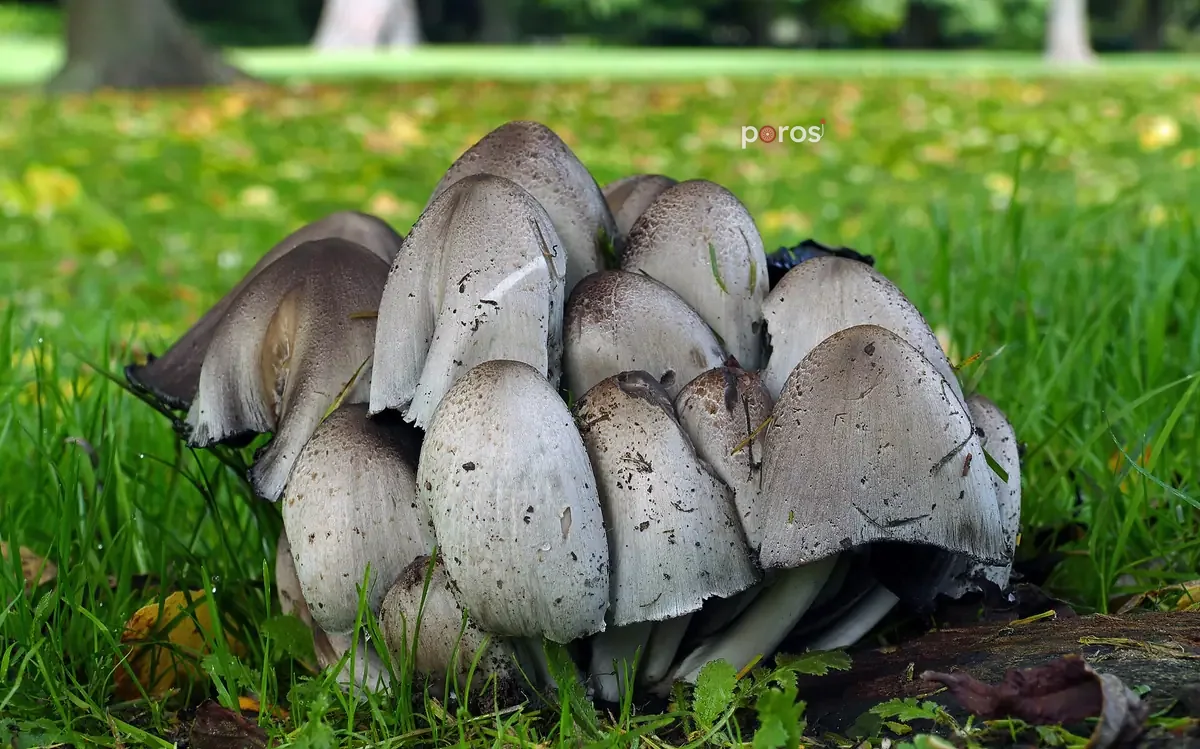 Common ink capCoprinopsis atramentariaPoisonous
-
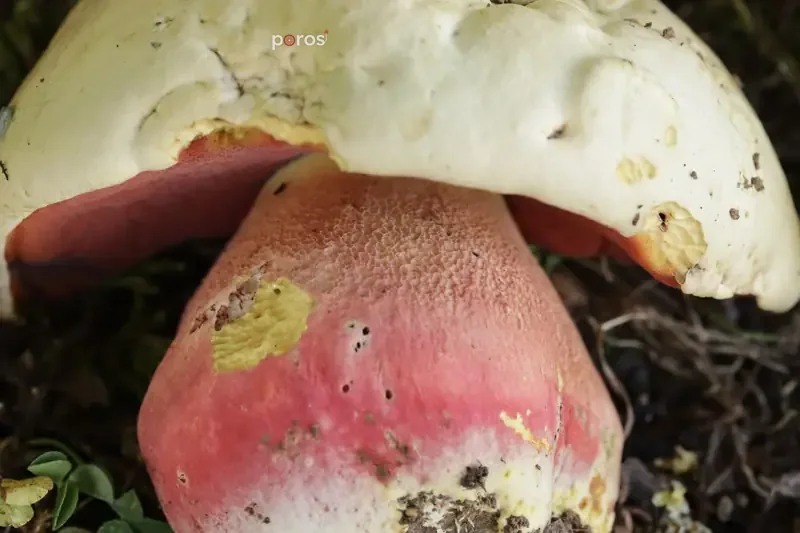 Devil’s boleteRubroboletus satanasPoisonous
-
 Fly agaricAmanita muscariaPoisonous
-
 Livid pinkgillEntoloma sinuatumPoisonous
-
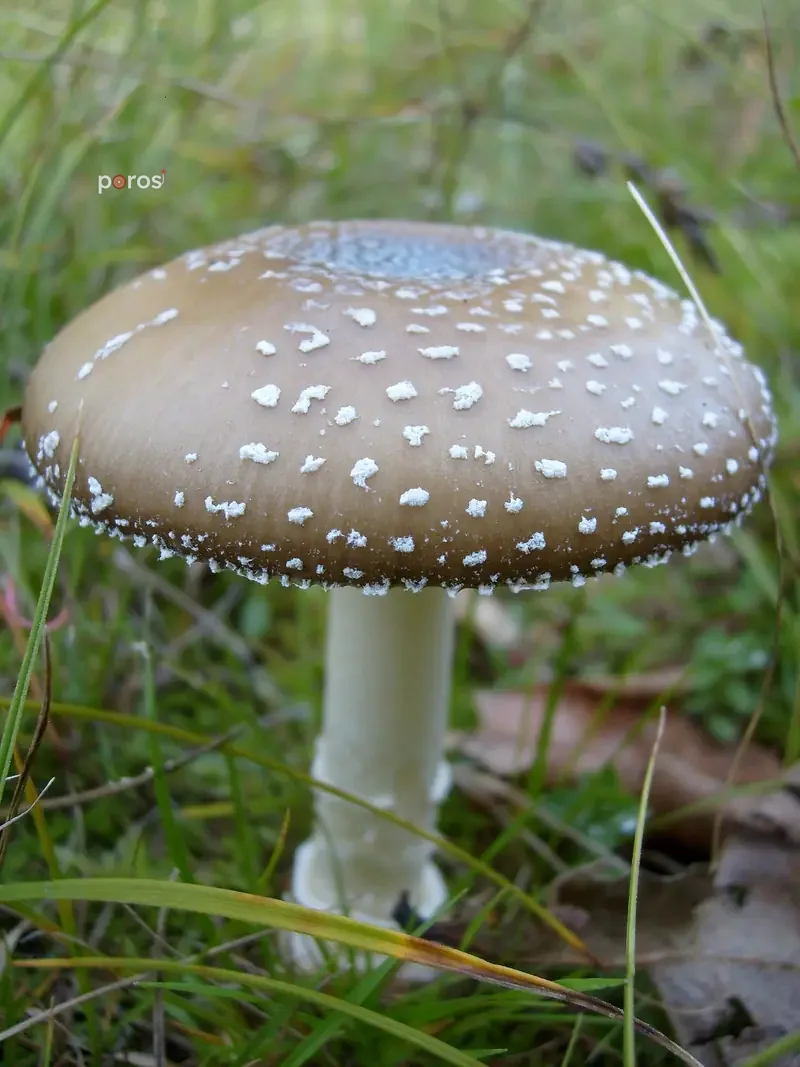 Panther capAmanita pantherinaPoisonous
-
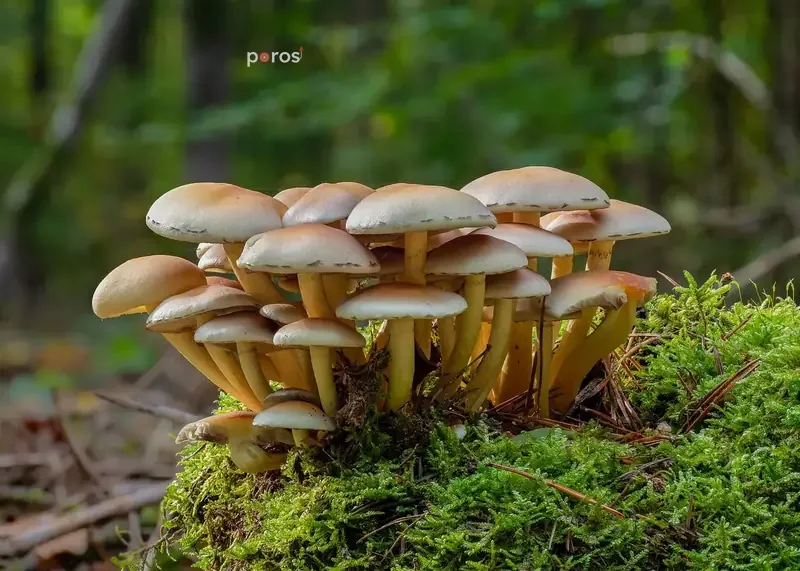 Sulphur tuftHypholoma fascicularePoisonous
Sources
- Yamaç ve ark. (2022), International Journal of Medicinal Mushrooms: Omphalotus olearius antioksidan etkinlik karşılaştırması pubmed.ncbi.nlm.nih.gov
- Adanacıoğlu ve ark. (2014), ANADOLU (Ege Tarımsal Araştırma Enstitüsü): Türkiye makromantar genetik kaynakları I. Ege Bölgesi dergipark.org.tr
- Vikipedi (TR): Ağulu mantar tr.wikipedia.org
All sources (7)
- Wikipedia (EN): Omphalotus olearius en.wikipedia.org
- First Nature: Omphalotus olearius first-nature.com
- GBIF: Türkiye kayıtları gbif.org
- iNaturalist: Türkiye gözlemleri inaturalist.org
Photo credits (12)
- File:Omphalotus olearius 3760833.jpg · Daniel Capilla / Daniel Capilla · CC BY-SA 4.0
- File:Omphalotus olearius.JPG · Antonio Abbatiello · Public domain
- File:Omphalotus olearius 23058140.jpg · Sarah Faulwetter · CC BY 4.0
- Omphalotus olearius · iNaturalist #251900798 · Santiago Martín-Bravo · CC BY 4.0
- Omphalotus olearius · iNaturalist #248641362 · David Pereira · CC BY 4.0
- Omphalotus olearius · iNaturalist #17718010 · Chris Taklis · CC BY 4.0
- Omphalotus olearius · iNaturalist #188514562 · Lazar Popović · CC BY 4.0
- Omphalotus olearius · iNaturalist #248641362 · David Pereira · CC BY 4.0
- iNaturalist: Yalova, 25 Oct 2025 · Mehmet · CC BY
- iNaturalist: Kırklareli, 20 Oct 2024 · Umut Nuri Erdoğan · CC BY
- iNaturalist: İstanbul, 3 Jan 2024 · Umut Nuri Erdoğan · CC BY
- iNaturalist: Manisa, 20 Dec 2023 · Umut Nuri Erdoğan · CC BY


