

Look-alikes · comparison
Porcini vs devil's bolete: how to tell them apart
Porcini (Boletus edulis; Turkish: çörek mantarı) and the devil's bolete (Rubroboletus satanas; Turkish: şeytan mantarı) are easiest to separate by pore colour. Porcini pores go from white to yellow to olive green and are never red. The devil's bolete has red pores, a red-netted stem and flesh that turns blue when cut, and it is poisonous.

Porcini vs devil's bolete: the three signs that matter
-
Pore colour: white to yellow, or red?
Both mushrooms have a sponge of pores under the cap instead of gills, so the pore colour is where we look first. Porcini pores are white when young, then yellow and finally olive green, and they do not change colour when pressed. In the devil's bolete the pores start yellow, turn blood red to orange-red and bruise blue. Once we see red pores, we no longer treat the mushroom as a porcini.
-
Stem net: white or red?
A porcini stem is 8–25 cm tall and stout, swollen at the base when young, with a fine white net over its upper part. The devil's bolete has a very swollen stem of 5–15 cm, yellow at the top and red in the middle, covered with a red net. The cap helps too: chestnut to pale brown in porcini, chalk white to grey in the devil's bolete.
-
Does the cut flesh turn blue?
Porcini flesh is white and stays white when cut. The flesh of the devil's bolete turns pale blue when cut, and old specimens smell of carrion. Blueing alone is not a sign of poison, since some edible boletes also turn blue, so we read it together with red pores and a red net. Boletes with red pores that turn blue are not picked.
We advise against relying on a single feature: if pores, stem net and cut flesh do not all agree, the mushroom is best left alone. A bolete we are unsure of is not eaten; it goes to an expert first.
Side-by-side differences
This table is built from the sourced descriptions on the two species pages.
| Feature | Porcini | Devil's bolete |
|---|---|---|
| Cap | 8–30 cm; hemispherical, then flattening; chestnut to pale brown with a lighter margin; slightly sticky when moist. | 8–30 cm, convex and thick; chalky white, grey to olive-tinged, dry and slightly velvety. |
| Pores | No gills: tubes with small round pores, white and "stuffed" when young, then yellow, finally olive-green. They do not stain when pressed. | Pores yellow when young, then blood-red to orange-red; bruising blue when pressed. |
| Stem | 8–25 cm tall, 2–7 cm thick; club-shaped when young; upper part covered in a fine white net pattern. | 5–15 cm, very swollen and bulbous; yellow at the top and red in the middle, covered in a red net. |
| Ring | None. | None. |
| Volva (cup at the base) | None. | None. |
| Smell and taste | Faint and pleasant with a mild nutty taste. White flesh that does not change colour when cut. | Mild when young, rank and unpleasant when old; the cut flesh turns pale blue. |
| Spore print | Olive brown. | Olive-brown. |
| Habitat | Porcini grow in broadleaf and conifer forests, in partnership with the roots of beech, birch, oak, chestnut, pine, spruce and fir (ectomycorrhizal). They come up on acidic soils and along forest tracks. | The devil's bolete grows on warm, chalky soil under oak, sweet chestnut and beech, forming a mycorrhizal partnership with the trees. |
| Season | Jun–Nov | Jul–Oct |
| Edibility | Edible species | Poisonous |
The same view of both species


This page is not a definitive identification. The signs we describe help separate these two species, but they do not prove what your mushroom is; other poisonous species can grow in the same place.
Frequently asked questions
Are porcini and the devil's bolete the same mushroom?
No. Both are large boletes with pores instead of gills, but they are separate species. Porcini (Boletus edulis, also called cep or penny bun) are listed in our sources as an edible species. The devil's bolete (Rubroboletus satanas, also Satan's bolete) has red pores and a red-netted stem and is poisonous.
Porcini or devil's bolete: which one is poisonous?
The devil's bolete is the poisonous one. It causes severe vomiting, stomach pain and diarrhoea, and cooking does not remove the risk. Porcini are not poisonous and are listed as an edible species, though we still advise against eating any wild find that an expert has not identified.
How do we tell porcini from the devil's bolete?
We check three things together. Porcini have white, yellow or olive-green pores, a white net on the stem and flesh that does not change colour when cut. The devil's bolete has red pores, a red net on the stem and flesh that turns blue. Its cap is chalk white to dirty grey rather than brown.
What happens if someone eats a devil's bolete?
Symptoms of devil's bolete poisoning usually begin within one to six hours, with vomiting, stomach pain and diarrhoea, and the vomiting and diarrhoea can be severe. Cooking does not remove the risk. If poisoning is suspected, keeping a piece of the mushroom helps with identification.
Do porcini and the devil's bolete grow in the same places?
They can. Both live in partnership with the roots of oak, chestnut and beech. Porcini also grow under birch, pine, spruce and fir, on acidic soils, whereas the devil's bolete prefers warm, chalky soils. In Turkey both have records from Istanbul, and the devil's bolete is also recorded from Tunceli.
When do porcini and the devil's bolete appear?
Porcini fruit from June to August and again from September to November, after rain in warm weather and as the soil cools in autumn. The devil's bolete appears from late summer to mid-autumn, and its Turkish records are from September and October. In late summer and early autumn the two can be out at the same time.
Is every bolete that turns blue poisonous?
No. Blueing alone is not a sign of poison, and some edible boletes turn blue as well. Boletes that have red pores and also turn blue, the devil's bolete among them, are not picked. Porcini flesh (Boletus edulis) never changes colour when cut, so a blueing specimen is not that species.
Can porcini and the devil's bolete be told apart from a photo?
A photo helps, but it is not a firm identification. Pore colour and the stem net can show in a good picture, but blueing of the cut flesh and smell cannot, and a young devil's bolete may still have yellow pores. We recommend showing the mushroom itself to an expert.
Sources
The facts in this comparison come from the sourced data on our porcini and devil's bolete pages:
More comparisons
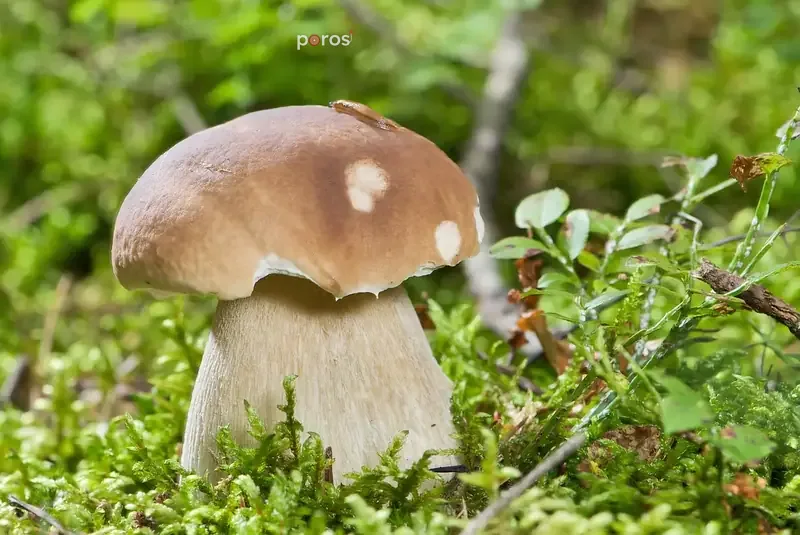
 ≠Porcini vs bitter boleteBoletus edulis · Tylopilus felleusInedible
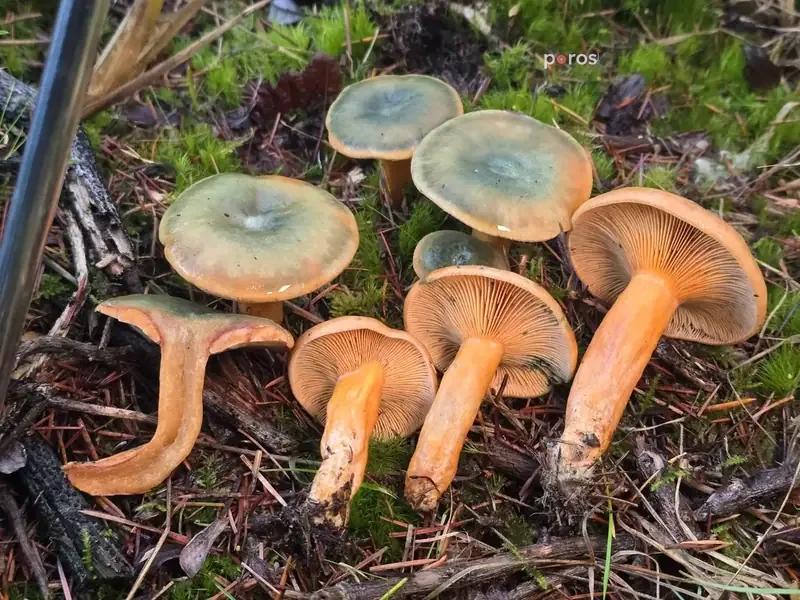
 ≠Saffron milk cap vs woolly milkcapLactarius deliciosus · Lactarius torminosusPoisonous
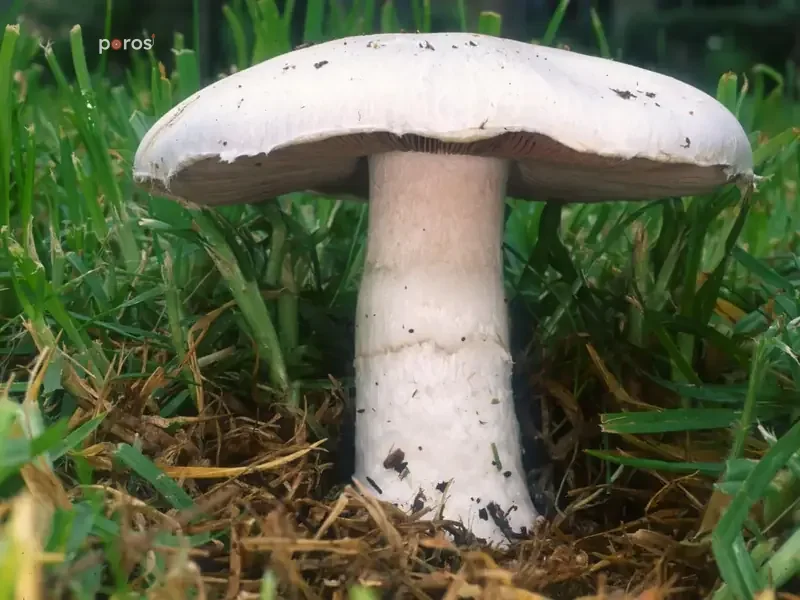
 ≠Field mushroom vs death capAgaricus campestris · Amanita phalloidesDeadly poisonous
 ≠Field mushroom vs yellow stainerAgaricus campestris · Agaricus xanthodermusPoisonous
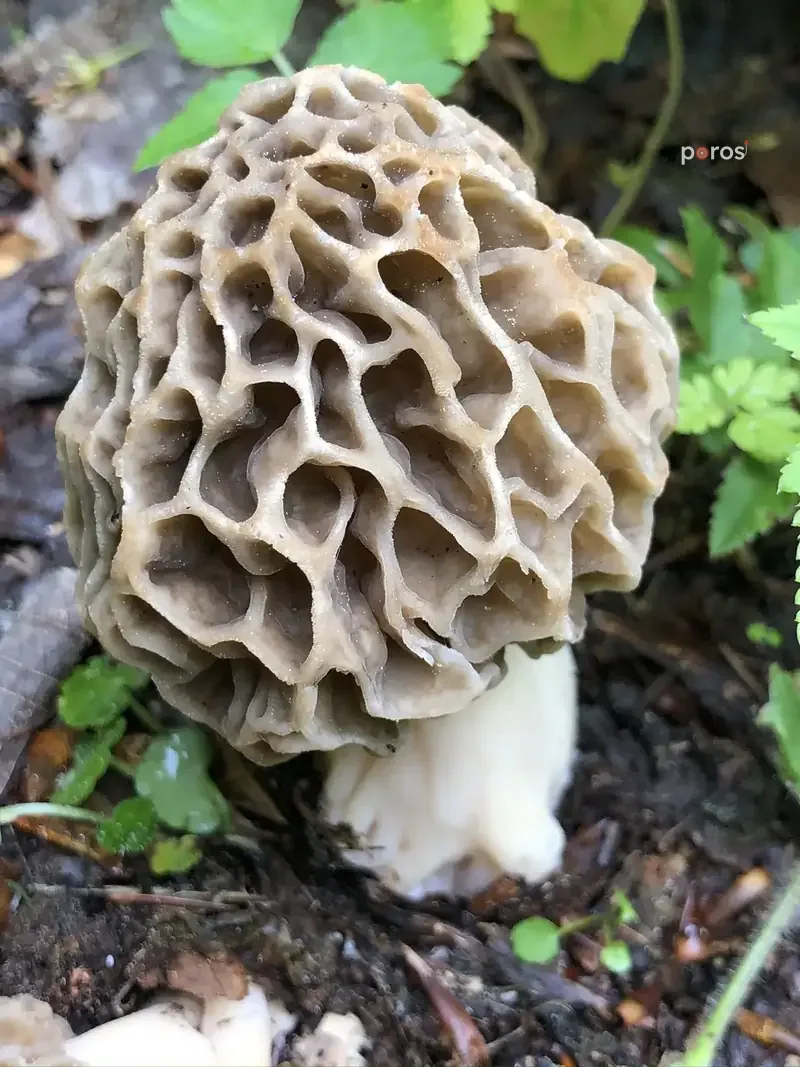
 ≠Morel vs false morelMorchella esculenta · Gyromitra esculentaDeadly poisonous
 ≠Parasol mushroom vs green-spored parasolMacrolepiota procera · Chlorophyllum molybditesPoisonous
Last updated: Prepared by the Poros Mantar editorial teamReport a correction