
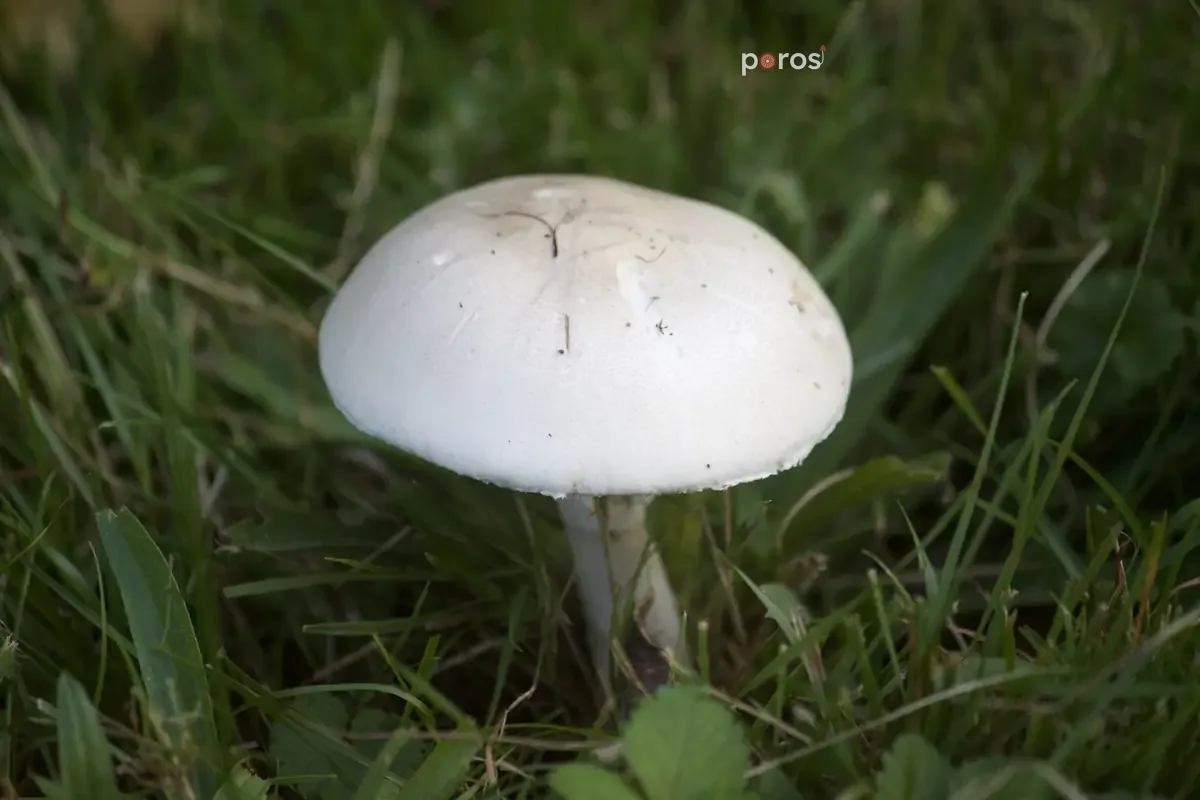
Species map · Leucocoprinus leucothites
White dapperling map of Turkey: where and when it grows
Our map holds 17 verified records of the white dapperling (Leucocoprinus leucothites) from 9 provinces of Turkey. Most come from İstanbul, Manisa, Yalova and Karaman; records peak in September, October and December.
- records
- 17
- provinces
- 9
- regions
- 5
- latest record
- Oct 2026
Records by province
- Marmara 9
- Black Sea 3
- Aegean 3
- Central Anatolia 1
- Mediterranean 1
Linked provinces have their own page with every species recorded there. Record density also reflects where observers work.
Which months?
This page covers only where and when the species is recorded in Turkey. For identification and edibility, see the species page. Built from research-grade, geo-referenced GBIF and iNaturalist records, refreshed at the start of every month.
Poisonous look-alikes of the white dapperling
- Death cap Amanita phalloides Deadly poisonous
- Destroying angel Amanita virosa Deadly poisonous
- Deadly dapperling Lepiota brunneoincarnata Deadly poisonous
- Yellow stainer Agaricus xanthodermus Poisonous
Records by region: Marmara 9; Black Sea 3; Aegean 3; Central Anatolia 1; Mediterranean 1. Most records come from İstanbul, Manisa, Yalova, Karaman, Bolu, Trabzon, Osmaniye and Muğla.
Records peak in September, October and December; about 70% of dated records fall in September–November and 0% in March–May.
The white dapperling appears in grass in autumn, after rain. Our Turkish records fall in October, November and December, most of them in October.
Lawns, parks, gardens, pastures and roadsides, growing from soil singly or in scattered groups; rare inside woodland.
Death cap (Amanita phalloides, deadly): The death cap usually grows near trees; its cap is often olive green or yellowish, but pale white forms exist. It has a sac-like volva at the stem base. The white dapperling has no volva, but the base must be dug out carefully before the two can be told apart.
Destroying angel (Amanita virosa, deadly): The destroying angel is also all white, ringed and white-spored, but it grows in woodland, has a shaggy stem and a sac-like volva at the base. Confusing the two can be fatal.
Deadly dapperling (Lepiota brunneoincarnata, deadly): The deadly dapperling is smaller, with a cap covered in pinkish brown scales and brown bands on the stem. The white dapperling's cap is smooth and white.
Yellow stainer (Agaricus xanthodermus, poisonous): The yellow stainer turns bright chrome yellow when the stem base is cut or scratched and smells of ink or phenol; its gills turn brown. The white dapperling does not yellow and its gills stay white.
Field mushroom (Agaricus campestris, edible): The field mushroom also grows in grass and is white, but its gills are pink when young and chocolate brown when mature, and its spore print is dark brown. The white dapperling's gills stay white and its spore print is white.
Frequently asked questions
Where does the white dapperling grow in Turkey?
Most records come from İstanbul, Manisa, Yalova, Karaman and Bolu.
When does the white dapperling fruit in Turkey?
Records peak in September, October and December.
Which province has the most white dapperling records?
İstanbul, followed by Manisa, Yalova and Karaman. The order also reflects where observers are active.
What habitat does the white dapperling prefer?
Lawns, parks, gardens, pastures and roadsides, growing from soil singly or in scattered groups; rare inside woodland.
Can I pick mushrooms where they are recorded?
A record is not a permit. Commercial picking in state forests needs a permit; picking in national parks is prohibited.
How current is this map?
Records are re-fetched from GBIF and iNaturalist at the start of every month and this page updates automatically.
What should I do in case of mushroom poisoning?
Call 112 at once; Turkey's poison centre is 114.
Sources
- 6831 sayılı Orman Kanunu (mevzuat.gov.tr) mevzuat.gov.tr
- 2873 sayılı Millî Parklar Kanunu, md. 14 (mevzuat.gov.tr) mevzuat.gov.tr
- Dızkırıcı, Kalmer ve Acar (2019), Mantar Dergisi 10(2): 143–150, Morphologic and Molecular Diagnosis of Some Leucoagaricus Species and Revealing a New Record from Turkey dergipark.org.tr
All sources (6)
- GBIF ve iNaturalist: Türkiye gözlem kayıtları (sitemizin haritası) gbif.org
- Wikipedia (EN): Leucocoprinus leucothites en.wikipedia.org
- First Nature: Leucoagaricus leucothites, White Dapperling first-nature.com
Data sources and licences
Observations from GBIF.org (human observations and herbarium specimens; records flagged with geospatial issues excluded) and iNaturalist research-grade records, retrieved 10 November 2026. Macrofungi only (Agaricomycetes, Pezizomycetes), named to species. Every point links to its own record, with the recorder and licence (CC0, CC BY, CC BY-NC).
GBIF records come from 25 separate datasets; the largest are Mushroom Observer (591), Aphyllophorales externi (95), Agaricales externi (95), INSDC Host Organism Sequences (36), University of Tennessee Fungal Herbarium (25), INSDC Sequences (23), Herbarium GB, University of Gothenburg (22), NHMD Mycology Collection (12), GENT Lactarius Deliciosi (11). A find entered on two platforms by the same person is counted once. All datasets, publishers and licences: mushroom records in Turkey.
Map: © OpenStreetMap contributors. Province centres: Wikidata. Region comes from the record's GADM province, or the nearest province centre when missing. For protected species (iNaturalist "threatened" or IUCN VU/EN/CR) locations are rounded to ~10 km; locations obscured by iNaturalist are marked "approximate".
An observation shows that a mushroom was seen there on that day, not that it is there now or that it may be picked. Counts reflect how many people record fungi in an area more than how common a species is.
Last updated: Prepared by the Poros Mantar editorial teamReport a correction