
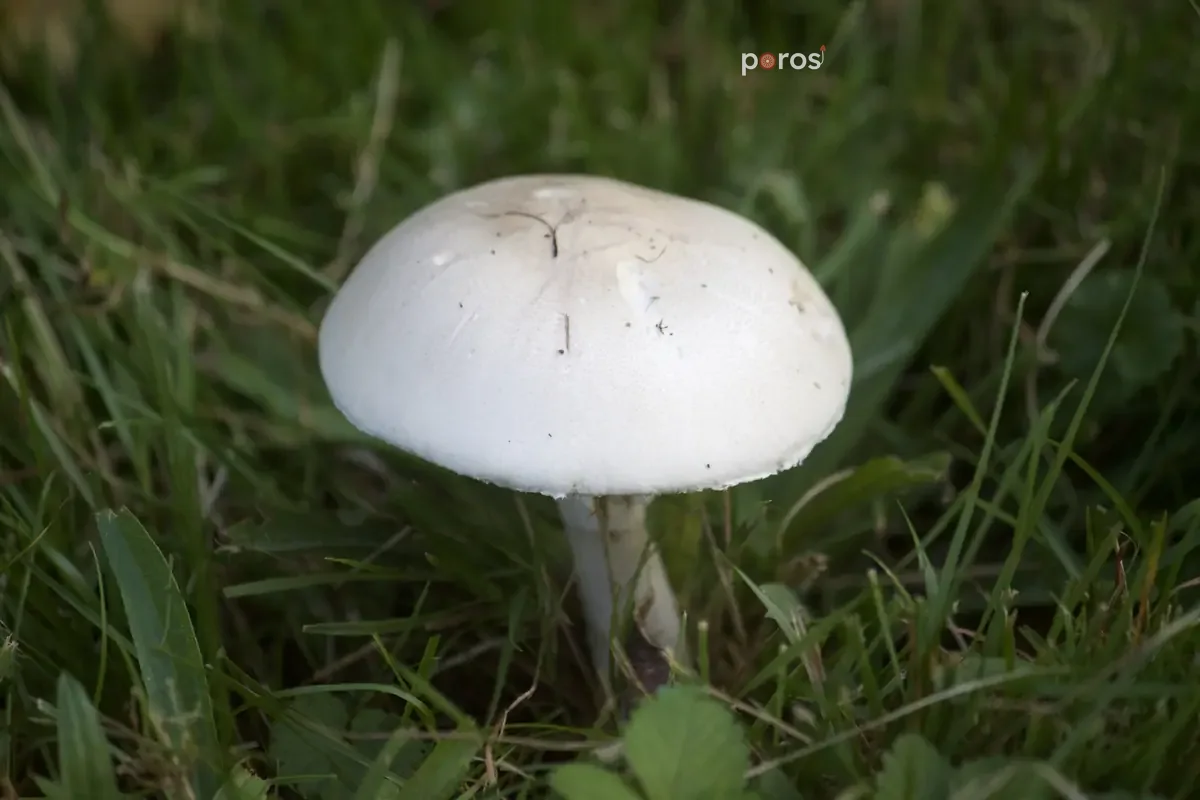


White dapperling
Leucocoprinus leucothites · Agaricaceae
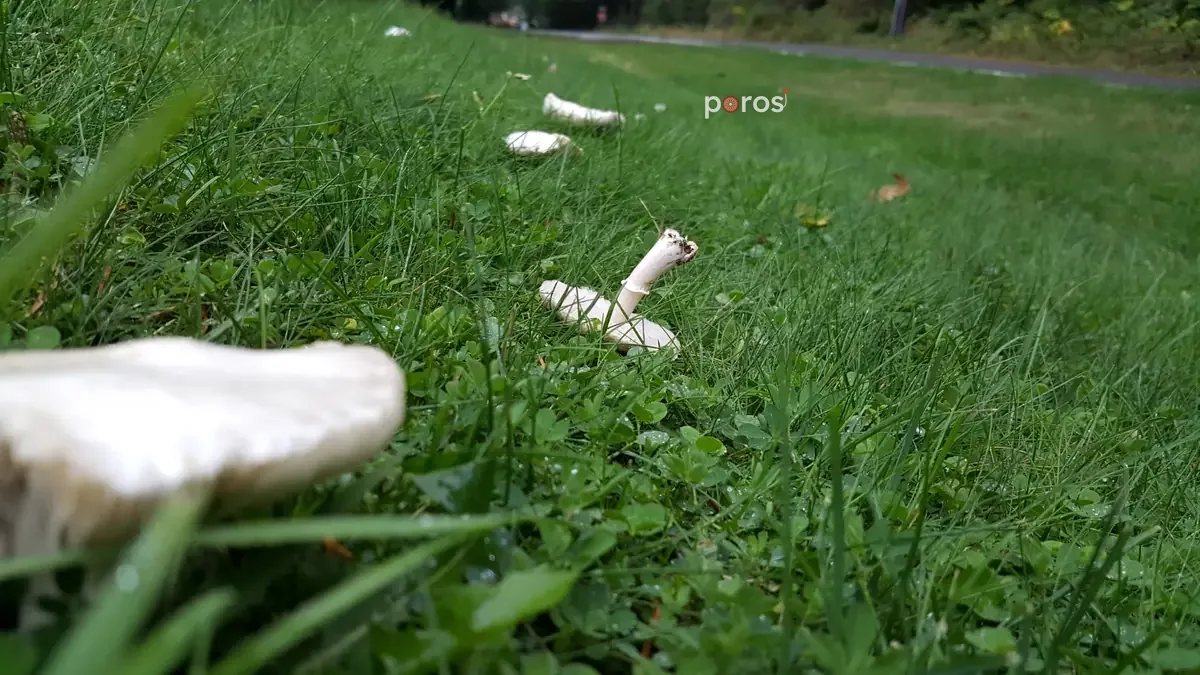
The white dapperling (Leucocoprinus leucothites), formerly Leucoagaricus leucothites and Lepiota leucothites, is a medium-sized, smooth white, ringed mushroom of lawns, parks and roadsides.
Last updated: Prepared by the Poros Mantar editorial team5 sources checkedReport a correction
The white dapperling (Leucocoprinus leucothites), formerly Leucoagaricus leucothites and Lepiota leucothites, is a medium-sized, smooth white, ringed mushroom of lawns, parks and roadsides. Its gills are white and may turn faintly pink with age, but never brown as in the field mushroom; the spore print is white. Some sources call it edible, but digestive upsets have been reported and it closely resembles deadly white Amanita and Lepiota species. Our advice is not to eat it.
Also called: smooth parasol, white Agaricus mushroom Turkish: Yalancı çayır mantarı Synonyms: Leucoagaricus leucothites, Lepiota leucothites, Leucoagaricus naucinus, Lepiota naucina
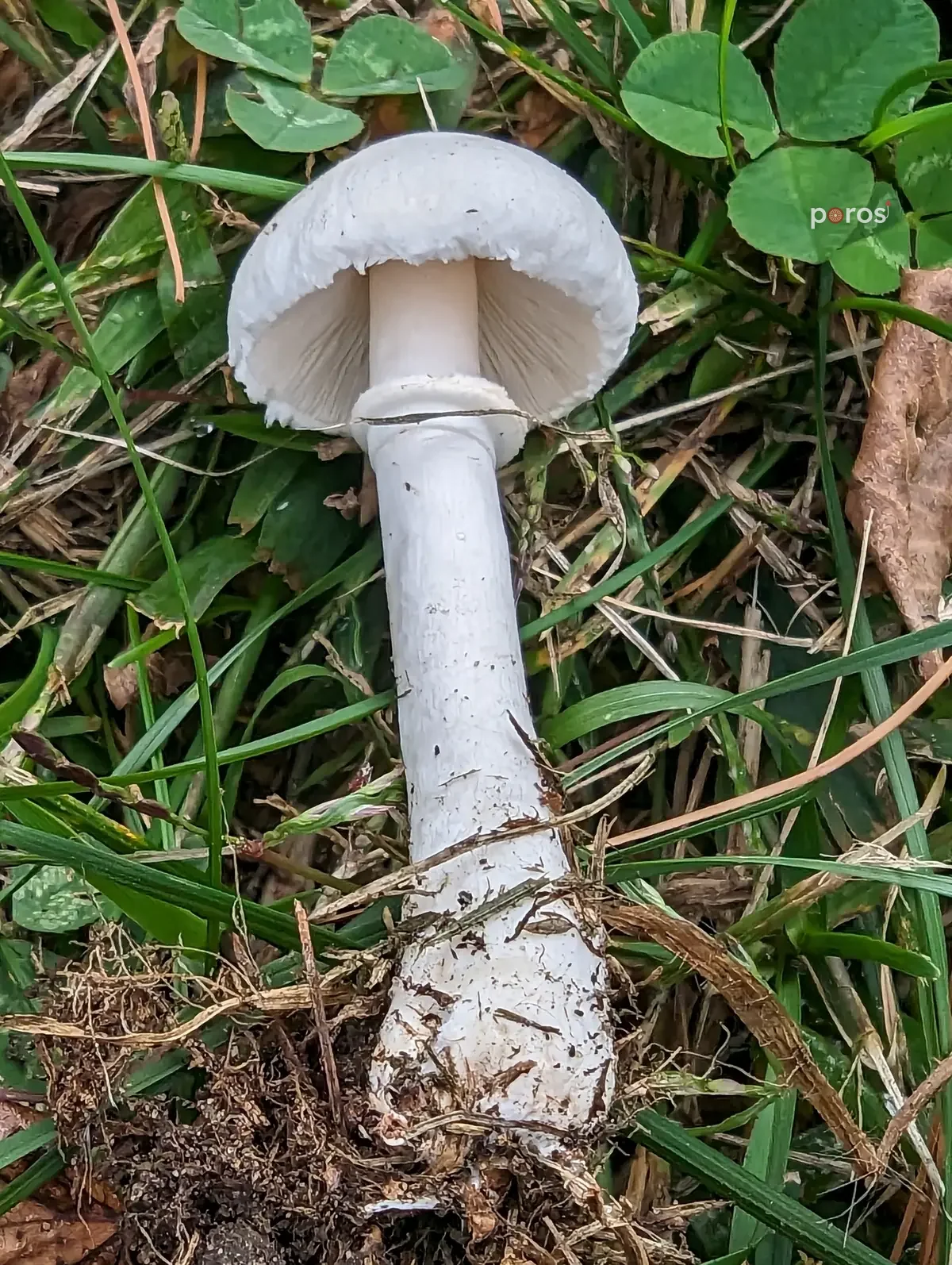
How to recognise it
White dapperling, part by part
No volva Spore print: White Faint, pleasant mushroomy or not distinctive.


When and where
Oct–Dec
- Jan
- Feb
- Mar
- Apr
- May
- Jun
- Jul
- Aug
- Sep
- Octin season
- Novin season
- Decin season
The white dapperling appears in grass in autumn, after rain. Our Turkish records fall in October, November and December, most of them in October.
Type Inedible
Months seen OctoberNovemberDecember
Colour White
Regions Black Sea RegionCentral Anatolia RegionMediterranean RegionAegean RegionMarmara RegionManisaTrabzonOsmaniyeSamsunKaramanBoluYalovaIstanbul
Where does white dapperling grow?
Lawns, parks, gardens, pastures and roadsides, growing from soil singly or in scattered groups; rare inside woodland.
Where is white dapperling found in Turkey?
Our map data (GBIF and iNaturalist) holds 12 Turkish records: 4 from Istanbul, 2 from Manisa and one each from Muğla, Osmaniye, Trabzon, Bolu, Karaman and Yalova. It has also been confirmed morphologically and molecularly, as Leucoagaricus leucothites, from a specimen collected in Bingöl (Dızkırıcı et al., 2019).
Which months
- Jan0
- Feb0
- Mar0
- Apr0
- May0
- Jun0
- Jul0
- Aug0
- Sep3
- Oct6
- Nov3
- Dec5
9 provinces, 17 observations (GBIF, iNaturalist); months from observation dates. Record density also reflects where observers work.
Latest white dapperling observations
-
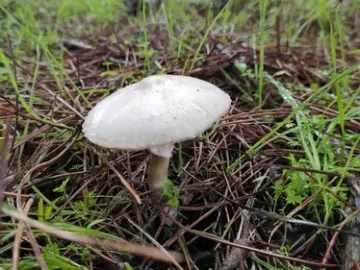 Manisa21 Dec 2023 · iNaturalist© Umut Nuri Erdoğan · CC BY
-
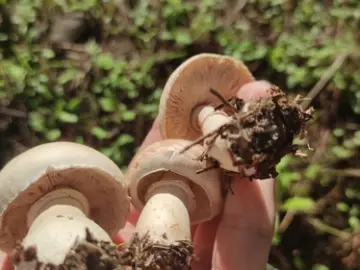 Manisa18 Dec 2023 · iNaturalist© Umut Nuri Erdoğan · CC BY
-
 Illustrative
Yalova6 Oct 2026 · iNaturalist
-
 Illustrative
Karaman2 Nov 2025 · iNaturalist
-
 Illustrative
Bolu9 Oct 2025 · iNaturalist
-
 Illustrative
Trabzon26 Oct 2024 · iNaturalist
-
 Illustrative
İstanbul13 Dec 2022 · iNaturalist
-
 Illustrative
İstanbul9 Dec 2022 · GBIF
- See on the map
On "illustrative" cards the image is a photo of the species; the observation photo cannot be shown here because of its licence, but can be seen at the source.
Look-alikes
What could it be confused with?
White dapperling can be mistaken for the species below. Each card shows the look-alike and how it differs from White dapperling.
 Deadly
not White dapperling
Death cap Amanita phalloides
The death cap usually grows near trees; its cap is often olive green or yellowish, but pale white forms exist. It has a sac-like volva at the stem base. The white dapperling has no volva, but the base must be dug out carefully before the two can be told apart.
 Deadly
not White dapperling
Destroying angel Amanita virosa
The destroying angel is also all white, ringed and white-spored, but it grows in woodland, has a shaggy stem and a sac-like volva at the base. Confusing the two can be fatal.
 Deadly
not White dapperling
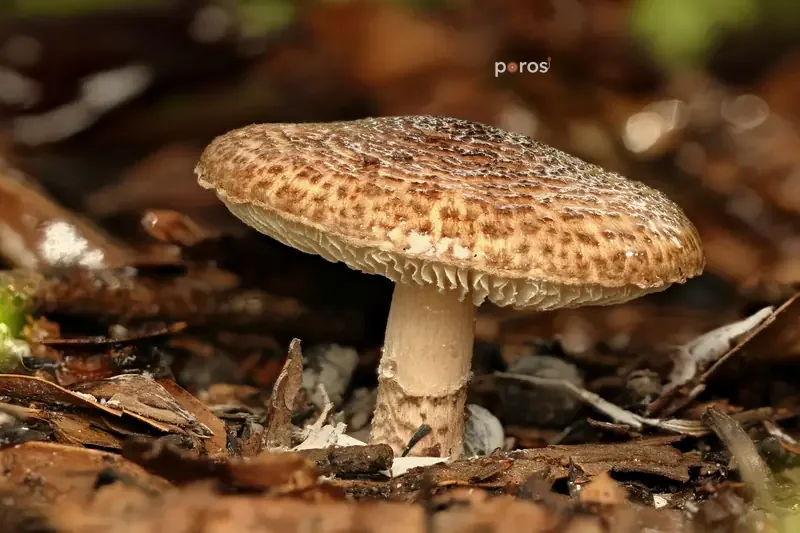
Deadly dapperling Lepiota brunneoincarnata
The deadly dapperling is smaller, with a cap covered in pinkish brown scales and brown bands on the stem. The white dapperling's cap is smooth and white.
 Edible species
not White dapperling
Field mushroom Agaricus campestris
The field mushroom also grows in grass and is white, but its gills are pink when young and chocolate brown when mature, and its spore print is dark brown. The white dapperling's gills stay white and its spore print is white.
 Poisonous
not White dapperling
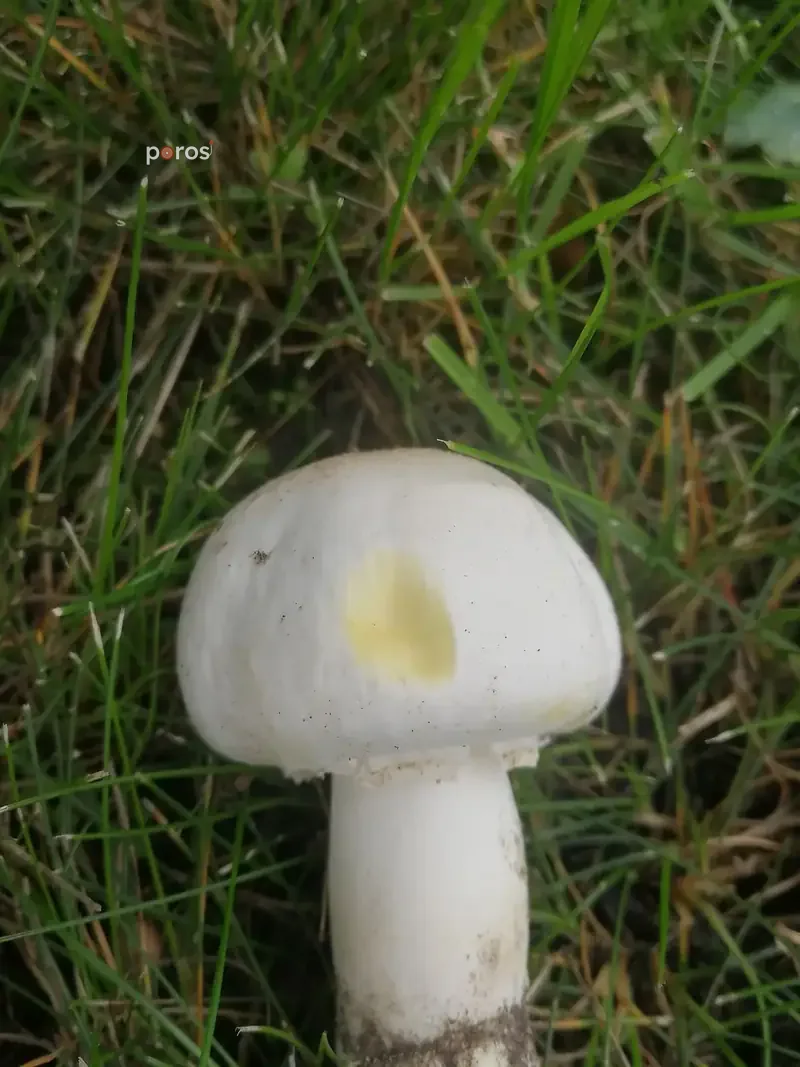
Yellow stainer Agaricus xanthodermus
The yellow stainer turns bright chrome yellow when the stem base is cut or scratched and smells of ink or phenol; its gills turn brown. The white dapperling does not yellow and its gills stay white.
What it contains
It is often found among white mushrooms picked in the belief that they are field mushrooms; gills that stay white and a white spore print are the first signs that separate it from brown-spored Agaricus species. Following genetic studies it was moved from Leucoagaricus to Leucocoprinus.
General information, not a health claim.
Some sources list the white dapperling as edible, but digestive upsets have been reported by people who ate it. The greater risk is that its white cap, white gills, ring and white spore print make it look very like the deadly death cap, destroying angel and Lepiota species. Our advice is not to eat it. If poisoning is suspected, call poison control and keep any leftover mushroom.
Frequently asked questions
Is the white dapperling edible?
Our advice is not to eat it. Some sources call it edible, but digestive upsets have been reported and it is very easily confused with deadly white mushrooms.
Is the white dapperling poisonous?
It is not considered deadly, but it is reported to cause stomach upsets in some people. The main danger is confusing it with the death cap and destroying angel.
How do you tell it from the field mushroom?
The field mushroom's gills go from pink to chocolate brown and its spore print is dark brown. The white dapperling's gills stay white and its spore print is white.
How do you tell it from the death cap?
The death cap has a sac-like volva at the stem base and usually grows near trees. The white dapperling has no volva, but the whole base must be dug out to check. A white, white-gilled, ringed mushroom should never be treated as safe.
Is it the same as Leucoagaricus leucothites?
Yes. It is also known as Lepiota leucothites and Leucoagaricus leucothites, and was moved to Leucocoprinus following genetic studies.
Where does it grow?
In lawns, parks, gardens, pastures and roadsides, from soil, singly or in scattered groups.
When does it appear?
In autumn, after rain; our Turkish records fall in October, November and December.
Where is it found in Turkey?
Our map data holds 12 records from Istanbul, Manisa, Muğla, Osmaniye, Trabzon, Bolu, Karaman and Yalova, with a published record from Bingöl too.
When is white dapperling season in Turkey?
In our calendar, white dapperling season runs Oct–Dec. The white dapperling appears in grass in autumn, after rain. Our Turkish records fall in October, November and December, most of them in October.
Where does white dapperling grow?
Lawns, parks, gardens, pastures and roadsides, growing from soil singly or in scattered groups; rare inside woodland.
Where is white dapperling found in Turkey?
Our map data (GBIF and iNaturalist) holds 12 Turkish records: 4 from Istanbul, 2 from Manisa and one each from Muğla, Osmaniye, Trabzon, Bolu, Karaman and Yalova. It has also been confirmed morphologically and molecularly, as Leucoagaricus leucothites, from a specimen collected in Bingöl (Dızkırıcı et al., 2019).
What can white dapperling be confused with?
White dapperling can be confused with death cap (Amanita phalloides, deadly), destroying angel (Amanita virosa, deadly), deadly dapperling (Lepiota brunneoincarnata, deadly), field mushroom (Agaricus campestris, edible species) and yellow stainer (Agaricus xanthodermus, poisonous). Look-alikes are compared on this page.
What is white dapperling called in Turkish?
In Turkish, white dapperling (Leucocoprinus leucothites) is called Yalancı çayır mantarı.
Related species
-
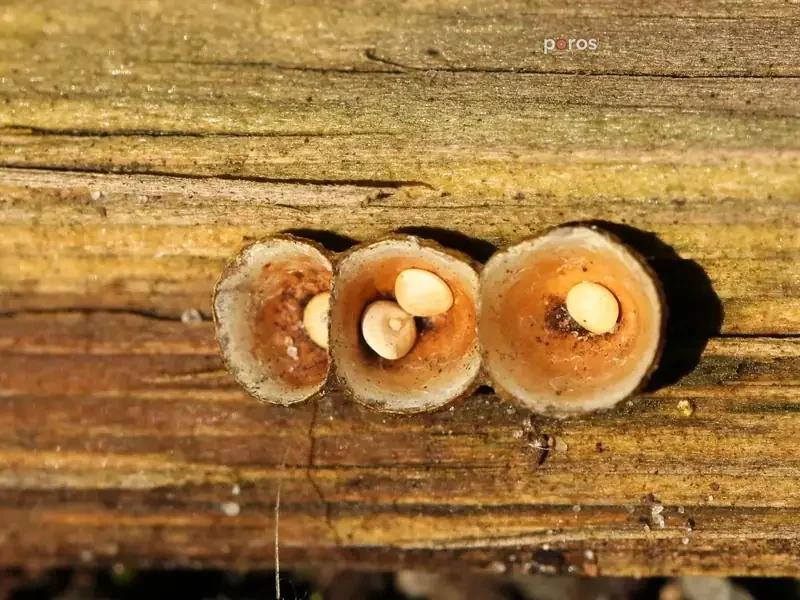 Common bird’s nest fungusCrucibulum laeveInedible
-
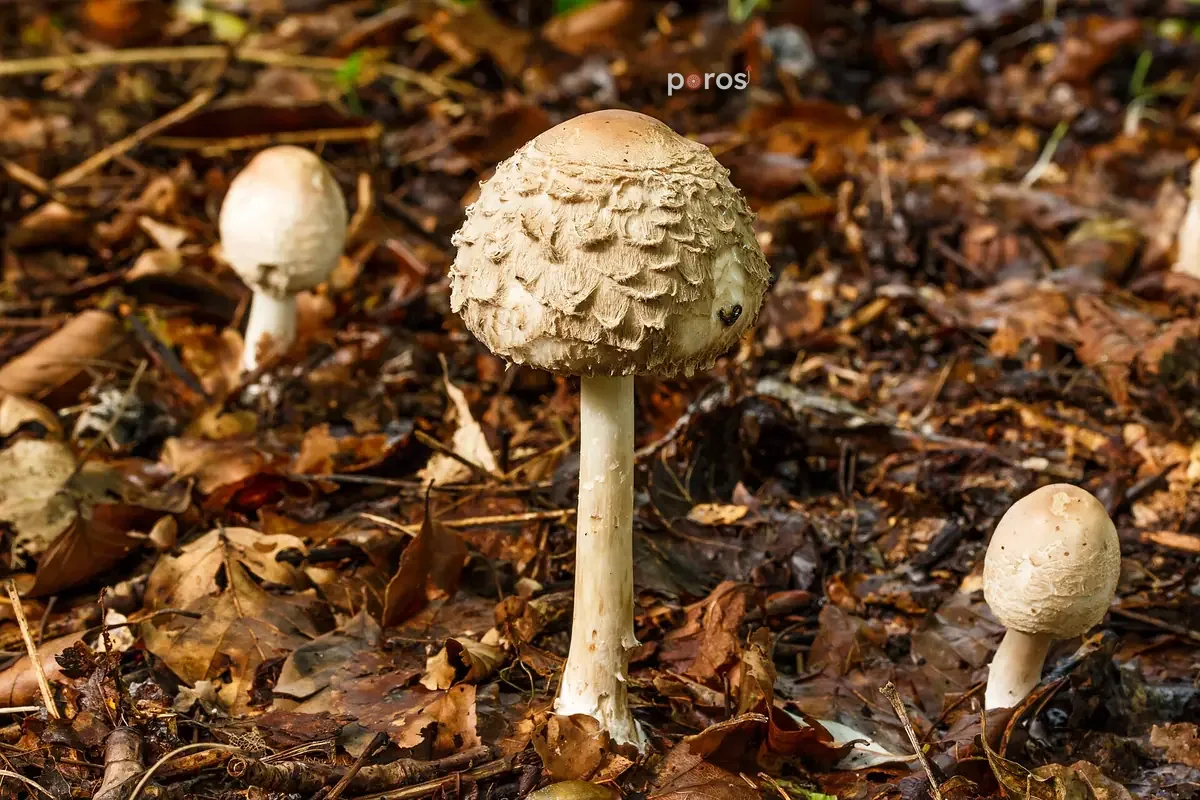 Shaggy parasolChlorophyllum rhacodesInedible
-
 Button mushroomAgaricus bisporusEdible species
-
Deadly dapperlingLepiota brunneoincarnataDeadly poisonous
-
Field mushroomAgaricus campestrisEdible species
-
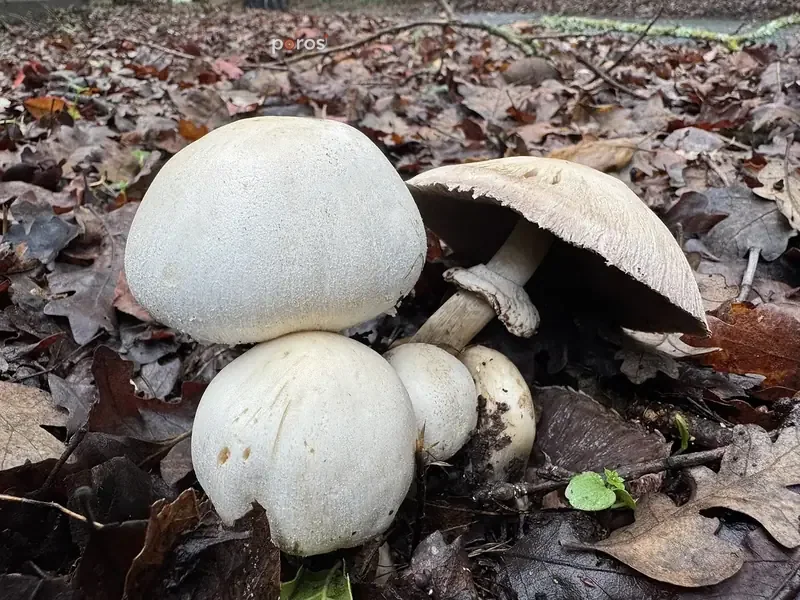 Horse mushroomAgaricus arvensisEdible species
-
 Parasol mushroomMacrolepiota proceraEdible species
-
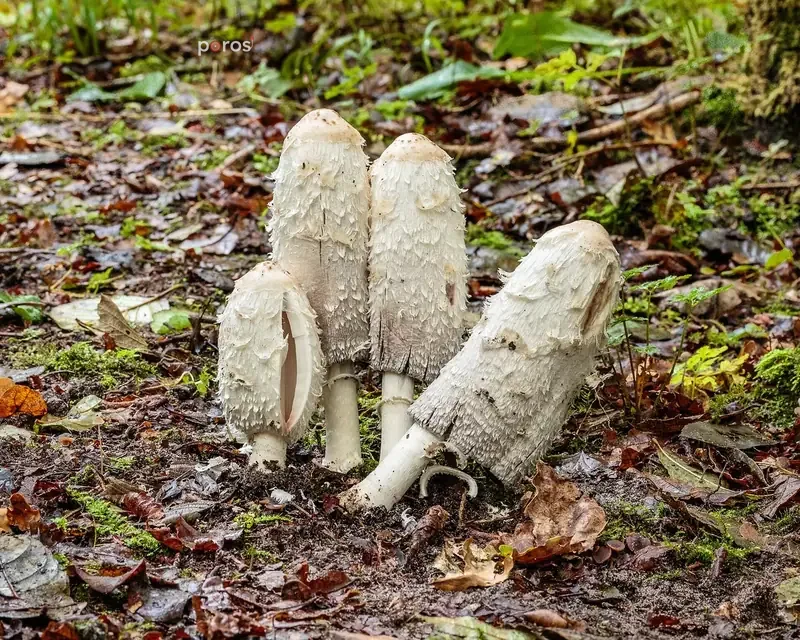 Shaggy ink capCoprinus comatusEdible species
Sources
- Dızkırıcı, Kalmer ve Acar (2019), Mantar Dergisi 10(2): 143–150, Morphologic and Molecular Diagnosis of Some Leucoagaricus Species and Revealing a New Record from Turkey dergipark.org.tr
- Wikipedia (EN): Leucocoprinus leucothites en.wikipedia.org
- First Nature: Leucoagaricus leucothites, White Dapperling first-nature.com
All sources (5)
- iNaturalist: Leucocoprinus leucothites (Türkçe ad ve Türkiye gözlemleri) inaturalist.org
- GBIF: Türkiye kayıtları gbif.org
Photo credits (10)
- Leucocoprinus leucothites · iNaturalist #62651746 · Diego Blanco · CC0
- Leucocoprinus leucothites · iNaturalist #321744908 · Robert M Hallock · CC BY 4.0
- Leucocoprinus leucothites · iNaturalist #79117732 · M Rutherford · CC BY 4.0
- Leucocoprinus leucothites · iNaturalist #34108879 · Peter Gabler · CC0
- Leucocoprinus leucothites · iNaturalist #244654878 · Lutra lutra · CC0
- Leucocoprinus leucothites · iNaturalist #161059665 · Csaba Béla Eötvös · CC BY 4.0
- Leucocoprinus leucothites · iNaturalist #79117732 · M Rutherford · CC BY 4.0
- Leucocoprinus leucothites · iNaturalist #8213003 · Cody D. Crossley · CC BY 4.0
- iNaturalist: Manisa, 21 Dec 2023 · Umut Nuri Erdoğan · CC BY
- iNaturalist: Manisa, 18 Dec 2023 · Umut Nuri Erdoğan · CC BY