
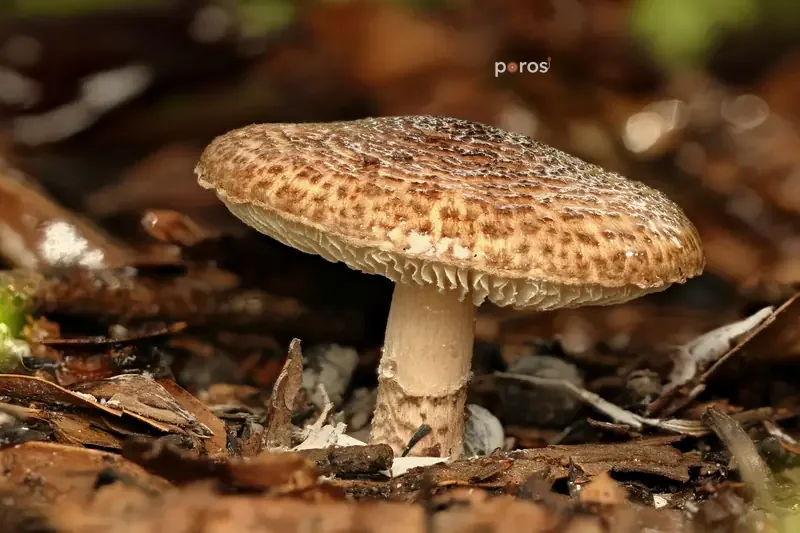


Deadly dapperling
Lepiota brunneoincarnata · Agaricaceae
A deadly species that looks like a parasol but is far smaller, with a cap covered in pinkish-brown scales and brown bands on the stem.
Last updated: Prepared by the Poros Mantar editorial team6 sources checkedReport a correction
DEADLY POISONOUS — keep it out of any basket of mushrooms to eat.
In deadly dapperling poisoning, vomiting and diarrhoea start 6–24 hours later, followed by a false recovery, while the real liver damage develops over the next days. Go to hospital without waiting for symptoms.
A deadly species that looks like a parasol but is far smaller, with a cap covered in pinkish-brown scales and brown bands on the stem. It contains the same toxins as the death cap (amatoxins), which is why small parasol-like mushrooms are never picked.
Also called: deadly parasol Turkish: Ölümcül lepiota, küçük şemsiye mantarı, zehirli lepiota
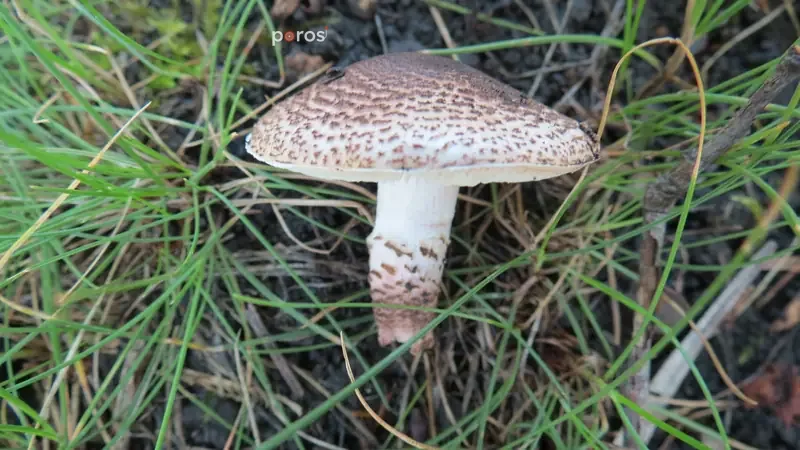
How to recognise it
Deadly dapperling, part by part
No volva Spore print: White Faintly fruity or indistinct.


When and where
Sep–Nov
- Jan
- Feb
- Mar
- Apr
- May
- Jun
- Jul
- Aug
- Sepin season
- Octin season
- Novin season
- Dec
The deadly dapperling fruits in autumn; the single Turkish GBIF record dates from October.
Where does deadly dapperling grow?
The deadly dapperling grows in grass, parks, gardens and woodland edges, in grassy, humus-rich soil.
Where is deadly dapperling found in Turkey?
The deadly dapperling has one GBIF record in Turkey (Yalova). Small Lepiota species have been reported among the causes of amatoxin poisoning in Turkey.
Which months
- Jan0
- Feb0
- Mar0
- Apr0
- May0
- Jun0
- Jul0
- Aug0
- Sep0
- Oct1
- Nov0
- Dec0
1 provinces, 1 observations (GBIF, iNaturalist); months from observation dates. Record density also reflects where observers work.
Latest deadly dapperling observations
 Illustrative
On "illustrative" cards the image is a photo of the species; the observation photo cannot be shown here because of its licence, but can be seen at the source.
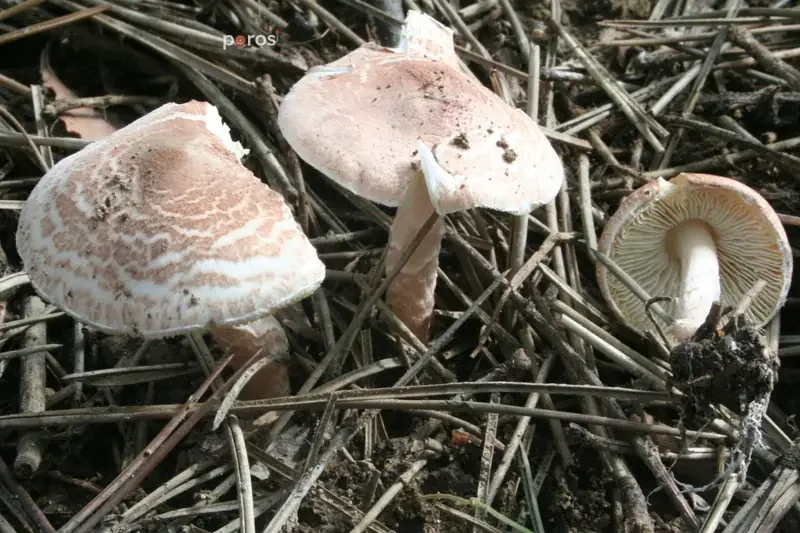
Look-alikes
What is it mistaken for?
Deadly dapperling can be mistaken for the species below. Each card shows the look-alike and how it differs from Deadly dapperling.
 Edible species
not Deadly dapperling
Parasol mushroom Macrolepiota procera
Cap 10–25 cm, stem 15–30 cm with a snakeskin pattern, and a thick movable ring. A small young parasol can be confused with the deadly dapperling, so parasol-like mushrooms with caps under 10 cm are never picked.
 Edible species
not Deadly dapperling
Field mushroom Agaricus campestris
Also grows in grass, but its gills turn from pink to chocolate brown and its spore print is brown.
 Poisonous
not Deadly dapperling
Stinking dapperling Lepiota cristata
Smaller, with orange-brown scales on a white cap and a sharp unpleasant smell; also poisonous.
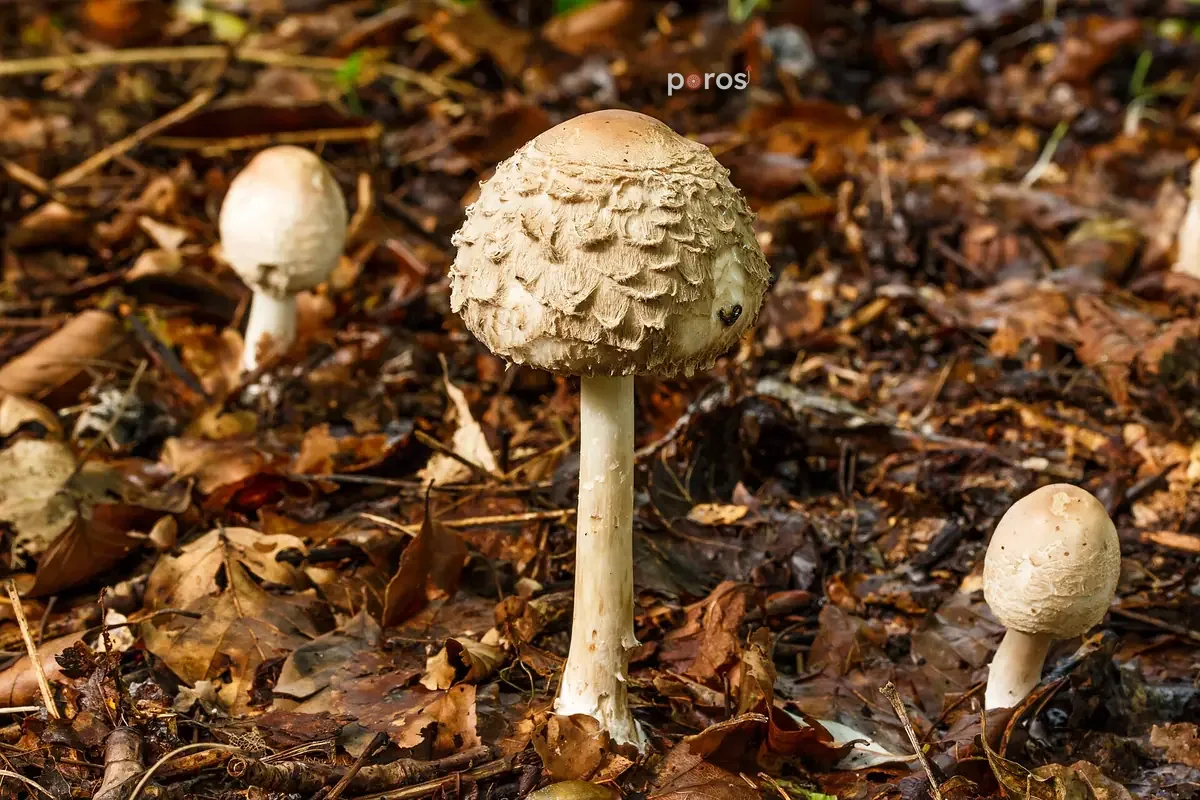 Inedible
not Deadly dapperling
Shaggy parasol Chlorophyllum rhacodes
Cap 7–15 cm with large upturned scales; the stem has a distinct bulb at the base and a movable double ring, and the flesh turns orange-red when cut. Young, small ones can be mistaken for dapperlings, so small parasol-like mushrooms are never picked.
 Inedible
not Deadly dapperling
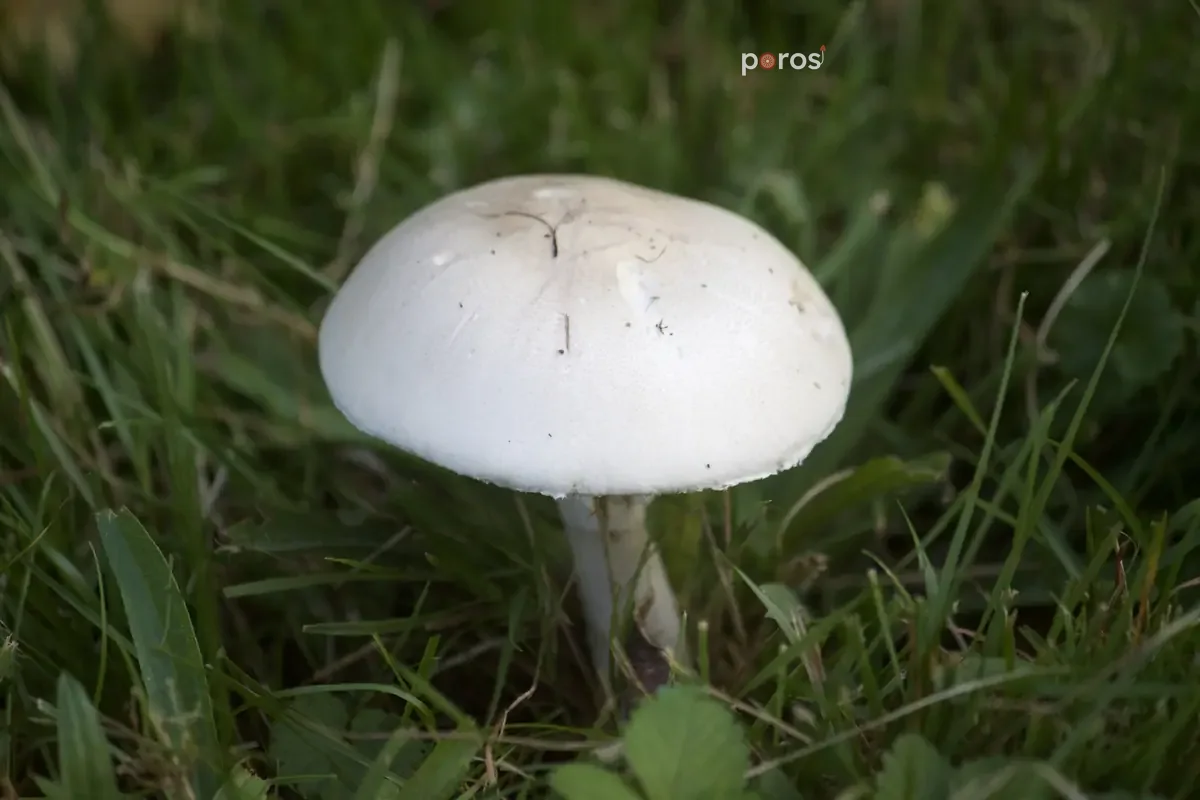
White dapperling Leucocoprinus leucothites
The white dapperling is larger, with a smooth white cap without scales and no brown bands on the stem.
Toxins
The deadly dapperling contains amatoxins (alpha-amanitin), as the death cap does. Source
Frequently asked questions
Is the deadly dapperling poisonous?
Yes, it is deadly. It contains the same amatoxins as the death cap and causes severe liver damage. Cooking, drying or freezing does not destroy the toxins.
How do you tell a parasol from the deadly dapperling?
The parasol has a 10–25 cm cap, a snakeskin-patterned stem and a thick movable ring. The deadly dapperling is 2–5 cm with pinkish-brown bands on the stem. Never pick any parasol-like mushroom with a cap under 10 cm.
Does the deadly dapperling grow in Turkey?
Yes. There is a GBIF record from Yalova, and small Lepiota species have been reported among the causes of amatoxin poisoning in Turkey.
Where does the deadly dapperling grow?
In grass, parks, gardens and woodland edges, in grassy, humus-rich soil: exactly where field mushrooms and parasols are picked.
When do symptoms start?
Vomiting and diarrhoea start after 6–24 hours, often followed by a false recovery while liver damage continues. If in doubt call 112 or 114 without waiting for symptoms.
When does it appear?
In autumn, between September and November; the Turkish record is from October.
Is deadly dapperling poisonous?
Yes, deadly dapperling is deadly poisonous and must never be eaten. In deadly dapperling poisoning, vomiting and diarrhoea start 6–24 hours later, followed by a false recovery, while the real liver damage develops over the next days. Go to hospital without waiting for symptoms.
When is deadly dapperling season in Turkey?
In our calendar, deadly dapperling season runs Sep–Nov. The deadly dapperling fruits in autumn; the single Turkish GBIF record dates from October.
Where does deadly dapperling grow?
The deadly dapperling grows in grass, parks, gardens and woodland edges, in grassy, humus-rich soil.
Where is deadly dapperling found in Turkey?
The deadly dapperling has one GBIF record in Turkey (Yalova). Small Lepiota species have been reported among the causes of amatoxin poisoning in Turkey.
What can deadly dapperling be confused with?
Deadly dapperling can be confused with parasol (Macrolepiota procera, edible species), field mushroom (Agaricus campestris, edible species), stinking dapperling (Lepiota cristata, poisonous), shaggy parasol (Chlorophyllum rhacodes, inedible) and white dapperling (Leucocoprinus leucothites, inedible). Look-alikes are compared on this page.
What is deadly dapperling called in Turkish?
In Turkish, deadly dapperling (Lepiota brunneoincarnata) is called Ölümcül lepiota; other local names include küçük şemsiye mantarı and zehirli lepiota.
Related species
-
 Button mushroomAgaricus bisporusEdible species
-
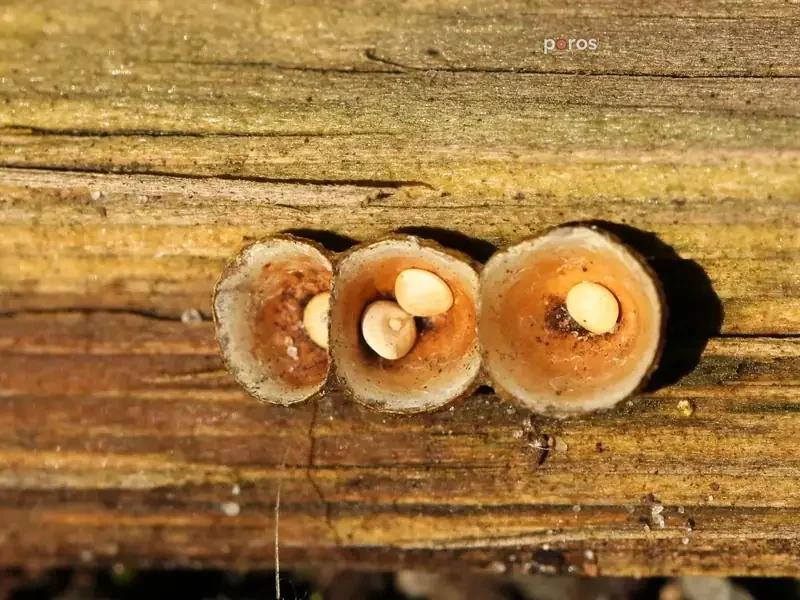 Common bird’s nest fungusCrucibulum laeveInedible
-
Field mushroomAgaricus campestrisEdible species
-
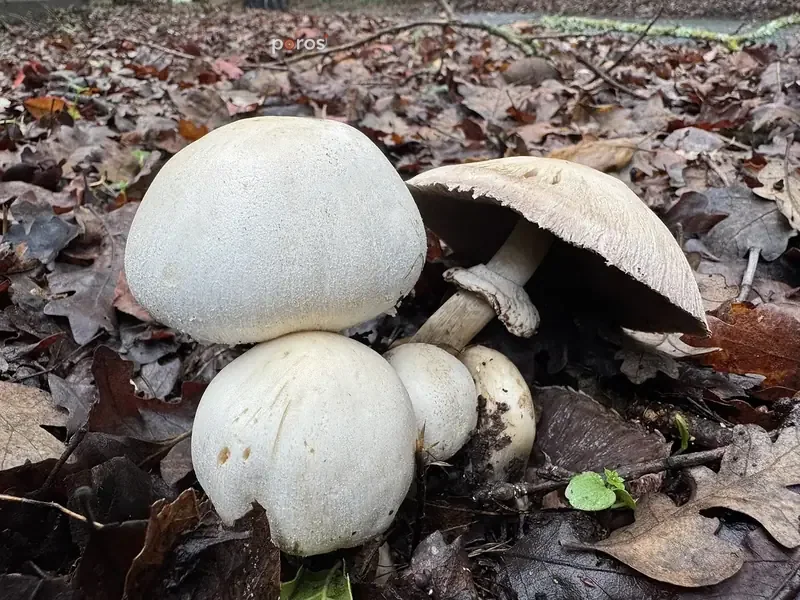 Horse mushroomAgaricus arvensisEdible species
-
Parasol mushroomMacrolepiota proceraEdible species
-
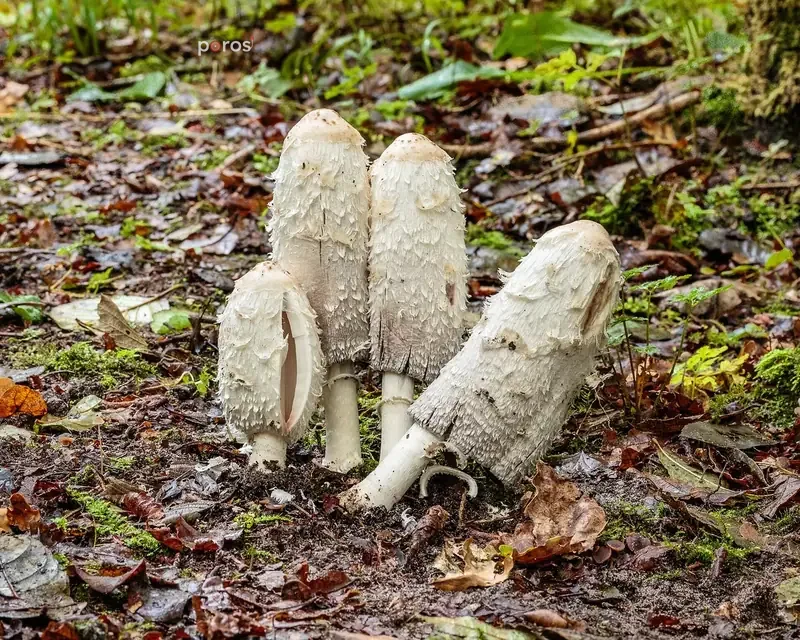 Shaggy ink capCoprinus comatusEdible species
-
Shaggy parasolChlorophyllum rhacodesInedible
-
White dapperlingLeucocoprinus leucothitesInedible
Sources
- Sun ve ark. (2019), Toxicon: Lepiota brunneoincarnata zehirlenmesi vaka çalışması pubmed.ncbi.nlm.nih.gov
- Adanacıoğlu ve ark. (2014), ANADOLU (Ege Tarımsal Araştırma Enstitüsü): Türkiye makromantar genetik kaynakları I. Ege Bölgesi dergipark.org.tr
- Wikipedia (EN): Lepiota brunneoincarnata en.wikipedia.org
All sources (6)
- First Nature: Lepiota brunneoincarnata first-nature.com
- GBIF: Türkiye kayıtları gbif.org
- iNaturalist: Türkiye gözlemleri inaturalist.org
Photo credits (8)
- Lepiota brunneoincarnata · iNaturalist #334408833 · Chaym Turak · CC BY-SA 4.0
- Lepiota brunneoincarnata · iNaturalist #29332101 · Elena A. Kizilova (Елена А. Кизилова) · CC BY 4.0
- File:Lepiota brunneoincarnata 170929w.JPG · Strobilomyces · CC BY-SA 4.0
- Lepiota brunneoincarnata · iNaturalist #334408833 · Chaym Turak · CC BY-SA 4.0
- Lepiota brunneoincarnata · iNaturalist #334408833 · Chaym Turak · CC BY-SA 4.0
- Lepiota brunneoincarnata · iNaturalist #61844174 · Alan Rockefeller · CC BY 4.0
- Lepiota brunneoincarnata · iNaturalist #29332101 · Elena A. Kizilova (Елена А. Кизилова) · CC BY 4.0
- File:Lepiota brunneoincarnata 060823w.jpg · User:Strobilomyces · CC BY-SA 3.0

