
Bay bolete (chestnut bolete)
Imleria badia · Boletaceae

Imleria badia, the bay bolete, is a bolete recognised by its chestnut-brown cap, tacky when wet, and cream-yellow pores that turn blue when pressed. Its stem has no net but fine brown streaks. It is one of the most gathered edible boletes in Europe; its flesh blues slightly when cut. It has no Turkish name.
Also called: bay bolete, chestnut bolete Turkish: Imleria badia Synonyms: Boletus badius, Xerocomus badius
Last updated: Prepared by the Poros Mantar editorial team3 sources checkedReport a correction
Bay bolete photos
-
© Valentin · CC BY-SA 4.0
-

© Valentin · CC BY-SA 4.0
-

Pores© AdventureLisa · CC0
-

© Enrico Tomschke · CC BY 4.0
-

© Lucian Clanet · CC BY 4.0
-

© Lucian Clanet · CC BY 4.0
-

Pores© Petr Harant · CC BY 4.0
-

Cap© Mikko Heikkinen · CC BY 4.0
-

Pores© Petr Harant · CC BY 4.0
-

Cross-section© Lukas · CC BY-SA 2.5
-

Stem© Вячеслав Юсупов · CC BY 4.0


These are licensed records of this species; photos alone are not enough to identify a mushroom.
Are bay boletes poisonous?
Bay boletes are not listed as poisonous in our sources. Imleria badia is edible when well cooked. It is known to accumulate heavy metals and radioactive caesium; do not pick it in polluted areas or eat it often. Even so, never eat wild ones without certain identification.
Are bay boletes edible?
Bay boletes are listed as edible in our sources; even so, never eat wild ones without certain identification. Do not eat them without an expert's approval. Imleria badia is edible when well cooked. It is known to accumulate heavy metals and radioactive caesium; do not pick it in polluted areas or eat it often. Set aside boletes with red pores. Do not eat a wild one an expert has not checked.
How to recognise it
Appearance of bay boletes
No ring or volva Spore print: Olive-brown Mild and fruity.
Where do bay boletes grow?
It grows in conifer and mixed forests under spruce, pine, fir and beech, on acidic soil, sometimes at the base of rotting stumps.
In Turkey
Turkish records are very scarce: iNaturalist has a single research-grade Turkish observation, and GBIF holds no Turkish record. Worldwide it ranges through most of Europe and the temperate forests of Asia.
Our map has no observations of bay boletes from Turkey yet.
Look-alikes
What could it be confused with?
Bay bolete can be mistaken for the species below. Each comparison shows Bay bolete on the left, the look-alike on the right, and how to tell them apart.
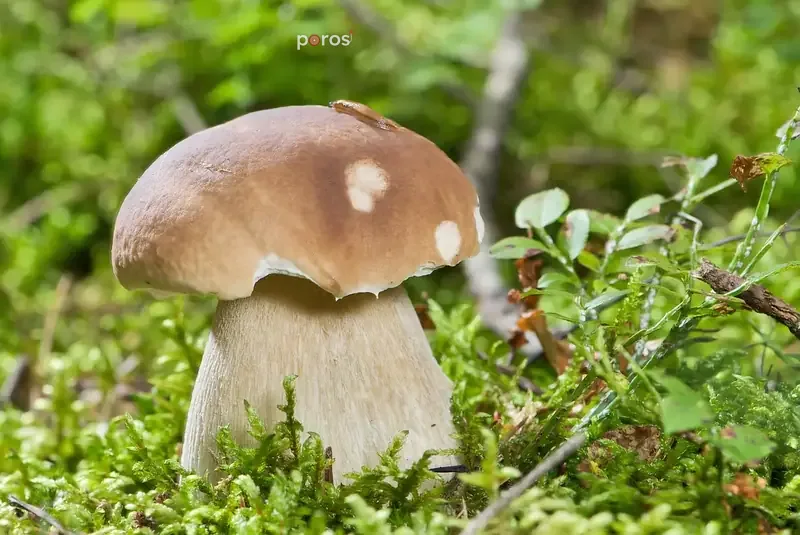
Porcini Boletus edulis
How to tell Its cap is a similar brown, but its stem is swollen with a white net, and its pores do not turn blue when pressed.

Bitter bolete Tylopilus felleus
How to tell Its pores turn pink, its stem has a dark net and it tastes very bitter; it is not eaten.
Other look-alikes (1)
 Inedible
not Bay bolete
Scarletina bolete Neoboletus erythropus
Its pores are red, its stem red-dotted, and its flesh turns dark blue instantly.
Bay bolete and its look-alikes compared
| Species | Status | Underside | Spore print | Season |
|---|---|---|---|---|
| Bay boleteImleria badia | Edible species | Pores cream to yellow-green, bruising clearly blue-green when pressed | Olive-brown | Aug–Nov |
| PorciniBoletus edulis | Edible species | No gills: tubes with small round pores, white and "stuffed" when young, then yellow, finally olive-green | Olive brown | Jun–Nov |
| Bitter boleteTylopilus felleus | Inedible | Pores whitish when young, pink to pinkish brown with age | Pinkish brown | Jul–Oct |
| Scarletina boleteNeoboletus erythropus | Inedible | Small, blood-red to orange-red pores that turn dark blue instantly when touched | Olive-brown | Jun–Oct |
The table is compiled from each species page. The status column is a guide only; do not eat a wild mushroom unless an expert has seen it in person. Compare look-alikes side by side
How to cook and eat bay boletes
Safety first. Imleria badia is edible when well cooked. It is known to accumulate heavy metals and radioactive caesium; do not pick it in polluted areas or eat it often. Set aside boletes with red pores. Do not eat a wild one an expert has not checked. If poisoning is suspected, call 112 (Turkey poison centre: 114) and keep any leftover mushroom.
How to store bay boletes
Grow it, buy it
Bay bolete price list
| Product | Poros Mantar | Market |
|---|---|---|
| Fresh bay boletes | Made to order · ask | — |
| Dried bay boletes | Made to order · ask | — |
We make our bay boletes products in small batches, to order; send a request and we email you the price and delivery date. The market column shows prices seen on other sellers' pages on the date given; they are not our prices and may have changed.
Frequently asked questions
Are bay boletes poisonous?
Bay boletes are not listed as poisonous in our sources. Imleria badia is edible when well cooked. It is known to accumulate heavy metals and radioactive caesium; do not pick it in polluted areas or eat it often. Even so, never eat wild ones without certain identification.
Are bay boletes edible?
Bay boletes are listed as edible in our sources; even so, never eat wild ones without certain identification. Do not eat them without an expert's approval. Imleria badia is edible when well cooked. It is known to accumulate heavy metals and radioactive caesium; do not pick it in polluted areas or eat it often. Set aside boletes with red pores. Do not eat a wild one an expert has not checked.
Why is it edible if its pores turn blue?
Bluing is a harmless oxidation reaction seen in many boletes and does not indicate toxicity. What matters more is whether the pores are red and whether the taste is bitter.
Does it have a Turkish name?
There is no established Turkish name, and iNaturalist Turkey gives none either, so we use the Latin name.
Does it grow in Turkey?
Records are very scarce: iNaturalist has a single research-grade Turkish observation and GBIF holds none.
Why does it accumulate radioactive caesium?
Certain pigments in its cap skin bind caesium. After Chernobyl it was measured as one of the strongest caesium accumulators among European mushrooms.
When does it fruit?
From late summer to late autumn, especially in conifer forests.
How do you tell it from the porcini?
The porcini has a swollen, white-netted stem and pores that do not blue. The bay bolete has a slender, unnetted stem and pores that do.
When is bay bolete season in Turkey?
In our calendar, bay bolete season runs Aug–Nov. It fruits from late summer to late autumn, especially in conifer forests.
Where do bay boletes grow?
It grows in conifer and mixed forests under spruce, pine, fir and beech, on acidic soil, sometimes at the base of rotting stumps.
Where are bay boletes found in Turkey?
Turkish records are very scarce: iNaturalist has a single research-grade Turkish observation, and GBIF holds no Turkish record. Worldwide it ranges through most of Europe and the temperate forests of Asia.
What can the bay bolete be confused with?
The bay bolete can be confused with porcini (Boletus edulis, edible species), bitter bolete (Tylopilus felleus, inedible) and scarletina bolete (Neoboletus erythropus, inedible). Look-alikes are compared on this page.
What is the bay bolete called in Turkish?
In Turkish, the bay bolete (Imleria badia) is called Imleria badia.
Related species
-
 Bronze boleteBoletus aereusEdible species
-
 Brown birch boleteLeccinum scabrumEdible species
-
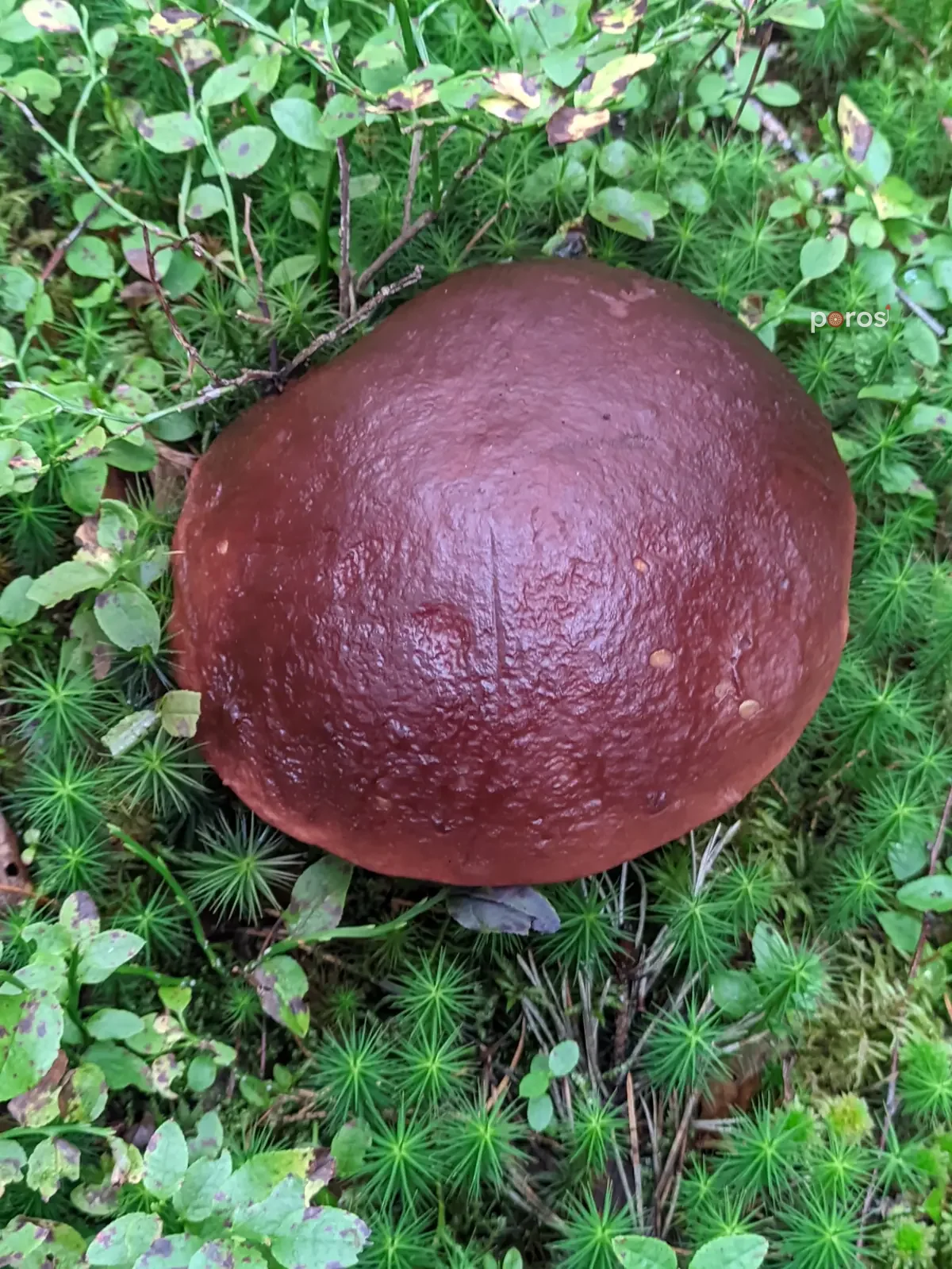 Pine boleteBoletus pinophilusEdible species
-
PorciniBoletus edulisEdible species
-
 Red-capped scaber stalkLeccinum aurantiacumEdible species
-
 Suede boleteXerocomus subtomentosusEdible species
-
 Summer cepBoletus reticulatusEdible species
-
Bitter boleteTylopilus felleusInedible
Sources
- Wikipedia (EN): Imleria badia en.wikipedia.org
- iNaturalist: Imleria badia (Türkçe ad ve Türkiye gözlemleri) inaturalist.org
- GBIF: Türkiye kayıtları gbif.org
Photo credits (11)
- Imleria badia · iNaturalist #17820444 · Valentin · CC BY-SA 4.0
- Imleria badia · iNaturalist #17820444 · Valentin · CC BY-SA 4.0
- Imleria badia · iNaturalist #103160161 · AdventureLisa · CC0
- Imleria badia · iNaturalist #396832272 · Enrico Tomschke · CC BY 4.0
- File:Imleria badia 8.jpg · Lucian Clanet · CC BY 4.0
- File:Imleria badia 7.jpg · Lucian Clanet · CC BY 4.0
- File:Imleria badia 241196348.jpg · Petr Harant · CC BY 4.0
- File:Imleria badia 316770702.jpg · Mikko Heikkinen · CC BY 4.0
- File:Imleria badia 241196185.jpg · Petr Harant · CC BY 4.0
- File:Imleria badia (=Boletus badius) (32746431490) cropped.jpg · Lukas · CC BY-SA 2.5
- Imleria badia · iNaturalist #128758615 · Вячеслав Юсупов · CC BY 4.0


